


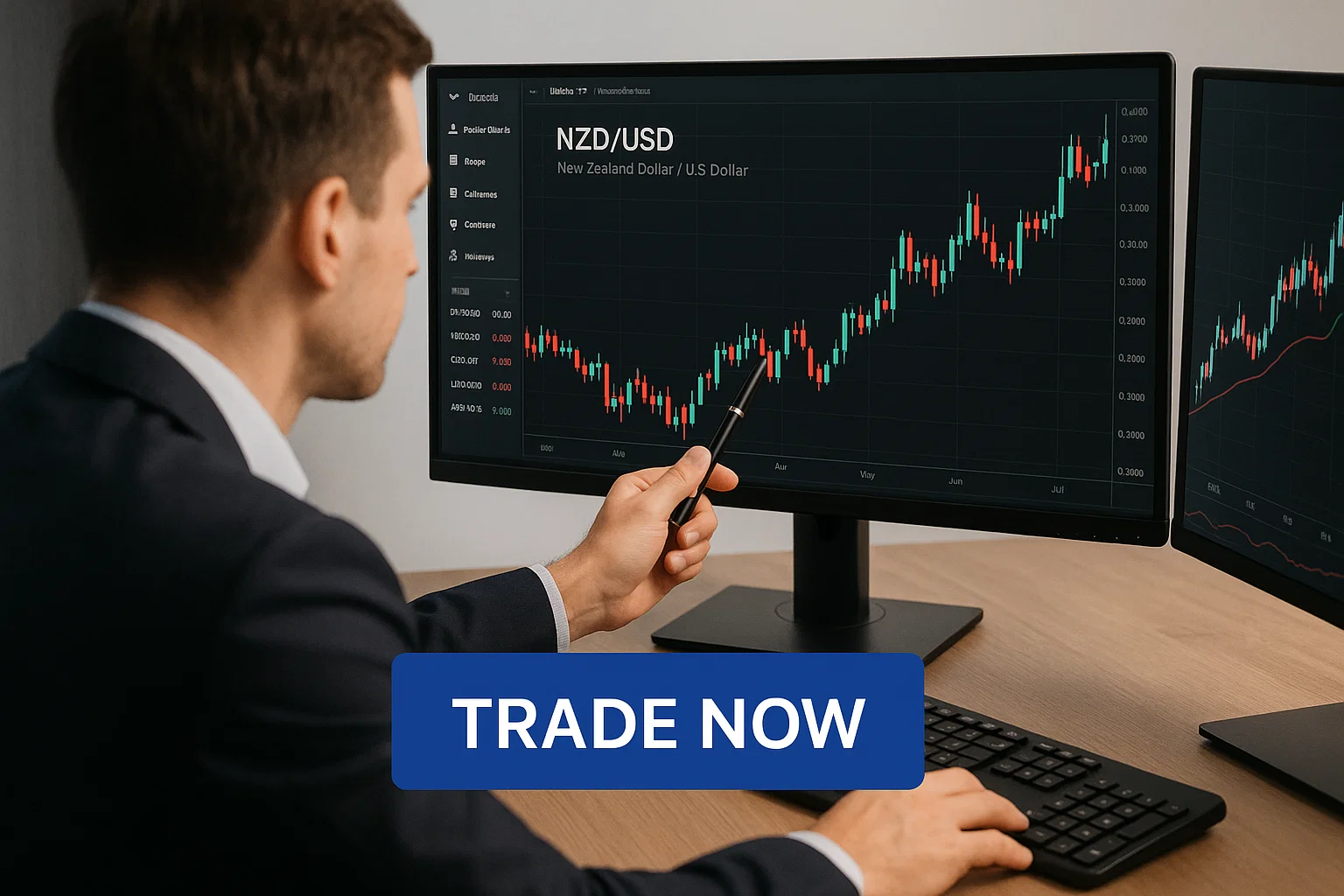
A good strategy for trading USD/NZD combines trend-following with pullback entries, supported by indicators like RSI, MACD, and support/resistance levels. Because USD/NZD is more volatile than major pairs, using structured entry rules and risk management is essential for consistent results.
This guide is designed for both beginner and intermediate forex traders who want a clear, practical approach to trading USD/NZD.
Key Takeaways
- USD/NZD is a volatile, trend-driven currency pair.
- Trend-following strategies work best for this pair.
- Pullbacks offer better entry opportunities than chasing price.
- Combining indicators improves trade accuracy.
- Risk management is essential due to higher volatility.
- High volatility means both higher opportunity and higher risk.
Why USD/NZD Requires a Specific Strategy
If you’re asking what is a good strategy for trading USD/NZD, you need to understand one thing first:
This pair is not like EUR/USD.
USD/NZD tends to be:
- More volatile
- Less liquid
- Strongly influenced by fundamentals
USD/NZD is heavily influenced by interest rate differences between the Federal Reserve (USD) and the Reserve Bank of New Zealand (NZD), as well as commodity prices and global risk sentiment.
That means a structured, rule-based approach is required.
Best Strategy: Trend + Pullback Approach
The most effective strategy for USD/NZD is simple:
Trade with the trend, but enter on pullbacks
Instead of chasing price, you wait for it to retrace before entering.
Here’s how it works:
- Identify the trend
- Wait for a pullback
- Enter in the direction of the trend
- Manage your risk
This helps you:
- Avoid bad entries
- Improve risk-to-reward
- Trade with momentum
For example, if USD/NZD is in an uptrend and pulls back to a support level or moving average, traders look for confirmation before entering a buy trade in the direction of the trend.
Step-by-Step USD/NZD Trading Strategy
Let’s break it down so you can actually use it.
Step 1: Identify the Trend
Use tools like:
- Moving averages
- Trendlines
- Market structure
If price is making higher highs → uptrend
If price is making lower lows → downtrend
Using a 50-period or 200-period moving average can help simplify trend identification for beginners.
Step 2: Wait for a Pullback
This is where most traders fail.
They chase price instead of waiting.
Instead, look for:
- Price retracing to support/resistance
- Pullback to moving average
- RSI moving from overbought (above 70) back toward neutral levels
Step 3: Look for Confirmation
Before entering, confirm the setup.
You can use:
- RSI bouncing from oversold/overbought
- MACD crossover
- Candlestick patterns
Look for at least 2 confirming signals before entering a trade to reduce false entries.
This reduces false entries.
Step 4: Enter the Trade
Once everything aligns:
Enter in the direction of the trend
Set:
- Stop-loss below/above structure
- Take-profit based on previous highs/lows
Aim for a minimum risk-to-reward ratio of 1:2 to ensure long-term profitability.
Instead of entering immediately, train yourself to wait for pullbacks; this alone can improve your trading results significantly.
Best Indicators for USD/NZD Strategy
Using the right indicators can make your strategy more effective.
Here’s a simple setup:
| Indicator | Purpose | How You Use It |
| Moving Average | Identify the trend | Trade above/below MA |
| ATR (Average True Range) | Measure volatility | Helps set realistic stop-loss levels |
| RSI | Measure momentum | Look for pullback zones |
| MACD | Confirm trend strength | Entry confirmation |
| Support/Resistance | Key levels | Entry and exit zones |
This combination helps you avoid relying on a single signal.
Best Time to Trade USD/NZD
Timing matters a lot with this pair.
USD/NZD is most active during the following times:
- Asian session (NZD activity)
- New York session (USD activity)
This creates opportunities at different times of the day.
For example:
- Asian session → smoother moves
- New York session → stronger volatility
Note: The overlap between sessions (especially late Asian and early New York) often provides the best trading opportunities due to increased liquidity and volatility.
4 Common Mistakes When Trading USD/NZD
Let’s quickly go over what to avoid.
- Chasing Price: Entering after a big move often leads to losses.
- Ignoring Volatility: This pair can move fast; without proper stops, losses can grow quickly.
- Overtrading: Because of volatility, traders may take too many trades.
- Not Using Confirmation: Entering without confirmation increases false signals.
- Ignoring Economic News: Major news events can cause sharp movements in USD/NZD.
Is USD/NZD Good for Beginners?
| Aspect | Details |
| Beginner Friendly? | USD/NZD can be traded by beginners, but it’s not the easiest pair to start with. |
| Pros | • Strong trends• Clear reactions to fundamentals |
| Cons | • Higher spreads• More volatility• Requires patience |
| Recommendation | Beginners should first practice on a demo account before trading USD/NZD with real capital. |
Execution Still Matters
Even with a solid strategy, execution plays a critical role in trading performance. USD/NZD can experience fast price movements and wider spreads, so choosing a broker with reliable execution, stable pricing, and low latency is important.
Defcofx provides access to MT5, fast order execution, and flexible trading conditions, helping traders manage volatility more effectively.
Open a Live Trading Account
Frequently Asked Questions (FAQ)
What is the best strategy for trading USD/NZD?
The best strategy is a trend-following approach combined with pullback entries. This means you trade in the direction of the trend and wait for the price to retrace before entering. This improves your entry price and reduces risk.
Is USD/NZD a good pair for beginners?
USD/NZD can be traded by beginners, but it is more volatile than major pairs like EUR/USD. This means you need to be more careful with risk management. Starting with small position sizes is recommended.
Why is USD/NZD so volatile?
USD/NZD is influenced by economic differences between the US and New Zealand, as well as global risk sentiment. Lower liquidity compared to major pairs also contributes to sharper price movements. This makes it more volatile.
What indicators work best for USD/NZD?
Moving averages, RSI, MACD, and support/resistance levels work well for USD/NZD. These tools help identify trends, momentum, and entry points. Using a combination of indicators provides more reliable signals.
What is the best time to trade USD/NZD?
The best time to trade USD/NZD is during the Asian and New York sessions. The Asian session reflects NZD activity, while the New York session brings USD-driven volatility. Trading during these sessions provides better opportunities.
Can you swing trade USD/NZD?
Yes, USD/NZD is suitable for swing trading because it often forms strong trends. Traders can hold positions for several days to capture larger moves. However, proper risk management is important due to volatility.
What leverage should you use for USD/NZD?
Lower leverage (e.g., 1:10 to 1:50) is recommended for most traders. High leverage increases both potential profits and risks. Beginners should avoid excessive leverage and focus on consistency first.
How do you manage risk when trading USD/NZD?
Risk management includes using stop-loss orders, limiting risk per trade, and avoiding overleveraging. Because USD/NZD is volatile, managing position size is especially important. This helps protect your capital over time.
Is USD/NZD better than EUR/USD?
USD/NZD offers stronger trends but comes with higher volatility and wider spreads. EUR/USD is more stable and beginner-friendly. The better choice depends on your trading style and experience level.
Final Thoughts
A good strategy for trading USD/NZD is to follow the trend and enter on pullbacks using tools like moving averages, RSI, and support/resistance. This approach helps you avoid chasing price and improves your risk-to-reward ratio. By combining discipline, timing, and proper risk management, you can trade USD/NZD more effectively.
Start applying this strategy today; create your Defcofx account and access global forex markets with flexible trading conditions and advanced tools.
Open a Live Trading Account