


Monday opened with the dollar still carrying the momentum built after the Federal Reserve’s hawkish turn the previous week. Markets were no longer trading mainly on the optimism around the U.S.-Iran framework agreement. Instead, traders were focused on whether the Fed’s renewed inflation concern could translate into actual rate hikes later in 2026. That made the dollar difficult to sell, especially against currencies whose central banks looked less able or less willing to match the Fed’s hawkishness.
The yen was the clearest pressure point. Reuters reported that Japanese officials were escalating their warnings as USD/JPY stayed near extreme levels, with Finance Minister Satsuki Katayama saying authorities were ready to act “at any time” if currency moves became excessive. The yen had softened around the 161.7 area, and market participants noted that expectations of U.S. rate hikes, combined with renewed Middle East uncertainty and oil risk, made it difficult for investors to cut dollar-long positions.
This created a classic late-cycle dollar setup: not outright panic, but persistent demand for the currency with the strongest yield story. Oil and geopolitical uncertainty also remained in the background. Even though energy prices had retreated from earlier crisis highs, the market still viewed the Middle East as unstable enough to keep inflation risk alive. That mattered because any renewed oil shock would strengthen the argument for the Fed to stay restrictive.
USD/JPY
Technical Analysis
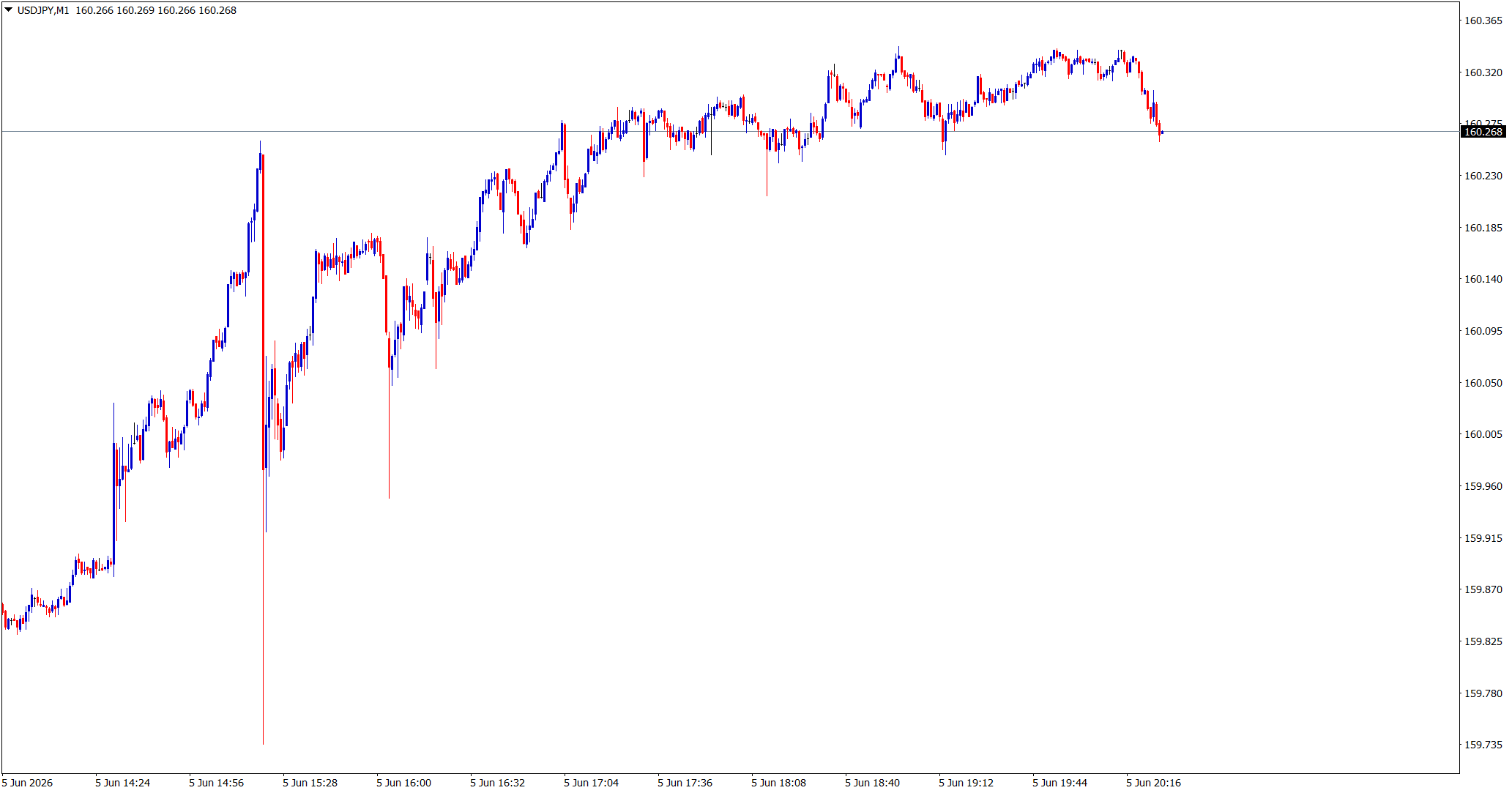
USD/JPY remained the dominant pair on Monday because it was trading in an area where market psychology, policy risk, and technical momentum all collided. The pair stayed near the 161–162 zone, close to levels that have historically attracted aggressive Japanese official attention. Technically, this is not a normal bullish trend environment. The pair still has upward momentum, but each push higher becomes more fragile because traders know intervention risk rises as the move extends.
The broader trend remained bullish, supported by higher lows and a clear recovery from the earlier June correction. However, the pace of the move was increasingly important. A slow grind higher is easier for authorities to tolerate; a sharp, disorderly spike is much more likely to trigger action. Monday’s price action suggested a market still willing to hold long-dollar exposure, but not necessarily willing to chase aggressively without fresh U.S. yield support.
Fundamental Analysis
The fundamental case for USD/JPY remained heavily dollar-positive. Fed hike expectations had strengthened after the prior week’s policy messaging, while the Bank of Japan remained far behind the Fed in absolute rate levels. Even though Japan had already raised rates, the gap between U.S. and Japanese yields remained large enough to keep carry trades attractive.
Japan’s energy dependence also complicated the yen outlook. Reuters noted that renewed Middle East uncertainty and oil prices made it harder for investors to reduce dollar-long positions. That matters because Japan imports most of its energy, so oil risk tends to worsen the trade balance and increases imported inflation pressure without necessarily supporting domestic growth.
The result was a yen caught in a difficult position: weak because of rate differentials and energy exposure, but dangerous to short aggressively because official intervention risk was rising.
EUR/USD
Technical Analysis
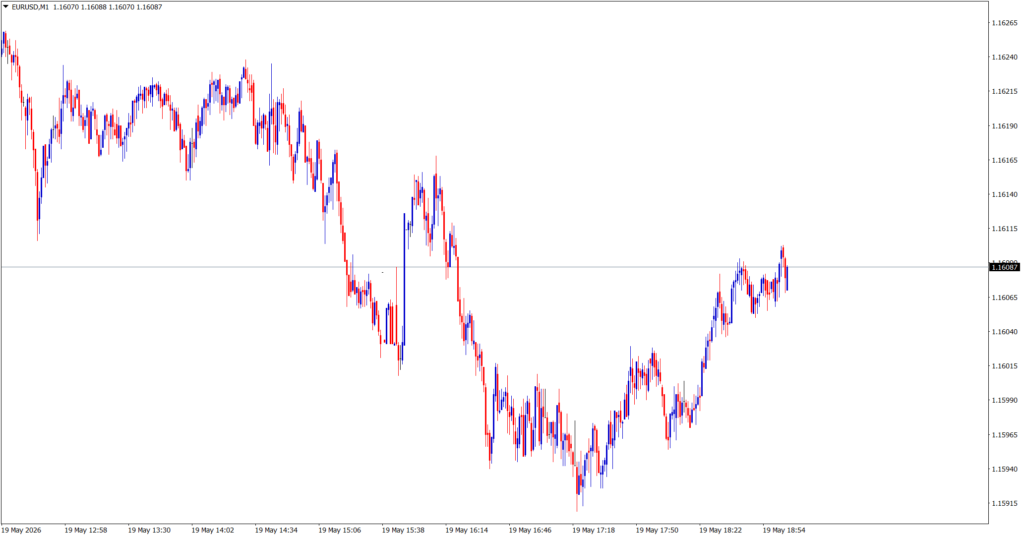
EUR/USD remained under pressure after losing momentum the previous week. The pair struggled to build a meaningful recovery and traded with a heavy tone, suggesting that the euro’s earlier relief rally had fully faded. Short-term rebounds were shallow, and sellers continued to defend resistance levels.
Technically, EUR/USD looked vulnerable because the pair had failed to reclaim the levels broken after the Fed’s hawkish shift. Momentum remained tilted lower, and the pair was increasingly trading as a dollar-yield story rather than a euro recovery story.
Fundamental Analysis
The euro’s weakness reflected renewed policy divergence. The Fed was moving toward a more hawkish stance, while the European Central Bank’s policy outlook remained more constrained by weak regional growth. Even if eurozone inflation remained sticky, Europe’s growth backdrop was not strong enough to give the euro the same support the dollar was receiving from the U.S. economy.
Europe also remained more exposed to energy-price swings than the U.S. If Middle East tension pushed oil higher again, the eurozone would face renewed pressure through imported inflation and weaker household purchasing power. That left EUR/USD vulnerable whenever geopolitical risk and U.S. yields moved in the dollar’s favor.
USD/CAD
Technical Analysis
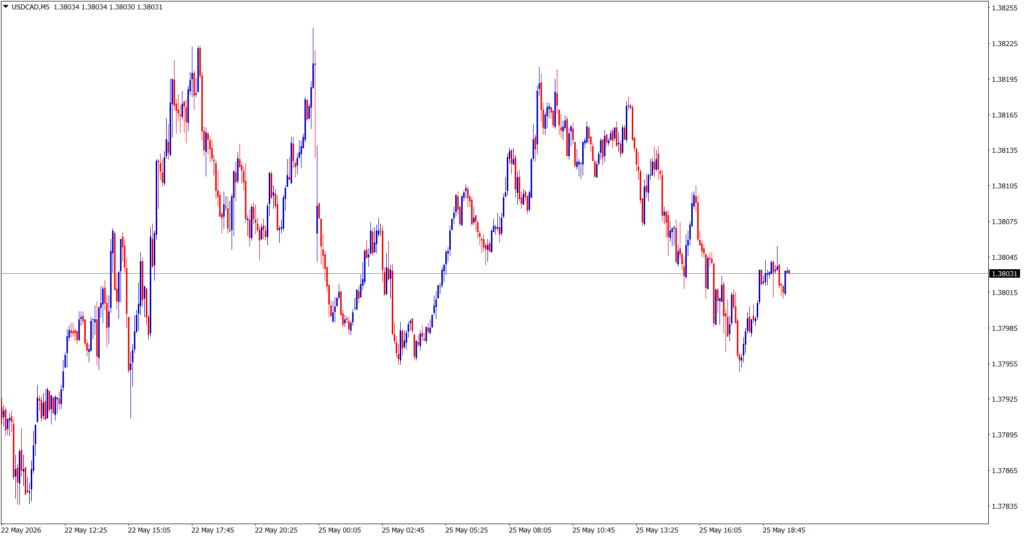
USD/CAD traded with a firmer tone, though not as dramatically as USD/JPY. The pair remained within a broader range, but dollar support prevented CAD from capitalizing fully on oil-related headlines. Technically, USD/CAD was not breaking out strongly, but it was holding a supportive structure above recent lows.
This suggested that the market was not ready to sell the dollar broadly, even against a commodity-linked currency.
Fundamental Analysis
The Canadian dollar’s story was mixed. Higher oil risks can support CAD because Canada is a major energy exporter. However, when oil strength is driven by geopolitical disruption rather than healthy global demand, the impact becomes less straightforward. In those environments, the U.S. dollar often benefits more from safe-haven flows and inflation-driven yield repricing than CAD benefits from crude.
That was the case on Monday. The market’s focus on Fed hikes and dollar yield advantage limited the loonie’s ability to outperform. USD/CAD therefore remained supported, even though the Canadian side had some commodity-linked backing.
Market Outlook
Monday set the tone for a week focused on three major forces: Fed hike expectations, yen intervention risk, and whether oil prices would continue easing or re-ignite inflation fears. The dollar remained supported because the market had not yet seen enough evidence to challenge the Fed-hawkish narrative.
For now:
- USD/JPY remained the most politically sensitive pair.
- EUR/USD stayed under pressure from yield divergence.
- USD/CAD remained supported despite Canada’s oil exposure.
- The dollar retained control as long as U.S. rates and geopolitical risk stayed aligned in its favor.