


The best time to trade NZD (New Zealand Dollar) is during the Asian trading session and early London session, especially when liquidity overlaps with other major markets. NZD pairs are most active when New Zealand, Australia, and global markets release economic data or when volatility increases during session overlaps.
Want to trade NZD during its most active hours? Explore how Defcofx provides access to global forex markets with fast execution and flexible trading conditions.
Open a Live Forex AccountKey Takeaways
- The NZD is most active during the Asian (Tokyo) session.
- NZD/USD is also active during London and New York sessions due to USD activity.
- The early London session can also provide strong movement.
- Session overlaps increase liquidity and volatility.
- NZD pairs react strongly to economic news and risk sentiment.
- Timing your trades improves entry quality and consistency.
Why Timing Matters When Trading NZD
If you’re asking what is the best time to trade NZD, you’re already considering an important aspect of trading because here’s the truth: Not all hours in forex are equal.
NZD pairs can feel
- Very active during certain hours
- Completely slow during others
If you trade at the wrong time, you may see the following:
- Low movement
- Wider spreads
- Fewer opportunities
But if you trade at the right time:
You get better setups, cleaner moves, and more consistent results.
Note: Forex markets operate 24 hours a day, but liquidity and volatility vary significantly depending on session activity.
Best Forex Sessions for Trading NZD
The New Zealand Dollar is most active when its local market and nearby regions are open.
Here’s how the main sessions affect NZD trading:
| Session | Time (Approx GMT) | NZD Activity Level | What to Expect |
| Asian (Tokyo) | 00:00 – 09:00 | High | Smooth, steady movement |
| London | 07:00 – 16:00 | Medium–High | Increased volatility |
| New York | 12:00 – 21:00 | Medium–High (NZD/USD specific) | News-driven moves |
The Asian session is where NZD really comes alive.
This is when:
- Regional markets are active
- Liquidity increases
- Price movement becomes clearer
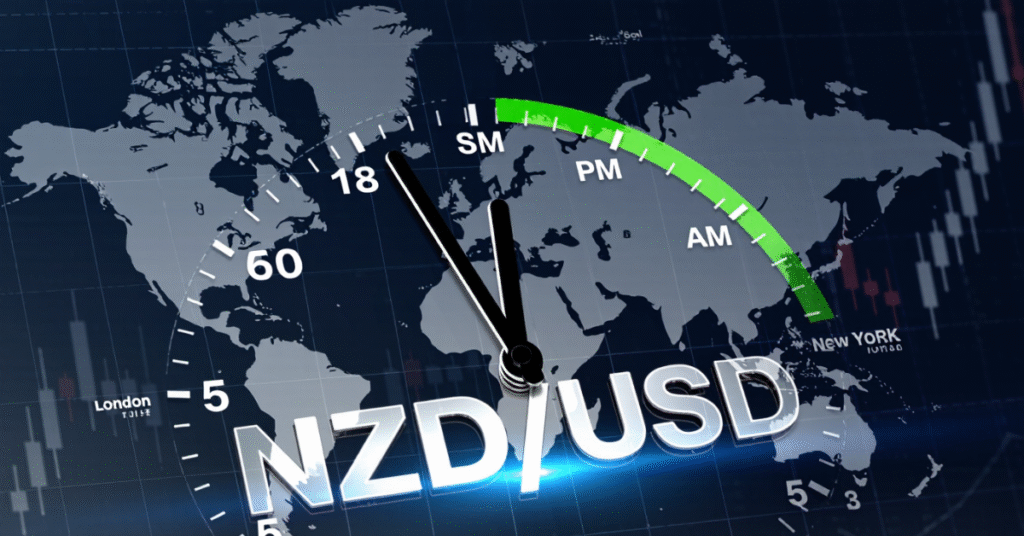
The highest activity for NZD/USD often occurs when the London and New York sessions overlap.
Why the Asian Session Is the Best for NZD
The Asian session is generally the most stable and predictable time to trade NZD, particularly for traders who prefer smoother price action. This session includes both the Sydney and Tokyo markets, which directly influence NZD and AUD currencies.
If you had to pick one time to trade NZD, it would be the Asian session.
Here’s why:
- New Zealand and Australian markets are open
- Local economic data is released
- Institutional traders in the region are active
For you, this means:
- More predictable price movement
- Cleaner setups
- Less random volatility
This is especially helpful if you prefer structured and calm market conditions.
NZD Behavior During London and New York Sessions
While the Asian session is best, NZD doesn’t stop moving after that.
London Session
- Volatility increases
- NZD pairs may follow global trends
- Good for breakout setups
New York Session
- Movement depends on USD strength
- NZD/USD becomes more active
- News events can create sharp moves
So if you’re trading NZD/USD specifically:
The New York session can still offer strong opportunities.
Note: Try tracking NZD/USD during both the Asian session and New York session to see which fits your trading style better.
Want to trade NZD/USD during high-volatility sessions? Open your Defcofx account and access fast-moving forex markets with advanced tools.
Open a Live AccountBest NZD Currency Pairs to Trade
Not all NZD pairs behave the same way.
Here are some popular ones:
| Pair | Characteristics | Best Session |
| NZD/USD | Balanced, USD-driven | New York + Asian |
| AUD/NZD | Slow, technical | Asian |
| NZD/JPY | Volatile, trend-driven | Asian |
| NZD/CAD | Commodity-based moves | New York |
Each pair reacts differently depending on:
- Market conditions
- Economic data
- Risk sentiment
Note: NZD/USD is the most liquid NZD pair, making it the most commonly traded among retail and institutional traders
What Moves NZD the Most?
To trade NZD effectively, you need to know what drives it.
The NZD is influenced by:
Economic Data
- Interest rates (RBNZ decisions).
- GDP reports
- Employment data
Commodity Prices
New Zealand is a commodity-based economy.
So NZD often reacts to:
- Dairy prices
- Global demand
Risk Sentiment
NZD is considered a risk-sensitive currency.
- Risk-on → NZD rises
- Risk-off → NZD falls
Understanding this helps you predict when movement is likely to increase.
Is NZD Good for Beginners?
NZD can be a good choice, but it depends on your style.
| Pros | Cons |
| Clear movement during Asian session | Lower liquidity than EUR/USD |
| Strong reaction to fundamentals | Can be slow outside active hours |
| Good for session-based trading |
If you’re a beginner: NZD/USD is usually the best pair to start with.
Open a Live Forex AccountTrading Conditions Still Matter
Even if you trade at the perfect time, your results can still depend on your broker.
Things like spread size, execution speed, and platform reliability can impact your trades, especially during active sessions.
Many traders prefer platforms that offer stable execution and tight spreads when trading session-based strategies. Brokers like Defcofx provide trading environments designed to support traders working with NZD pairs across different sessions, helping you take advantage of market timing more effectively.
Open a Live Trading Account
Frequently Asked Questions (FAQ)
What is the best time to trade NZD?
The best time to trade NZD is during the Asian session when New Zealand and nearby markets are active. This is when liquidity and price movement are most consistent. You may also find opportunities during the London and New York sessions, especially for NZD/USD.
Is NZD a good currency to trade?
Yes, NZD can be a good currency to trade because it reacts well to economic data and risk sentiment. It offers clear movement during active sessions, especially in the Asian market. However, it may be slower during off-peak hours.
Which NZD pair is best for beginners?
NZD/USD is usually the best NZD pair for beginners because it has relatively good liquidity and is influenced by well-known economic factors. It is easier to analyze compared to more volatile pairs. Starting with this pair helps build confidence and understanding.
Does NZD move during the New York session?
Yes, NZD can still move during the New York session, especially when paired with USD. NZD/USD often reacts to US economic data and market sentiment during this time. However, movement may not be as smooth as during the Asian session.
Why is NZD active during the Asian session?
NZD is most active during the Asian session because New Zealand and nearby markets like Australia are open. This increases trading volume and liquidity. As a result, price movement becomes more consistent and easier to trade.
What affects NZD the most?
NZD is influenced by economic data, interest rates, commodity prices, and global risk sentiment. Decisions by the Reserve Bank of New Zealand can cause strong market reactions. Understanding these factors helps you anticipate price movements.
Does NZD move during session overlaps?
Yes. NZD/USD often experiences stronger movement during London–New York overlap due to increased liquidity and USD activity.
Is NZD more volatile than EUR/USD?
NZD pairs generally have lower liquidity than EUR/USD, which can lead to sharper price movements during active sessions.
Final Thoughts
The best time to trade NZD is during the Asian session, when regional markets are active and price movement is most consistent. The early London session and New York session can also offer opportunities, especially for NZD/USD. By understanding session timing and market behavior, you can trade NZD more effectively and improve your overall trading performance.
Start trading NZD during its most active sessions, create your Defcofx account and access global forex markets with advanced tools.
Open a Live Account