


Global forex markets were rocked by heightened volatility as traders grappled with a cocktail of weak U.S. economic data and shifting central bank signals. The U.S. dollar surged broadly amid a risk-off wave spurred by signs of a slowing American labor market. The latest report showed job growth nearly stalling and the unemployment rate creeping higher, reinforcing bets on a potential Federal Reserve policy pivot. Meanwhile, the euro struggled under the weight of mixed ECB communications; influential ECB policymaker Isabel Schnabel urged holding rates steady given still-elevated inflation risks, tempering euro bulls. The British pound saw only fleeting support from local data as UK macro readings painted a conflicted picture. Overall, USD sentiment reigned supreme, setting the stage for wild intraday swings and technical breakouts across EUR/USD, GBP/USD, and AUD/USD.
EUR/USD
Technicals in Focus
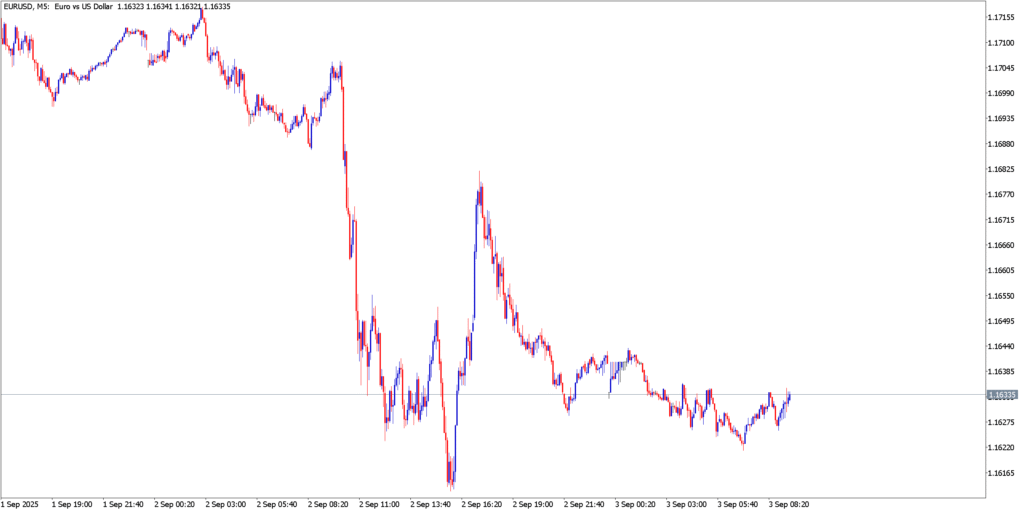
EUR/USD started the session on a choppy footing, struggling to sustain gains above the mid-1.16s. The 5-minute chart shows the pair oscillating in a range-bound chop early on, capped near the 1.1700 region and finding temporary support around 1.1630. A burst of volatility hit following the U.S. jobs data – the euro spiked and then swiftly reversed as dollar strength took hold, breaching its intraday support and tagging fresh lows near 1.1600. Technical indicators reflect this bearish tilt: the RSI hovered around the neutral 50 mark during the consolidation before dipping lower, signaling waning bullish momentum. The MACD on the M5 timeframe remains slightly below the zero line, still flashing a sell bias as its signal line trends under the baseline. The Stochastic oscillator, which had been mid-range, briefly dipped into oversold territory during the downturn and is now crawling back toward the 50 level – a sign of only a modest relief bounce so far. Overall, downside pressure is evident, with momentum favoring the bears unless new catalysts emerge.
Trading Strategy
Given the euro’s failure to hold rallies, a cautious short position is favored on recoveries. Key entry zone to watch is around 1.1680 – 1.1700, near the underside of broken support turned resistance. A target of 1.1600 (with extension toward 1.1550 on momentum) offers a favorable risk-reward, while a stop-loss above 1.1750 (just beyond this morning’s highs) protects against a trend reversal.
GBP/USD
Technicals in Focus
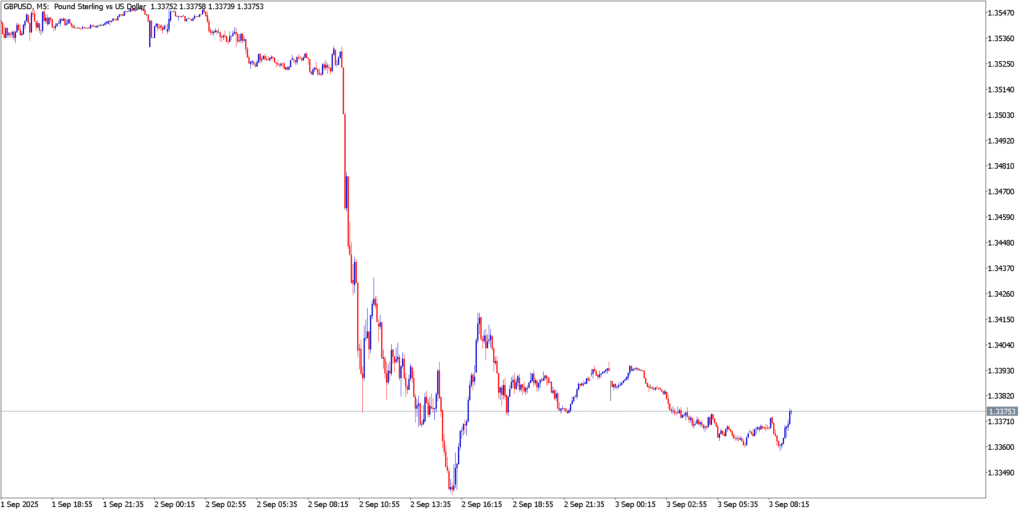
It was a wild ride for GBP/USD, which plunged dramatically amid dollar strength and only managed a tepid bounce. Early in the day, an upside surprise in UK services PMI data (August Services PMI jumped to 53.6 vs 51.8 expected, a 12-month high) gave the pound a brief lift. In the chart, this is seen as a mid-morning pop toward the 1.3450 area. However, the rally quickly fizzled as USD demand roared back – exacerbated by the U.S. labor market jitters – sending GBP/USD skidding to fresh lows around 1.3350. The pair’s inability to hold onto gains underscores a sell-the-rally market. Technicals confirm the bearish momentum: RSI readings remained subdued, staying under 50 after the drop (≈47 by late session), indicating the rebound lacked strength. MACD momentum is firmly negative, with the histogram and signal line still pointing to downside bias (the MACD line around -0.003 continues to register a sell signal). The Stochastic oscillator shows that sterling fell into oversold territory during the worst of the sell-off, and while it has since ticked up above 60 with the bounce, it now appears to be rolling over below overbought levels. This suggests the relief rally is likely running out of steam in the face of prevailing bearish pressure.
Trading Strategy
The pound’s technical tone remains weak, so selling into strength is the preferred play. A potential entry zone lies around 1.3400 – 1.3450, if prices retrace to that resistance band (near the overnight high and the 50-period M.A.). Look for a drop back toward 1.3300 as a primary target, with an extended goal near 1.3250 if bearish momentum continues. A stop-loss above 1.3470 would cap risk – just beyond the 1.3457/1.3472 resistance levels noted on the chart and technical pivots.
AUD/USD
Technicals in Focus
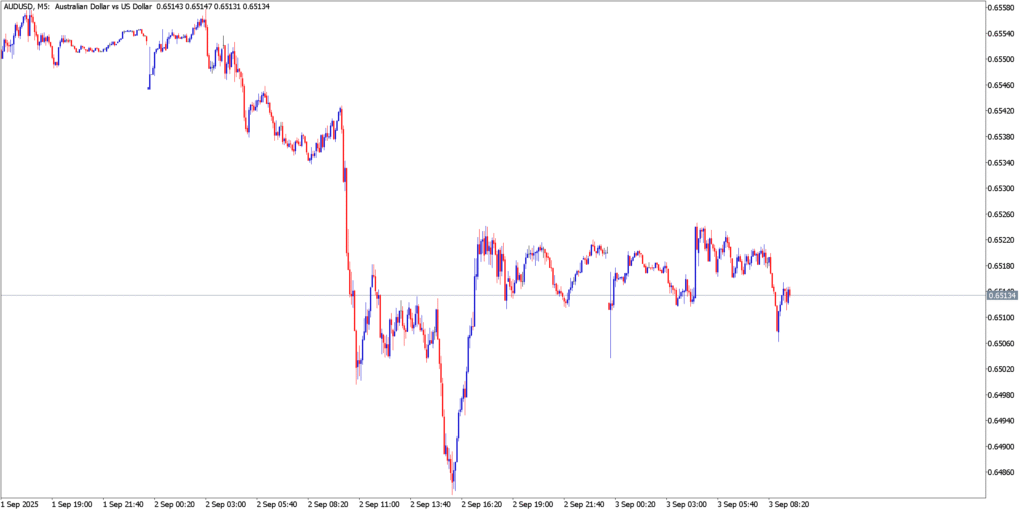
The Australian dollar experienced a whipsaw session – initially pummeled by the global wave of USD buying, then finding respite from strong domestic data. AUD/USD plunged in the first half of the day, slicing through support at 0.6550 and hitting lows near 0.6480 as risk-sensitive currencies sold off. Notably, the pair’s fortunes turned when Australia’s Q2 GDP beat forecasts, coming in at +0.6% QoQ (versus 0.5% expected) – the fastest annual growth in almost two years. This upbeat news sparked a relief rally, with AUD/USD bouncing back above 0.6520 as shorts covered and optimism over the Australian economy grew. However, the recovery lost momentum around the mid-0.65s, showing that broader risk sentiment and USD dynamics still dominated. Technically, the pair’s indicators reflect a market searching for direction. The RSI indicator recovered from deeply oversold levels to hover just above 50 after the GDP-triggered rebound (around 53, per intraday metrics), suggesting momentum has stabilized for now. The MACD has flattened out around the zero line, with its prior sell signal fading – a tentative sign that the bearish drive is pausing. Meanwhile, the Stochastic oscillator has lifted out of oversold territory into the mid-50s, but the StochRSI shows near-overbought after the sharp bounce. This juxtaposition hints that the Aussie’s rally could be running into resistance, especially if external factors (like a firm USD or risk aversion) resurface.
Trading Strategy
Given the Aussie’s two-way swings, a range-bound but cautious bearish stance is warranted. Consider selling into any rallies toward 0.6530 – 0.6550 (an area of recent supply and the R1/R2 pivot zone). A pullback target at 0.6480 – the intraday low and near S3 support – is reasonable for short-term traders, with a stretch goal to 0.6450 if risk-off sentiment intensifies. Position stops above 0.6570 to account for volatility (just beyond the week’s high), as a break above that level could signal a bullish reversal on the back of any new positive news.
Market Outlook
Looking ahead, traders are laser-focused on upcoming economic releases and central bank developments that could fuel the next market move. In the United States, attention turns to additional labor market indicators and service-sector data for confirmation of the cooling trend. Thursday’s ISM Services PMI and weekly jobless claims are on deck, and any surprise weakness could amplify expectations that the Fed will cut rates at its mid-September meeting. (Rate-futures markets are already pricing in a significant chance of a Fed rate reduction at the September 17–18 FOMC, especially after the poor jobs report – some are even betting on a half-point cut.) On the flip side, stronger-than-anticipated data would test the resolve of USD bulls by suggesting the economy isn’t down for the count.
Across the Atlantic, the European Central Bank’s next policy meeting (September 11) looms large. The ECB is widely expected to hold rates steady after its year-long easing cycle, consistent with officials like Schnabel signaling no urgent need for further cuts. Still, traders will scour every word from President Lagarde and company for clues on future stimulus or concerns about growth. Any hawkish hints could give the euro a lift, while dovish tones or downgraded forecasts might rekindle euro selling. In the UK, focus is on domestic data to guide the pound. July retail sales figures – due on Friday, Sep 5 – will be a critical barometer of consumer health (especially after June’s modest rebound). A disappointment in retail activity could reinforce the downbeat outlook for the UK and bolster the case for the Bank of England to continue easing. (Notably, the BoE has already cut rates to 4.00% in August amid easing inflation, in a split vote, so further signs of economic weakness may nudge policymakers toward additional cuts.) On the other hand, any upside surprises from the UK (or diminishing Brexit/trade anxieties) might help sterling stabilize – though for now, that appears to be an outside risk.
Broader market sentiment will also play a role. Macro risks and themes from global trade tensions to equity market swings remain intertwined with currency moves. If investors regain an appetite for risk, currencies like the AUD could find fresh support, whereas continued risk aversion would likely keep the USD and safe-haven flows in vogue. All told, the forex market enters the latter half of the week on a knife’s edge. Traders are bracing for more fireworks as data releases and central bank speak roll in, ready to adjust positions in a heartbeat. With the dollar’s bullish momentum now tied to the prospect of policy shifts, and other central banks treading cautiously, expect the unexpected – and stay nimble.