


When you’re trading with a $1,000 account, one of the most important questions you’ll face early on is, “What is the best lot size for a $1000 account?” The answer isn’t simply “use 1 lot” or “use 0.1 lot.” It comes down to how much you are willing to risk, your stop‑loss in pips, the pair you trade, and your strategy. Choosing an appropriate lot size ensures you protect your capital, stay in the game, and build experience.
Key Takeaways
- The best lot size for a $1,000 trading account is usually 0.01–0.02 lots, especially for beginners.
- Risking 1–2% per trade ($10–$20) is considered safe and helps protect small accounts.
- Your ideal lot size depends on stop-loss distance, currency pair, and pip value—not just account balance.
- Using too large a lot size (like 0.10 lot) on $1,000 can cause fast losses, large drawdowns, and possible account blow-ups.
- Proper position sizing helps you survive more trades, learn patterns, and grow your account steadily.
- A clear formula keeps risk consistent:
Lot Size = Risk Amount ÷ (Stop-Loss pips × Pip Value) - Small accounts require strict risk management, psychological discipline, and avoiding oversized trades.
Why Lot Size Matters on a $1,000 Account
Lot size determines how large your position is. If you pick a lot size that’s too big relative to your account and your stop‑loss is substantial, a single loss could wipe out a significant portion of your account. For smaller accounts like $1,000, the margin for error is much slimmer. According to risk‑management guidelines, many traders limit risk to about 1‑2% of their account per trade.
By selecting the right lot size, you make your risk per trade manageable. Rather than focusing on the largest possible gain, your initial priority should be surviving and preserving your capital so you can trade many times, learn, refine your strategy, and grow steadily.
How to Find Out Lot Size
To determine the appropriate lot size on a $1,000 account, you first decide how much of that $1,000 you are willing to risk per trade. Suppose you decide to risk 1% of your account, which equals $10. Then you pick your stop‑loss in pips based on your strategy.
For example, if your stop‑loss is 50 pips, then you calculate Lot Size = (Amount to Risk) ÷ (Stop‑Loss in Pips × Pip Value per Lot). Many educational sources explain this formula for micro/mini/standard lots.
Let’s consider a micro-lot example: On EUR/USD, a movement of 1 pip in a micro lot (0.01 lot) often equals about $0.10. So to risk $10 with a 50‑pip stop‑loss, you would use $10 ÷ (50 pips × $0.10) = 2 micro lots (which equals 0.02 lot). That gives you a risk aligned with your account size.
Lot Sizes & Approximate Risk on $1,000 Account
| Lot Size | Approx. Units (EUR/USD) | Pip Value (USD‑quoted major) | If stop-loss is 50 pips → Risk |
| 0.01 (2 micro) | 2,000 units | ~$0.20 per pip | 50 × $0.20 = $10 |
| 0.02 (4 micro) | 4,000 units | ~$0.40 per pip | 50 × $0.40 = $20 |
| 0.05 (5 micro) | 5,000 units | ~$1.00 per pip | 50 × $1.00 = $50 |
| 0.10 (1 mini) | 10,000 units | ~$1.00–$10 per pip (depends) | 50 × ~$1.00 = ~$50 |
What’s a Safe Lot Size for Your $1,000 Account?
While many educational posts claim you can trade 0.1 lot (mini lot) or even higher on a $1,000 account, the more prudent choice, especially for beginners, is much smaller, often 0.01 or 0.02 lot (micro lots). On forums, traders often argue you should risk only about 1‑2% of your account per trade. For a $1,000 account, that means $10–$20 per trade.
Choosing a 0.01 lot allows you to keep your stop‑loss at a comfortable size and still manage risk. If your strategy uses larger stop‑losses or you enter multiple trades at once, you’ll need to reduce lot size accordingly. The goal is not the maximum lot size, but the right lot size.
What Happens If You Use Too Large A Lot Size
If you open a position size that uses 0.10 lot or more on a $1,000 account and your stop‑loss is large (say 100 pips), you may risk $100 or more in one trade, which is 10% or more of your account. That level of risk may lead to large drawdowns, emotional pressure, and possibly account blow‑up. Investment sources stress that small accounts require tighter risk controls.
Another issue: larger lot sizes increase margin requirements and reduce flexibility. With less available margin, one adverse move may trigger a margin call or stop‑out. On the other hand, smaller lot sizes give you room, time, and the opportunity to learn. You survive more trades, observe patterns, refine strategy, and scale up when ready.
Additional Things to Keep in Mind
Selecting lot size isn’t just about account size and stop‑loss. You also need to consider:
- Leverage: If your account is leveraged at 1:100 or higher, even small lots carry significant risk.
- Volatility: Pairs or instruments with high volatility might warrant smaller lot sizes or tighter stops.
- Strategy timeframe: If you’re scalping, you might use smaller stops and thus slightly higher lot sizes; if you’re swing trading with larger stops, your lot size should shrink.
- Broker’s minimum lot size and increment: Make sure your broker allows micro lots (0.01) or even nano lots for precision.
- Psychological comfort: Trading on a small account can be stressful; choose a lot size you can live with if you hit a string of losses.
Final Thoughts: Best Lot Size for $1,000 Account
For a $1,000 account, the best lot size is not a fixed number but one that aligns with your risk tolerance, stop‑loss distance, trading strategy, and capital. As a general guideline, using micro lots (0.01–0.02 lot) and risking around 1% of your account ($10) per trade is a wise starting point. Over time, as your account grows and you become consistent, you may scale up lot sizes appropriately.
With smart position sizing, you give yourself the chance to learn, adapt, and grow your account steadily instead of risking big and potentially losing it fast. Keep risk first, growth second.
Ready to apply smart position sizing in a real trading environment?
Create your free trading account today with Defcofx.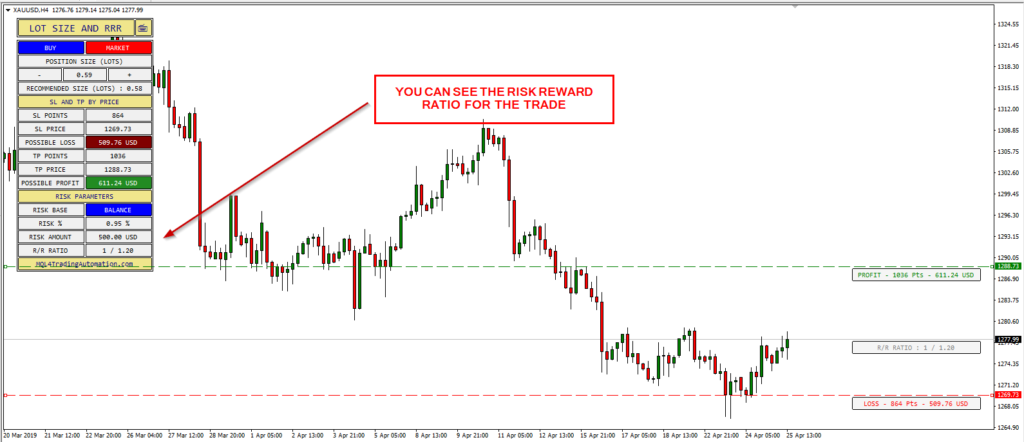
FAQs
You can, technically, if your stop‑loss is very tight (for example, under 10 pips) and you’re comfortable risking a larger percentage of your account. However, for most traders using a realistic stop‑loss of 50‑100 pips, a 0.10 lot may expose them to too much risk. It’s safer to start smaller.
Stop-loss size is key. If you have a 50‑pip stop‑loss and are risking $10, your pip value should be $0.20. Using the pip value, you calculate how many lots you can take. Larger stops mean you must reduce lot size to keep risk consistent.
When the quote currency isn’t USD (e.g., USD/JPY, EUR/JPY), pip value changes. You’ll need to convert risk to USD and use a lot size formula accordingly. Tools and calculators help here.
Risking 1% is a conservative and widely recommended guideline for traders, especially beginners. Some experienced traders may risk 2% or slightly more, but the key is preserving capital and avoiding large drawdowns.
Once you’ve proven your strategy with consistent profitability and low drawdown, you might scale up lot size or risk percentage. Also, when your account size grows (say to $5,000 or $10,000), you’ll have more margin to manage risk.
High leverage allows you to open larger positions with less margin, but it also magnifies losses. Even with micro lots, high leverage can cause large losses if the price moves strongly. Treat leverage as a risk multiplier rather than an advantage.
Yes. Instead of entering one big trade, you might open several smaller ones, each with a controlled lot size and individual risk. This diversification within your account helps manage psychological and market risk.
Defcofx Forex Articles You Shouldn’t Miss
Discover powerful forex strategies in these top reads from Defcofx.