


Scalp trading involves making many small trades in minutes, while swing trading focuses on holding trades for days or weeks. Scalp traders profit from quick market movements, whereas swing traders capture bigger trends. The best approach depends on your schedule, patience, and trading style.
Key Takeaways
- Scalp trading is fast-paced and ideal for quick profits from small price moves.
- Swing trading targets larger gains from longer-term trends.
- Scalp trading requires constant screen time, while swing trading is more flexible.
- Risk, strategy, and personality determine which suits you best.
- Platforms like Defcofx provide tools for both strategies, including tight spreads and fast execution.
What Is Scalp Trading?
Scalp trading is a method where traders buy and sell currency pairs within minutes, sometimes seconds, to take advantage of small price changes. A typical scalp trade might only aim for 5 to 10 pips of profit. The goal is to place many trades throughout the day and stack up small wins.
Scalpers use short timeframes like the 1-minute (M1) or 5-minute (M5) charts. Because of how quickly prices move, this strategy needs fast decision-making and reliable tools. A broker like Defcofx, offering low spreads and quick execution, can make a big difference.
Scalp traders often rely on:
- Price action and candlestick patterns.
- Indicators like moving averages, MACD, or Bollinger Bands.
- High liquidity during peak sessions (London/New York).
This approach can be exciting but intense. If you’re easily distracted or have a day job, scalp trading may be difficult to manage.
Open a Live Trading AccountWhat Is Swing Trading?
Swing trading takes a slower approach. Instead of making many quick trades, swing traders hold their positions for several days or even weeks. The goal is to catch a “swing,” or a large movement in price during a trend.
Swing traders use higher timeframes like the 4-hour (H4) or daily charts. They rely on a combination of technical indicators, trend lines, support/resistance levels, and sometimes fundamental analysis. It’s less stressful than scalping and doesn’t require constant screen-watching.
Swing trading is ideal for people who:
- Can only check charts once or twice a day.
- Prefer thoughtful, planned trades.
- Want to capture larger price movements.
With a solid broker like Defcofx, swing traders get access to detailed charting tools and the ability to place trades with precision, even when markets are volatile.
Time Commitment: Scalping vs Swing Trading
| Feature | Scalp Trading | Swing Trading |
| Trade Duration | Seconds to minutes | Days to weeks |
| Time on Screens | Several hours per day | 30–60 minutes per day |
| Best for | Full-time traders | Part-time or working traders |
| Monitoring Frequency | Constant | Periodic (1–2x per day) |
If you can dedicate multiple hours daily to the market, scalping trading might suit you. Otherwise, swing trading offers more flexibility with less screen time.
Risk Management Differences
Scalp traders risk a little per trade but trade more often, increasing the chance of losses due to slippage or spread widening. Because of this, tight stop-losses and instant execution are essential. Defcofx provides raw spreads and low latency to reduce execution issues.
Swing traders, on the other hand, use wider stop-losses to account for daily price swings. This means fewer trades and potentially more significant drawdowns, but also larger rewards.
Position Size Examples:
- A scalper might use 0.10 lots with a 5-pip stop-loss.
- A swing trader might use 0.05 lots with a 50-pip stop-loss.
Both strategies benefit from proper risk-reward ratios, typically 1:2 or better.
Strategy Tools for Each Style
| Tool/Indicator | Scalping Use | Swing Trading Use |
| Moving Averages | Entry/exit trigger on M1/M5 | Trend confirmation on H4/D1 |
| RSI/Stochastic | Overbought/sold scalps | Trend reversals or pullbacks |
| Fibonacci Levels | Quick bounce areas | Deep retracement analysis |
| Support/Resistance | Micro S/R zones for exits | Key zones for trend breaks |
Which Trading Style Is More Profitable for You?
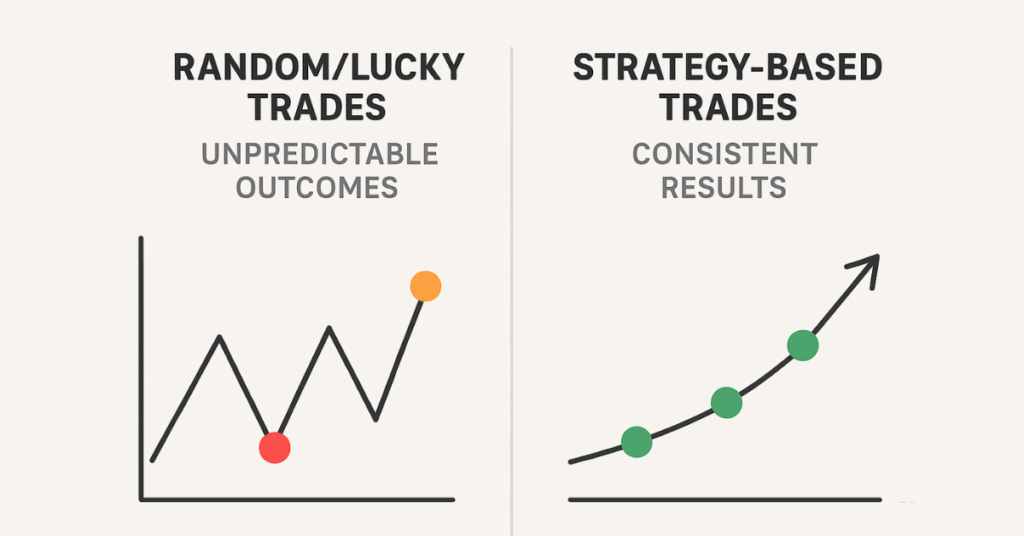
There’s no one-size-fits-all answer. Scalping can build up quick profits, but losses add up just as fast if you’re not disciplined. Swing trading offers bigger wins per trade, but it demands patience and dealing with overnight risks.
Your profit potential depends more on:
- Your trading plan
- How well you manage risk
- Emotional control
- Consistency in execution
Both styles can be profitable with practice and the right tools. Many traders even combine both: scalp when markets are fast and swing trade when trends form.
Open a demo or live account with Defcofx today and experiment with both scalping and swing trading tools. Learn which approach suits you best, without compromising on speed or reliability.
Open AccountFinal Thoughts: Scalp Trading vs Swing Trading
Choosing between scalp trading vs swing trading depends on your goals, lifestyle, and risk appetite. If you thrive under pressure and love fast trades, scalping might be your game. But if you prefer to analyze calmly and hold positions over time, swing trading may be your path.
Whichever strategy you choose, having a supportive broker like Defcofx can make the journey smoother. With tight spreads, flexible accounts, and powerful platforms, you’re equipped to succeed, one trade at a time.
Open a Live Trading AccountFAQs
Which is better for beginners: scalping or swing trading?
Swing trading is usually better for beginners because it gives more time to analyze and less pressure to act instantly. It also helps develop discipline and chart-reading skills without needing to monitor trades all day.
Can I do both scalp and swing trading?
Yes, many traders combine both. You might swing trade major trends and scalp intraday moves when markets are volatile. Just make sure you track trades separately and manage risk for each style.
What is the biggest risk in scalping?
The main risk in scalping is overtrading and poor execution. Spreads and slippage can eat into profits quickly. That’s why fast execution and tight spreads, like those offered by Defcofx, are critical for scalpers.
Is swing trading less risky than scalping?
Not necessarily. Swing trading involves holding positions longer, which means more exposure to overnight news and unexpected moves. However, swing trades are fewer, so risk can be easier to manage per trade.
What timeframes are best for each strategy?
Scalping typically uses 1-minute to 5-minute charts. Swing trading uses 4-hour or daily charts. Your timeframe choice impacts how often you trade and how much time you need to spend monitoring.
Do I need a different account for each strategy?
Not always, but it helps to separate funds or use sub-accounts for better risk control. Brokers like Defcofx let you manage multiple strategies from one platform using advanced tools and account types.
Can I swing trade with a small account?
Yes. Even with $500 or $1,000, you can swing trade using micro lots and proper risk management. Focus on quality setups, use stop-losses, and avoid risking more than 1–2% per trade.
Defcofx Forex Articles You Shouldn’t Miss
Discover powerful forex strategies in these top reads from Defcofx.
- Cease Trade Order Definition
- What Is Swap on MT4?
- How Many Trading Days in a Year?
- What Are Currency Controls? Definition, Types & Examples
- Best Currency Pairs to Trade During London Session
- How Much is 0.5 Lot Size in Dollars
- List of Major and Minor Forex Pairs
- What Is Considered the Greatest Risk Associated With Forex Settlement?
- Is NZD/USD a Major or Minor Pair?
- Trailing Stop Limit: Definition, Uses & Trading Guide