



Good stocks to invest in for beginners are usually well-established, financially stable companies with predictable performance. These stocks are easier to understand, less volatile, and suitable for new investors who want to grow wealth gradually while managing risk effectively. These stocks usually offer lower volatility, steady performance, and easier understanding, making them suitable for new investors who want to build wealth gradually while managing risk effectively.
Key Takeaways
- Good stocks to invest in for beginners are usually stable, well-known companies with predictable business models and consistent financial performance.
- Beginners should prioritize long-term growth and capital preservation instead of reacting to short-term price fluctuations.
- Low-risk and diversified stock choices help reduce the impact of market volatility for new investors.
- Understanding basic fundamentals is more important than trying to time the market.
- Choosing a reliable trading platform plays a key role in executing trades smoothly and managing investments efficiently.
What Makes a Stock Beginner-Friendly
A beginner-friendly stock is one that is easy to understand, financially stable, and less sensitive to extreme market swings. Beginners should focus on stock types that prioritize stability and gradual growth. New investors benefit most from companies that have been operating successfully for many years, as their performance is often supported by proven business models rather than speculation.
Such stocks usually belong to industries with steady demand, allowing beginners to follow company performance without needing advanced market knowledge. Strong balance sheets, consistent revenue growth, and reliable cash flow indicate that a company can withstand economic downturns better than highly speculative businesses.
Another important factor is transparency. Beginner-friendly stocks are often widely covered by analysts and financial media, making it easier for new investors to access accurate information and make informed decisions. Lower volatility and a history of long-term growth help beginners stay invested confidently without reacting emotionally to short-term market fluctuations.
Types of Stocks Beginners Should Start With
Beginners should focus on stock types that prioritize stability and gradual growth rather than rapid price swings. These stocks help new investors understand how the market works while reducing unnecessary risk and emotional decision-making.
Large-Cap Stocks
Large-cap stocks are often a strong starting point because they represent well-established companies with solid market positions and more predictable performance. These companies usually operate across multiple regions and have diversified revenue streams, which helps reduce the impact of market downturns.
Dividend-Paying Stocks
Dividend-paying stocks are another beginner-friendly option, as they offer regular income alongside potential price appreciation. Receiving dividends can help beginners stay invested long term, even during slower market periods.
Defensive Stocks
Defensive stocks operate in essential sectors such as consumer goods, utilities, or healthcare. Because demand for their products and services remains relatively stable regardless of economic conditions, these stocks typically experience lower volatility, helping beginners build confidence while investing.
Good Stocks to Invest in for Beginners (Category-Wise Breakdown)
For beginners, it helps to categorize stocks based on their stability, growth potential, and income generation. This approach simplifies decision-making and ensures a diversified portfolio.
1. Blue-Chip Stocks (Best Starting Point for Beginners)
- Established companies with strong brand recognition and consistent earnings.
- Often pay dividends, providing beginners with regular income.
- Example sectors: consumer goods, healthcare, technology.
2. Dividend Stocks
- Offer regular payouts, giving beginners both growth and income.
- Ideal for long-term investors who prefer steady returns.
- Reduces reliance on stock price appreciation alone.
3. Growth Stocks (For Beginners With Long-Term Focus)
- Companies expected to grow faster than the overall market.
- Higher potential returns but slightly more volatility.
- Good for beginners who understand long-term investing risks.
Low-risk stocks are an essential part of a beginner’s portfolio, but they are not completely risk-free. They simply tend to fluctuate less and recover faster during market downturns.
4. Index Funds or ETFs
(Optional for beginners who prefer indirect stock exposure)
- Diversify across many companies in a single investment.
- Lower risk compared to picking individual stocks.
- Helps beginners learn market trends without managing multiple positions.
Best Long-Term Stocks for Beginners
Long-term stocks are ideal for beginners because they allow investments to grow steadily over time while minimizing the stress of short-term market fluctuations. Companies with proven business models, consistent earnings, and a track record of resilience during economic cycles are the most suitable choices.
4 Key Characteristics of Long-Term Stocks:
- Consistent Revenue Growth: Companies that steadily increase profits year over year.
- Strong Market Position: Dominant or niche players in their industry with loyal customers.
- Dividend Payments: Provide additional income and reinforce long-term stability.
- Low Volatility: Less susceptible to drastic price swings, reducing beginner anxiety.
Examples of sectors that typically include long-term stocks for beginners are consumer staples, healthcare, technology, and utilities, as they usually have reliable demand and consistent performance.
If executed on a platform like Defcofx, beginners can also take advantage of high leverage options, fast support, and smooth withdrawals, making the investment process more flexible and user-friendly.
Low-Risk and Safer Stocks for Beginners
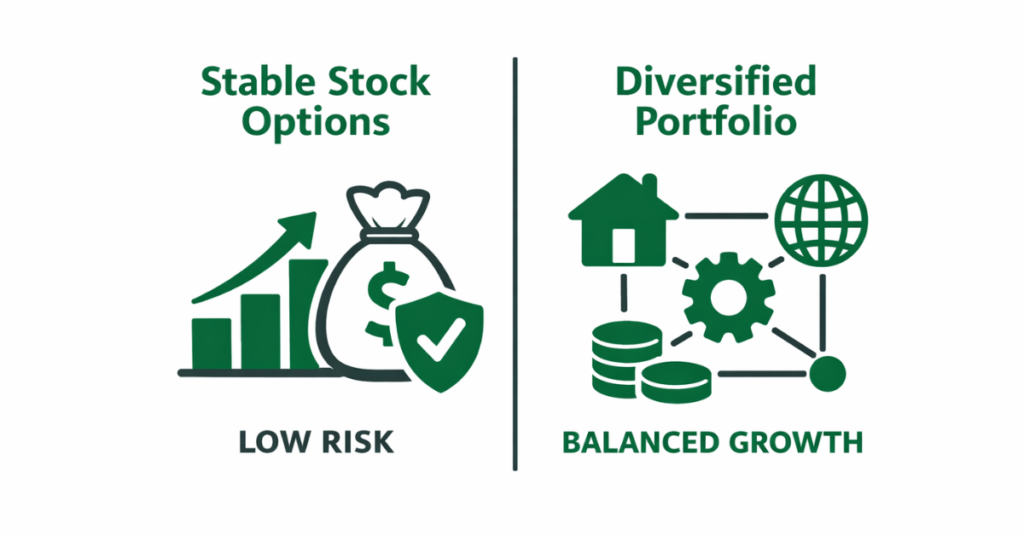
Beginners often prioritize capital preservation over rapid gains, making low-risk stocks an essential part of their portfolio. These stocks tend to have stable earnings, predictable performance, and less sensitivity to economic fluctuations. Choosing safer stocks allows new investors to learn market dynamics without the stress of volatile price swings.
4 Characteristics of Low-Risk Stocks:
- Established Market Leaders: Companies with a strong reputation and reliable operations.
- Predictable Earnings: Consistent revenue and profit growth over the years.
- Dividend Payouts: Provides regular income, which reinforces long-term wealth accumulation.
- Resilience to Economic Cycles: Performs steadily even during downturns.
Examples of Safer Stocks:
- Consumer Staples: Companies providing essential goods such as food, hygiene, and household items.
- Utilities: Energy, water, and other essential services with steady demand.
- Healthcare: Firms producing medicine and medical services, resilient during economic shifts.
Integrating Defcofx’s platform can further enhance beginner confidence in trading low-risk stocks:
- High Leverage Options: Defcofx offers flexible leverage up to 1:2000, but beginners are advised to start with low leverage to avoid unnecessary risk while learning.
- No Commissions or Swap Fees: Spreads from 0.3 pips ensure cost-effective trades.
- Fast Support and Withdrawals: Capital access within 4 business hours, including weekends.
How Much Money Do Beginners Need to Invest in Stocks
Beginners often wonder how much capital is required to start investing in the stock market. The good news is that you don’t need a large sum to begin, especially with the rise of online trading platforms and fractional shares. Starting with a manageable amount allows new investors to learn the market while controlling risk.
Beginners do not need large amounts of money to succeed. Consistency, patience, and disciplined investing matter far more than starting capital.
4 Key Guidelines for Beginner Investment Amounts:
- Start Small: Many beginners can start with as little as $100–$500 to gain hands-on experience.
- Incremental Investments: Gradually increase investment amounts as confidence and understanding grow.
- Diversification Consideration: Allocate funds across multiple stocks or sectors to reduce risk exposure.
- Leverage Opportunities: Platforms like Defcofx allow high leverage options (up to 1:2000), letting beginners explore larger positions without committing excessive capital.
Practical Tips for Beginners:
- Avoid investing money you cannot afford to lose.
- Use demo accounts first to practice before using real funds.
- Take advantage of bonuses where available; for example, Defcofx offers a 40% Welcome Bonus for first-time deposits of $1000 or more, which can give a helpful initial boost.
- Focus on long-term stocks rather than attempting to time short-term market movements.
How Beginners Can Start Investing in Stocks Step by Step
Starting in the stock market may feel overwhelming at first, but breaking the process into clear steps makes it much more manageable. The goal is to build confidence, minimize risk, and make informed decisions from the beginning.
Step 1: Learn the Basics of the Stock Market
Beginners should start by understanding basic concepts such as how stocks are traded, what influences stock prices, and the differences between growth stocks, dividend stocks, and low-risk stocks. This foundational knowledge helps prevent impulsive decisions and supports long-term investing success.
Step 2: Open a Reliable Trading Account
Choosing a trustworthy trading platform is essential. Platforms like Defcofx offer a secure environment with fast customer support, quick withdrawals, no commissions or swap fees, and flexible leverage options. Beginners should start with small investments and increase exposure gradually as confidence grows.
Step 3: Choose Beginner-Friendly Stocks
New investors should focus on large-cap, dividend-paying, or low-volatility stocks. Diversifying across different sectors helps reduce risk and protects the portfolio from the poor performance of a single stock.
Step 4: Monitor and Manage Investments Wisely
Regularly review investments without reacting emotionally to short-term market movements. Setting clear financial goals and sticking to a long-term strategy helps maintain discipline and consistency.
Step 5: Use Educational Tools and Practice Safely
Beginners can benefit from demo accounts, educational resources, and structured investment plans. These tools allow learning through practice while keeping risk low and building real-world experience.
Common Beginner Stock Investing Mistakes to Avoid
New investors often make predictable mistakes that can slow progress and limit long-term growth. Understanding these pitfalls helps beginners protect their capital, make better decisions, and build confidence over time.
Lack of Research
Buying stocks based on tips, social media hype, or trending news without proper research can lead to poor investment choices. Beginners should understand a company’s business model, financial health, and industry position before investing.
Overtrading
Frequent buying and selling in response to short-term market movements can reduce profits and increase costs. A patient, long-term approach is more effective for steady growth and lower stress.
Ignoring Diversification
Investing too heavily in a single stock or sector exposes beginners to unnecessary risk. Spreading investments across multiple stocks and sectors helps reduce volatility and maintain more stable returns.
Why Diversification Matters for Beginner Investors
Diversification is a key strategy for beginners because it spreads risk across multiple stocks or sectors, reducing the impact of any single investment’s poor performance. By avoiding the concentration of capital in one company or industry, beginners can achieve more stable returns while learning how different markets behave.
Investing in a mix of blue-chip stocks, dividend-paying stocks, and growth stocks allows new investors to balance income and growth potential. Even within a single sector, selecting companies with different business models and market positions can further minimize risk.
Choosing the Right Trading Platform as a Beginner

Selecting the right trading platform is critical for beginners because it directly affects how smoothly they can execute trades, access market data, and manage investments. A platform should be user-friendly, secure, and reliable, with tools that support learning and decision-making.
Key features to look for include intuitive interface, educational resources, and real-time market data. Beginners benefit from demo accounts to practice without risking real money, as well as mobile accessibility to monitor investments on the go.
Using a beginner-friendly platform ensures smoother trades, faster execution, and confidence when exploring different stocks and investment strategies.
Why Defcofx is Beginner-Friendly
- High Leverage Options: Up to 1:2000 for flexible capital use.
- No Commissions or Swap Fees: Low spreads from 0.3 pips for cost-effective trading.
- Global Reach: Accepts clients from all countries with multi-language support.
- Fast Support and Withdrawals: Withdrawals processed within 4 business hours, including weekends.
By combining a strong platform with beginner-focused stocks and risk management strategies, new investors can start building a stable, long-term portfolio with confidence.
Open a Live Trading AccountRisk Management Tips for Beginner Stock Investors
Effective risk management is essential for beginners to protect their capital and make informed investment decisions. Even well-researched stocks can lead to unexpected losses without proper risk controls in place.
Use Proper Position Sizing
Invest only a small portion of your total capital (typically 5–10%) in a single stock to limit exposure and preserve capital. This limits the impact of any one investment performing poorly and helps preserve your overall portfolio balance.
Set Stop-Loss Orders
Stop-loss orders automatically close a position if a stock moves against your expectations. This helps beginners control losses and avoid emotional decision-making during market fluctuations.
Diversify Your Portfolio
Spreading investments across different sectors and stock types reduces risk. A mix of blue-chip, dividend-paying, and growth stocks allows beginners to balance stability with potential returns.
Use Leverage Cautiously
While platforms like Defcofx offer leverage options up to 1:2000, beginners should use leverage conservatively. Excessive leverage can magnify losses just as quickly as gains, so starting with low or no leverage is recommended.
Open a Live Trading AccountFAQs
Beginners should focus on stable, well-established companies with consistent earnings, such as large-cap, dividend-paying, or low-volatility stocks. These provide predictable performance and reduce exposure to high-risk market swings.
You can start with as little as $100–$500, gradually increasing your investment as you gain confidence. Platforms like Defcofx also allow high leverage options (up to 1:2000) for flexible trading with smaller capital.
Both options are viable. Individual stocks provide hands-on learning and potential for growth, while ETFs offer diversification across multiple companies, reducing risk for new investors.
Do thorough research, avoid overtrading, diversify investments, set clear goals, and manage risk. Using a beginner-friendly platform like Defcofx ensures smoother execution and access to resources to support informed decisions.
High leverage can amplify gains but also increases potential losses. Beginners should use leverage cautiously and understand risk management strategies to avoid major financial setbacks.