


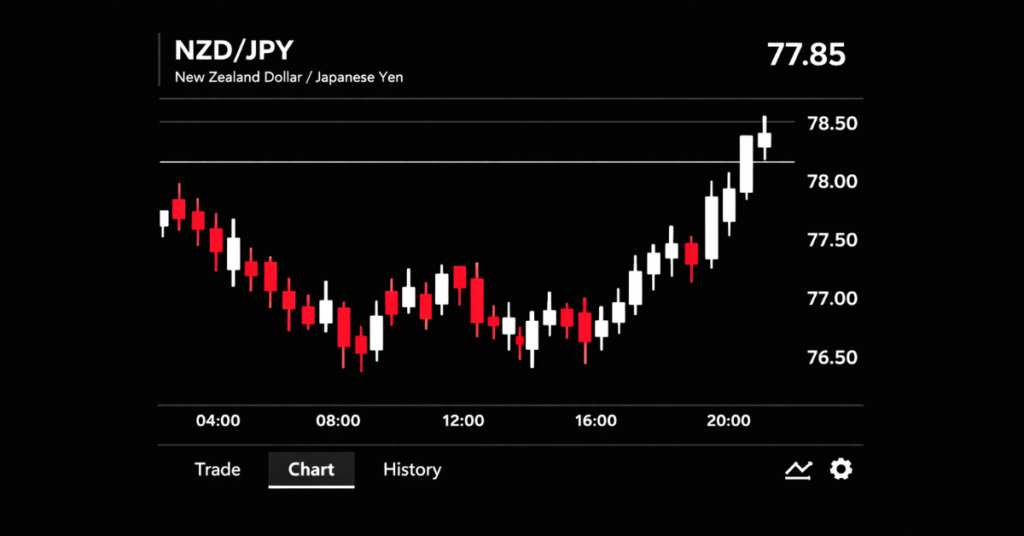
No, NZD/JPY is not a major currency pair. It is classified as a minor (cross) pair because it does not include the US Dollar. Despite this, traders actively trade NZD/JPY due to its volatility, carry trade potential, and sensitivity to global market sentiment.
Key Takeaways
- NZD/JPY is classified as a minor (cross) currency pair, not a major one
- It does not include the US Dollar, which is required for major pairs
- The pair is known for its high volatility, creating both opportunities and risks
- It is heavily influenced by interest rate differences between New Zealand and Japan
- Commonly used in carry trade strategies due to rate differentials
- Better suited for traders who understand risk management and market timing
What Type of Currency Pair Is NZD/JPY?
NZD/JPY represents the exchange rate between the New Zealand Dollar (NZD) and the Japanese Yen (JPY). In the forex market, it is classified as a cross currency pair, meaning it does not include the US Dollar.
To understand its classification clearly, currency pairs are generally divided into three main categories. Major pairs always include the US Dollar and are the most liquid and widely traded. Minor pairs, also known as cross pairs, exclude the US Dollar but still involve strong global currencies. Exotic pairs, on the other hand, combine a major currency with one from a smaller or emerging economy.
NZD/JPY falls into the minor pair category because both the New Zealand Dollar and Japanese Yen are established currencies, but neither is the US Dollar. This makes the pair slightly less liquid than majors, yet still highly tradable and popular among traders seeking volatility and diversification.
Why NZD/JPY Isn’t a Major Currency Pair
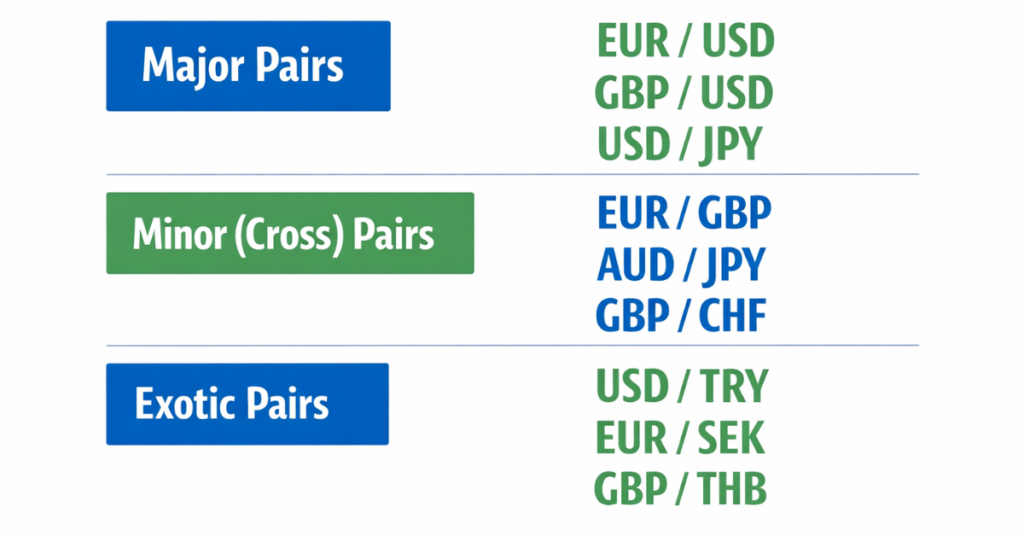
NZD/JPY isn’t considered a major currency pair because it does not meet the key requirement that defines majors, the inclusion of the US Dollar. All major pairs, such as EUR/USD or USD/JPY, revolve around the US Dollar due to its dominant role in global trade and finance.
Another important factor is liquidity. Major pairs have the highest trading volume in the forex market, which leads to tighter spreads and more stable price movements. In contrast, NZD/JPY has relatively lower liquidity, meaning price movements can be more aggressive and spreads slightly wider during certain market conditions.
Additionally, institutional and central bank activity is heavily concentrated in USD-based pairs, further reinforcing their “major” status. Since NZD/JPY operates outside this core structure, it is classified as a minor (cross) pair, even though it remains popular among traders for its strong price movements and trading opportunities.
NZD/JPY Pair Characteristics
NZD/JPY is widely recognized for its active price behavior, driven by the contrasting economic profiles of New Zealand and Japan. Unlike many major pairs that often move within tighter ranges, NZD/JPY tends to produce larger and more frequent price swings, creating opportunities for traders who prefer volatility.
One of the most important characteristics of this pair is its volatility pattern, which is closely tied to global market sentiment. When investors are optimistic and willing to take risks (“risk-on” conditions), the New Zealand Dollar often strengthens. In contrast, during uncertain or unstable market conditions (“risk-off”), the Japanese Yen commonly viewed as a safe-haven currency gains strength, pushing the pair downward.
Another key factor is liquidity and spread behavior. While NZD/JPY is actively traded, it does not reach the liquidity levels of major USD-based pairs. As a result, spreads can be slightly wider, especially during off-peak trading hours.
Key Characteristics Overview
| Characteristic | Behavior in NZD/JPY |
| Volatility | High compared to major pairs |
| Liquidity | Moderate (lower than majors) |
| Spread | Slightly wider than major pairs |
| Market Influence | Strongly affected by global risk sentiment |
| Price Movement | Trend-driven with momentum phases |
From a trading perspective, NZD/JPY often exhibits clear trends, making it suitable for technical analysis approaches such as trend-following and breakout strategies. Traders frequently rely on indicators like moving averages or support/resistance levels to identify entry and exit points.
What Affects NZD/JPY Price Movements?
NZD/JPY price movements are influenced by a combination of macroeconomic factors, interest rate differentials, and global market sentiment. Because this pair represents two economically distinct countries New Zealand and Japan it tends to react strongly to both domestic developments and international financial conditions.
One of the most significant drivers is the interest rate differential between the two countries. New Zealand typically offers higher interest rates compared to Japan, which historically maintains very low or near-zero rates. This difference encourages carry trade strategies, where traders borrow in JPY (low interest) and invest in NZD (higher interest) to profit from the rate gap.
Another major influence is global risk sentiment. NZD is considered a “risk-on” currency, meaning it tends to strengthen when investors are confident. In contrast, the Japanese Yen is a “safe-haven” currency that gains value during periods of uncertainty or market stress.
Key Factors Influencing NZD/JPY
- Interest rate decisions by the Reserve Bank of New Zealand (RBNZ) and Bank of Japan (BoJ)
- Inflation data and GDP growth from both countries
- Commodity prices (especially dairy exports for New Zealand)
- Global equity market performance
- Risk-on vs risk-off market environments
In addition, commodity exposure plays an indirect role in NZD valuation. New Zealand’s economy relies heavily on exports such as dairy and agricultural goods, so fluctuations in global commodity demand can impact the NZD side of the pair.
Is NZD/JPY a Good Pair to Trade?
NZD/JPY can be a good pair to trade, but its suitability largely depends on a trader’s experience level, strategy, and risk tolerance. Because it is a minor (cross) currency pair, it behaves differently from major pairs and tends to offer both higher opportunity and higher risk.
One of the main advantages of trading NZD/JPY is its strong volatility, which creates frequent price movements and trading opportunities. Traders who rely on short-term strategies such as breakout trading or swing trading often find this pair appealing due to its tendency to form clear trends.
However, this same volatility can also be a disadvantage. Sudden price reversals and sharp movements may lead to losses if proper risk management is not applied. For beginners, this means NZD/JPY can be challenging without a solid understanding of market behavior.
Advantages
- High volatility creates more trading opportunities
- Clear trend structures suitable for technical analysis
- Potential for profit in both short-term and medium-term strategies
Disadvantages
- Higher risk due to sharp price swings
- Sensitive to global economic and sentiment changes
- Requires active monitoring and strong risk management
Best Time to Trade NZD/JPY
The best time to trade NZD/JPY is during periods of higher market activity when liquidity and volatility are sufficient to create meaningful price movements. Since this pair involves the Japanese Yen and New Zealand Dollar, trading activity is most relevant during the Asian trading session and overlaps with other sessions.
During the Asian session, both Japan-related market activity and New Zealand economic influences are more active. This is typically when NZD/JPY experiences more consistent movement compared to quieter periods of the day. Additionally, when the Asian session overlaps with the early European session, volatility can increase further due to broader market participation.
NZD/JPY does not rely heavily on a single session like some USD-based pairs, but it still tends to respond best when multiple markets are active simultaneously.
Trading Session Overview
| Session | Activity Level for NZD/JPY | Notes |
| Asian Session | High | Most relevant for JPY-related movements |
| European Session | Moderate | Overlap increases volatility |
| US Session | Lower–Moderate | Indirect influence via global sentiment |
Traders should also pay attention to economic news releases from New Zealand and Japan, as well as global risk sentiment events. These can temporarily increase volatility regardless of the session, creating additional trading opportunities.
NZD/JPY Trading Strategies
Trading NZD/JPY effectively requires strategies that align with its volatility, trend behavior, and sensitivity to macroeconomic factors. Because this pair often moves in strong directional phases, many traders prefer strategies that capitalize on momentum rather than ranging conditions.
One of the most commonly used approaches is the carry trade strategy. This involves taking advantage of the interest rate difference between New Zealand and Japan. Since New Zealand typically offers higher interest rates compared to Japan, traders may hold long positions in NZD/JPY to benefit from potential interest rate differentials, in addition to price appreciation.
Another widely used method is trend-following. NZD/JPY often develops clear upward or downward trends, especially during periods of strong market sentiment. Traders use tools such as moving averages, trendlines, and momentum indicators to identify and ride these trends.
Breakout trading is also effective for this pair. NZD/JPY frequently consolidates before making sharp moves, and breakouts from support or resistance levels can signal the beginning of strong price movements.
Common NZD/JPY Strategies Overview
| Strategy | Description | Best Use Case |
| Carry Trade | Profit from interest rate differences | Long-term positions |
| Trend Following | Trade in direction of market momentum | Trending markets |
| Breakout Trading | Enter after price breaks key levels | Volatile market phases |
| Swing Trading | Capture medium-term price moves | Mixed conditions |
NZD/JPY vs Major Pairs (Comparison Table)
Understanding how NZD/JPY compares to major currency pairs helps clarify why it behaves differently in the forex market. Major pairs such as those involving the US Dollar typically have higher liquidity, tighter spreads, and more stable price movements. In contrast, NZD/JPY is a cross pair with comparatively higher volatility and less liquidity.
This difference plays a significant role in how traders approach each type of pair, especially in terms of strategy selection, risk management, and cost considerations.
Comparison of NZD/JPY vs Major Currency Pairs
| Feature | NZD/JPY (Minor Pair) | Major Pairs (e.g., EUR/USD, USD/JPY) |
| Liquidity | Moderate | Very High |
| Volatility | Higher | Relatively Lower |
| Spread | Wider | Tighter |
| USD Involvement | No | Yes |
| Market Influence | Global sentiment + rates | USD-driven global factors |
| Trading Behavior | Trend-heavy, volatile | More stable, predictable |
NZD/JPY’s higher volatility can be beneficial for traders looking for larger price movements, but it also increases exposure to risk. On the other hand, major pairs are often preferred by beginners due to their stability and lower trading costs.
How to Trade NZD/JPY (Step-by-Step)

Trading NZD/JPY involves a structured approach that combines market analysis, proper execution, and disciplined risk management. Because this pair is a minor (cross) currency pair, understanding its volatility and behavior is essential before placing any trades.
Step 1: Choose a Reliable Forex Broker
Select a broker that provides access to NZD/JPY with competitive trading conditions such as tight spreads, fast execution, and stable platforms. For traders seeking flexibility, features like high leverage and low trading costs can enhance trading efficiency.
Step 2: Open and Fund Your Trading Account
After selecting a broker, complete the account registration process and verify your identity if required. Deposit funds using the available payment methods to begin trading.
Step 3: Analyze the Market
Before entering a trade, perform both:
- Technical analysis (trendlines, support/resistance, indicators)
- Fundamental analysis (interest rates, economic data, risk sentiment)
This helps you understand whether NZD/JPY is trending or consolidating.
Step 4: Place Your Trade
Decide whether to go long (buy NZD/JPY) or short (sell NZD/JPY) based on your analysis. Set your entry, stop-loss, and take-profit levels to define your risk and reward.
Step 5: Manage Risk Effectively
Risk management is critical when trading volatile pairs like NZD/JPY. Always:
- Use stop-loss orders
- Avoid overleveraging
- Maintain proper position sizing
Costs of Trading NZD/JPY
When trading NZD/JPY, understanding the associated costs is essential because they directly impact overall profitability, especially for short-term traders. The primary cost components include spreads and, in some cases, commissions.
Spreads
The spread is the difference between the bid and ask price of a currency pair. NZD/JPY typically has moderate spreads compared to major pairs. While not as tight as highly liquid USD-based pairs, spreads are still relatively competitive, making the pair tradable for most strategies.
Commissions
Some brokers charge a commission per trade, while others include their fees within the spread. The structure varies depending on the account type and broker conditions.
Cost Comparison Overview
| Cost Type | NZD/JPY | Major Pairs |
| Spread | Moderate | Very Low |
| Commission | Depends on broker | Often low or embedded |
| Overall Cost Efficiency | Medium | High |
Risk Management for NZD/JPY
Risk management is one of the most critical aspects of trading NZD/JPY due to its relatively high volatility and sensitivity to global market conditions. Without proper controls, even well-planned trades can be affected by sudden price swings.
One of the first principles is the consistent use of stop-loss orders. A stop-loss helps limit potential losses by automatically closing a trade when the market moves against your position beyond a predefined level. This is especially important for NZD/JPY, where price movements can accelerate quickly during volatile sessions.
Position sizing is another essential factor. Traders should avoid risking a large portion of their capital on a single trade. Instead, maintaining a fixed percentage risk per trade helps ensure long-term sustainability.
Leverage should also be used carefully. While leverage can amplify profits, it can equally increase losses if not managed properly. NZD/JPY’s volatility makes it particularly sensitive to overleveraging, which can lead to rapid account drawdowns.
Why Broker Choice Matters for NZD/JPY
Choosing the right broker plays a crucial role when trading NZD/JPY because the pair’s performance is directly influenced by execution quality, trading costs, and withdrawal efficiency. Since NZD/JPY is a volatile cross currency pair, even small differences in spreads or execution speed can significantly impact trading outcomes.
A reliable broker should provide stable pricing, fast order execution, and transparent costs. These factors become especially important during high-volatility periods when price movements can be rapid and slippage may occur. Additionally, consistent liquidity access helps ensure that trades are executed at expected prices.
Key Broker Considerations for NZD/JPY
- Tight and stable spreads to reduce trading costs
- Fast execution to handle volatile price movements
- Reliable withdrawal processing for smooth fund access
- Global accessibility for traders from different regions
- Flexible account conditions suitable for different strategies
Why Some Traders Consider Defcofx
Some traders prefer brokers that offer conditions aligned with active trading styles. For example, features such as high leverage up to 1:2000, low spreads starting from 0.3 pips, and no commissions or swap fees can support cost-efficient trading strategies. Additionally, fast withdrawals (within 4 business hours) and global accessibility make the platform convenient for international traders.
Open a Live Trading AccountFAQs
No, NZD/JPY is not a major currency pair. It is classified as a minor or cross pair because it does not include the US Dollar. Major pairs always involve the USD, while NZD/JPY consists of two non-USD currencies.
NZD/JPY is popular due to its volatility and responsiveness to global market sentiment. Traders often use it for trend-following strategies and carry trades, especially when interest rate differentials between New Zealand and Japan are significant.
It can be suitable, but beginners should approach it with caution. Its higher volatility means price movements can be fast and unpredictable. Beginners should prioritize risk management and gain experience before trading volatile cross pairs.
The pair is influenced by interest rates, economic data from New Zealand and Japan, and global risk sentiment. When markets are optimistic, the New Zealand dollar often strengthens, while during uncertainty, the Japanese yen tends to gain strength.
Yes, NZD/JPY can be used for long-term trading strategies such as swing or position trading. Its trends can last for extended periods, especially when driven by macroeconomic factors like interest rate divergence.
The best time to trade NZD/JPY is during periods of higher market activity, typically when both the Asian and Pacific sessions overlap. This is when liquidity and volatility are generally higher, creating more trading opportunities.
Final Thoughts on NZD/JPY being a Major Currency
NZD/JPY is not a major currency pair because it does not include the US Dollar. Instead, it is classified as a minor (cross) pair. However, it remains popular among traders due to its volatility, responsiveness to global market sentiment, and suitability for various trading strategies such as trend trading and carry trades.
This pair is influenced by both the New Zealand and Japanese economies, particularly interest rate differentials and risk appetite in global markets. When risk sentiment is positive, NZD/JPY often strengthens, while during uncertainty, it may weaken as traders move toward safer assets like the Japanese yen.