


Friday closed the week with markets still focused on the same core issue: whether the U.S.-Iran ceasefire extension could become a durable agreement. Reports that Washington and Tehran may extend their ceasefire continued to pressure oil prices and the dollar, while giving risk assets room to stabilize.
The broader dollar picture was mixed across timeframes. On the day and week, the dollar weakened as ceasefire optimism reduced safe-haven demand and lowered inflation pressure. The WSJ Dollar Index fell 0.35% for the week, its largest weekly drop since early May. But for the month, the index still rose 0.61%, its strongest monthly gain since March, reflecting how much support the dollar had gained earlier from high yields and war-driven inflation risk.
Gold also reflected that tension. It rose more than 1% on Friday as the weaker dollar and lower oil supported bullion, but it remained on track for a monthly decline because persistent inflation concerns and expectations of higher interest rates had weighed on the metal throughout May.
At the global level, May had been defined by a violent bond-market repricing. Reuters reported that the 30-year U.S. Treasury yield surged to around 5.2% on May 20, its highest since 2007, as the Iran war roiled global bond markets. Yields in the U.S., Britain, Japan, and Germany all reached multi-year or multi-decade highs during the month.
Friday therefore ended not just a volatile week, but a volatile month in which geopolitics, oil, inflation expectations, and central-bank policy all collided.
GBP/USD
Technical Analysis
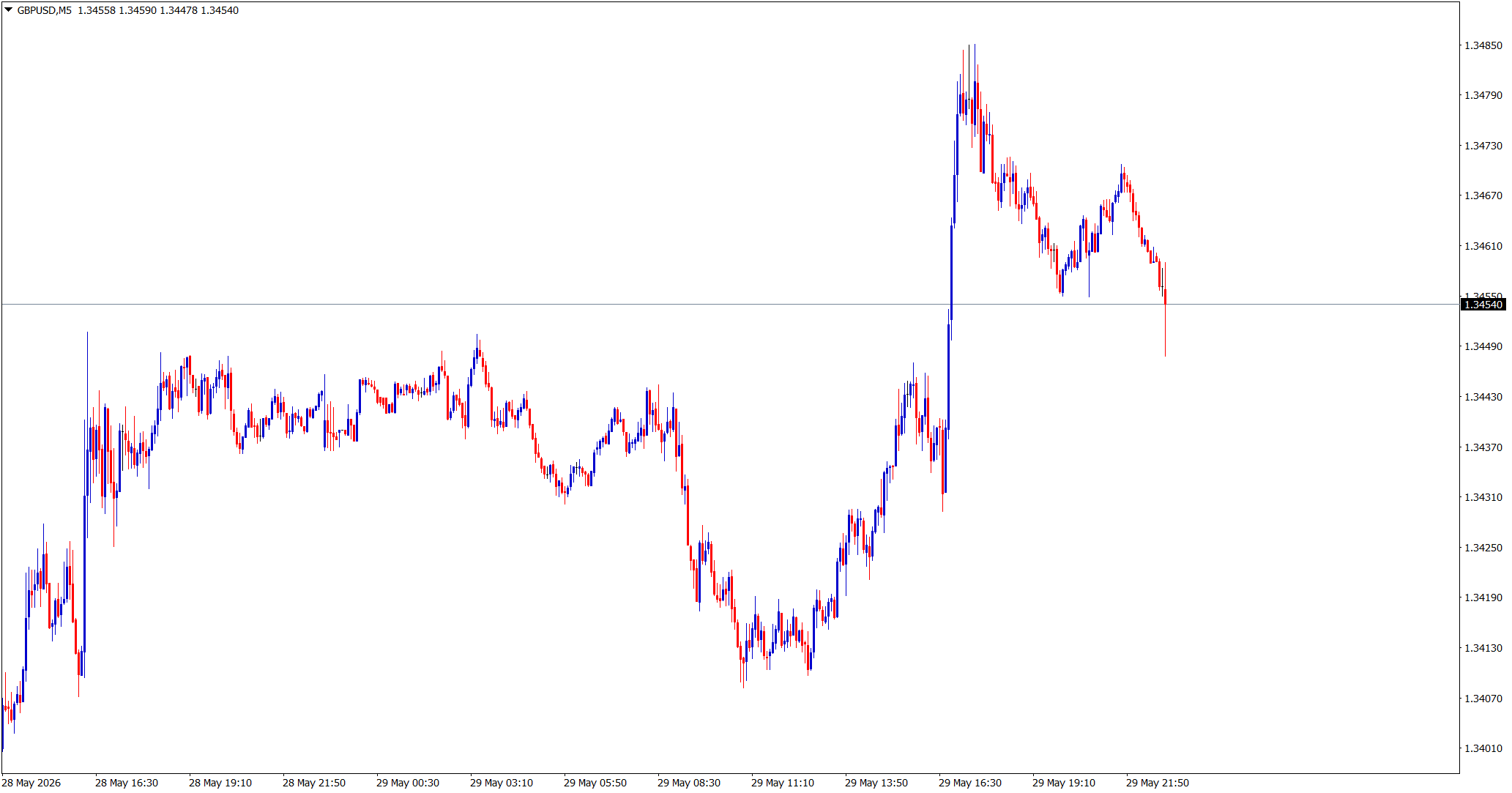
GBP/USD faced renewed pressure on Friday, underperforming several other dollar pairs. Sterling fell around 0.3%, reflecting both domestic UK uncertainty and broader caution into month-end.
Technically, the pair looked less constructive than EUR/USD. While the weaker dollar should have supported sterling, the pound struggled to capitalize fully. That suggests that GBP/USD was being weighed down by local political risk rather than simply tracking the broader dollar move.
The pair remained within its broader May range, but momentum was less positive than earlier in the month.
Fundamental Analysis
The pound was pressured by political uncertainty in the UK. The WSJ report highlighted concerns that Andy Burnham could challenge Prime Minister Keir Starmer’s leadership, adding a domestic political risk premium to sterling.
That mattered because GBP/USD had previously benefited from the easing of energy fears and dollar weakness. But on Friday, local political uncertainty limited sterling’s ability to rally alongside other currencies.
At the same time, the UK economy remains sensitive to the broader global backdrop. Higher yields, energy uncertainty, and weak domestic data have all weighed on the pound at different points in May. Even with ceasefire optimism helping global sentiment, sterling remained vulnerable because traders were reluctant to add long GBP exposure into political uncertainty.
USD/CAD
Technical Analysis
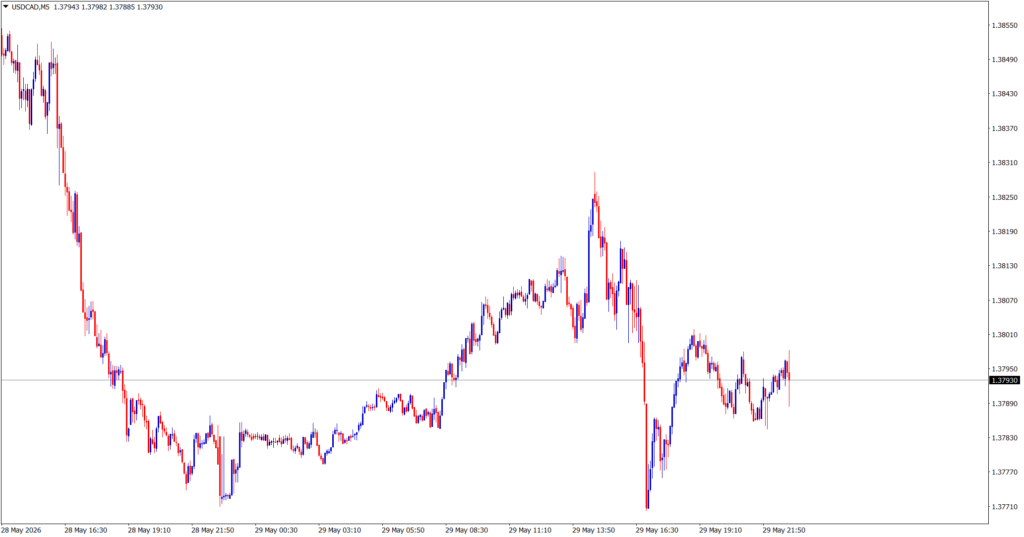
USD/CAD held relatively firm despite broader dollar softness. The pair did not move sharply higher, but it also did not break lower decisively, suggesting that CAD was not receiving strong enough support from the macro backdrop.
Technically, USD/CAD remained range-bound, with the pair continuing to respect both support and resistance zones. The loonie’s earlier strength had faded as oil prices softened, and Friday’s price action reinforced the idea that CAD’s upside is limited when crude is falling.
Fundamental Analysis
The Canadian dollar was caught between two opposing forces.
On one hand, the softer U.S. dollar should have supported CAD. On the other, ceasefire optimism pushed oil lower, reducing one of the Canadian dollar’s key sources of support. Since Canada is a major energy exporter, weaker crude prices tend to limit CAD strength.
This created a situation where USD/CAD did not fully participate in the broader anti-dollar move. The pair stayed relatively stable because dollar weakness and weaker oil effectively offset each other.
In broader terms, Canada’s economy remains tied to both commodity prices and U.S. demand. With oil under pressure and global markets reassessing inflation risks, traders were cautious about pushing the loonie too far higher.
XAU/USD
Technical Analysis
Gold rose more than 1% on Friday, extending Thursday’s rebound from a two-month low. Spot gold climbed 1.5% to $4,556.84 per ounce, while U.S. gold futures settled 1.3% higher at $4,593.
Technically, gold’s recovery was important because Reuters noted it had bounced from a key support zone. The metal is approaching a potential turning point that could determine whether it extends this year’s losses or builds a recovery base.
The rebound helped repair some of the short-term technical damage from earlier in the week, but gold remained vulnerable on the monthly chart because May’s yield surge had severely pressured non-yielding assets.
Fundamental Analysis
Gold benefited from the same forces that weighed on the dollar: ceasefire optimism, lower oil prices, and reduced inflation pressure. A weaker dollar makes gold cheaper for international buyers, while easing yields reduce the opportunity cost of holding the metal.
Reuters noted that optimism over the ceasefire extension pushed oil prices and the dollar lower, both supportive for bullion.
However, gold was still heading for a monthly decline because the broader May environment was hostile. Inflation concerns, high Treasury yields, and expectations of tighter Fed policy weighed heavily on precious metals. The month’s bond-market shock was a major headwind, with long-dated U.S. yields reaching levels not seen since 2007.
So Friday’s gold rally was meaningful, but not yet a full reversal of the monthly bearish pressure.
Market Outlook
May 29 closed a volatile month with the dollar softer on the week but stronger on the month. That contrast captures the broader FX environment perfectly.
The short-term story is that ceasefire optimism has weakened the dollar, lowered oil prices, and helped gold recover. The medium-term story is that May still delivered a major bond-market shock, persistent inflation anxiety, and a stronger monthly dollar performance.
Looking ahead:
- If the ceasefire extension is approved and Hormuz reopening becomes credible, the dollar could remain under pressure.
- If oil falls further, EUR/USD may benefit more than USD/CAD because lower crude helps energy importers but limits CAD strength.
- If Treasury yields stabilize or decline, gold could continue rebounding from support.
- If inflation fears return, the dollar and yields could recover quickly, putting pressure back on XAU/USD and EUR/USD.
For now:
- GBP/USD is being held back by UK political uncertainty.
- USD/CAD remains range-bound because lower oil offsets dollar weakness.
- XAU/USD has staged an important rebound but remains vulnerable on the monthly trend.
- The dollar has lost near-term momentum, but its broader yield advantage has not disappeared.