


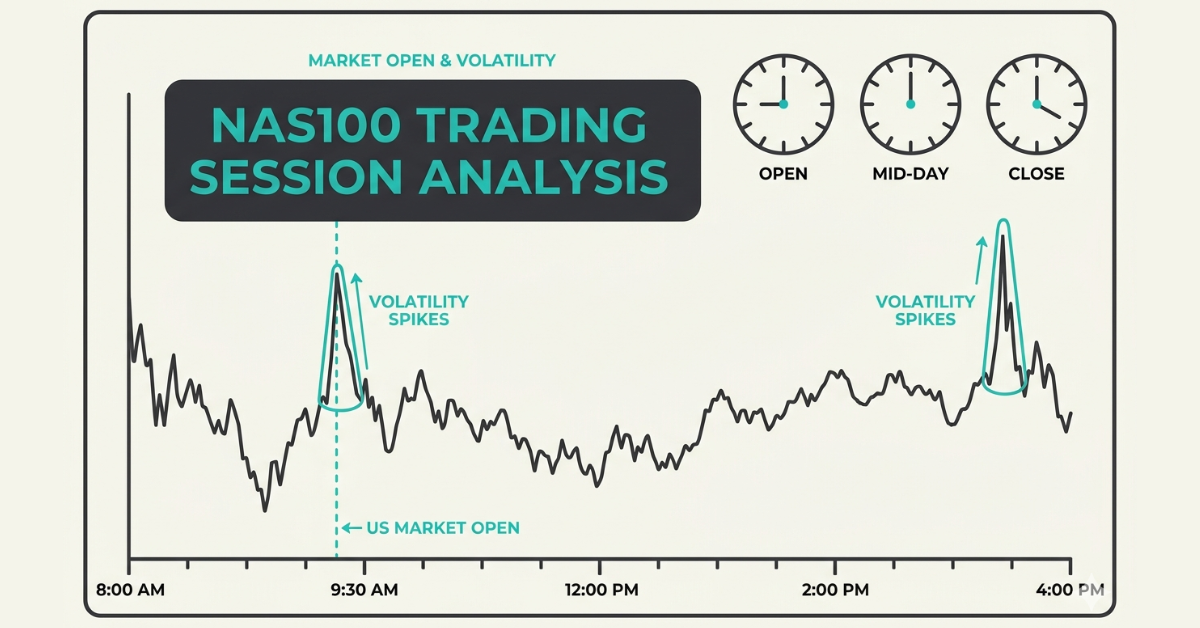
The US100, also known as the NASDAQ 100 Index, is one of the world’s most actively traded indices. Its tech-heavy composition and high volatility create frequent opportunities for beginners and experienced traders alike. The right strategy, matched to the right condition, helps you navigate its swings while keeping risk under control.
Key Takeaways
- The US100 tracks 100 of the largest non-financial companies listed on the NASDAQ Stock Exchange.
- Each strategy below fits a different market condition, there’s no single ‘best’ approach for every session.
- Economic news and earnings reports can significantly impact the index.
- Risk management is just as important as choosing the right strategy.
- Combining technical analysis with market fundamentals can improve trading decisions.
Why Is the US100 Popular With Traders?
The US100 combines high liquidity with consistent price movement. Institutions, hedge funds, and retail traders all participate every day, which keeps volume and opportunity high.
It also reacts strongly to Federal Reserve decisions, inflation reports, and earnings from large technology companies, which often generates significant volatility, making it attractive for both day traders and swing traders.
It also tends to follow well-defined trends, which is why technical analysis works reasonably well on it.
1. Trend-Following Strategy
Definition: Identify the prevailing direction and trade with that momentum, rather than trying to predict a reversal.
Best used when: the US100 is in a clear, sustained trend with higher highs and higher lows (or the reverse). Traders buy pullbacks in bull markets and sell rallies in bear markets, using moving averages or trendlines to confirm direction first.
Benefit: trends on the US100 can run for days or weeks, so one well-timed entry can capture a much larger move than short-term setups.
When not to use it: in a sideways, range-bound market, where trend signals whipsaw and generate false entries.
2. Breakout Trading Strategy
Definition: Identify key support and resistance levels, then enter once the price closes beyond one of them with increased momentum.
Best used when: the US100 has been consolidating in a tight range and volume starts to build, often around a major economic release or a batch of technology earnings.
Benefit: you get positioned right as a new move begins, which can offer some of the best risk-to-reward ratios here if the breakout holds.
When not to use it: in quiet, low-volume sessions, or in the minutes before a scheduled announcement, when price often fakes a move before reversing hard.
3. Pullback Trading Strategy
Definition: Wait for a temporary retracement within an established trend, then enter as the trend resumes, instead of chasing the initial move.
Best used when: the broader trend is already well established and the price pulls back to a logical zone, such as a moving average, a Fibonacci level, or a prior support or resistance area.
Benefit: entering on a retracement typically gives a tighter stop and a better risk-to-reward ratio than buying or selling into a move that’s already run.
When not to use it: when the broader trend isn’t clear yet, or during strong one-directional runs where pullbacks are too shallow and fast to catch.
Patience is essential; entering before the pullback has actually finished is the most common way this strategy goes wrong.
4. Opening Range Breakout Strategy
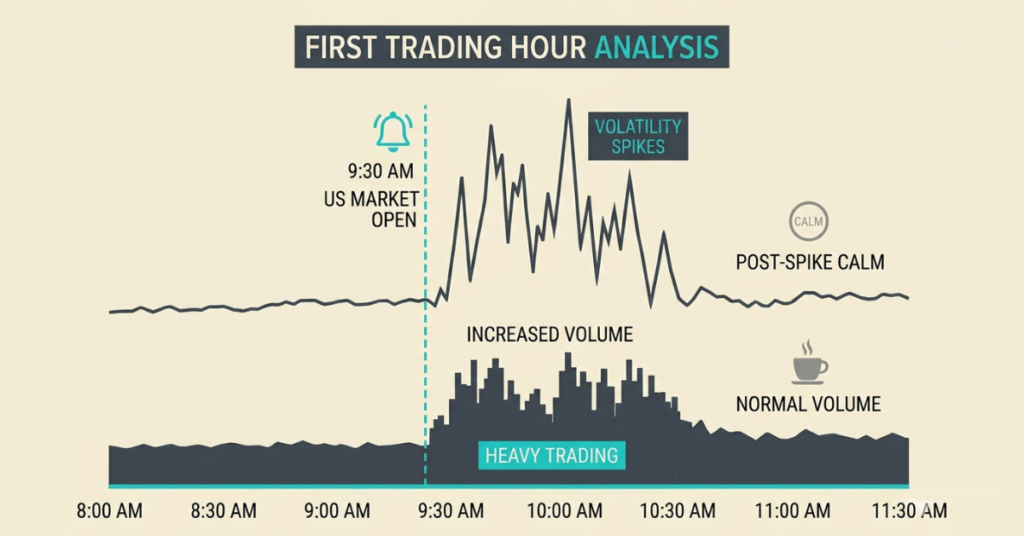
Definition: Mark the high and low of the range formed in the opening minutes of the U.S. session, then trade a breakout above or below it.
Best used when: the first hour after the U.S. market opens, typically the most volatile window of the day, especially with data or earnings scheduled around the open.
Benefit: a clear, rules-based setup with an obvious level for stop placement and momentum that can carry through the rest of the session.
When not to use it: on quiet days with no scheduled catalysts, when the opening range stays narrow, and when breakouts from it tend to fail.
Discipline matters here too; entering before the market has established a clear direction out of the range tends to produce more losses than wins.
5. News Trading Strategy
Definition: Take positions around scheduled high-impact news or earnings that are likely to move the index sharply within minutes.
Best used when trading around a specific catalyst, inflation data, employment figures, GDP, interest rate decisions, Fed commentary, or earnings from heavyweight names like Apple, Microsoft, NVIDIA, Amazon, Meta, and Alphabet.
Benefit: the potential for a large, fast move that compresses days of typical price movement into minutes.
When not to use it: without a pre-built plan and firm risk controls, or during thin, ill-iquid hours around the release when spreads widen sharply.
Which Trading Strategy Is Best for Beginners?
Trend-following and pullback trading are generally the most beginner-friendly. Both encourage patience and discipline, and both keep you trading with the broader market rather than trying to call a sudden reversal.
Breakout trading can work well too, but it takes more experience to filter out false breakouts. News trading suits experienced traders best, given the volatility major announcements can produce.
| Strategy | Difficulty | Best For |
| Trend Following | Easy | Beginners |
| Pullback Trading | Easy-Medium | Swing traders |
| Breakout Trading | Medium | Active traders |
| Opening Range Breakout | Medium | Day traders |
| News Trading | Advanced | Experienced traders |
Risk Management Matters More Than Strategy
Even the best trading strategy cannot guarantee profits. Professional traders lean heavily on risk management because preserving capital is what allows them to keep trading over the long term.
5 Common risk management practices include:
- Using stop-loss orders on every trade.
- Risking only a small percentage of account capital per position.
- Avoiding excessive leverage.
- Maintaining realistic risk-to-reward ratios.
- Following a written trading plan.
Successful trading is usually the result of consistent decision-making, not finding a single perfect strategy.
Trading the US100 With CFDs
Many retail traders access the US100 through Contracts for Difference (CFDs), which let you speculate on rising and falling prices without buying the underlying companies and provide access to leverage so you can control a larger position with less capital.
With Defcofx, you can trade the US100 through MetaTrader 5 while benefiting from spreads starting from 3 points on the NAS100, commission-free trading, leverage up to 1:200 on indices, and withdrawals processed within 3 hours. Eligible new clients can also get a 40% welcome bonus on their first deposit of $1,000 or more.
Ready to Trade the US100?
Whether you prefer trend trading, breakouts, or short-term momentum, a fast and reliable platform is essential. Defcofx gives traders access to major global indices, including the US100, through MetaTrader 5. Open a live account or try a free demo first to test a strategy without risking capital.
4 Common Mistakes to Avoid
Many traders struggle with the US100 because they underestimate its volatility.
- Chasing the market after a large move instead of waiting for a planned setup.
- Ignoring scheduled economic events that can move the index within seconds.
- Overleveraging: leverage magnifies losses as much as returns.
- Revenge trading after a loss, or abandoning a plan after a winning streak.
Final Thoughts
The US100 is one of the most dynamic indices available to traders, thanks to its liquidity, tech-heavy composition, and consistent volatility. Trend-following, pullback trading, breakouts, opening range breakouts, and news trading can all work; the key is matching the strategy to the condition in front of you, not searching for one approach that works everywhere. Combine that with sound risk management, and consistency matters more than any single setup.
Frequently Asked Questions
What is the best trading strategy for the US100?
There isn’t one single best strategy, it depends on market conditions. Trend-following tends to be the most reliable in sustained directional markets, since it focuses on trading with the overall market rather than predicting reversals.
Is the US100 good for day trading?
Yes. The US100 is highly popular among day traders due to its strong liquidity, regular volatility, and frequent intraday price movements.
What time is best to trade the US100?
The highest trading activity typically occurs during the U.S. market session, particularly around the market open and during major economic announcements.
Why is the US100 more volatile than the S&P 500?
The US100 has a larger concentration of technology and growth companies, which tend to react more strongly to earnings reports, interest rate changes, and investor sentiment.
Should beginners trade the US100?
Yes, but beginners should start with smaller position sizes, use proper risk management, and stick to simple strategies such as trend-following or pullback trading before attempting more advanced approaches like news trading.
Can I trade the US100 without buying stocks?
Yes, CFDs let you speculate on US100 price movements without owning the underlying shares, so you can trade both rising and falling markets.
What indicators work well for the US100?
Many traders use moving averages, RSI, MACD, Bollinger Bands, and support and resistance levels alongside price action to identify potential trading opportunities.
Disclaimer
Trading forex, CFDs, precious metals, indices, and cryptocurrencies involves significant risk and may not be suitable for all investors. Leverage can amplify both gains and losses. Past performance is not indicative of future results. Please ensure you fully understand the risks involved and seek independent financial advice if necessary before trading with Defcofx.