


The second full trading week of October began with the U.S. dollar extending its remarkable recovery, supported by persistent inflation concerns, geopolitical uncertainty and growing doubts about the economic outlook outside the United States.
The dollar index advanced approximately 0.2% to 102.38, reaching its strongest level since April 2025. This reflected the market’s continued preference for dollar-denominated assets despite questions surrounding U.S. fiscal sustainability and the economic consequences of President Donald Trump’s trade policies.
Oil remained central to the macroeconomic outlook. The continuing confrontation between the United States and Iran had kept energy prices elevated, complicating the Federal Reserve’s efforts to contain inflation. Unlike a conventional demand-driven expansion, an energy shock raises costs for businesses and households while threatening consumer spending. This creates a difficult environment for monetary policymakers because inflation can remain elevated even as economic activity begins to weaken.
The geopolitical picture was also complicated by developments involving Russia and Ukraine. President Trump announced an energy-related ceasefire arrangement, but uncertainty over its acceptance and implementation limited the market’s confidence in a lasting diplomatic breakthrough. For currency traders, the prospect of reduced energy disruption offered some relief to European economies, although the underlying political risks remained substantial.
European political instability was another important source of dollar demand. France’s fiscal challenges continued to weigh on the euro, while differences between French and German government bond yields highlighted investors’ concerns about public finances and political cohesion within the eurozone.
Sterling was comparatively resilient. Expectations of further Bank of England tightening helped the pound strengthen against the euro, demonstrating that European currencies were not responding uniformly to the global inflation shock.
The session therefore reinforced a central theme: the dollar’s strength was not solely a reflection of confidence in the U.S. economy. It also reflected the relative weaknesses of competing economies and currencies.
EUR/USD
Technical Analysis
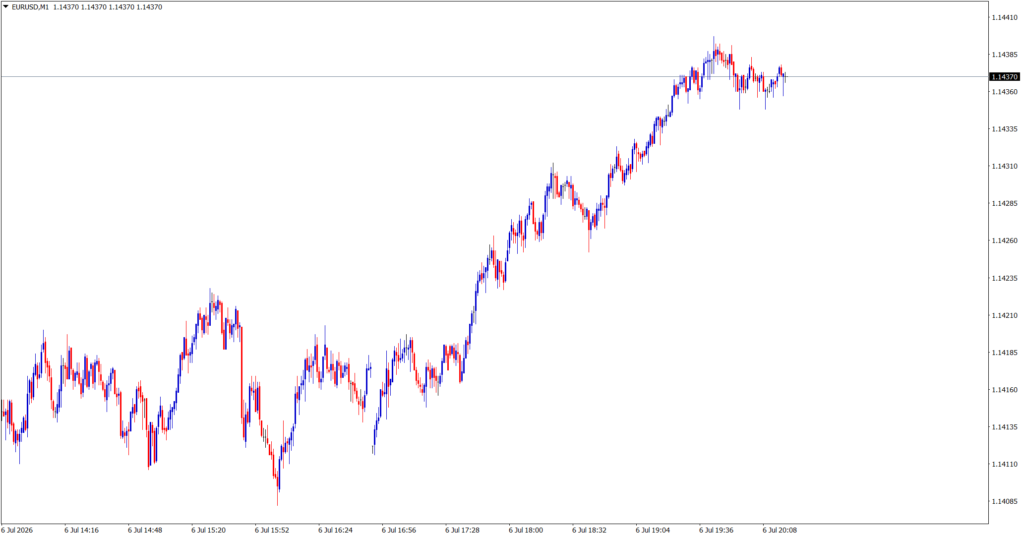
EUR/USD entered the week under sustained selling pressure as the dollar index reached an 18-month high.
The pair’s broader technical structure remained bearish, with successive recovery attempts struggling to generate lasting upside momentum. Rather than attracting sustained buying, rebounds were increasingly vulnerable to renewed selling as investors favored the dollar.
The 1.13 region was an important psychological reference point, while the lower 1.12 area represented a potential downside zone if bearish momentum accelerated.
A convincing recovery would require EUR/USD to reclaim previously broken resistance and establish a sequence of higher lows. Without that improvement, temporary rebounds would remain vulnerable to selling pressure.
Fundamental Analysis
The euro’s weakness reflected both international and domestic challenges.
France’s fiscal uncertainty continued to weigh on investor confidence. Rising concerns about government debt and political stability can increase the yield premium investors demand to hold French bonds relative to German Bunds. Although higher yields sometimes support a currency, a widening sovereign-risk premium can instead discourage capital inflows.
The eurozone also remained vulnerable to expensive imported energy. High oil prices threaten industrial competitiveness and household purchasing power, especially in economies already struggling with weak growth.
Meanwhile, the Federal Reserve remained more willing to contemplate additional tightening than markets had expected earlier in the year. The resulting interest-rate outlook supported the dollar.
EUR/USD therefore faced a difficult combination of U.S. yield support, European political risk and uncertain eurozone growth prospects.
USD/JPY
Technical Analysis
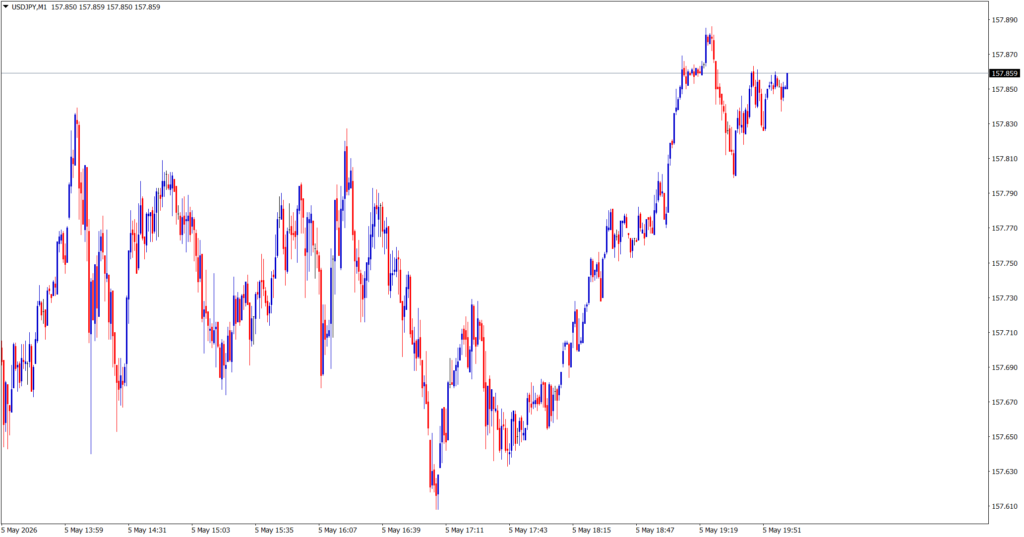
USD/JPY traded around the 158 region, consolidating after the substantial volatility experienced during September.
The pair was no longer displaying the same uninterrupted upward momentum that characterized much of the summer. Instead, it was attempting to stabilize as traders weighed the Federal Reserve’s policy outlook against expectations for further Bank of Japan normalization.
The 158–160 area remained important resistance territory. Sustained trading above 160 would suggest that dollar demand was once again overpowering the yen’s policy-related support.
On the downside, the mid-150s remained a potential support region.
Fundamental Analysis
The yen faced competing monetary and geopolitical influences.
Elevated U.S. interest rates continued to support the dollar by making dollar-denominated assets attractive relative to Japanese alternatives.
However, Japan’s gradual shift away from exceptionally accommodative monetary policy limited the attractiveness of aggressively shorting the yen.
Japan also remained vulnerable to high imported energy costs, which can weaken its trade balance. Nevertheless, periods of global financial stress can support the yen through the unwinding of leveraged carry trades.
That combination made USD/JPY more sensitive to changes in global bond yields and investor positioning than a simple comparison of U.S. and Japanese policy rates would suggest.
GBP/USD
Technical Analysis
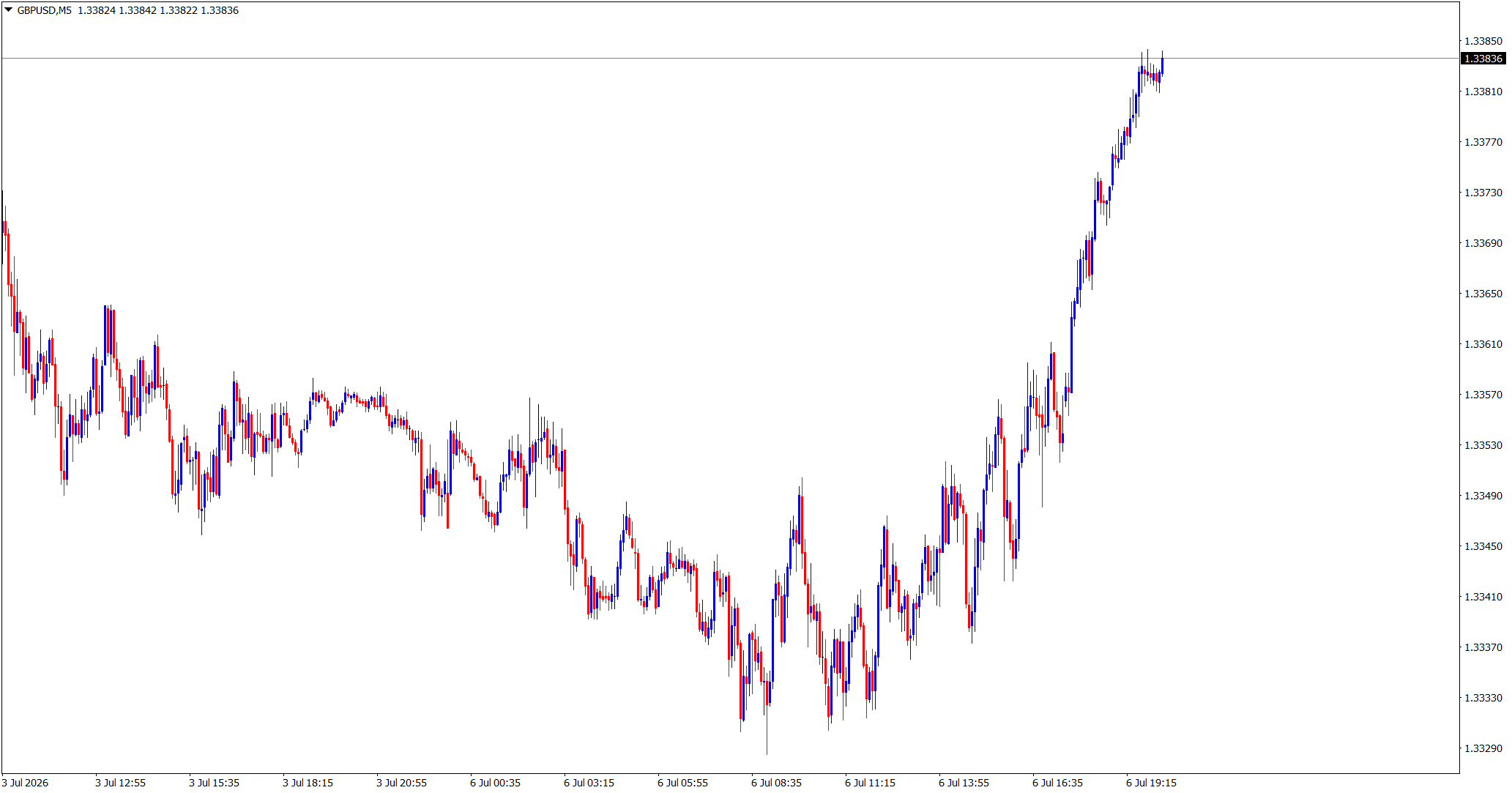
GBP/USD remained under pressure from broad dollar strength but demonstrated relative resilience compared with EUR/USD.
Sterling’s strong performance against the euro indicated that investors were distinguishing between the UK’s monetary-policy outlook and the eurozone’s political challenges.
The 1.33 area was an important near-term reference point. A sustained recovery above it would improve the short-term technical outlook, while renewed dollar strength could expose lower support around 1.32.
Fundamental Analysis
The pound benefited from expectations that the Bank of England would maintain a restrictive monetary-policy stance.
Persistent UK inflation increased the likelihood of further rate increases, supporting sterling through expected interest-rate differentials.
The British government also appeared increasingly focused on reassuring investors ahead of its October 28 budget. Prime Minister Andy Burnham’s interest in improving trade relations with the European Union offered a potentially constructive longer-term economic signal.
Nevertheless, high borrowing costs and uncertainty about fiscal policy remained risks.
Market Outlook
October 12 established a dollar-positive starting point for the week. EUR/USD remained vulnerable to French political uncertainty, USD/JPY was balancing U.S. yield support against Japanese monetary normalization, and GBP/USD benefited from comparatively hawkish Bank of England expectations.
The upcoming U.S. inflation releases would determine whether the dollar could extend its advance or whether much of the expected Federal Reserve tightening had already been priced into currency markets.