


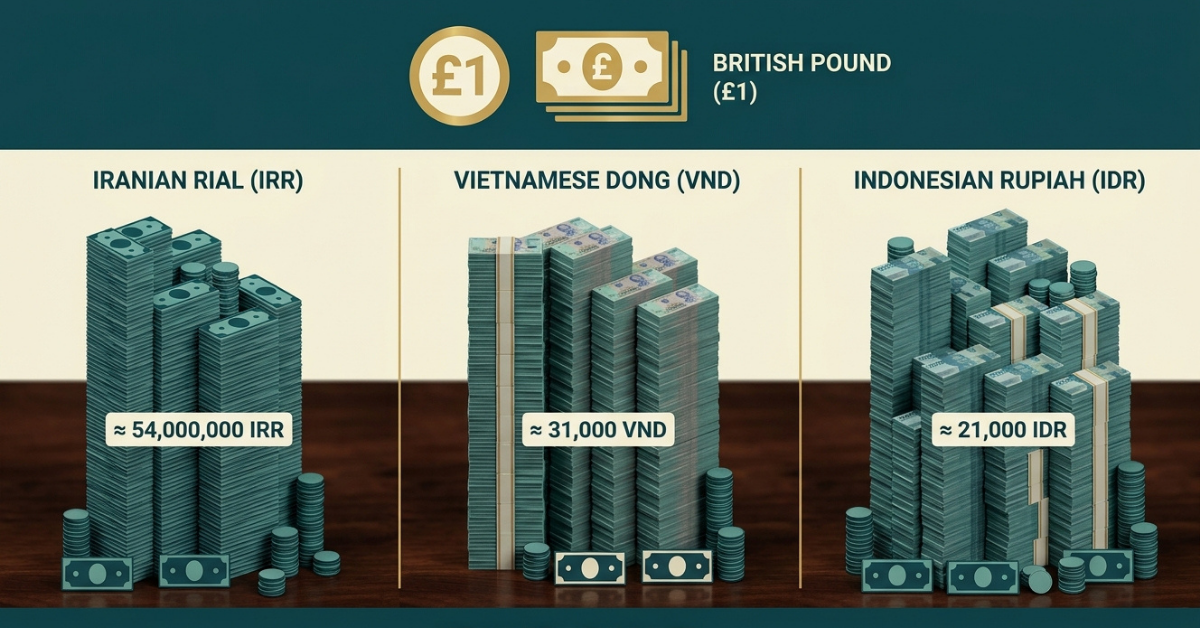
The top currencies in the world include the U.S. Dollar (USD), Euro (EUR), Japanese Yen (JPY), British Pound (GBP), Swiss Franc (CHF), Canadian Dollar (CAD), Australian Dollar (AUD), and Chinese Yuan (CNY). These currencies are important because they are widely used for international trade, investing, banking, or forex trading.
But what does “top” actually mean? There isn’t one official list of the world’s top 30 currencies. A currency can be important because it is heavily traded, used by a large economy, held by central banks, or important within its region.
So rather than simply looking at which currency has the highest value, let’s look at 30 major and internationally important currencies.
| # | Currency | Code | Country/Region |
| 1 | U.S. Dollar | USD | United States |
| 2 | Euro | EUR | Eurozone |
| 3 | Japanese Yen | JPY | Japan |
| 4 | British Pound | GBP | United Kingdom |
| 5 | Chinese Yuan | CNY | China |
| 6 | Swiss Franc | CHF | Switzerland |
| 7 | Canadian Dollar | CAD | Canada |
| 8 | Australian Dollar | AUD | Australia |
| 9 | Hong Kong Dollar | HKD | Hong Kong |
| 10 | Singapore Dollar | SGD | Singapore |
| 11 | South Korean Won | KRW | South Korea |
| 12 | Indian Rupee | INR | India |
| 13 | Mexican Peso | MXN | Mexico |
| 14 | New Zealand Dollar | NZD | New Zealand |
| 15 | Swedish Krona | SEK | Sweden |
| 16 | Norwegian Krone | NOK | Norway |
| 17 | Danish Krone | DKK | Denmark |
| 18 | Brazilian Real | BRL | Brazil |
| 19 | South African Rand | ZAR | South Africa |
| 20 | Turkish Lira | TRY | Türkiye |
| 21 | Polish Złoty | PLN | Poland |
| 22 | UAE Dirham | AED | United Arab Emirates |
| 23 | Saudi Riyal | SAR | Saudi Arabia |
| 24 | Israeli New Shekel | ILS | Israel |
| 25 | Thai Baht | THB | Thailand |
| 26 | Indonesian Rupiah | IDR | Indonesia |
| 27 | Malaysian Ringgit | MYR | Malaysia |
| 28 | Philippine Peso | PHP | Philippines |
| 29 | Kuwaiti Dinar | KWD | Kuwait |
| 30 | Qatari Riyal | QAR | Qatar |
This isn’t a strict ranking from “best” to “worst.” It is a beginner-friendly list of currencies that are significant because of their trading activity, economies, international use, or regional importance.
Do You Need To Trade All 30 Currencies?
Definitely not. Knowing about 30 currencies doesn’t mean you should trade all of them. Actually, trying to follow too many markets can make trading harder.
Imagine trying to track:
30 currencies.
Economic news from 20 countries.
Interest-rate decisions.
Inflation.
GDP.
Employment reports.
Political news.
And dozens of charts.
Your brain would probably give up before lunchtime.
Many traders focus on a smaller group of currency pairs they understand well.
That makes it easier to learn how those markets normally behave.
The Easiest Currencies To Remember First
If 30 currencies feel like too much, don’t memorize the whole table.
Start with these:
- USD = U.S. Dollar
- EUR = Euro
- GBP = British Pound
- JPY = Japanese Yen
- CHF = Swiss Franc
- AUD = Australian Dollar
- CAD = Canadian Dollar
- NZD = New Zealand Dollar
Once those make sense, currencies such as CNY, SGD, HKD, MXN, ZAR, and others will become much easier to understand.
Forex isn’t a memory test. Understanding what the currencies represent matters much more.
Open a Live Trading AccountWhat Are Emerging-Market Currencies?
Some currencies on our list are usually described as emerging-market currencies.
Examples can include:
MXN – Mexican Peso
BRL – Brazilian Real
ZAR – South African Rand
TRY – Turkish Lira
INR – Indian Rupee
IDR – Indonesian Rupiah
Emerging-market currencies can sometimes experience larger price movements than major developed-market currencies.
They may also have wider spreads and lower liquidity in some trading environments.
What Are the Important Middle Eastern Currencies?
Various Middle Eastern currencies are important because of the region’s economies, energy markets, and international trade.
These include:
AED – UAE Dirham
SAR – Saudi Riyal
KWD – Kuwaiti Dinar
QAR – Qatari Riyal
One important thing to understand is that several Gulf currencies are pegged or closely linked to the U.S. Dollar.
A currency peg means authorities aim to keep their currency at or around a particular exchange rate against another currency.
That makes them behave differently from freely floating currencies such as GBP or JPY.
What Are the Major Currencies in Forex?
Forex traders often focus heavily on a smaller group.
These include:
- USD
- EUR
- JPY
- GBP
- CHF
- AUD
- CAD
- NZD
These currencies appear in many of the most actively followed currency pairs.
Here’s a simple example:
| Pair | Currencies |
| EUR/USD | Euro + U.S. Dollar |
| GBP/USD | British Pound + U.S. Dollar |
| USD/JPY | U.S. Dollar + Japanese Yen |
| USD/CHF | U.S. Dollar + Swiss Franc |
| AUD/USD | Australian Dollar + U.S. Dollar |
| USD/CAD | U.S. Dollar + Canadian Dollar |
| NZD/USD | New Zealand Dollar + U.S. Dollar |
You’ll notice something. USD appears in every pair. That’s how important the dollar is in forex.
Want to start trading? You can get started with Defcofx by opening a free demo trading account and practicing in a risk-free environment.
Open a Demo Trading Account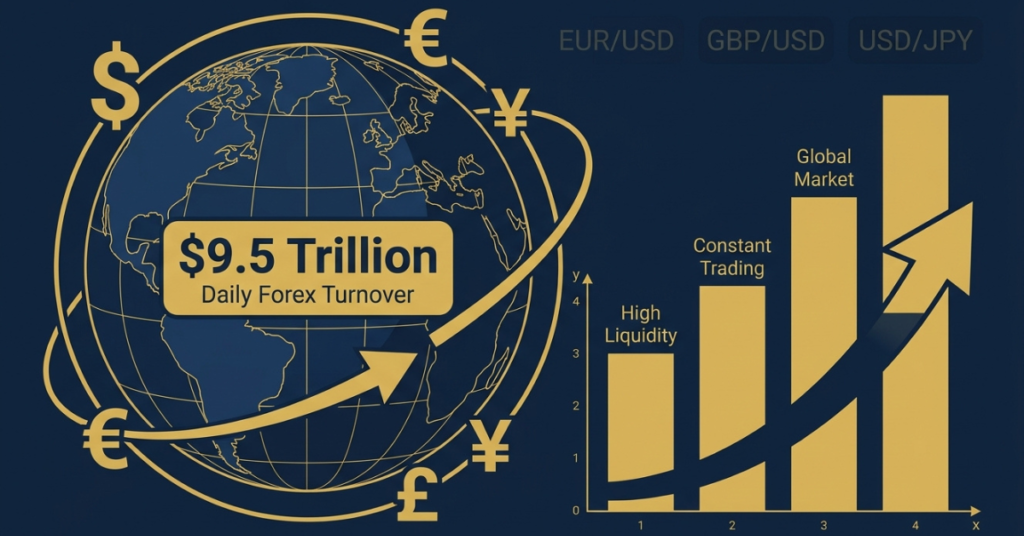
Which Currencies Are Easiest for Beginners to Understand?
Beginners often start by studying major currencies because there is usually plenty of information available about them.
Pairs such as EUR/USD, GBP/USD, and USD/JPY are widely followed.
They also tend to have higher liquidity than many less-traded currency pairs.
Liquidity simply means there are many buyers and sellers.
More liquidity can often mean tighter spreads and smoother trading conditions, although these can still widen during volatile periods.
Explore Major Currencies With Defcofx
Defcofx gives traders access to forex markets through MetaTrader 5, where they can study currency charts, follow price movements, and use technical analysis tools.
Want to put your currency knowledge into practice? Explore forex markets with Defcofx through MetaTrader 5 and use professional charting and technical analysis tools to study how global currencies move.
Open a Live Trading AccountFrequently Asked Questions
What are the world’s major currencies?
Some of the most important currencies include the U.S. Dollar, Euro, Japanese Yen, British Pound, Swiss Franc, Canadian Dollar, Australian Dollar, and Chinese Yuan.
What is the most traded currency in the world?
The U.S. dollar is the dominant currency in global forex trading and appears on one side of many heavily traded currency pairs.
What does USD mean?
USD stands for the United States Dollar.
What does EUR mean?
EUR is the international currency code for the Euro.
Is the most expensive currency automatically the strongest?
No. A high value per currency unit doesn’t automatically mean the currency has the strongest economy or the biggest role in international markets.
Which currencies should forex beginners learn first?
Beginners often start with USD, EUR, GBP, JPY, CHF, AUD, CAD, and NZD because these currencies appear in many major forex pairs.
Why do currencies have three-letter codes?
Three-letter codes make currencies easy to identify internationally. For example, USD means U.S. Dollar, GBP means British Pound, and JPY means Japanese Yen.
Do I need to trade all the major currencies?
No. Many traders focus on a relatively small number of currency pairs they understand well instead of trying to follow every currency at once.