


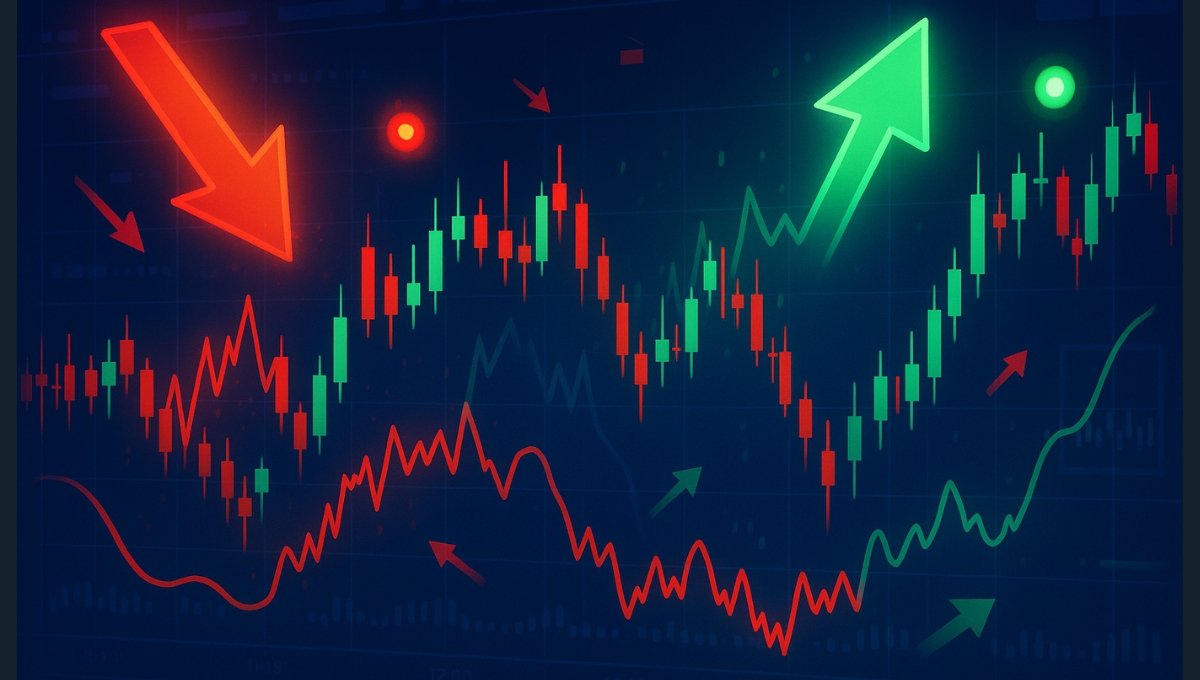
The best stock indicators for swing trading include moving averages, RSI, MACD, Bollinger Bands, and volume-based tools. These indicators help traders analyze trends, momentum, and volatility, allowing them to identify potential entry and exit points over short- to medium-term timeframes.
Most indicators are based on past price data, meaning they help confirm trends rather than predict future price movements.
Want to apply these indicators in real market conditions? Explore how Defcofx provides access to global markets with advanced charting tools.
Open a Live Trading AccountKey Takeaways
- Swing trading relies on identifying short- to medium-term trends.
- Moving averages help define trend direction.
- RSI and MACD are powerful momentum indicators.
- Volume confirms the strength of a price move.
- Combining indicators gives more reliable signals.
- Indicators are lagging tools and should be used with price action and risk management.
What Are Swing Trading Indicators and Why Do You Need Them?
Swing trading indicators are tools derived from historical price and volume data that help traders analyze trends, momentum, and volatility. They should be used as confirmation tools rather than standalone signals.
If you’re getting into swing trading, you’re basically trying to capture price moves that last from a few days to a few weeks.
The challenge is knowing:
- When to enter
- When to exit
- Whether the trend is strong or weak
That’s where stock indicators for swing trading come in.
They help you:
- Spot trends early
- Confirm momentum
- Avoid false signals
Instead of guessing, you’re making decisions based on data.
Moving Averages – The Foundation of Trend Trading
If you had to pick just one tool, moving averages would be a great starting point. They smooth out price data and show you the overall direction of the market.
Common types include:
- 50-day moving average
- 100-day moving average
- 200-day moving average
Here’s how you can use them:
- Price above moving average → Uptrend
- Price below moving average → Downtrend
Many swing traders also use moving average crossovers to spot trend changes.
Short-term traders often use the 20-day or 50-day moving average, while longer-term traders rely on the 100-day or 200-day moving average.
Relative Strength Index (RSI) – Spot Overbought and Oversold Levels
The RSI (Relative Strength Index) is one of the most popular stock momentum indicators. It measures how strong a price move is.
RSI ranges from 0 to 100:
- Above 70 → Overbought (possible reversal down)
- Below 30 → Oversold (possible reversal up)
For swing trading, RSI helps you time entries when a stock is likely to reverse or pull back.
MACD – Identifying Momentum Shifts
The MACD (Moving Average Convergence Divergence) is another powerful tool for swing traders. It shows the relationship between two moving averages.
What you should look for:
- MACD line crossing above signal line → Bullish signal
- MACD line crossing below signal line → Bearish signal
MACD is especially useful for confirming trends and spotting momentum shifts before big moves happen.
Instead of using too many indicators, focus on mastering 2–3 key tools like RSI and moving averages for better clarity and consistency.
Bollinger Bands – Understanding Volatility
Bollinger Bands help you understand how volatile a stock is.
They consist of:
- A middle moving average
- Upper and lower bands
Here’s how you can use them:
- Price touching upper band → Potential overbought
- Price touching lower band → Potential oversold
For swing traders, Bollinger Bands are great for spotting breakouts and reversals.
Volume Indicators – Confirming Strength
Price alone doesn’t tell the full story. Volume shows how much interest there is in a move.
If a stock is moving up with high volume:
The move is more likely to be strong and sustainable
If volume is low:
The move may not last.
Volume indicators help confirm whether a trend is real or weak.
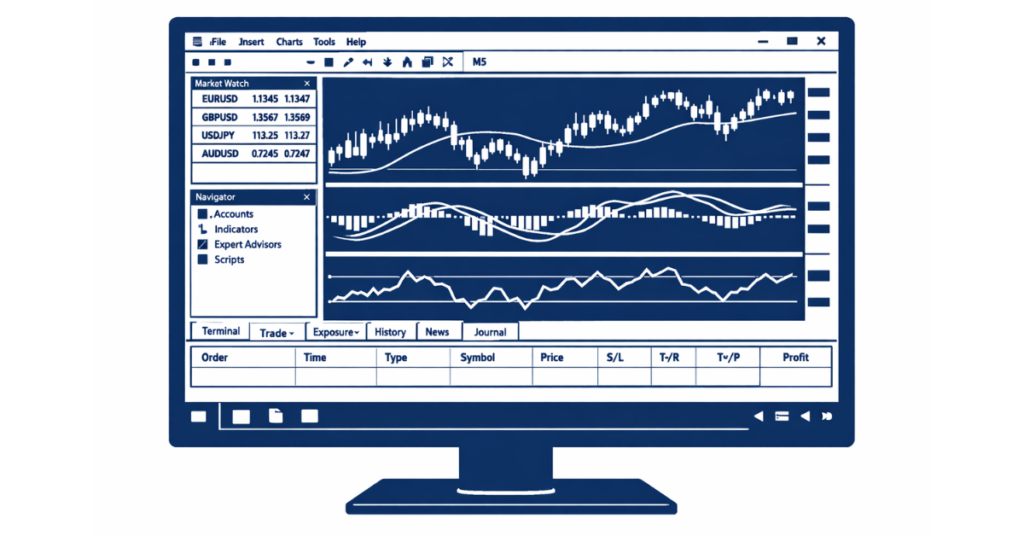
Best Indicator Combinations for Swing Trading
Using just one indicator is rarely enough. The best swing traders combine tools to get stronger signals.
Here’s a simple and effective combination:
| Indicator | Purpose |
| Moving Average | Identify trend |
| RSI | Find entry timing |
| MACD | Confirm momentum |
| Volume | Validate strength |
For example:
- The trend is up (moving average)
- RSI pulls back to 30–40
- MACD turns bullish
This creates a higher-probability setup.
How to Choose the Right Indicators for You
There’s no “perfect” indicator setup.
What works best depends on:
- Your trading style
- Risk tolerance
- Market conditions
If you’re just starting:
Keep it simple
Too many indicators can confuse you and lead to analysis paralysis. Focus on consistency rather than complexity.
Execution Still Matters in Swing Trading
Even if you’re using the best stock indicators for swing trading, execution plays a key role.
Entry price, spreads, and order speed all affect your results.
Many traders prefer platforms that offer stable pricing and smooth execution when managing swing trades across different markets. Brokers like Defcofx provide trading conditions designed to support traders holding positions over multiple days while maintaining cost efficiency.
Open a Live Trading AccountFrequently Asked Questions (FAQ)
What are the best stock indicators for swing trading?
The best indicators include moving averages, RSI, MACD, Bollinger Bands, and volume indicators. These tools help identify trends, momentum, and entry points.
How many indicators should I use for swing trading?
Most traders use 2–3 indicators. Using too many can create confusion and conflicting signals.
Is RSI good for swing trading?
Yes. RSI helps identify overbought and oversold conditions, making it useful for timing entries and exits.
Can beginners use stock indicators for swing trading?
Yes. Indicators like moving averages and RSI are beginner-friendly and widely used in swing trading strategies.
What is the best combination of indicators?
A common combination includes moving averages for trend, RSI for entry timing, and MACD for confirmation.
Do indicators guarantee profitable trades?
No. Indicators help improve decision-making but do not guarantee profits. Risk management is still essential.
Are indicators better than price action?
Indicators are derived from price action, so they should complement—not replace—chart analysis.
Can you trade with only indicators?
It is possible but not recommended. Combining indicators with market structure and risk management improves results.
Final Thoughts
The best stock indicators for swing trading include moving averages, RSI, MACD, Bollinger Bands, and volume tools. These indicators help you identify trends, confirm momentum, and time entries more effectively. By combining a few key indicators and focusing on consistency, you can build a stronger and more confident swing trading strategy.
Start building your swing trading strategy, create your Defcofx account and access advanced trading tools today.
Open a Trading Account