


Six sovereign countries officially use the US dollar as legal tender: the United States, Ecuador, El Salvador, Panama, Timor-Leste, and Zimbabwe. However, many other countries accept the US dollar alongside their local currency, meaning the total number of places where dollars circulate is significantly higher.
Key Takeaways
- Six sovereign countries officially use the US dollar as legal tender: the United States, Ecuador, El Salvador, Panama, Timor-Leste, and Zimbabwe.
- Many other countries accept the US dollar alongside their local currency, but it is not their official legal tender.
- There is a major difference between full dollarization (official adoption) and informal or partial acceptance.
- The US dollar is the world’s primary global reserve currency, which explains its widespread international use.
How Many Countries Officially Use the US Dollar as Legal Tender?
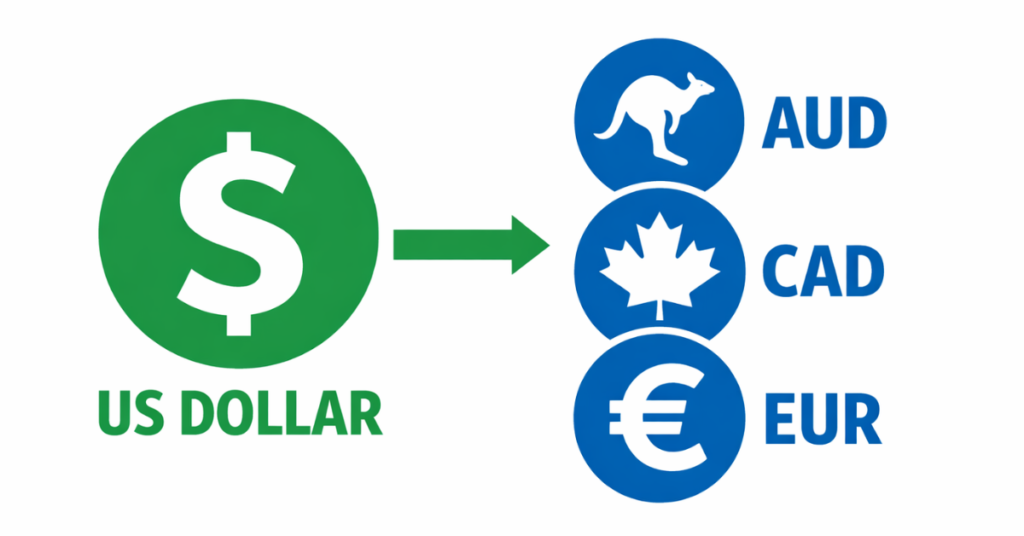
Six sovereign countries officially use the US dollar as their national currency. In these countries, the US dollar is the primary and legally recognized medium of exchange for all public and private transactions.
Countries That Use the US Dollar Officially
| Country | Year Adopted | Reason for Adoption |
| United States | 1792 | National currency |
| Panama | 1904 | Monetary stability & trade |
| Ecuador | 2000 | Hyperinflation crisis |
| El Salvador | 2001 | Economic integration & stability |
| Timor-Leste | 2000 | Post-independence stabilization |
| Zimbabwe | 2009 (re-adopted 2019–present in multi-currency system) | Inflation control |
It is important to note that this list refers only to sovereign nations. Some US territories, such as Puerto Rico and Guam, also use the US dollar, but they are not independent countries.
Countries That Use the US Dollar Alongside Their Own Currency
Several countries don’t officially adopt the US dollar as legal tender but allow it to circulate alongside their domestic currency, this practice is called partial dollarization and helps stabilize local economies, facilitate international trade, and provide a trusted medium for transactions.
4 Examples of Partial Dollarization
- Cambodia: US dollars are widely accepted in major cities for retail and real estate, though the Cambodian riel remains official.
- Bahamas: The Bahamian dollar is pegged 1:1 to the US dollar, and both currencies are commonly used.
- Jamaica: US dollars are often accepted in tourism and banking sectors alongside the Jamaican dollar.
- Lebanon: Due to economic instability, US dollars are widely used for savings, loans, and large transactions.
This distinction helps users understand the difference between full dollarization (official use) and informal acceptance, which affects financial policies, currency stability, and trade dynamics.
Why Do Some Countries Use the US Dollar?
Many countries adopt the US dollar either officially or partially to achieve economic stability, control inflation, and facilitate international trade. Using a globally trusted currency like the US dollar reduces the risk of local currency devaluation and increases confidence among investors and citizens.
4 Key Reasons for Dollar Adoption
- Economic Stability: Countries facing volatile currencies often adopt the US dollar to stabilize prices and prevent hyperinflation.
- Trade and Investment Benefits: The US dollar is widely accepted globally, making import-export transactions smoother and more predictable.
- Inflation Control: Dollarization limits a government’s ability to print money excessively, helping control inflation.
- Investor Confidence: Foreign investors are more likely to engage in countries where a strong and stable currency is in use.
Understanding these reasons explains why countries like Ecuador, El Salvador, and Panama officially adopted the US dollar, while others maintain partial dollarization for practical and economic advantages.
Is the US Dollar the World’s Global Reserve Currency?
The US dollar serves as the primary global reserve currency, meaning central banks and financial institutions worldwide hold it to back their own currencies and international trade. Its dominance ensures stability in global markets and makes it the most widely used currency for cross-border transactions.
Central banks, multinational corporations, and governments prefer holding US dollars due to its liquidity, stability, and wide acceptance. This global trust is why the US dollar is used not only in the six official countries but also extensively in partially dollarized economies.
Oil and commodity markets largely rely on the dollar.
Global financial systems use USD as a benchmark for reserves.
This makes the US dollar a key currency for forex traders. Platforms like Defcofx provide traders access to major USD currency pairs, offering benefits such as up to 1:2000 leverage, spreads from 0.3 pips with no commissions or swap fees, global accessibility, and fast withdrawals within 4 business hours, which align with the global dominance of the USD in trading.
Open a Live Trading AccountHow Many Countries Use Other Types of Dollars?
Besides the US dollar, several countries use different dollar-denominated currencies as their official or widely accepted medium of exchange. These include the Australian dollar (AUD), Canadian dollar (CAD), Eastern Caribbean dollar (XCD), and others.
Examples
- Australia (AUD): National currency used officially within the country.
- Canada (CAD): Official currency across all provinces and territories.
- Eastern Caribbean (XCD): Used by eight island nations including Antigua and Barbuda, Saint Lucia, and Grenada.
- Singapore (SGD) and Hong Kong (HKD): While called “dollars,” these are separate national currencies and not interchangeable with the US dollar.
Why the US Dollar Matters in Forex Trading
The US dollar’s dominance in global finance makes it the most traded currency in forex markets. Traders often focus on USD currency pairs due to their high liquidity, lower spreads, and predictable market behavior. Understanding which countries use the US dollar helps traders anticipate global economic trends and currency movements.
Final Thoughts on How many Countries use Dollars.
Six sovereign countries officially use the US dollar as legal tender, while many others accept it alongside their local currency. Understanding the distinction between official adoption and informal use is key for global finance, international trade, and forex trading decisions.
The US dollar’s role as the world’s primary reserve currency explains its widespread acceptance and stability. Countries adopt it for economic stability, inflation control, and trade advantages, while partial dollarization allows flexibility without fully relinquishing national currency control.
For traders, this global dominance makes USD currency pairs highly liquid and accessible. Platforms like Defcofx provide an optimized trading environment with up to 1:2000 leverage, low spreads from 0.3 pips with no commissions or swap fees, fast withdrawals in 4 business hours, and global reach, allowing traders to efficiently engage with the world’s most important currency.
Open a Live Trading AccountFAQ’s
Six sovereign countries officially use the US dollar as their legal currency: the United States, Panama, Ecuador, El Salvador, Timor-Leste, and Zimbabwe.
Besides the six official nations, several countries accept the US dollar alongside their local currency, including Cambodia, Bahamas, Jamaica, and Lebanon.
While not legal tender everywhere, the US dollar is widely accepted internationally for trade, tourism, and financial transactions due to its global reserve status.
Dollarization occurs when a country adopts a foreign currency, like the US dollar, either officially as legal tender or partially alongside its national currency to stabilize its economy.
The United States officially adopted the US dollar in 1792 with the Coinage Act, establishing it as the national currency.