


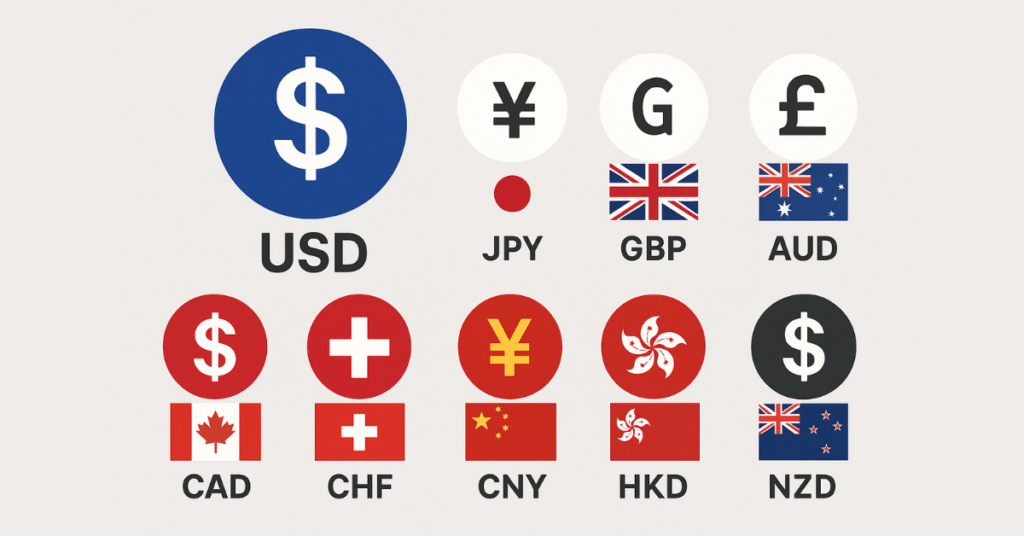
The 10 most traded currencies are the US dollar (USD), euro (EUR), Japanese yen (JPY), British pound (GBP), Australian dollar (AUD), Canadian dollar (CAD), Swiss franc (CHF), Chinese yuan (CNY), Hong Kong dollar (HKD), and New Zealand dollar (NZD), led by USD and EUR in volume.
Key Takeaways
- The US dollar, euro, and Japanese yen dominate global forex trading due to high liquidity and strong economic influence.
- The top 10 most traded currencies share traits like stability, global demand, and deep financial markets.
- Understanding these currencies helps traders navigate liquidity, spreads, and market behavior more effectively.
What “Most Traded Currencies” Means
The term “most traded currencies” refers to currencies with the highest global turnover in the foreign exchange market. This turnover represents how frequently a currency is bought or sold worldwide within a specific period, mainly measured through daily transaction volume in the multi-trillion-dollar forex market.
The 10 Most Traded Currencies
US Dollar (USD): The US dollar is the world’s most traded currency, involved in nearly all global forex transactions. Its status as the primary reserve currency and the backbone of international trade makes it the most influential currency in the market.
Euro (EUR): The euro is the second most traded currency, widely used across Europe’s powerful economic bloc. Its stability, deep financial markets, and role in global payments make it a major driver of forex liquidity.
Japanese Yen (JPY): The Japanese yen is heavily traded due to Japan’s massive economy and its safe-haven reputation. Traders often turn to JPY during global uncertainty, increasing its daily turnover.
British Pound (GBP): The British pound remains one of the oldest and most trusted currencies. The financial strength of the UK, especially London as a global trading hub, keeps GBP among the top currencies.
Australian Dollar (AUD): The AUD is popular due to Australia’s stable economy and its strong ties to commodity exports. Traders often use AUD to access commodity-driven market movements.
Canadian Dollar (CAD): The Canadian dollar is another commodity-linked currency, heavily influenced by oil prices. Its close relationship with the US economy boosts its liquidity.
Swiss Franc (CHF): The Swiss franc is known for safety, stability, and strict monetary policies. CHF often strengthens during geopolitical or economic uncertainty, increasing its trading volume.
Chinese Yuan (CNY): The yuan has grown rapidly due to China’s expanding economic influence. Although still regulated, CNY trading continues to rise as China integrates more deeply into global financial markets.
Hong Kong Dollar (HKD): The Hong Kong dollar remains highly traded because Hong Kong is a major financial gateway between Asia and global markets, supported by its linked exchange rate system.
New Zealand Dollar (NZD): The NZD is traded more than expected for a small economy because of its stable financial environment and ties to agricultural and commodity sectors.
Table: Ranking of the 10 Most Traded Currencies + Market Share
| Rank | Currency | Symbol | Approx. Global Forex Market Share |
| 1 | US Dollar | USD | 88% |
| 2 | Euro | EUR | 32% |
| 3 | Japanese Yen | JPY | 17% |
| 4 | British Pound | GBP | 13% |
| 5 | Australian Dollar | AUD | 7% |
| 6 | Canadian Dollar | CAD | 5% |
| 7 | Swiss Franc | CHF | 5% |
| 8 | Chinese Yuan | CNY | 4% |
| 9 | Hong Kong Dollar | HKD | 2% |
| 10 | New Zealand Dollar | NZD | 2% |
Why These Currencies Dominate Global Forex Trading
The dominance of the top 10 currencies is driven by several key factors:
Economic Strength: Countries with large, stable economies tend to have currencies that are widely traded. The US, EU, and Japan lead because of their substantial GDP and financial influence.
Stability and Trust: Traders favor currencies from politically and economically stable nations. Currencies like USD, EUR, and CHF are seen as safe-haven assets during market uncertainty.
Reserve Currency Role: Many of these currencies, especially the USD and EUR, serve as reserve currencies for central banks globally, increasing their demand in international transactions.
Global Trade Importance: Currencies linked to major exporters or importers, such as the CAD with oil or AUD with commodities, see higher trading volumes due to business transactions.
Financial Market Depth: Well-established financial markets, like those in London, New York, and Tokyo, ensure liquidity, low spreads, and fast execution, making these currencies attractive for high-volume trading.
Most Traded Currency Pairs
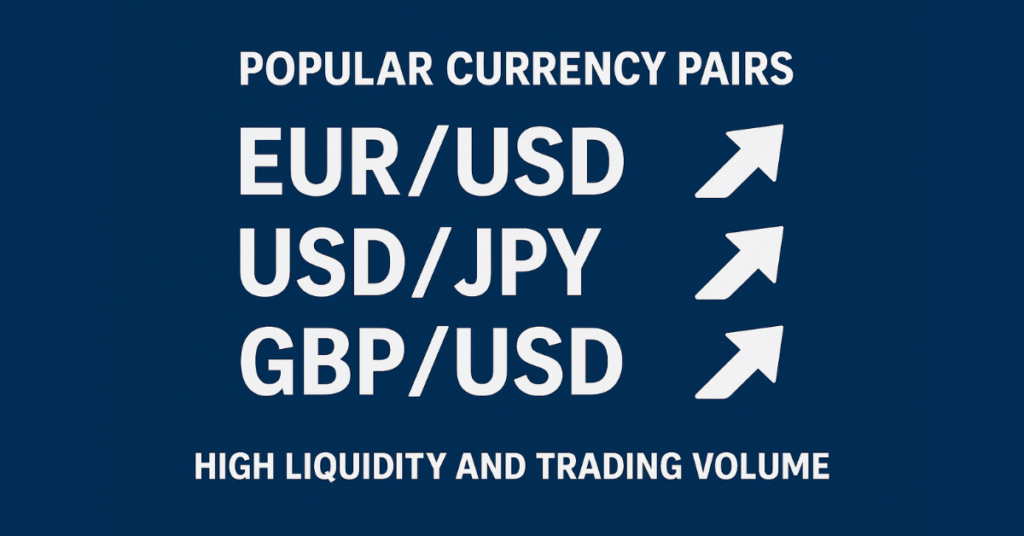
The most traded currency pairs consist of combinations of the top currencies, dominated by the US dollar. These pairs are popular due to high liquidity, tight spreads, and consistent market activity.
Major Currency Pairs:
- EUR/USD: The most traded pair globally, offering high liquidity and low spreads.
- USD/JPY: Popular for safe-haven trading and carry trades.
- GBP/USD: Strongly influenced by UK and US economic events.
- AUD/USD: Commodity-linked and sensitive to global market trends.
- USD/CAD: Closely tied to oil price fluctuations.
How Currency Trading Volume Affects Traders
Trading volume directly impacts liquidity, spreads, and execution speed. High-volume currencies like USD and EUR allow traders to enter and exit positions efficiently, with minimal slippage. Greater liquidity also often results in tighter spreads, enhancing profitability for frequent traders.
Defcofx Advantages for Trading Major Currencies
- High Leverage Options: Offers up to 1:2000 leverage, allowing traders to maximize potential returns on these liquid currencies.
- No Commissions or Swap Fees: Enjoy spreads starting from 0.3 pips with zero hidden costs, ideal for high-volume trades.
- Global Reach: Traders from all countries can access the platform in multiple languages, ensuring accessibility.
- Fast Support and Withdrawals: Withdrawal processes are completed within 4 business hours, even on weekends.
- 40% Welcome Bonus: New clients depositing $1000 or more can benefit from the bonus, boosting initial trading potential.
Factors That Make a Currency Highly Traded
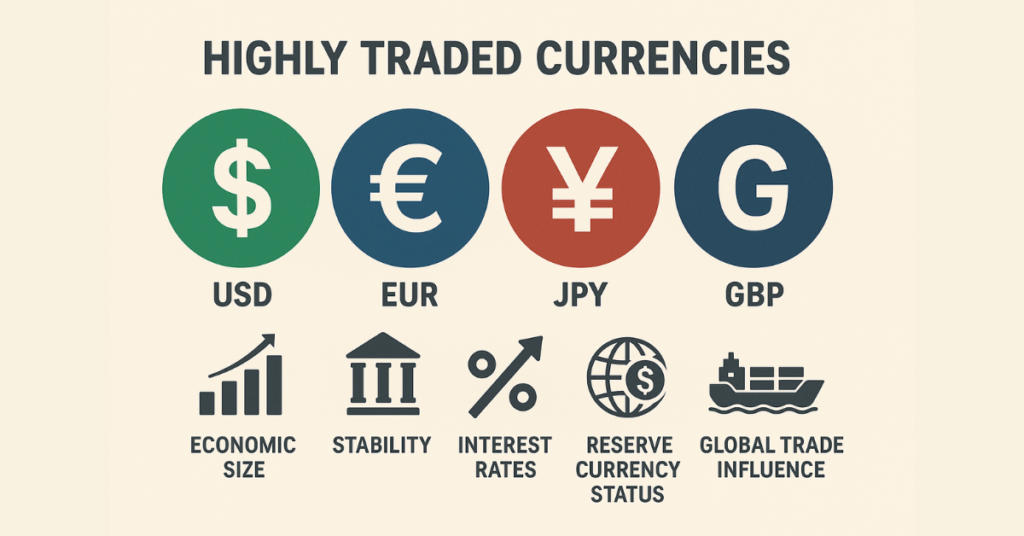
Several factors determine why certain currencies dominate the forex market:
Economic Size: Currencies from large, economically powerful countries are widely traded because they represent significant international trade and investment flows.
Reserve Currency Status: Currencies held as reserves by central banks, like USD and EUR, are in constant demand, boosting their trading volume.
Political Stability: Traders favor currencies from countries with stable governments and low geopolitical risk, reducing uncertainty in transactions.
Interest Rates: Higher interest rates attract foreign investment, increasing demand and trading activity for that currency.
Global Trade Influence: Currencies linked to major exporting or importing countries see more usage in commercial and financial transactions, increasing turnover.
Open a Trading Live Account5 Tips for New Forex Traders Trading Major Currencies
For beginners, trading major currencies requires careful planning and risk management:
- Trade during peak liquidity hours to benefit from tighter spreads and faster execution.
- Focus on major currency pairs like EUR/USD or USD/JPY to reduce volatility risks.
- Use risk management tools such as stop-loss and take-profit orders.
- Stay updated with economic calendars and news releases that impact top currencies.
- Start with manageable position sizes, especially when using high leverage like 1:2000, to avoid excessive losses.
Final Thoughts on What Are the 10 Most Traded Currencies?
The 10 most traded currencies, led by USD, EUR, and JPY, dominate the forex market due to their stability, economic strength, and global demand. Understanding these currencies, their major pairs, and the factors driving their popularity is essential for effective trading.
Platforms like Defcofx provide advantages such as high leverage up to 1:2000, low spreads from 0.3 pips, global access, fast withdrawals, and a 40% welcome bonus, helping traders maximize opportunities while managing execution efficiency.
By combining knowledge of top currencies with proper risk management and reliable trading tools, traders can navigate the forex market with greater confidence and consistency.
FAQs
Currency trading volume is influenced by economic size, global trade, political stability, interest rates, and central bank reserve status. Major currencies like USD and EUR dominate due to their global demand and liquidity.
The US dollar (USD) is the most traded currency, appearing in nearly 90% of all forex transactions worldwide.
Yes. While the top currencies like USD, EUR, and JPY remain dominant, rankings can shift slightly due to economic growth, geopolitical events, or changes in global trade patterns.
The EUR/USD pair is the most traded globally, offering high liquidity, low spreads, and frequent trading opportunities.
Trading major currencies is generally safer for beginners due to higher liquidity, lower spreads, and more predictable market behavior, while minor currencies carry higher volatility and risk.
The USD is the world’s primary reserve currency, widely used in international trade and finance, which ensures its constant demand in nearly all currency pairs.