


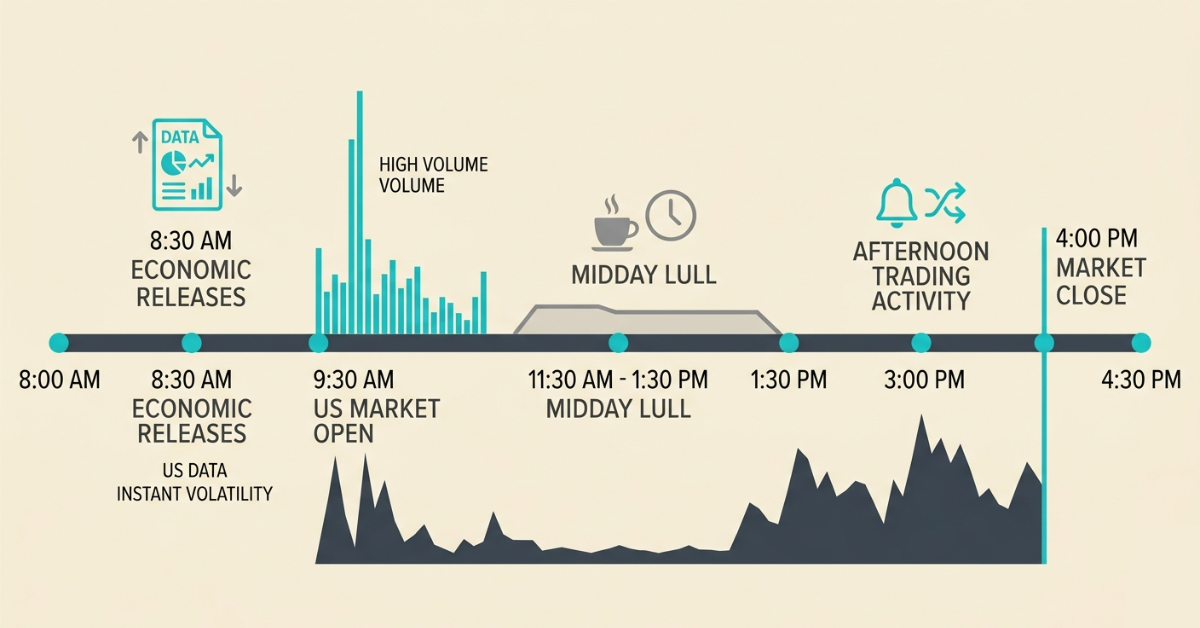
The NAS100 follows the official US stock market schedule, opening at 9:30 AM Eastern Time (ET) and closing at 4:00 PM ET, Monday through Friday. Although many forex brokers offer extended trading hours for NAS100 CFDs, the highest trading activity and liquidity typically occur during the official market session.
Key Takeaways
- NAS100 officially opens at 9:30 AM ET on weekdays.
- The main trading session closes at 4:00 PM ET.
- Many brokers offer pre-market, after-hours, or nearly 24-hour CFD trading.
- The first hour after the market opens is often the most volatile.
- Trading during peak liquidity can improve execution and reduce spreads.
Why NAS100 Opening Time Matters
If you’re learning how to trade NAS100, knowing when the market opens is almost as important as knowing how to trade it.
Many beginners believe they can open a chart at any time of the day and expect the same market conditions. In reality, NAS100 behaves very differently depending on the time.
There are periods when the market is extremely active, with large price swings and high trading volume. There are also quieter periods when price moves more slowly and opportunities become less frequent.
Professional traders understand this difference.
Rather than trading whenever they have free time, they often plan their trading around the hours when the market offers the best combination of liquidity, volatility, and trading opportunities.
Simply knowing the opening time can help you prepare for these conditions instead of reacting to them after they’ve already begun.
Official NAS100 Trading Hours
The NAS100 follows the trading schedule of the US stock market.
Here are the standard market hours:
| Session | Eastern Time (ET) | What to Expect |
| Pre-Market | 4:00 AM – 9:30 AM | Lower liquidity, lighter volume |
| Regular Market | 9:30 AM – 4:00 PM | Highest trading activity |
| After-Hours | 4:00 PM – 8:00 PM | Reduced liquidity, earnings reactions |
The regular trading session is when the majority of institutional investors, hedge funds, banks, and professional traders participate in the market.
As a result, this session usually produces the strongest price movements and the highest trading volume.
Why the First Hour Is So Important
Ask experienced NAS100 traders which part of the day they pay the most attention to, and many will give the same answer: The opening hour.
The first hour after the market opens often sets the tone for the rest of the trading day.
This happens because overnight orders begin to execute, institutions adjust their positions, and traders react to economic reports or company news released before the market opened.
The result is a sharp increase in both trading volume and volatility.
For traders, this creates opportunity, but also additional risk.
Large price swings can produce excellent setups, but they can also trigger emotional decisions if you aren’t prepared.
Instead of jumping into the market the moment it opens, many professional traders spend the first few minutes observing how price reacts before committing to a position.
NAS100 Opening Time Around the World
Since traders come from different countries, it’s helpful to know how the opening time translates into other major time zones.
| Location | NAS100 Opening Time |
| New York (ET) | 9:30 AM |
| London (GMT/BST) | 2:30 PM or 1:30 PM (depending on daylight saving) |
| Dubai (GST) | 5:30 PM or 6:30 PM |
| Sydney (AEST) | 11:30 PM or 12:30 AM |
| Tokyo (JST) | 10:30 PM or 11:30 PM |
Because daylight saving time changes in different countries at different times of the year, the exact local opening time may shift by one hour.
Checking your broker’s trading schedule can help you avoid confusion.
Before trading NAS100 each day, spend a few minutes reviewing the economic calendar and planning your session. Preparation often leads to better decisions than reacting after volatility begins.
Open AccountShould You Trade Immediately When NAS100 Opens?
One of the biggest misconceptions among beginners is that the opening bell is automatically the best time to place a trade.
Sometimes it is.
Often, it isn’t.
The first few minutes of trading can be extremely unpredictable.
Institutional orders enter the market, overnight positions are adjusted, and prices can move rapidly in both directions.
Professional traders usually avoid chasing these initial moves.
Instead, they wait for the market to reveal its direction.
For example, they may wait for:
- The opening range to form.
- A breakout with confirmation.
- A pullback after the initial move.
- A clear trend to develop.
This approach often reduces emotional trading and improves the quality of trade entries.
When Is the Best Time to Trade NAS100?
Although the market is officially open from 9:30 AM to 4:00 PM ET, not every hour offers the same opportunities.
| Time Period | Market Characteristics | Suitable For |
| First Hour | High volatility and volume | Experienced day traders |
| Midday | Lower volatility, slower movement | Patient traders and swing setups |
| Final Hour | Increased institutional activity | Breakout and momentum traders |
Many traders prefer the first and last hours because these periods tend to offer the strongest momentum.
However, beginners may find the extreme volatility challenging.
If you’re still developing your skills, waiting for the market to settle can sometimes lead to better decision-making.
How Economic News Affects the Market Open
The NAS100 opening session often overlaps with important US economic releases.
Reports covering:
- Inflation
- Employment
- GDP
- Consumer confidence
- Manufacturing activity
can all influence market sentiment before or shortly after the opening bell.
In addition, company earnings released before the market opens can create large price gaps in technology stocks, which may affect the entire index.
This is why professional traders rarely trade the opening session without first checking the economic calendar. Understanding what news is scheduled helps explain why the market is moving, not just how it’s moving.
Why Liquidity Is Highest During the Main Session
Liquidity refers to how easily buyers and sellers can transact without causing significant price changes.
During the official market session:
- Institutional investors become active.
- Banks execute client orders.
- Hedge funds enter positions.
- Retail traders participate in large numbers.
All of this activity creates deeper liquidity.
Higher liquidity generally leads to:
- Faster execution
- Tighter spreads
- Better order fills
- More reliable price movement
This is one reason many traders focus their NAS100 trading during the official session rather than extended hours.
Broker Trading Hours May Differ
One point that often confuses new traders is that their broker may allow NAS100 trading outside official exchange hours.
This is because many brokers offer NAS100 as a CFD rather than direct ownership of the underlying index.
While extended hours provide additional flexibility, the strongest liquidity and most consistent price action usually occur during the regular US trading session.
Many traders choose brokers such as Defcofx, which provide access to NAS100 CFDs alongside forex and other global markets. Features such as competitive spreads, fast execution, leverage of up to 1:2000, and responsive customer support can help traders navigate both regular and extended trading sessions more efficiently.
Frequently Asked Questions
What time does NAS100 officially open?
The NAS100 officially opens at 9:30 AM Eastern Time (ET), Monday through Friday, following the regular US stock market schedule. This is when the highest level of institutional trading activity begins. Many traders focus on this period because it often produces the strongest market movements.
Can I trade NAS100 before the official market opens?
Yes, many brokers offer NAS100 CFDs during extended trading hours, allowing you to trade before the official opening bell. However, trading conditions may differ because liquidity is often lower outside regular market hours. This can result in wider spreads and less predictable price action.
Why is the first hour of NAS100 trading so volatile?
The first hour is typically volatile because overnight orders are executed, institutions adjust their positions, and traders react to overnight news and economic releases. This combination creates higher trading volume and stronger price movements. While this can create opportunities, it also increases trading risk.
What is the best time of day to trade NAS100?
Many traders prefer the first and last hours of the regular trading session because these periods generally have the highest liquidity and momentum. However, beginners may find the volatility challenging and may benefit from waiting until the market establishes a clearer direction. The best time ultimately depends on your trading strategy.
Does NAS100 trade 24 hours a day?
The underlying Nasdaq-100 Index follows official US stock market hours, but many forex brokers offer NAS100 CFDs for extended hours during the trading week. These additional hours provide greater flexibility but usually have lower liquidity than the regular session. Always check your broker’s specific trading schedule.
Does daylight saving time affect NAS100 opening hours?
Yes. Because daylight saving time begins and ends on different dates around the world, the local opening time of NAS100 can change by one hour depending on your country. It’s a good idea to verify trading times with your broker whenever daylight saving adjustments occur.
Should beginners trade the NAS100 market open?
Beginners should approach the market open with caution because price movements can be extremely fast and unpredictable. Waiting for the initial volatility to settle often leads to clearer trading opportunities. Developing patience is usually more beneficial than trying to catch the very first move.
Why do traders monitor economic news before NAS100 opens?
Economic reports and corporate earnings released before the market opens can significantly influence investor sentiment. These announcements often determine the direction and volatility of the opening session. Checking the economic calendar before trading helps traders understand the context behind market movements rather than reacting blindly.
Final Thoughts
The NAS100 officially opens at 9:30 AM Eastern Time and closes at 4:00 PM ET on weekdays. While many brokers provide extended trading hours through CFDs, the regular US market session remains the period with the highest liquidity, strongest institutional participation, and most consistent trading opportunities. Understanding when the market opens and how it behaves throughout the day can help you make better trading decisions and improve your overall strategy.