


Tuesday was the first real test of whether Monday’s intervention shock would have staying power.
The yen weakened slightly, but importantly, it retained most of the extraordinary gains generated by coordinated U.S.-Japan action. Reuters reported USD/JPY around 157.79, up roughly 0.4% on the day but still far below July’s 163.99 forty-year peak. The yen had strengthened nearly 5% over the previous three sessions, leaving speculative short positions considerably more dangerous than they had been only a week earlier.
This restraint was telling. Markets know that intervention rarely changes long-term currency fundamentals by itself. But the presence of the U.S. alongside Japan materially alters the psychological equation. Former BOJ official Atsushi Takeuchi told Reuters that Washington and Tokyo would “certainly” intervene again if the yen resumed a meaningful decline, and suggested USD/JPY could trade between 155 and 162 in the near term.
The dollar edged lower more broadly as lower oil prices and renewed hopes around Middle East diplomacy reduced safe-haven demand. Qatar said mediators were making progress toward ending the Iran war, although Tehran disputed President Trump’s claim that formal talks had already begun. The euro gained around 0.2% to $1.1531 and sterling around 0.1% to $1.3451.
Global markets were nevertheless far from completely relaxed. Japan’s 10-year government bond auction drew weak demand, pushing yields higher and reminding investors that Tokyo’s broader policy challenge extends beyond the exchange rate. Asian equities softened, while U.S. futures benefited from strong corporate earnings.
USD/JPY
Technical Analysis
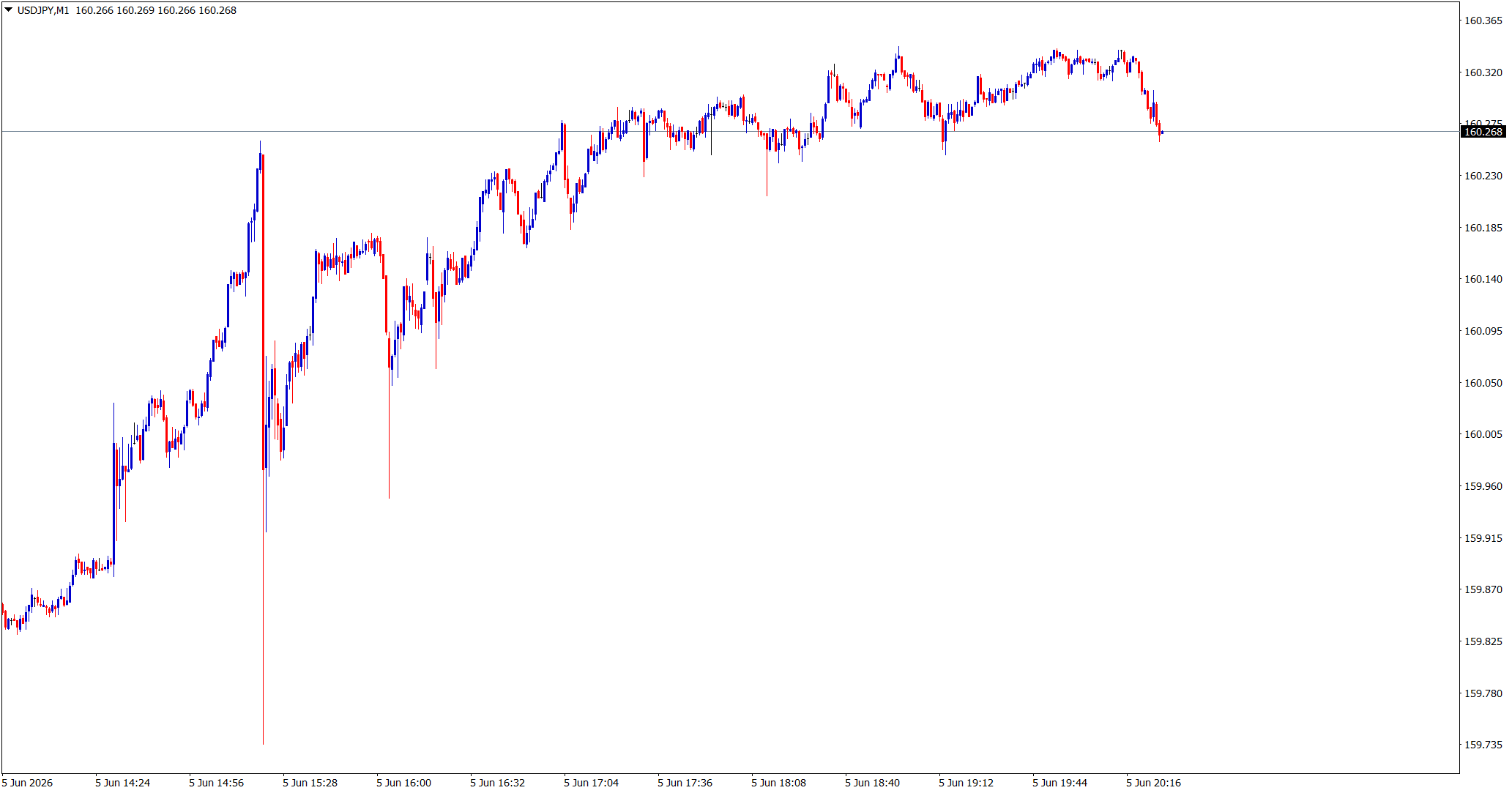
USD/JPY rebounded from Monday’s 155.20 intervention low toward the upper 157s. Technically, that recovery was expected after such a violent decline. Intervention-driven moves often overshoot initially because leveraged positions are liquidated simultaneously.
The important detail is that the pair did not immediately return toward 160–164.
The 155 area has emerged as initial support, while 158–160 now represents an important zone where the strength of speculative dollar demand will be tested. If the pair climbs too rapidly back through 160, the market will likely become increasingly nervous about renewed intervention.
The technical structure has therefore changed from a simple bullish trend into a wide, policy-driven range.
Fundamental Analysis
Fundamentally, intervention has not eliminated the factors that weakened the yen. Japan still has a large yield disadvantage, and fiscal policy under Prime Minister Sanae Takaichi remains expansionary. Reuters noted that Japanese 10-year yields had recently reached thirty-year highs partly because markets feared the government would pursue significant spending while attempting to restrain Bank of Japan tightening.
Yet the intervention has created credible downside risk for USD/JPY.
The U.S. Treasury’s participation means speculative funds can no longer assume Tokyo has limited resources or political support. Takeuchi argued that the symbolic significance of Washington standing behind Japan is substantial enough to discourage hedge funds from rebuilding aggressive long-dollar/short-yen positions immediately.
This makes USD/JPY one of the least straightforward carry trades in the market: the underlying economics still favor dollar strength, but the policy risk has become unusually large.
EUR/USD
Technical Analysis
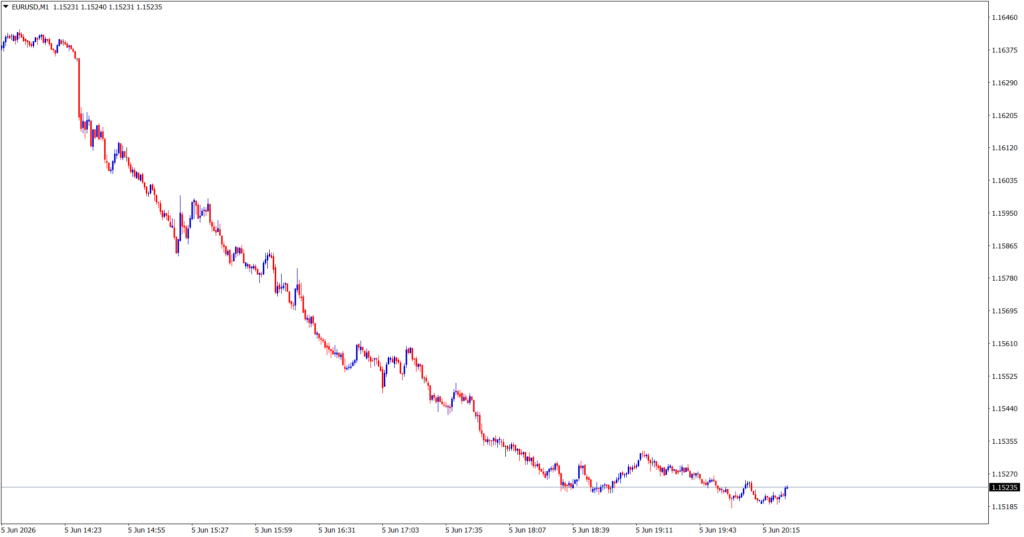
EUR/USD advanced modestly to approximately $1.1531, extending the euro’s recent stabilization.
Technically, the pair remained constructive without breaking into a major new trend. Buyers continued defending the 1.15 region, while upside momentum remained controlled.
Fundamental Analysis
The euro benefited from softer dollar demand and lower oil prices. Qatar’s suggestion that mediation on Iran was making progress reduced concerns about prolonged disruption to Gulf energy flows. For Europe, lower oil is economically supportive because it reduces imported inflation and improves household purchasing power.
However, the euro’s upside remained limited because the U.S. economy still appeared relatively strong and markets continued to assign meaningful probability to another Fed hike.
A Reuters FX poll published the following day showed strategists expecting the dollar to remain firm in the coming months before weakening later, with EUR/USD around $1.15 over the next three months.
GBP/USD
Technical Analysis
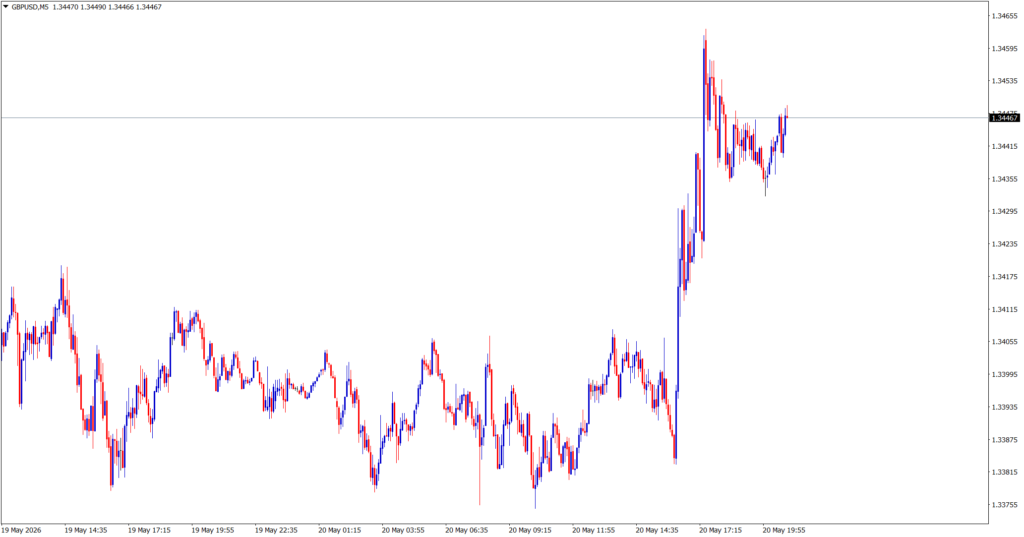
GBP/USD traded around $1.344 and remained largely unchanged. The pair continued consolidating rather than trending aggressively.
The ability to hold around the mid-1.34s after the intervention-related volatility suggested that sterling’s broader structure remained stable.
Fundamental Analysis
The pound was caught between global optimism and domestic uncertainty. Possible U.S.-Iran negotiations supported risk sentiment and lower oil, which helps the UK because of its imported-energy exposure. However, traders were also waiting for clearer policy signals and remained aware of Britain’s fiscal constraints.
The absence of strong UK-specific data kept sterling tied mainly to global dollar flows.
Market Outlook
Aug. 4 showed that intervention had changed behavior even if it had not changed fundamentals.
- USD/JPY rebounded but remained well below its pre-intervention peak.
- EUR/USD benefited from easing oil and geopolitical concerns.
- GBP/USD stayed range-bound while awaiting stronger domestic catalysts.
- Traders increasingly viewed 155–162 as a possible near-term USD/JPY range while remaining alert to renewed joint action.