


Monday opened one of the most consequential FX weeks of the summer with a development markets had not seen in decades: coordinated U.S.-Japan intervention to support the yen. Japanese authorities confirmed that Tokyo and Washington had acted together in the foreign-exchange market after the yen weakened close to 164 per dollar, its weakest level in roughly forty years. Japan’s intervention had already been suspected after sharp moves late the previous week, but Monday’s confirmation fundamentally changed the way traders viewed the risk of remaining aggressively short yen.
What made the operation especially unusual was Washington’s method. Reuters reported that the U.S. Treasury supported the yen by selling euros rather than dollars through the New York Federal Reserve. The apparent objective was to help Tokyo strengthen the yen without creating the impression that Washington was pursuing broad dollar depreciation, which could have complicated U.S. inflation management and pushed Treasury yields even higher. The choice immediately created spillovers into EUR/JPY and introduced a new question for global FX markets: was this simply a yen-specific intervention, or the beginning of a more active U.S. approach to currency management?
The yen surged to around 155.20 per dollar, its strongest level in three months, after trading close to 164 only days earlier. Japan may have spent as much as $36.6 billion in the latest operation, bringing total intervention this year above $100 billion across several episodes. The scale and international coordination forced leveraged funds and carry traders to reconsider one of the market’s most profitable trades of 2026.
The dollar itself was more stable against other major currencies. The dollar index recovered modestly to around 99.97, while the euro and sterling showed only limited movement. That distinction mattered: Monday was not fundamentally a broad anti-dollar event. It was primarily a yen intervention shock, deliberately designed to avoid destabilizing the wider dollar complex.
USD/JPY
Technical Analysis
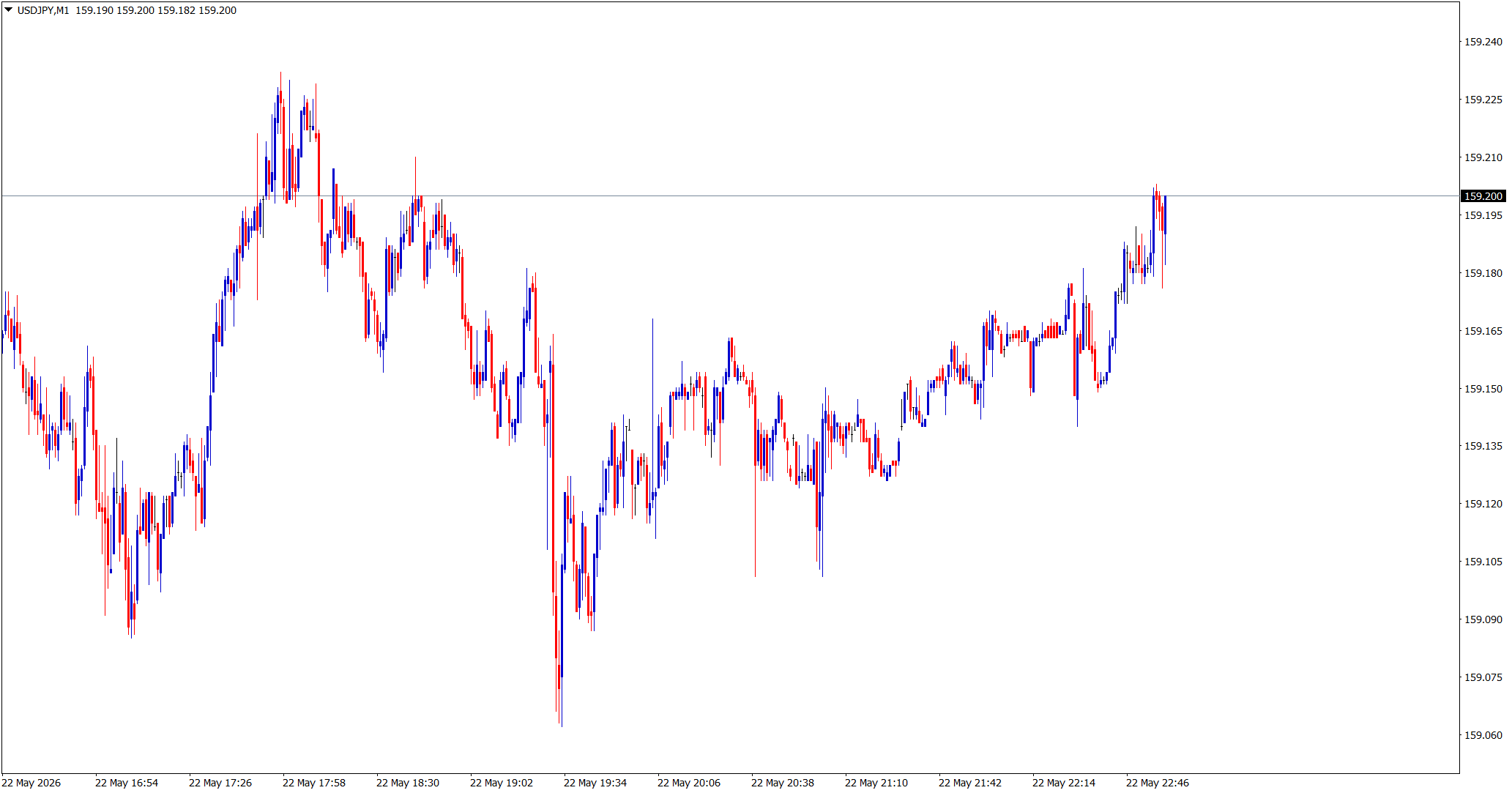
USD/JPY experienced one of its most important technical reversals of the year. The pair had traded near 164 in late July before collapsing toward 155.20 after intervention, a move of more than 5% from the recent peak. That kind of decline is not an ordinary correction; it breaks momentum, forces stop-loss liquidation, and changes the risk profile for anyone attempting to rebuild long-dollar positions.
The most significant technical development is that the market can no longer treat dips in USD/JPY as automatically safe buying opportunities. Throughout much of 2026, every correction was eventually absorbed because traders trusted the enormous U.S.-Japan interest-rate differential. The coordinated intervention introduced a new obstacle: authorities have demonstrated they are willing to attack positioning when the move becomes extreme.
The 155–156 region now represents an important support area following Monday’s intervention-induced low. On the upside, the 160 area has become psychologically important again, but in a different way than earlier in the year. Previously, 160 was simply a round resistance level. Now it represents a zone where traders know policymakers may become uncomfortable if yen depreciation accelerates again.
Technically, the long-term USD/JPY trend is not necessarily dead, but the easy one-way momentum has been broken. Volatility is likely to remain elevated, and rallies may increasingly attract profit-taking rather than automatic continuation.
Fundamental Analysis
Fundamentally, intervention changes the market’s behavior more than it changes the underlying economics. The U.S.-Japan rate differential still favors the dollar, and Japan still faces structural challenges including fiscal expansion, high government debt, and a Bank of Japan that cannot tighten rapidly without risking disorder in its bond market.
But coordinated action from Washington gives Tokyo significantly more credibility. Reuters reported that discussions between U.S. and Japanese officials had taken place repeatedly before the intervention and that Washington was willing to participate because unchecked yen weakness and rising Japanese yields threatened broader financial-market stability.
The signal is important: the market is no longer fighting Japan alone. Traders must consider the possibility that the U.S. Treasury and New York Fed could assist again.
That does not remove the carry advantage supporting USD/JPY, but it raises the cost of expressing that trade aggressively. Leveraged funds now face the possibility that any rapid yen decline could trigger another sudden intervention-driven reversal.
EUR/USD
Technical Analysis
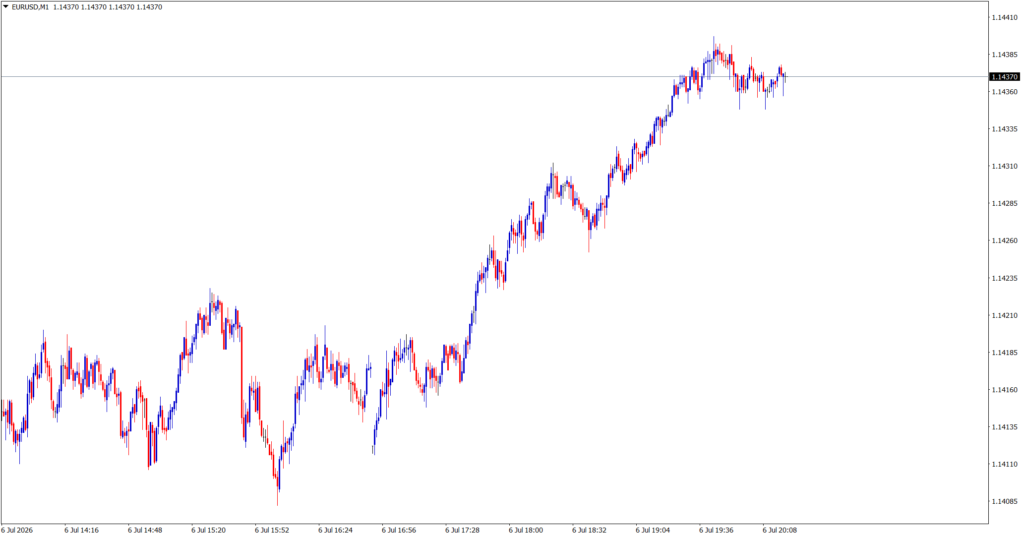
EUR/USD firmed modestly as the broader dollar lost some momentum, but the pair’s movement was much smaller than USD/JPY’s. The euro strengthened by roughly 0.2% against the greenback, leaving the pair around the mid-1.15 area.
Technically, EUR/USD remained constructive after its late-July recovery. The pair continued holding above previously reclaimed support, but it lacked the momentum required for a decisive breakout.
Monday’s price action therefore looked more like continuation of consolidation than the start of a fresh trend.
Fundamental Analysis
The euro’s reaction was especially interesting because the U.S. intervention was reportedly funded through euro sales rather than dollar sales. Normally, direct U.S. involvement in supporting another currency might be interpreted as a signal that Washington wants a softer dollar. Selling euros instead avoided that signal.
That decision limited the direct upside for EUR/USD.
At the same time, improving hopes surrounding Middle East diplomacy and lower oil prices helped Europe. The eurozone remains highly sensitive to imported energy costs, so any reduction in oil risk supports the region’s growth outlook and reduces inflation pressure.
Thus, EUR/USD was supported by easing geopolitical risk but restrained by the unusual structure of the intervention operation itself.
GBP/USD
Technical Analysis
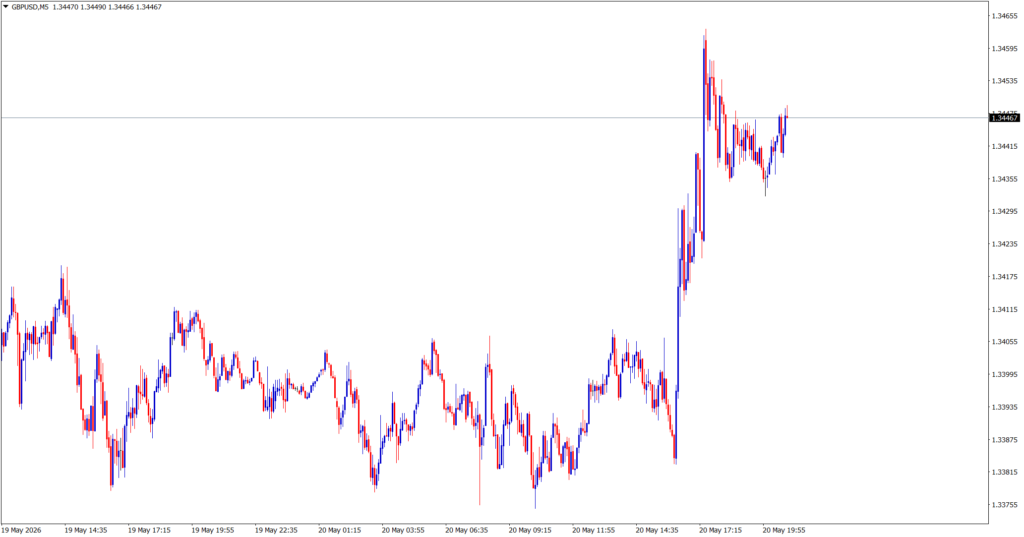
GBP/USD traded more defensively than EUR/USD and ended the session softer as sterling’s recent three-day rally stalled. Reuters reported that the pound weakened against the dollar and fell around 0.5% against the yen as intervention flows reshaped cross-currency positioning.
Technically, GBP/USD remained inside its broader July-August consolidation range. The decline was not large enough to damage the medium-term structure, but it highlighted that sterling was not the primary beneficiary of Monday’s FX shock.
Fundamental Analysis
The pound faced a domestic fiscal headwind. Reuters reported that UK Finance Minister John Healey had asked cabinet ministers to identify spending cuts to finance new government commitments. That kept attention on Britain’s fiscal position even as global FX markets focused on Japan.
Sterling also lacked the strong policy catalyst that would have allowed it to outperform the euro. With the Bank of England having recently held rates steady, the pound remained primarily driven by global dollar movements and UK fiscal expectations.
Market Outlook
Aug. 3 fundamentally changed the risk-reward profile of USD/JPY. The U.S.-Japan operation demonstrated that currency intervention was no longer purely a Japanese issue and that Washington was prepared to participate when disorderly yen weakness threatened broader financial stability.
For now:
- USD/JPY remains vulnerable to sudden intervention-driven declines even though underlying yield differentials still favor the dollar.
- EUR/USD remains supported by easing energy concerns but received only limited benefit from the intervention because Washington deliberately avoided selling dollars.
- GBP/USD remains comparatively range-bound and sensitive to UK fiscal politics.
- The broader dollar is still relatively stable; this was a targeted attack on yen weakness, not a generalized campaign against the greenback.