


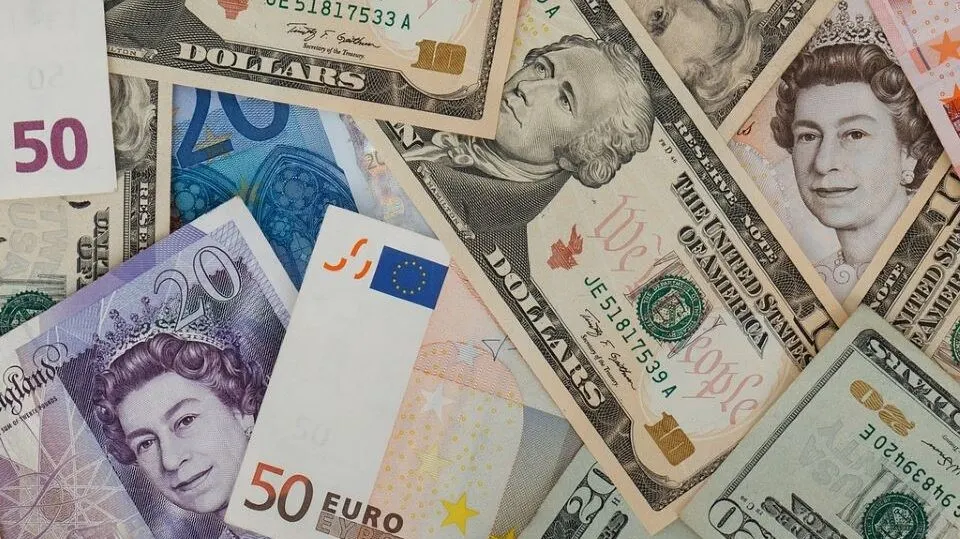
In general, the Kuwaiti Dinar (KWD) is the most valuable currency in the world, trading at about 1 KWD ≈ 3.26 USD, driven by Kuwait’s oil-backed economy, a peg to a stable currency basket, low inflation and strong fiscal reserves.
Key Takeaways
- The Kuwaiti Dinar (KWD) remains the most valuable currency in the world, valued at around 1 KWD ≈ 3.26 USD.
- Currency value depends on economic strength, reserves, inflation rates, and global trade balance.
- Not all valuable currencies are widely traded, some are strong locally but limited in global usage.
- This guide explains why certain currencies dominate value rankings and how traders can interpret this.
- Forex traders can use brokers like Defcofx to capitalize on currency fluctuations with high leverage up to 1:2000 and low spreads from 0.3 pips.
Understanding What Makes a Currency Valuable
A currency’s value reflects the economic strength and stability of its issuing nation. It’s influenced by factors like inflation rates, interest policies, export performance, and investor confidence. When an economy is strong and its exports are in high demand, its currency tends to appreciate compared to others.
Core Factors That Determine Currency Value
- Economic Stability: Nations with stable GDP growth, low inflation, and controlled debt typically maintain stronger currencies.
- Trade Balance: Countries with higher exports than imports generate demand for their currency, increasing its value.
- Interest Rates & Monetary Policy: Central banks with higher interest rates attract foreign investment, driving currency strength.
- Inflation Rate: Low inflation supports purchasing power, while high inflation weakens currency value.
- Foreign Reserves & Government Policy: Countries holding significant foreign reserves (especially in USD or gold) can better stabilize their currencies.
Top 10 Most Valuable Currencies in the World
While many assume the U.S. Dollar or Euro are the strongest, the truth is quite different. The most valuable currencies are often those of smaller, economically stable nations with strong exports and controlled supply, especially those supported by oil and financial reserves.
Top 10 Most Valuable Currencies (vs USD)
| Rank | Currency | Country | Code | Value (vs 1 USD) | Key Strength Factor |
| 1 | Kuwaiti Dinar | Kuwait | KWD | ≈ 0.31 USD | Oil-backed economy, fiscal surplus |
| 2 | Bahraini Dinar | Bahrain | BHD | ≈ 0.38 USD | Pegged to USD, oil exports |
| 3 | Omani Rial | Oman | OMR | ≈ 0.39 USD | Oil economy, low inflation |
| 4 | Jordanian Dinar | Jordan | JOD | ≈ 0.71 USD | Stable peg, strong banking sector |
| 5 | Gibraltar Pound | Gibraltar | GIP | ≈ 1.27 USD | Backed by British economy |
| 6 | British Pound Sterling | United Kingdom | GBP | ≈ 1.28 USD | Global trust, major trade currency |
| 7 | Cayman Islands Dollar | Cayman Islands | KYD | ≈ 1.20 USD | Offshore finance hub |
| 8 | Euro | Eurozone | EUR | ≈ 1.09 USD | Major global reserve currency |
| 9 | Swiss Franc | Switzerland | CHF | ≈ 1.07 USD | Safe-haven asset, financial stability |
| 10 | U.S. Dollar | United States | USD | 1.00 USD | Global reserve, high demand |
Why the Kuwaiti Dinar Tops the List
The Kuwaiti Dinar (KWD) has held its place as the world’s most valuable currency for years. Its exceptional strength is not accidental; it’s backed by a combination of economic stability, oil wealth, and strong fiscal management.
Oil-Backed Economy
Kuwait possesses one of the largest oil reserves globally, making petroleum exports its primary income source. Global demand for oil supports continuous inflow of foreign currency, particularly USD, increasing demand for the Kuwaiti Dinar.
Pegged to a Currency Basket
Unlike currencies pegged solely to the U.S. Dollar, the Dinar is pegged to a basket of major currencies, giving Kuwait flexibility to minimize volatility and protect its currency from market shocks.
Low Inflation and Controlled Supply
Kuwait’s central bank maintains tight control over money supply, ensuring low inflation rates and preserving the Dinar’s purchasing power.
Fiscal Discipline and Stability
Strong government reserves and conservative monetary policy keep the Dinar stable even during periods of global uncertainty.
Most Valuable vs. Most Powerful Currency
Many people confuse the most valuable currencies with the most powerful or most traded ones but these are two very different concepts in global finance. A currency’s value per unit doesn’t necessarily translate to economic influence or global reach.
Most Valuable = Highest Exchange Rate
Currencies like the Kuwaiti Dinar (KWD), Bahraini Dinar (BHD), and Omani Rial (OMR) top the list because each unit of their currency is worth more U.S. Dollars. However, they are not heavily used in international trade or as reserve currencies.
Most Powerful = Global Demand & Usage
The U.S. Dollar (USD), Euro (EUR), and Japanese Yen (JPY) dominate world markets due to:
- High international demand
- Widespread trade settlements
- Reserve holdings by central banks
- Deep liquidity and accessibility
These currencies may not be the highest in value per unit, but they are the most influential and powerful in global commerce.
Why This Distinction Matters for Traders
Understanding this difference helps forex traders identify opportunities:
- “Valuable” currencies (like KWD) are stable but rarely traded.
- “Powerful” currencies (like USD, EUR, JPY) offer liquidity and volatility, ideal for active trading.
- Combining both insights helps diversify and balance trading portfolios.
How Currency Value Impacts Forex Trading
Currency value plays a major role in how traders make decisions, assess market trends, and manage risk. Understanding how a currency’s strength or weakness influences trading behavior is key to succeeding in the forex market.
Why Currency Value Matters
When a currency strengthens, it can affect everything from trade balances to investment flows. For traders, the change in currency value determines potential profit opportunities.
- High-value currencies often show price stability, suitable for long-term positions.
- Fluctuating or depreciating currencies present more volatility, ideal for short-term trading strategies.
Trading Valuable vs. Powerful Currencies
- Valuable currencies like the Kuwaiti Dinar (KWD) aren’t frequently traded because of limited liquidity.
- Powerful currencies such as the U.S. Dollar (USD), Euro (EUR), and Japanese Yen (JPY) dominate forex markets and make up the major pairs, offering high trading volume and tighter spreads.
These pairs (EUR/USD, GBP/USD, USD/JPY) are where most traders find opportunities driven by global news, interest rates, and policy changes.
Role of Brokers in Trading Currency Values
To act on market opportunities, traders rely on brokers offering tight spreads, high leverage, and fast execution.
That’s where Defcofx stands out naturally designed for traders who value both performance and transparency:
- High Leverage Options: Up to 1:2000 flexibility.
- No Commissions or Swap Fees: Spreads starting from 0.3 pips.
- 40% Welcome Bonus: For deposits from $1000 and above.
- Global Reach: Clients from all countries with multilingual support.
- Fast Withdrawals: Processed within 4 business hours, including weekends.
How to Start Trading Global Currencies
Getting started in forex trading involves more than just choosing currency pairs; it requires understanding the market structure, choosing a trusted broker, and developing a disciplined trading approach. Here’s a complete step-by-step guide for beginners.
Learn the Basics of Forex Trading
Before investing real money, traders must grasp the fundamentals:
- Currency Pairs: All trades involve buying one currency and selling another (e.g., EUR/USD).
- Major, Minor, and Exotic Pairs: Major pairs are the most liquid, while exotic pairs include emerging market currencies.
- Market Hours: The forex market runs 24 hours, five days a week, covering London, New York, Tokyo, and Sydney sessions.
Choose a Regulated and Reliable Broker
A trusted broker provides security, transparency, and fair trading conditions.
Here’s where Defcofx naturally fits as a preferred choice:
- High Leverage Options: up to 1:2000 flexibility for all traders.
- 40% Welcome Bonus: on first-time deposits starting from $1000.
- No Commissions or Swap Fees: low spreads from 0.3 pips only.
- Global Access: available to clients from all countries, with multilingual support.
- Fast Support & Withdrawals: completed within 4 business hours, even on weekends.
3. Develop a Solid Trading Plan
Your trading plan should outline:
- Entry and exit strategies
- Position sizing and leverage use
- Risk-reward ratio (e.g., 1:2 or better)
- Emotional discipline
Having a defined plan helps traders minimize losses and stay consistent.
4. Use a Demo Account First
Practice with virtual funds before risking real money. A demo account allows you to:
- Test strategies risk-free
- Understand platform functions
- Build trading confidence
Once you’re comfortable, you can switch to a live account.
Open a Trading Live AccountFinal Thoughts on What Currency is The Most Valuable
The Kuwaiti Dinar (KWD) continues to dominate the global rankings as the most valuable currency, trading at roughly 1 KWD ≈ 3.26 USD. This strength is no accident; it’s the result of Kuwait’s oil-backed economy, disciplined fiscal policies, low inflation, and a well-maintained currency peg system. However, “most valuable” does not mean “most powerful,” as currencies like the U.S. Dollar and Euro, despite lower per-unit value, command greater influence in international trade and global finance due to their liquidity and widespread use.
For traders, the real opportunity lies in understanding the distinction between value and tradability. While highly valuable currencies like the KWD offer stability, they lack the volatility and liquidity that make forex markets profitable. Active traders typically focus on powerful, heavily traded currencies such as USD, EUR, and JPY to capitalize on price movements. Whether you’re analyzing valuable or influential currencies, using a reliable broker with tight spreads, high leverage, and speedy execution such as Defcofx can make all the difference in navigating global currency markets successfully.
Open a Trading Live AccountFAQs About the World’s Most Valuable Currency
The Kuwaiti Dinar (KWD) is the world’s most valuable currency, with 1 KWD equal to around 3.26 USD. Its strength comes from Kuwait’s stable economy, low inflation, and significant oil exports.
Because Kuwait maintains a strong oil-backed economy with massive export revenues and a managed currency peg. The Dinar’s limited supply and high demand in oil transactions give it a higher value per unit than the US Dollar.
The most valuable currency (KWD) has the highest exchange rate per unit, while the most traded currency (USD) dominates global commerce, forex reserves, and financial settlements. Value ≠ Global Power.
Most traders prefer powerful currencies like USD, EUR, or JPY because they offer higher liquidity and tighter spreads. Valuable currencies (like KWD) are less traded and have limited market availability.
The top 10 most valuable currencies are:
Kuwaiti Dinar (KWD)
Bahraini Dinar (BHD)
Omani Rial (OMR)
Jordanian Dinar (JOD)
Gibraltar Pound (GIP)
British Pound Sterling (GBP)
Cayman Islands Dollar (KYD)
Swiss Franc (CHF)
Euro (EUR)
US Dollar (USD)
Defcofx Forex Articles You Shouldn’t Miss
Discover powerful forex strategies in these top reads from Defcofx.
- How to Turn $1000 Into $10000 in a Month?
- Best Currency Pairs to Trade During London Session
- How Much is 0.5 Lot Size in Dollars
- Best Time To Trade NZD/USD
- What Is Considered the Greatest Risk Associated With Forex Settlement?
- Is NZD/USD a Major or Minor Pair?
- Trailing Stop Limit: Definition, Uses & Trading Guide
- When Does a Bearish Market Become Bullish in Forex?
- Is Pound Stronger than Dollar?