



The golden rules of trading are: plan your trades with clear goals, manage risk carefully, control emotions, focus on low-cost trading, continuously learn and adapt, and use reliable platforms. Following these principles improves consistency and decision-making, helps reduce avoidable mistakes, and supports long-term discipline in trading.
Key Takeaways
- Plan and Set Goals: Successful trading starts with a clear strategy and defined objectives for each trade.
- Manage Risk Carefully: Protect capital with proper position sizing, stop-loss orders, and disciplined leverage usage.
- Control Emotions: Avoid impulsive decisions by sticking to your trading plan and maintaining psychological discipline.
- Low-Cost Trading Matters: Choose brokers and platforms with tight spreads and minimal fees to maximize profits.
- Continuous Learning: Stay updated on markets, adapt strategies, and learn from both successes and mistakes.
- Reliable Platforms & Support: Fast, responsive support and dependable trading tools improve efficiency and reduce risks.
Introduction to Golden Rules of Trading
The golden rules of trading are the foundation of long-term success in the financial markets. They aren’t optional tips. They are practical principles that help traders protect their capital, reduce mistakes, and stay consistent over time.
Trading without rules is like sailing without direction. It often leads to emotional decisions, unnecessary risks, and unpredictable results.
Why Golden Rules Matter
Markets can change quickly, and even skilled traders face losses. The difference is that disciplined traders follow rules that keep them focused and protected.
These rules help traders:
- Build discipline and patience.
- Trade with structure instead of impulse.
- Avoid emotional reactions during volatility.
- Stay consistent even after wins or losses.
An Important Part of Trading: Learning and Adapting
Trading isn’t static. Markets evolve, and strategies can lose effectiveness over time. Successful traders keep learning, reviewing their results, and improving their approach.
By applying these golden rules, traders develop a balanced trading style that combines:
- Strategy
- Discipline
- Risk management
- Continuous learning
This creates a safer and more professional approach, especially when using advanced tools like leverage.
Rule 1: Plan Your Trades and Set Clear Goals
This section highlights the importance of having a clear trading plan and realistic goals before entering any trade. Planning helps traders define entry and exit points, evaluate risk, and set achievable profit targets.
A structured plan improves consistency and reduces emotional decision-making. It also gives traders a clear roadmap for executing strategies with discipline.
Proper planning helps traders:
- Stay focused on long-term financial goals.
- Track performance clearly.
- Improve strategies over time.
- Avoid emotional trading decisions.
Rule 2: Risk Management: Protect Your Capital
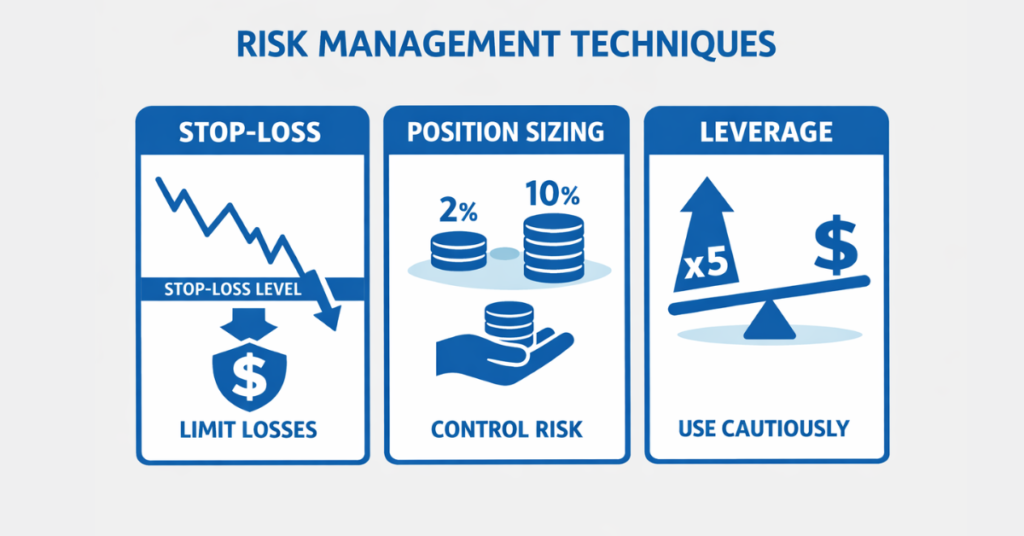
This section explains why risk management is one of the most important rules in trading. Its main purpose is to protect your capital and prevent large losses that can wipe out your account.
It covers key practices such as using stop-loss orders, choosing the right position size, and avoiding too much exposure in one trade or market. Traders should also evaluate risk-to-reward ratios and use leverage carefully, especially with high leverage options like 1:2000.
Note: High leverage increases risk significantly and can lead to rapid losses, especially in volatile markets.
Strong risk management helps traders:
- Limit losses before they grow.
- Stay consistent over the long term.
- Avoid overtrading and emotional decisions.
- Remain calm during market volatility.
Rule 3: Control Your Emotions While Trading
Controlling emotions is a key part of disciplined trading and long-term success. Emotional actions such as chasing losses, impulsive buying, or panic selling often lead to unnecessary mistakes and heavy losses, even for experienced traders.
A calm and objective mindset helps traders stay consistent, follow their strategy, and make decisions based on analysis instead of fear or greed.
Emotional control helps traders:
- Follow their trading plan consistently.
- Avoid impulsive trades and panic reactions.
- Stay focused during market volatility.
- Make rational decisions based on data.
Rule 4: Keep Trading Costs Low
Keeping trading costs low is important for improving overall profitability. Costs such as commissions, hidden fees, and wide spreads can reduce your returns, even when your trades are successful.
To protect your profits, traders should choose platforms and brokers with low-cost trading conditions.
Low trading costs help traders:
- Keep more profit from each trade.
- Avoid hidden fees and unnecessary charges.
- Reduce the impact of spreads on results.
- Improve long-term profitability.
Traders should look for brokers like Defcofx that offer:
- Tight spreads
- No commission Trading
- No swap fees (if possible)
Rule 5: Commit To Continuous Learning
Financial markets change constantly, so traders must keep learning to stay competitive. This includes studying market trends, reviewing past trades, exploring new strategies, and adjusting methods as conditions change.
A learning mindset helps traders improve skills, spot better opportunities, and avoid repeating the same mistakes.
Continuous learning helps traders:
- Improve trading skills over time.
- Understand changing market trends.
- Identify new opportunities.
- Avoid repeating past mistakes.
- Adapt strategies to current market conditions.
Rule 6: Use Reliable Platforms and Support
A dependable trading platform and responsive customer support are important for smooth and stress-free trading. A reliable platform provides accurate market data, fast order execution, and minimal downtime, so traders can act quickly when opportunities appear.
Good customer support also matters because it helps traders solve problems quickly, handle account questions, and process withdrawals without delays.
A reliable platform and support help traders:
- Access accurate market data.
- Execute trades quickly and smoothly.
- Avoid delays caused by downtime.
- Resolve account issues faster.
- Get help with withdrawals and technical problems efficiently.
5 Common Trading Mistakes to Avoid
Even the most experienced traders can fall prey to common mistakes that erode profits and derail long-term success. Understanding and avoiding these errors is critical for both beginners and seasoned traders.
Some of the most frequent mistakes include:
- Overleveraging: Using excessive leverage, such as 1:2000, may amplify gains but can also lead to significant losses in a short time. Traders must calculate risk exposure carefully and never invest more than they can afford to lose.
- Neglecting Risk Management: Skipping stop-loss orders or failing to plan trade sizes exposes accounts to unnecessary risk. Proper risk management ensures losses are controlled and protects capital for future opportunities.
- Impulsive Trading Decisions: Emotional reactions to market fluctuations panic selling or chasing losses often lead to poor outcomes. Discipline and adherence to a pre-defined trading plan prevent impulsive actions.
- Lack of Planning: Entering trades without a strategy or clear objectives can result in inconsistent results and prevent evaluation of performance. Clear trade plans, including entry and exit points, are essential for systematic trading.
- Ignoring Continuous Learning: Markets evolve constantly, and outdated strategies can quickly fail. Traders who neglect learning from past trades or market trends may repeatedly make avoidable mistakes.
Follow The Golden Rules For Long-Term Success
The golden rules of trading provide a clear framework for consistent success. They include planning trades, managing risk, controlling emotions, keeping costs low, continuous learning, and using reliable trading platforms.
Following these principles helps traders protect capital, make smarter decisions, and stay disciplined during market volatility. It also reduces common mistakes and improves long-term profitability.
FAQ’s
The most important rule is managing risk effectively. Protecting capital with stop-loss orders, proper position sizing, and disciplined leverage use ensures long-term sustainability and prevents emotional decision-making, even during market volatility.
Avoid losses by following a structured trading plan, controlling emotions, using proper risk management, and keeping costs low. Consistent learning and adapting strategies to market conditions also minimize mistakes and enhance profitability.
High leverage can increase risk significantly. It may be manageable only with strict risk controls, low position sizing, and clear stop-loss rules. For most beginners, lower leverage is safer.
Defcofx Forex Articles You Shouldn’t Miss
Discover powerful forex strategies in these top reads from Defcofx.
- Intrinsic Value of a Stock: Definition & Calculation
- What is the Big 5 Currency?
- What Is the 3 Strongest Currency?
- What is a Good Profit Factor in Trading?
- How to Start Investing in the Stock Market
- What Is Backtesting in Trading?
- Top 10 Currencies in the World
- What is a Good Profit Factor in Trading?
- What Is a Trade Assist?
- Lot Size vs Leverage Explained: Risk, Margin & Pip Value