


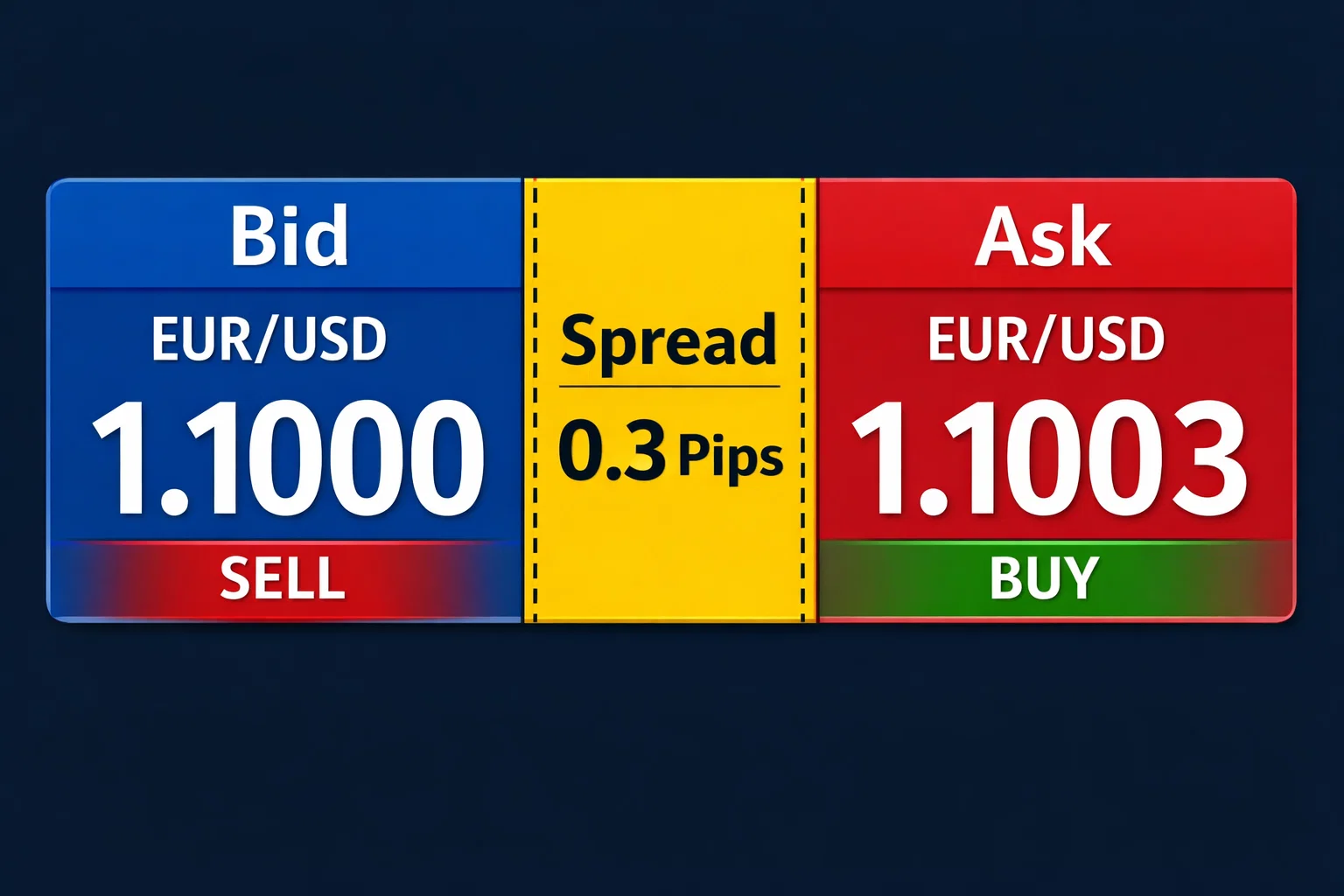
To calculate spread in trading, subtract the bid price from the ask price. The spread represents the broker’s profit and the cost of entering a trade. In forex trading, spreads can be fixed or variable, and they play a big role in determining your overall trading cost and profitability.
Key Takeaways
- The spread is the difference between the ask and bid price.
- You can calculate spread with a simple formula: Ask Price – Bid Price.
- Spreads are either fixed or variable, depending on the broker and market.
- Lower spreads = lower trading costs, especially for scalpers and day traders.
- Forex brokers like Defcofx offer raw spread accounts with very tight spreads and fast execution.
How to Calculate Spread
Calculating spread is straightforward:
Spread = Ask Price – Bid Price
Example: If the EUR/USD pair has a bid price of 1.1050 and an ask price of 1.1052, the spread is:
1.1052 – 1.1050 = 0.0002 or 2 pips
On most trading platforms like Defcofx, this calculation is automatic and displayed in real-time on the quote window. But understanding how it works helps traders estimate costs more precisely.
What Is Spread in Trading?
The term spread in trading refers to the gap between the price at which you can buy an asset (ask) and the price at which you can sell it (bid). This gap is essentially the broker’s commission and can vary depending on market volatility, liquidity, and the type of trading account.
For example, in forex trading, spreads are often measured in pips, the smallest unit of price movement. A lower spread means tighter pricing and more efficient trading, something brokers like Defcofx specialize in.
Why Spreads Matter in Forex Trading
In forex trading, the spread has a direct impact on your profit or loss. The wider the spread, the more the price must move in your favor before you start seeing a profit.
This is why low-spread brokers like Defcofx are popular among active traders. With lower spreads, you minimize costs and improve trade efficiency, particularly important in scalping or high-frequency trading strategies.
Spreads can widen during high-volatility news events or when liquidity is low, such as after market close or during holidays. So always be alert when trading around major economic releases.

Types of Spreads in Forex
- Fixed spread: This stays the same regardless of market conditions. It’s more predictable but often slightly higher.
- Variable spread also called a floating spread, this changes based on market volatility. It can drop very low during high liquidity but spike during major events.
- Raw Spread is the actual interbank spread with no markup, usually offered with a small commission. Defcofx offers raw spread accounts for advanced traders.
Trading Example: Calculating Spread Cost
Let’s say you’re trading GBP/USD, and the bid-ask prices are:
- Bid: 1.2500
- Ask: 1.2503
That’s a 3-pip spread.
If you trade a standard lot (100,000 units), then:
- Each pip is worth $10
- 3 pips x $10 = $30 spread cost
So you start the trade $30 in the red, meaning the market must move in your favor by at least 3 pips just to break even.
Using Defcofx, you might get a 1-pip spread instead, reducing this to $10 per trade.
Experience ultra-tight raw spreads, low commissions, and lightning-fast execution with Defcofx. Perfect for scalpers, swing traders, and beginners looking to reduce costs and trade smarter.
Open AccountFAQs
What does spread mean in forex trading?
Spread in forex trading is the gap between the buying (ask) and selling (bid) price of a currency pair. It represents the broker’s profit and your transaction cost. Low spreads are ideal for fast-paced strategies like scalping or day trading, which is why traders often choose brokers like Defcofx that offer raw spread accounts.
How do I calculate spread in pips?
Subtract the bid price from the ask price and convert the result into pips. If EUR/USD has an ask price of 1.1002 and a bid of 1.1000, the spread is 0.0002, which equals 2 pips. Most brokers show the spread directly on your trading platform, but knowing the formula helps assess market conditions more clearly.
Is a low spread always better?
In most cases, yes. A low spread reduces your trading cost, which is especially useful for short-term strategies. However, check for hidden fees like commissions. Raw spread accounts often charge a small commission but still provide better value overall for active traders.
Do spreads change throughout the day?
Yes, spreads can fluctuate based on liquidity, market volatility, and trading session. They’re usually tight during major sessions like London and New York but widen during low-volume times or high-impact news events. Smart traders using platforms like Defcofx monitor spreads and adapt accordingly.
What is the difference between fixed and variable spread?
Fixed spreads stay constant regardless of market conditions, while variable spreads change with market liquidity and volatility. Fixed spreads offer predictability, while variable spreads (common in ECN accounts) can provide lower costs during peak hours. Defcofx offers both options depending on your trading style.
How does spread affect profit in forex trading?
The spread is a cost you incur immediately when opening a trade. For example, if your trade starts with a 2-pip spread, you’ll see a small loss at the start. Your position must move in your favor by that amount before becoming profitable. That’s why many traders prefer brokers with lower spreads like Defcofx.
Defcofx Forex Articles You Shouldn’t Miss
Discover powerful forex strategies in these top reads from Defcofx.