


Monday’s session opened the new trading week with a noticeably calmer tone after Friday’s modest dollar rebound. Rather than extending defensive positioning, markets shifted back into a more balanced wait-and-see mode, leaving the dollar mixed across major pairs.
The broader macro backdrop remained familiar:
- geopolitical tensions stayed contained overall
- oil prices remained relatively stable
- and Treasury yields moved within narrow ranges
At the same time, there was little in the way of fresh macro catalysts. Without significant economic data, central-bank repricing, or geopolitical escalation, traders appeared reluctant to commit aggressively in either direction.
This created a session defined by:
- consolidation rather than trend development
- selective dollar strength rather than broad buying
- and reduced volatility across FX markets
Importantly, Monday reinforced a pattern that has dominated much of May:
the dollar performs best when markets become defensive, but struggles to sustain momentum when conditions stabilize.
With sentiment balanced and yields steady, the market shifted into consolidation mode once again.
EUR/USD
Technical Analysis
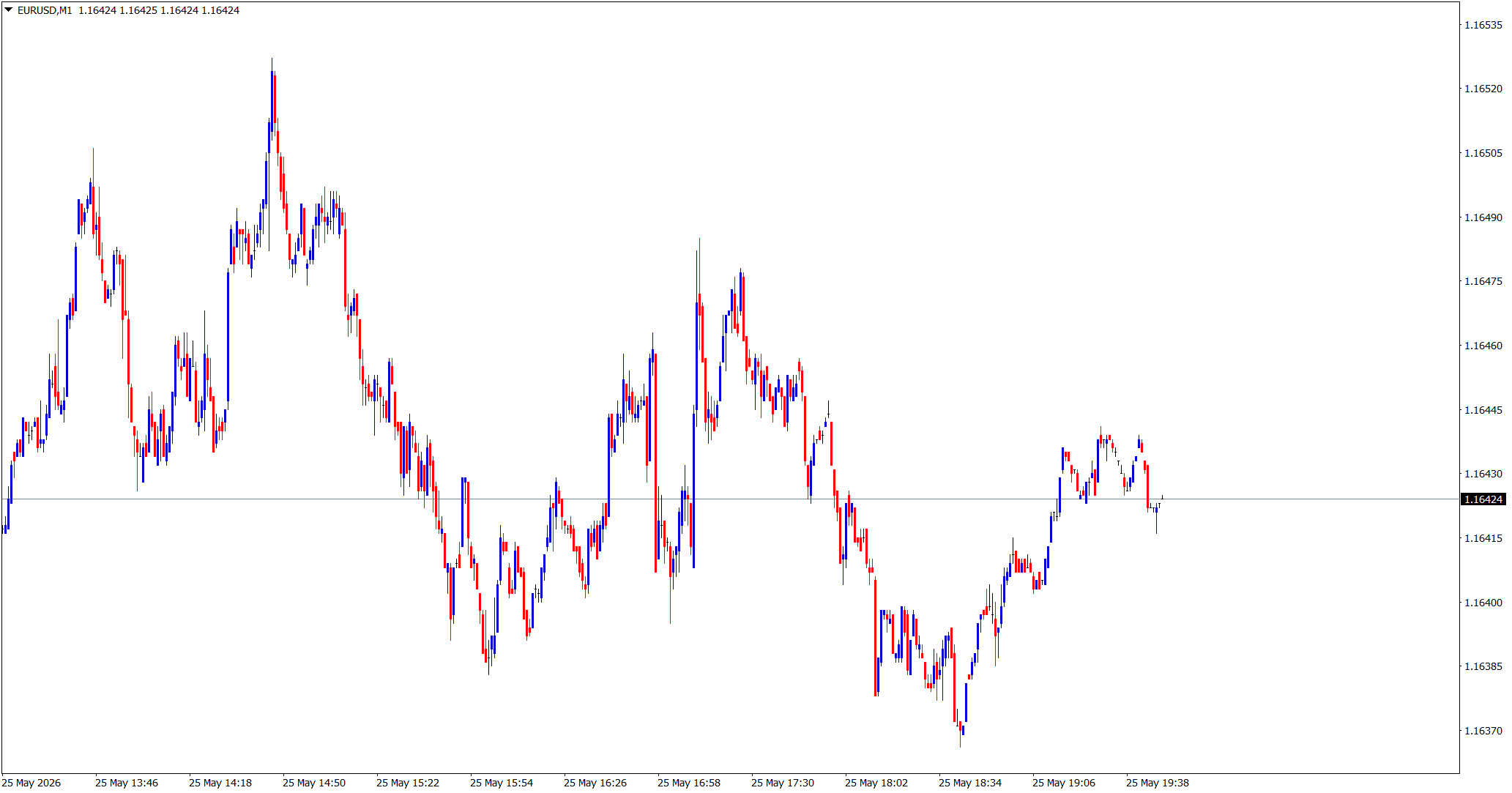
EUR/USD traded sideways and consolidated after Friday’s pullback. The pair remained within its broader established range and showed limited volatility throughout the session.
Technically, this reinforces the broader consolidation structure that has dominated recent weeks. Buyers continue defending support levels effectively, while upside momentum remains capped near recent highs.
The pair currently reflects equilibrium rather than directional conviction.
Fundamental Analysis
The euro remained relatively stable as traders balanced steady dollar conditions against the absence of fresh bullish euro catalysts.
At the same time, calmer market sentiment prevented stronger defensive dollar demand from developing further after Friday’s rebound. This allowed EUR/USD to stabilize despite firmer Treasury yields late last week.
The broader eurozone outlook also remains stable enough to prevent renewed pressure on the currency, particularly with energy concerns far less severe than they were earlier in April.
As a result, EUR/USD remained trapped in consolidation rather than extending either upward or downward.
USD/JPY
Technical Analysis
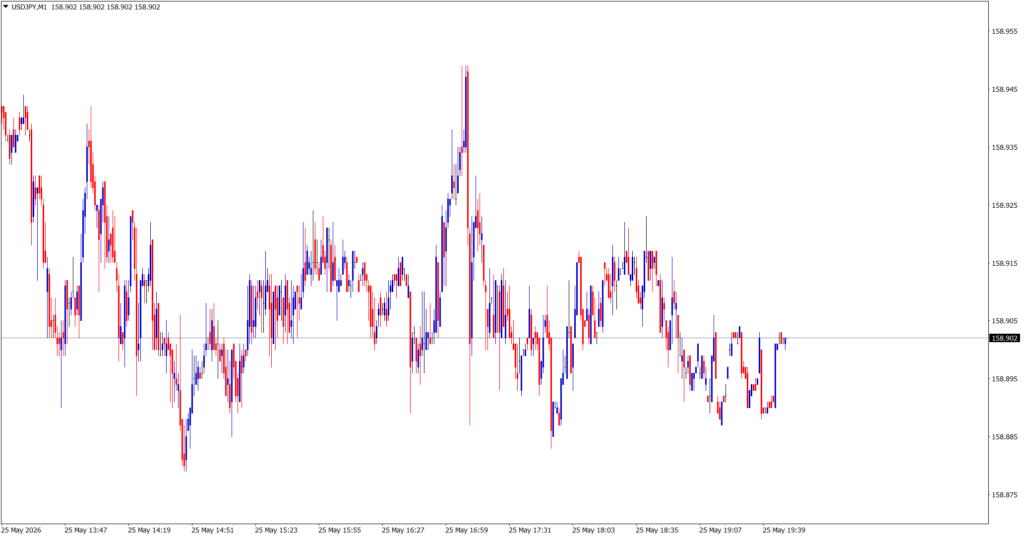
USD/JPY steadied after Friday’s rebound and traded within a relatively narrow range. The pair showed limited follow-through in either direction, reflecting broader hesitation across FX markets.
From a technical perspective, the pair continues consolidating after its recent corrective decline. While Friday’s rebound stabilized momentum somewhat, the pair still struggles to regain the stronger bullish momentum seen earlier in the spring.
Resistance levels near recent highs continue limiting upside conviction.
Fundamental Analysis
USD/JPY remained supported by relatively stable Treasury yields, but the absence of further yield increases limited additional upside momentum.
At the same time, market sentiment improved slightly compared to Friday’s more defensive tone, reducing urgency for stronger dollar positioning against the yen.
This left the pair balanced between:
- steady yield support for the dollar
- and fading momentum near elevated levels.
The broader market still appears cautious about aggressively chasing USD/JPY higher without a clearer catalyst through yields or macro conditions.
USD/CAD
Technical Analysis
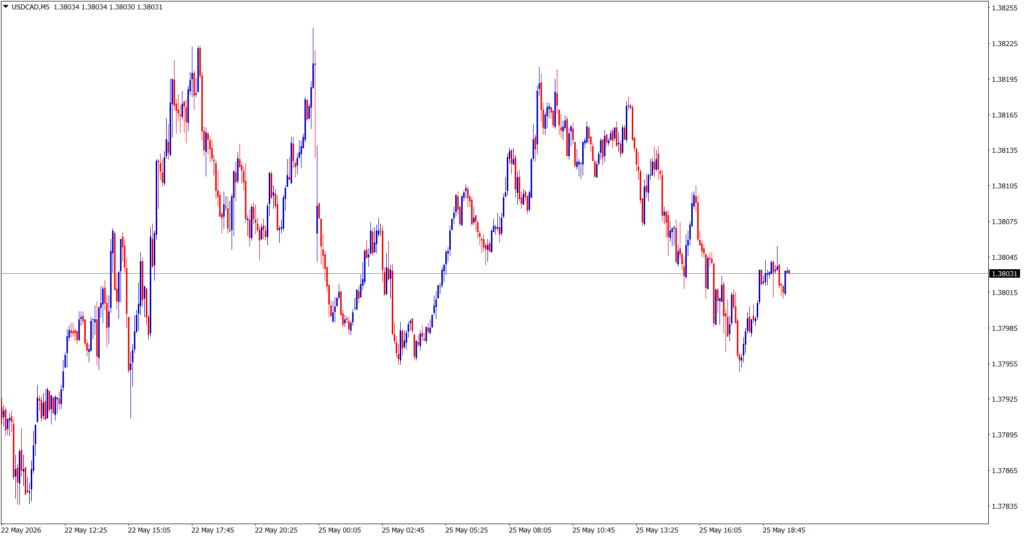
USD/CAD drifted modestly lower and gave back part of Friday’s gains. The move remained controlled and lacked aggressive selling pressure, reflecting gradual repositioning rather than a major sentiment shift.
Technically, the pair remains firmly range-bound. Recent sessions continue to reflect balance between buyers and sellers, though Monday’s price action carried a slight bearish bias for the pair.
The broader consolidation structure remains intact.
Fundamental Analysis
The Canadian dollar benefited modestly from stable-to-firm oil prices and calmer market conditions. While oil did not rally aggressively, prices remained supportive enough to prevent further weakness in CAD.
At the same time, the broader dollar failed to extend Friday’s rebound once markets shifted away from defensive positioning. This allowed USD/CAD to drift lower modestly during the session.
However, the move remained limited because Treasury yields stayed relatively stable, continuing to provide underlying support for the dollar side of the pair.
The result was another session of controlled range trading rather than breakout behavior.
Market Outlook
Monday’s session reinforced the broader environment that has dominated FX markets throughout May:
- contained geopolitical risk
- steady but not aggressively rising yields
- and consolidation-driven trading conditions
The dollar remains supported whenever markets become defensive, but struggles to sustain broader rallies once conditions stabilize.
For now:
- EUR/USD remains trapped within constructive consolidation
- USD/JPY continues stabilizing after recent weakness
- USD/CAD retains a mild downside bias within its range
- and overall market sentiment remains balanced rather than strongly risk-on or risk-off.
Unless stronger catalysts emerge through:
- Treasury yields
- central-bank repricing
- or geopolitical developments
the market is likely to remain dominated by gradual moves, positioning adjustments, and range-bound trading rather than aggressive directional trends.