


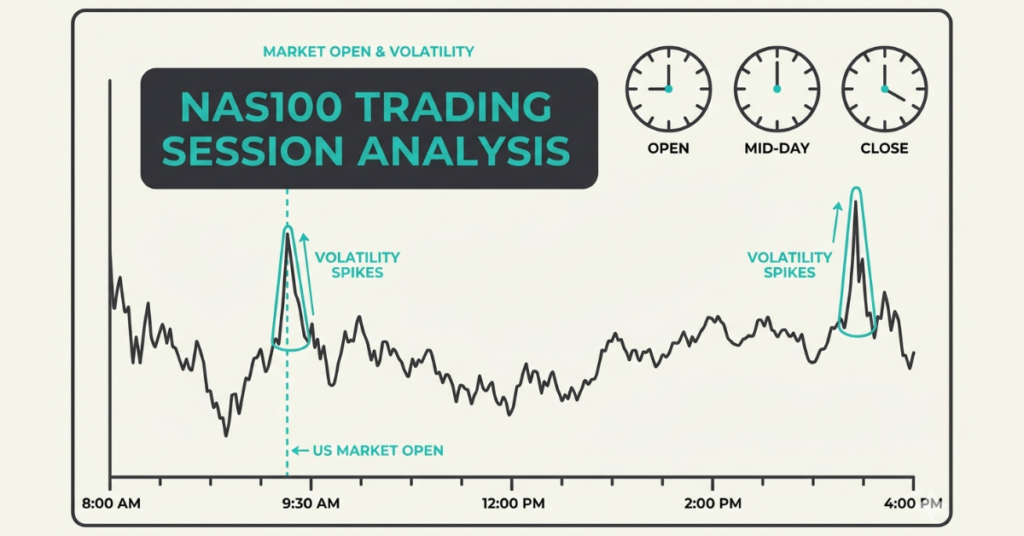
The best time to trade NAS100 is during the U.S. cash session, especially the first hour or two after the open at 9:30 AM ET. Liquidity and volatility peak then, along with key economic releases at 8:30 AM ET, giving the cleanest moves of the day.
Key Takeaways
- NAS100 tracks U.S. tech giants, so it is most active when American markets are open, even though the CFD trades nearly around the clock.
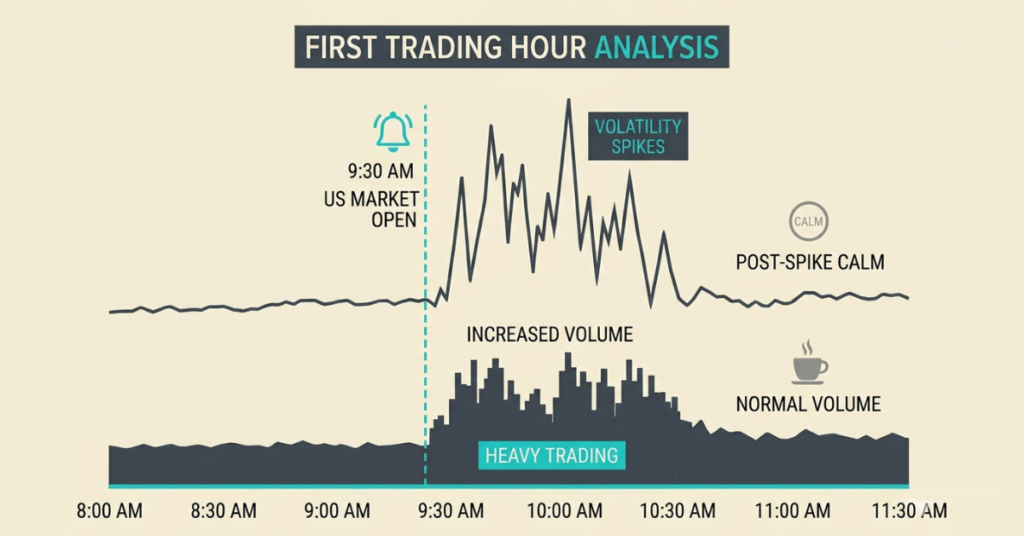
- The U.S. open at 9:30 AM ET brings the sharpest moves, with the first 60 to 90 minutes usually the most volatile.
- Major U.S. economic data lands at 8:30 AM ET, often setting the tone before the cash open.
- The London and New York overlap adds extra liquidity in the morning hours.
- Quiet periods like the late Asian session tend to have thinner moves and wider ranges to avoid breakout trades.
Why Timing Matters More for NAS100
NAS100 follows the Nasdaq-100, a basket of large U.S. technology and growth companies. Those businesses are based in the United States, and their shares trade most heavily when the U.S. market is open. So even though the index CFD is available nearly 24 hours, the price only comes alive when the companies behind it are actively traded.
This is the core principle: trade NAS100 when its underlying market is awake. Outside U.S. hours, moves can be thin and choppy, which makes spreads feel wider and breakouts less reliable. If you want the broader picture of how index sessions work, the guide on what indices are in forex is a useful base.
NAS100 Activity Through the Day
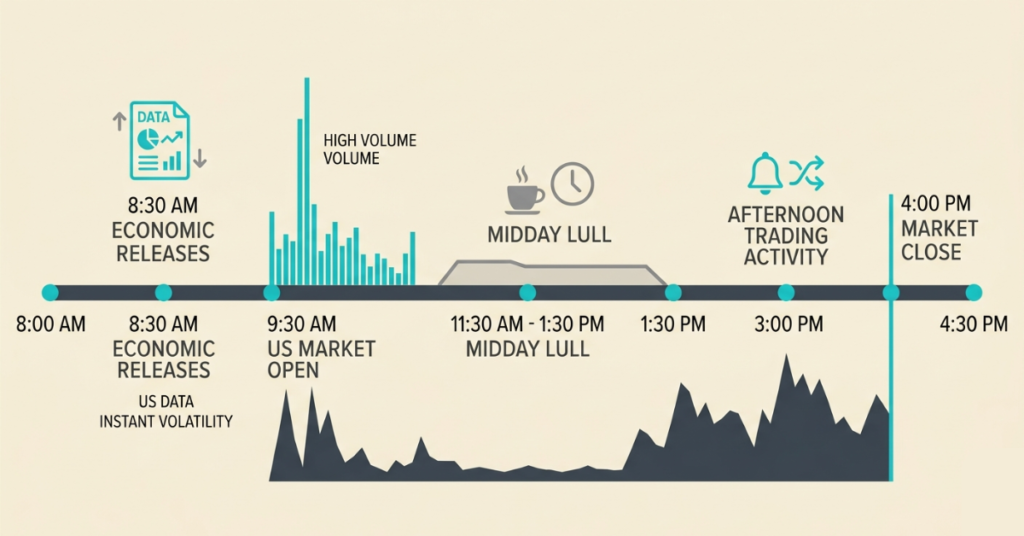
Here is how a typical trading day breaks down for NAS100, with all times in Eastern Time. Use this as a map of where the action tends to concentrate.
| Time (ET) | Session Phase | What to Expect |
| 8:30 AM | U.S. data releases | Sharp pre-open reactions to jobs, inflation, GDP |
| 9:30 AM | U.S. cash open | Highest volatility, strongest directional moves |
| 9:30 – 11:00 AM | Opening drive | Best window for momentum and breakout trades |
| 11:30 AM – 1:00 PM | Midday lull | Volume thins, ranges tighten, choppy moves |
| 2:00 – 4:00 PM | Afternoon session | Activity picks up into the close, trend resolution |
| After 4:00 PM | After-hours | Thinner liquidity, earnings-driven gaps possible |
The U.S. Open: The Prime Window
The single most active period for NAS100 is the U.S. cash open at 9:30 AM ET. Orders that built up overnight hit the market, and traders react to the morning’s news. The first 60 to 90 minutes usually deliver the day’s strongest, cleanest moves, which is why many short-term traders focus their work here.
This window suits momentum and breakout strategies because direction tends to be decisive. It also demands discipline, since fast moves cut both ways. Tight risk control and predefined stops matter most during this stretch.
The 8:30 AM Data Spike
An hour before the cash open, major U.S. economic releases land at 8:30 AM ET. Reports on jobs, inflation, and growth can move NAS100 hard before the regular session even begins. Big surprises here often set the tone for the entire morning.
These releases create fast, news-driven volatility. Some traders look to capture it, while others step aside until the dust settles. Either way, knowing the data calendar helps you avoid being caught off guard. Pairing this with a look at the indices trading hours keeps your timing precise.
The London and New York Overlap
Before the U.S. open, London is already active, and the hours where London and New York overlap bring strong liquidity to global markets. While NAS100’s biggest moves come from U.S. hours, this overlap adds depth in the morning and can sharpen early positioning. The breakdown of the Asian, London, and New York sessions shows how this rhythm builds through the day.
Deeper liquidity generally means tighter spreads and smoother fills, which benefits NAS100 traders working the morning. If you also trade currencies, the guide on which currencies are most active during specific sessions pairs well with this thinking.
Times to Be Cautious
Not every hour rewards activity. The midday U.S. lull, roughly late morning into early afternoon, often sees volume drop and ranges tighten. Breakouts here can fail more often, trapping traders who expect follow-through that never arrives.
The late Asian session, when U.S. markets are closed, also tends to be quiet for NAS100. Moves can be thin and erratic. This does not mean you cannot trade, but strategies built for high volatility usually work better during U.S. hours. For a wider view on timing across markets, the best time to trade forex guide adds helpful context.
Trading NAS100 With Defcofx
Defcofx offers NAS100 as an index CFD on MetaTrader 5, with conditions built for the fast moves this instrument is known for.
| Feature | What Defcofx Offers |
| Trading platform | MetaTrader 5 (MT5) |
| Spreads | From 0.3 pips |
| Commissions | Zero commissions |
| Swap fees | Zero swap fees |
| Leverage | Up to 1:2000 |
| Welcome bonus | 40% on first deposits of $1,000 or more |
| Withdrawals | Processed within 4 business hours, including weekends |
| Index access | NAS100, US30, and other major index CFDs |
NAS100 Timing at a Glance
A few reference points to keep your timing sharp. All times are Eastern Time, the natural anchor for a U.S. index.
U.S. cash session: 9:30 AM to 4:00 PM ET, the core active window for NAS100.
Peak volatility: the first 60 to 90 minutes after the 9:30 AM open.
Key data drops: 8:30 AM ET for major U.S. economic releases.
Quietest stretch: midday lull and the late Asian session when U.S. markets are closed.
Availability: NAS100 CFDs trade nearly 24 hours a day, five days a week.
Final Thoughts on Best Time to Trade NAS100
Timing is one of the biggest factors in successful NAS100 trading. While the index can be traded almost around the clock through CFDs, the highest-quality opportunities typically appear when the underlying U.S. stock market is active. The period surrounding the 9:30 AM ET market open consistently delivers the strongest liquidity, the largest price movements, and the clearest trading setups, making it the preferred window for most NAS100 traders.
Equally important is understanding how scheduled economic events influence the index. Major U.S. data releases at 8:30 AM ET often create significant volatility before the market even opens, while the London–New York overlap adds additional liquidity that can improve execution and market depth. Traders who align their strategies with these high-activity periods generally have a better chance of finding meaningful opportunities than those trading during quieter market hours.
FAQ
The U.S. cash open at 9:30 AM ET, especially the first 60 to 90 minutes, offers the highest volatility and the cleanest directional moves of the day.
At 9:30 AM ET, overnight orders and morning news hit the market at once. This burst of activity drives the strongest moves, making the open the busiest period.
Yes. Major U.S. releases at 8:30 AM ET, such as jobs and inflation reports, can move NAS100 sharply before the cash session even opens.
Usually not for breakout trades. Volume often thins around midday, tightening ranges and increasing false moves. Range strategies may suit this quieter window better.
Eastern Time (ET) is the natural anchor since NAS100 tracks U.S. companies. Convert ET to your local time, and remember it shifts with daylight saving.