


Monday was not a normal “risk-off” session. It was the start of a macro repricing driven by a violent energy shock after the U.S.-Israeli attack on Iran widened the Middle East conflict. Reuters reported that oil and gas prices posted their biggest jump in years, while the dollar and gold rallied as markets worried the conflict could last for weeks, disrupt the global recovery, and reignite inflation. Reuters also noted that futures traders were no longer fully pricing a Fed cut until September, which meant the dollar was being helped not only by safe-haven demand, but also by a meaningful shift in the expected path of U.S. rates.
That made Monday’s FX behavior more nuanced than a generic flight to safety. The market was not simply hiding in the dollar because of fear. It was also rethinking whether higher oil and gas prices would keep inflation sticky for longer across the G10, especially in economies more exposed to energy imports. Reuters’ market coverage described exactly that dilemma in bonds too: investors had to choose between buying sovereign debt for safety and selling it because inflation expectations were suddenly moving up again. On balance, inflation fear dominated.
EUR/USD
Technical Analysis
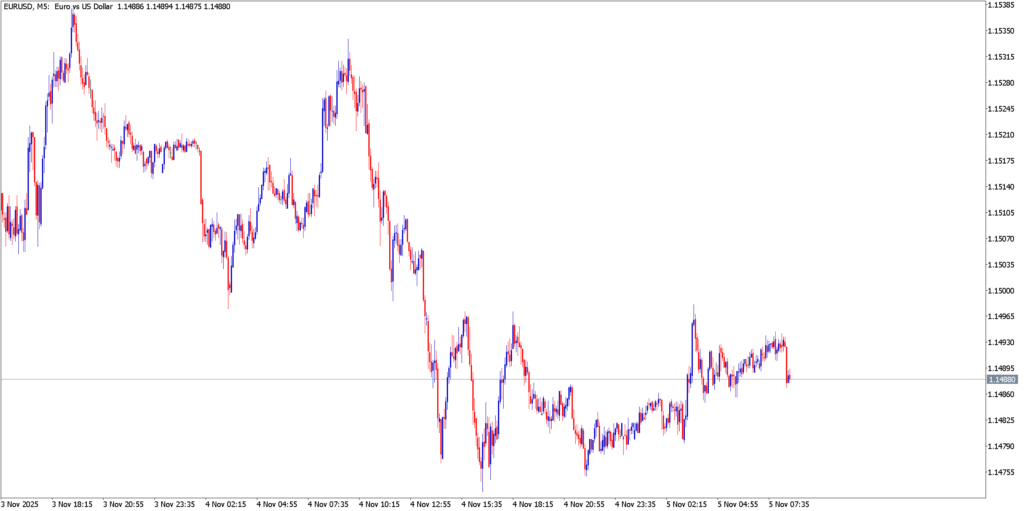
EUR/USD traded with the kind of tone that usually signals a market moving out of a neutral range and into a more defensive phase. It was not an outright collapse, but rallies lacked conviction and price action repeatedly failed to hold recoveries. That sort of structure tends to matter because it shows the market is no longer treating dips as buying opportunities; instead, it is using short rebounds to lighten euro exposure.
Fundamental Analysis
The euro was one of the clearest expressions of the day’s macro story. Reuters said the euro fell on Monday because higher oil prices hurt currencies of economies seen as more vulnerable to energy shortages, while the dollar was supported by both haven demand and delayed Fed-cut pricing. That matters for EUR/USD because Europe faces a harder inflation-growth tradeoff in an energy shock: imported inflation rises just as growth risks worsen. In other words, the euro was pressured not just because the dollar was strong, but because the euro area’s macro setup suddenly looked more fragile under an oil shock.
USD/CAD

Technical Analysis
USD/CAD was one of Monday’s more interesting trades because, in theory, higher oil should support the Canadian dollar. Instead, the pair rose. Technically, that is a strong signal: when an otherwise supportive commodity move fails to lift the loonie, it tells you the market’s dominant driver is not export economics but broad dollar demand and defensive positioning. The pair held a firm upward bias because the USD side of the trade was stronger than the CAD side of the oil story.
Fundamental Analysis
Reuters reported that the Canadian dollar weakened 0.4% against the U.S. dollar on Monday even though oil jumped 5.9% and Canadian manufacturing data improved. The reason, according to Reuters and CIBC’s Sarah Ying, was that geopolitical risk and risk-off conditions were dominating, and the dollar’s haven appeal was strong enough to overshadow the normal oil benefit Canada would receive. Reuters also noted that the U.S. dollar had its biggest basket gain since July and that bond yields rose as the energy shock revived inflation worries. So USD/CAD became a very clean illustration of Monday’s logic: even oil-linked currencies could lose ground if the market’s primary need was still to own dollars.
USD/JPY

Technical Analysis
USD/JPY was not smooth. It traded like a pair trying to process two strong and conflicting narratives at once. On one side, higher U.S. yields and a stronger dollar should push it upward. On the other, geopolitical tension can create episodic demand for the yen as a haven. That kind of conflict usually produces bigger intraday swings, less elegant trend structure, and more sensitivity to headlines than to chart levels alone.
Fundamental Analysis
Reuters reported that the yen fell on Monday alongside the euro because higher oil prices hurt currencies of countries exposed to energy shortages, but that does not erase the yen’s haven status. Japan is highly sensitive to imported energy costs, so an oil shock can weaken the yen fundamentally even while market stress makes it attractive tactically. That is why USD/JPY became one of the week’s most reactive pairs from the very start: it was balancing energy vulnerability, haven flows, and U.S. rate repricing all at once.
Market Outlook
By the end of Monday, the market had adopted a new working assumption: higher oil meant higher inflation risk, fewer near-term Fed cuts, and stronger dollar support. That framework left EUR/USD and USD/CAD as cleaner macro expressions, while USD/JPY looked set to remain the most two-way and headline-sensitive major pair of the week.