


The British pound sterling (GBP) is generally considered the oldest currency still in use today. It has been used in some form for more than 1,200 years, with its roots going back to Anglo-Saxon England around the 8th century. While the pound has changed a lot since then, it has kept its identity as Britain’s currency.
Key Takeaways
- The British pound sterling is generally considered the world’s oldest currency still in use.
- Its history goes back more than 1,200 years.
- The pound started as a way of measuring the value of silver.
- GBP stands for Great British Pound and is the code traders usually see on forex platforms.
- The pound became decimalized in 1971, when £1 officially became 100 pence.
- Today, GBP is still one of the world’s major currencies.
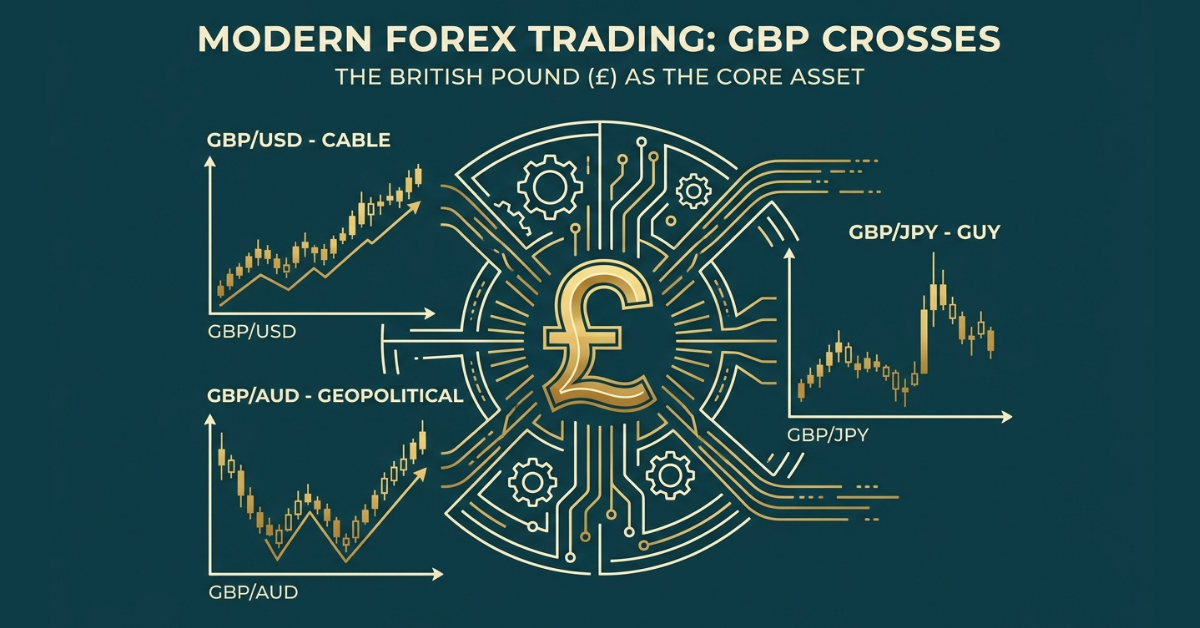
- GBP/USD, EUR/GBP, and GBP/JPY are some of the most commonly traded pound currency pairs.
How Old Is the British Pound?
Pretty old.
The story of the British pound goes back to Anglo-Saxon England. A monetary system based around silver pennies developed during this period, and the idea behind the “pound” was originally connected to weight.
Basically, a pound of silver could be divided into 240 silver pennies.
This is also where the name “pound sterling” comes from.
Of course, the money people used back then looked nothing like the British notes and coins we know today. The monetary system changed many times over the centuries.
But the pound itself survived.
That’s what makes it special. Plenty of currencies have existed for hundreds or even thousands of years, but most eventually disappeared or were replaced. The pound continued evolving instead.
Where Did the Name “Pound” Come From?
The word “pound” originally referred to weight. In the early monetary system, the value of money was connected to a pound of silver. That silver could be divided into smaller coins called pennies.
So instead of the pound beginning as the paper money we recognize today, it started as a way of describing a certain amount of valuable metal.
The word “sterling” is connected to the silver standard used for English money.
Over hundreds of years, the meaning changed. The pound became a proper currency rather than simply a measure of silver.
What Does the £ Symbol Mean?
The famous £ symbol also has a surprisingly old story behind it.
It comes from the Latin word “libra,” which was a unit of weight.
That’s why the symbol looks like a fancy letter L.
You may also have heard of pounds being called “quid.” That’s simply an informal British nickname for pounds, a bit like Americans saying “bucks” instead of dollars.
So: £20 = 20 pounds = 20 quid.
Same money. Different way of saying it.
Pounds, Shillings, and Pennies
Here’s where old British money gets a little strange.
Today, the system is straightforward:
£1 = 100 pence.
But it wasn’t always like that.
For centuries, British money was divided into pounds, shillings, and pence.
One pound was worth 20 shillings, and one shilling was worth 12 pence.
That meant:
| Old British Money | Value |
| 1 pound | 20 shillings |
| 1 shilling | 12 pence |
| 1 pound | 240 pence |
Yes, 240 pennies in a pound.
If you’re wondering why anyone thought that was easier than 100, you’re probably not alone.
Britain eventually changed to the much simpler decimal system.
When Did the Pound Become Decimal?
The big change happened in 1971 on what became known as Decimal Day.
Britain officially moved away from the old pounds, shillings, and pence system.
From then on: £1 = 100 pence.
That’s the system still used today.
This is a good example of how a currency can change dramatically without becoming an entirely new currency.
The coins changed. The calculations changed. The monetary system became much simpler.
But the pound remained the pound.
Is the British Pound Really Older Than the U.S. Dollar?
Yes, by a very long way.
The U.S. dollar officially became the currency of the United States in the late 18th century.
The British pound had already existed in different forms for centuries by then.
Here’s a simple comparison:
| Currency | Code | Approximate Origin |
| British Pound | GBP | 8th-century roots |
| U.S. Dollar | USD | 18th century |
| Swiss Franc | CHF | 19th century |
| Japanese Yen | JPY | 19th century |
| Euro | EUR | 1999 |
The euro is especially interesting because it feels so established today, but it’s actually very young compared with the pound.
The Euro was introduced for electronic and accounting purposes in 1999, with physical Euro notes and coins following in 2002.
What About Currencies From Ancient Civilizations?
This topic is where people sometimes get confused.
Money existed thousands of years before the British pound.
Ancient civilizations used coins long before England even existed in its modern form. Ancient Greek, Roman, Chinese, Persian, and other civilizations all had forms of money.
But those currencies aren’t still being used today.
For example, you can’t walk into a shop in Rome and pay using an ancient Roman denarius.
The modern British pound is different because its monetary history continued over centuries rather than the currency disappearing completely and being replaced.
That’s why the question isn’t “What was the first money ever?”
It’s “What is the oldest currency still in use?”
And that’s what puts the pound in a special position.
Why Has the Pound Lasted So Long?
There’s no single reason. Britain itself changed massively during those 1,200-plus years. Kings and queens came and went, borders changed, the British Empire rose and declined, banking developed, and the entire global financial system changed.
The pound adapted along the way.
It moved from silver-based money to coins and banknotes and eventually into today’s digital financial system.
The Bank of England also became an important part of that story after it was founded in 1694.
Today, the Bank of England is the UK’s central bank. Among other responsibilities, it helps set monetary policy and works to maintain price stability.
So while the pound has ancient roots, the way it operates today is completely modern.
Why Is GBP Important in Forex Trading?
This is where the history connects with modern trading.
GBP is still one of the world’s major currencies, so you’ll see it constantly on forex platforms.
You won’t normally see it written as “British pound sterling” on your chart. You’ll see the three-letter code GBP.
Common GBP pairs include:
GBP/USD is one of the best-known.
When you see GBP/USD on a chart, you’re simply looking at how many U.S. dollars are needed to buy one British pound.
So if GBP/USD rises, the pound is generally getting stronger compared with the dollar.
If it falls, the dollar is getting stronger relative to the pound.
You can trade easily with Defcofx. Please review our complete website and make an informed decision to get started with a live forex trading account. You can easily sign up by visiting this link: https://portal.defcofx.com/signup-live-account
A Currency With a Very Long Story
The really interesting thing about the pound isn’t just its age.
It’s how much has happened while it remained in use.
It existed long before modern stock markets, smartphones, online banking, or forex platforms. It survived enormous political and economic changes and kept adapting to them.
Today’s pound isn’t a bag of silver pennies.
You can hold it as a banknote, keep it digitally in a bank account, use it through your phone, or trade it against another currency online.
But behind that modern system is more than a thousand years of monetary history.
Frequently Asked Questions
What is the oldest currency still used today?
The British pound sterling is generally considered the oldest currency still in continuous use today. Its history can be traced back more than 1,200 years.
How old is the British pound?
Its roots go back to Anglo-Saxon England around the 8th century, making the currency more than 1,200 years old.
What does GBP stand for?
GBP stands for Great British Pound. It’s the international currency code used for the British pound sterling.
Is the British pound older than the U.S. Dollar?
Yes. The pound’s history goes back centuries before the U.S. Dollar was established in the late 18th century.
Why is the pound called sterling?
The name is linked to the historical use of sterling silver in England’s monetary system.
What are the most popular British pound forex pairs?
Some commonly traded GBP pairs include GBP/USD, EUR/GBP, GBP/JPY, GBP/CHF, and GBP/AUD.
Why is GBP/USD called Cable?
The nickname comes from the transatlantic telegraph cable that was historically used to send exchange-rate information between Britain and the United States.