


A swing trade is usually held for a few days to a few weeks. There is no exact number of days you have to hold it. You normally stay in the trade until your price target is reached, your stop-loss is hit, or the reason you entered the trade is no longer valid.
Basically, swing trading sits somewhere between day trading and long-term investing. You aren’t trying to close everything within a few minutes or hours, but you are also not planning to hold the position for years.
8 Important Insights About Holding a Swing Trade
- Swing trades are commonly held for a few days to several weeks.
- There is no fixed holding period.
- Some swing trades may only last one or two days.
- Others can stay open for several weeks.
- Your trading setup should decide when you exit, not boredom or fear.
- Stop-loss and take-profit levels can help plan your exit.
- Swing traders often use 4-hour and daily charts.
- Overnight and weekend risks matter because swing trades stay open longer.
How Many Days Should You Hold a Swing Trade?
There’s no magic number. You don’t need to close a trade after exactly 5 days just because it’s a swing trade.
A typical swing trade might look something like this:
| Trading Style | Typical Holding Time |
| Scalping | Seconds to minutes |
| Day Trading | Minutes to hours |
| Swing Trading | Days to weeks |
| Position Trading | Weeks to months or longer |
| Long-Term Investing | Months to years |
These aren’t strict rules.
A swing trade could finish much faster than expected if the market makes a big move. Another could take longer because the market moves slowly.
The important thing is why you’re still holding the position.
Ready to explore swing trading? Trade forex markets with Defcofx through MetaTrader 5 and monitor market moves with flexible charting tools.
Explore Forex TradingDon’t Choose Your Exit Based Only on Time
Imagine you enter a trade on Monday.
You tell yourself: “I’m going to hold this until Friday.”
But why Friday?
What if your profit target is reached on Tuesday?
Would you keep holding it for no reason?
Or what if the setup clearly fails on Wednesday?
Would you keep the losing trade open just because Friday hasn’t arrived yet?
Probably not.
This is why effective swing trading isn’t really about deciding how many days you want to stay in a trade.
It’s about deciding what needs to happen for you to leave.
Hold Until Your Take-Profit Is Reached
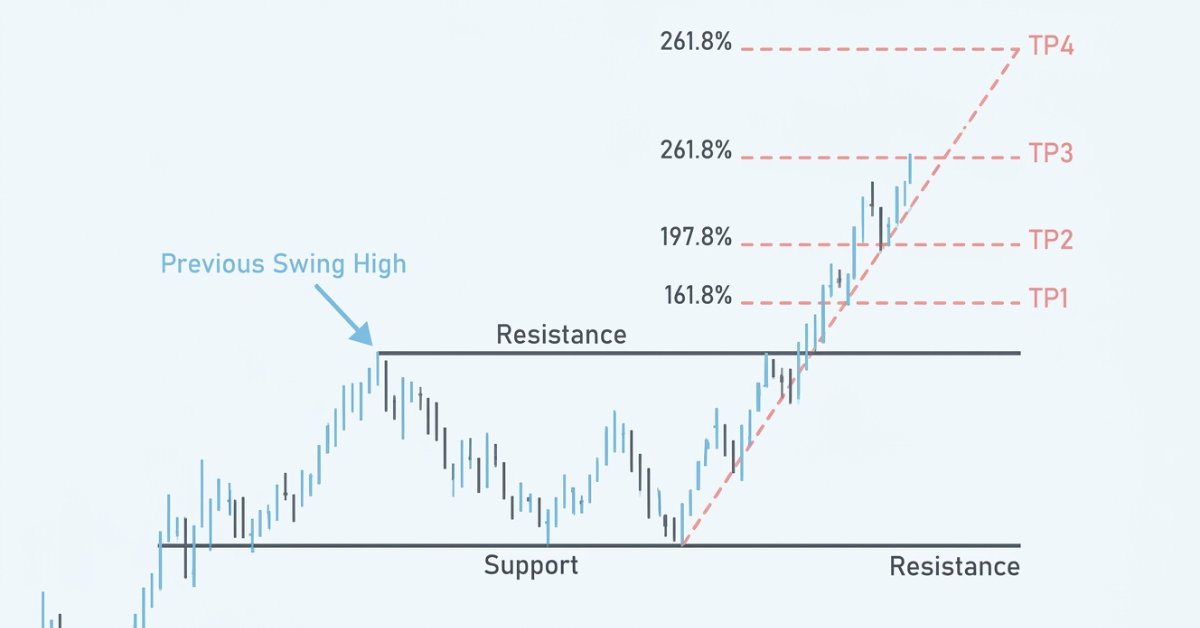
One simple way to manage a swing trade is with a take-profit level.
A take-profit is a price where your trade automatically closes in profit.
Let’s use a really easy example.
Imagine EUR/USD is trading at 1.1000. You think it could rise to 1.1200. You buy at 1.1000 and set your take-profit at 1.1200.
Now imagine it takes six days for EUR/USD to reach 1.1200. Your swing trade lasted six days.
But what if the price reaches 1.1200 tomorrow? Then your trade might only last one day.
The market decides how quickly the move happens.
Your Stop-Loss Can End the Trade Too
Of course, not every trade reaches the profit target. Sometimes you’re wrong. That’s completely normal.
A stop-loss is a price level where the trade automatically closes to limit your loss.
Let’s use the same example.
You buy EUR/USD at 1.1000.
Your take-profit is 1.1200.
Your stop-loss is 1.0900.
Now you have a basic plan.
| Level | Price |
| Entry | 1.1000 |
| Take-Profit | 1.1200 |
| Stop-Loss | 1.0900 |
If EUR/USD reaches 1.1200, you exit with a profit.
If it falls to 1.0900, you exit with a loss.
You don’t keep holding simply because you wanted it to be a two-week swing trade.
You Can Exit When the Setup Stops Making Sense
You don’t always have to wait for your stop-loss or take-profit. Sometimes the market gives you new information.
Imagine you bought a currency pair because it was clearly trending upward.
- Then something changes.
- The price breaks below an important support level.
- The trend starts looking weaker.
Your original reason for buying may no longer be there.
A swing trader might decide to exit early rather than wait for the stop-loss.
The important thing is having rules for situations like this before emotions take over.
Can a Swing Trade Last Only One Day?
Yes. A swing trade can end much faster than expected.
Imagine you enter a position expecting the move to take a week. Then major news comes out. The market moves rapidly and reaches your target the next day. There’s no reason you need to keep the position open just to make it “officially” a swing trade.
Trading styles are descriptions, not strict laws.
Can a Swing Trade Last a Month?
It can. Some market swings develop slowly. A trader might hold a position for several weeks if the trend remains strong and the trading plan allows it.
At some point, though, the line between swing trading and position trading becomes a little blurry. That’s okay. The label isn’t the important part. Managing the trade properly is.
Should You Hold a Swing Trade Over the Weekend?
This is an important question because swing traders regularly face weekends.
Forex trading normally closes for retail traders over the weekend. If you have an open position on Friday, you generally have two choices:
- Close it.
- Or keep it open until the market reopens.
Holding over the weekend creates something called gap risk. A gap happens when the market reopens at a noticeably different price from where it closed.
Imagine that some huge political or economic news happens on Saturday. You can’t normally close your forex position while the market is shut. When trading starts again, the price could open much higher or lower. That can create additional risk.
What About Holding a Trade Overnight?
Swing traders normally hold positions overnight. Otherwise, it would be difficult to keep a trade open for several days.
But there’s something else you should understand. Depending on your broker, instrument, and account type, holding a position overnight may involve financing or swap charges. These costs can increase if you keep a position open for a long time.
That’s why swing traders should understand their broker’s overnight trading conditions before entering a position.
How Do You Know When It’s Time to Exit?
There are several simple reasons you might close a swing trade.
- Your profit target has been reached.
- Your stop-loss has been hit.
- The trend has changed.
- An important support or resistance level has broken.
- Your original setup is no longer valid.
- A major event is coming, and you don’t want the extra risk.
The important thing is having a reason. Closing because you’re scared after one small price movement isn’t much of a strategy. Neither is holding because you’re hoping a losing trade will magically recover.
Should You Close a Swing Trade Before Big News?
It depends on your strategy.
Imagine you’re trading GBP/USD and the Bank of England is announcing its interest rate decision tomorrow. That could cause a big price move.
- Some swing traders may keep their positions open because the event is part of their strategy.
- Others may reduce their position or close it because they don’t want to deal with the extra volatility.
There’s no universal answer.
What matters is knowing the event is coming up.
You don’t want to wake up and say, “Wait, there was an interest-rate decision today?”
Check the economic calendar.
How Long Should You Hold a Winning Trade?
This is where things can get tricky.
Imagine your trade is already in profit. You’re happy.
Now you start thinking, “Should I take the money now?” Maybe.
But again, go back to your trading plan. If your target hasn’t been reached and the setup still looks good, closing just because you’re nervous could mean leaving the trade too early.
Some traders use a trailing stop to manage their exit. A trailing stop basically moves with the market as the trade moves in your favor. It can help protect some profit while still giving the position room to continue.
How Long Should You Hold a Losing Swing Trade?
Not until it “comes back.”That’s a common trap for beginners.
Imagine your plan says:
- Entry: 1.1000
- Stop-loss: 1.0900
But when the price approaches 1.0900, you think, “I’ll give it a little more room.”
You move the stop to 1.0800.
Then the price falls again.
So you move it to 1.0700.
Now a small planned loss has become a much larger one.
The point of a stop-loss is to decide how much you’re prepared to lose before you’re emotional about the trade. Losses happen. Swing traders don’t need every trade to win.
They need to control what happens when they’re wrong.
How Much Should You Risk on a Swing Trade?
Holding time and risk go together.
Swing trades often need more room to move than very short-term trades, that means your stop-loss could be further away from your entry. But that doesn’t mean you need to risk more money. You can simply use a smaller position size.
Here’s a simple example. Imagine you’re comfortable risking $50. A trade with a tight stop may allow a larger position. A trade with a wider stop may require a smaller position. The amount you’re willing to lose can stay around $50 in both cases. That’s why position sizing matters.
Start Trading with Defcofx
Want to practice spotting longer market moves? Explore forex markets with Defcofx through MetaTrader 5 and use charts, technical indicators, stop-loss orders, and take-profit levels to build a trading plan that fits your strategy.
Open a Live Forex Trading AccountSwing trading gives traders more time to follow larger market movements without needing to react to every tiny price change.
Don’t Watch a Swing Trade Every Five Minutes
If you’re trading from a daily chart, checking the position every two minutes can make you panic over completely normal price movements.
Remember why you chose swing trading. You’re trying to catch a bigger move. There will probably be little movements against you along the way. That’s normal.
If every tiny red candle makes you want to close the position, you may end up interfering with your strategy.
- Set your levels.
- Manage your risk.
- Stay aware of important news.
Then give the trade enough room to actually develop.
Frequently Asked Questions
How many days should I hold a swing trade?
Swing trades are commonly held for a few days to several weeks. There is no fixed number of days.
Can I hold a swing trade overnight?
Yes. Holding positions overnight is normal in swing trading. However, you should understand overnight price risk and any financing costs that may apply.
Can you hold a swing trade for one month?
Yes. Some swing trades can last several weeks or around a month if the market move continues. Longer trades may start to look more like position trading.
Should I hold a swing trade over the weekend?
You can, but there is extra risk because markets may reopen at a different price after weekend news. Traders should understand this gap risk before keeping positions open.
What timeframe is best for swing trading?
Many swing traders use 4-hour and daily charts. Some also check weekly charts to understand the larger trend.
When should I exit a swing trade?
Common exit reasons include reaching your take-profit, hitting your stop-loss, seeing the trend change, or having your original trading setup become invalid.
Should I keep holding a losing swing trade?
You shouldn’t keep a trade open simply because you hope it will recover. Your trading plan should define how much you’re prepared to risk and where you’ll exit if the trade goes against you.
Final Thoughts
So, how long should you hold a swing trade? Usually, anywhere from a few days to a few weeks.
But don’t focus too much on the exact number of days.
A better approach is to hold the position while your trading setup remains valid and exit when your target is reached, your stop-loss is hit, or market conditions change enough to invalidate the trade.
Some swing trades might finish tomorrow. Others could take two or three weeks.
The important part isn’t how long you held them.
It’s whether you followed your trading plan and controlled your risk.