


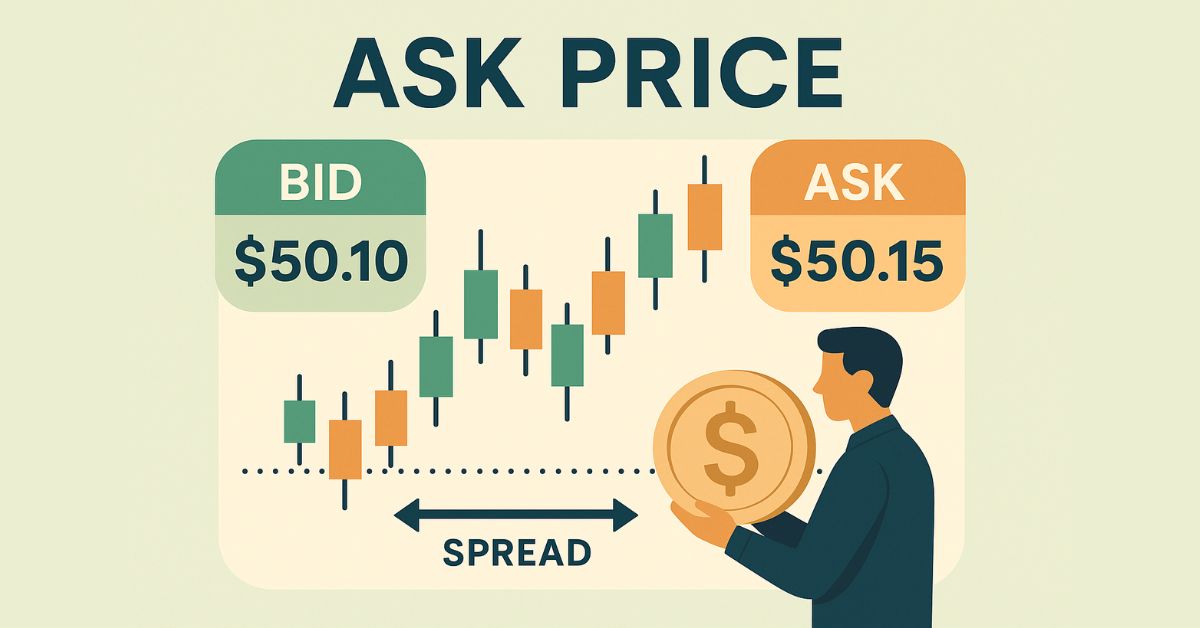
When you want to know how to assess the ask-bid spread for a stock, you’re looking at a key piece of trading mechanics: the difference between the price at which someone is willing to buy the stock (bid) and the price at which someone is willing to sell it (ask). This spread reveals information about liquidity, the cost of entering/exiting a trade, and how friendly a market is for your trading style.
If you buy a stock at the ask and immediately sell it at the bid, you incur the spread as a cost. Over many trades, that cost adds up. Knowing how to analyze the spread helps you trade smarter, whether you’re a short‑term trader or a long‑term investor.
Key Takeaways
- The ask-bid spread is the difference between the price buyers bid and sellers ask, a key cost in every trade.
- Narrow spreads mean high liquidity and efficient markets; wide spreads signal low liquidity or higher volatility.
- Spread size directly affects trading costs and profitability, especially for short-term traders.
- Factors influencing spreads include liquidity, volatility, stock price, order book depth, and time of day.
- Always compare the current spread to historical averages to spot unusual market behavior.
- Limit orders can help control costs and reduce the impact of wide spreads.
- Treat the spread as a core trading expense; mastering it leads to better entries, exits, and risk control.
Why the Ask‑Bid Spread Matters
The ask‑bid spread is often called a hidden cost of trading. While you may focus on commissions or fees, the spread is the first cost you incur the moment you enter a position. If you pay the ask and the stock hasn’t moved when you sell, you’re already behind by the size of the spread.
Beyond cost, the width of the spread tells you about how liquid and efficient the market is. A very narrow spread often means many buyers and sellers are active, order book depth is strong, and slippage risk is lower. Conversely, a wide spread can signal low liquidity, higher volatility, or potential execution challenges.
For example, if you plan to trade smaller or less‑liquid stocks, you might face a spread of several cents or even a dollar, which changes the risk/reward equation compared to a large‑cap stock with a $0.02 spread.
What Influences the Spread?
Several factors determine how wide or narrow a spread will be:
Liquidity & volume
If a stock is heavily traded and many orders sit at nearby bid and ask levels, the spread tends to be narrow. Illiquid stocks have fewer participants and usually wider spreads.
Volatility
When markets expect big news or price swings, market makers may widen spreads to protect against rapid moves. A stock with sudden large price changes will often show a wider spread before or after the event.
Stock price level and market structure
Lower‑priced stocks often have larger percentage spreads because the absolute number of dollars is small, but the risk for market makers is relatively larger.
Order book depth & quotes
How many shares are available at the best bid and ask? If one side is very shallow, even a medium‑sized trade can move the price, broadening the effective spread.
Time of day/market session
During pre‑market or after‑hours, or when trading is light, spreads widen because fewer participants are active.
How to Assess the Spread Step‑by‑Step
- Check current bid and ask: Look at your trading platform. Note the ask price and the bid price at that moment.
- Calculate the spread: Subtract bid from ask to get the dollar spread. For example, if bid = $10.00 and ask = $10.08, the spread is $0.08.
- Compute percentage spread: This helps compare across stocks with different price levels. For example: Spread ÷ midpoint price × 100. An $0.08 spread on a $10 stock is 0.8%. On a $100 stock, the same spread is 0.08%.
- Check historical typical spread: Look at the normal range of spreads for the stock during normal conditions (no major news). If the current spread is much wider, it may signal caution.
- Look at the order book/Level 2 data: Are there many shares lined up at bid/ask levels? A shallow book means risk of price movements when you execute.
- Consider your trade size and timeframe – Larger trades or rapid exit demands increase sensitivity to spread size. Short‑term trades are more impacted by spread than long‑term holds.
- Factor spread into costs and stop‑loss decisions – If your trade needs to move just a few cents to profit, a wide spread can eat all potential gains.
Key Spread Assessment Metrics
| Metric | Typical Value | Why It Matters |
| Absolute spread ($) | e.g., $0.02‑$0.10 on large‑cap | Shows direct cost per share |
| Percentage spread (%) | e.g., 0.10% – 1% | Normalises cost across different price stocks |
| Historical range | Narrow to wide depending on stock | Indicates what “normal” looks like for this stock |
| Order book depth | High vs Low volume at bid/ask | Affects execution risk and price impact |
| Time‑of‑day spread size | Narrow midday, wider pre‑/post‑market | Helps plan timing of entry/exit |
When Spread Behaviour Signals Something Else
Sometimes the spread tells a story beyond mere cost:
- Widening ahead of earnings or news: The market may anticipate volatility; traders or market‑makers widen the spread as a risk buffer.
- Persistent wide spreads despite high volume: Could be a sign of hidden problems such as pending corporate action, liquidity stress, or abnormal order flow.
- Very tight spreads: While usually positive, they may also precede a sharp move if many orders await consumption; the thinness might hide risk.
Final Thoughts: How to Assess the Ask Bid Spread for a Stock
Learning how to assess the ask-bid spread for a stock is a foundational trading skill. Beyond mere awareness, you integrate it into your trade planning: entry timing, order type, risk size, and exit strategy. Spread is part of your cost of doing business in the market. The more you treat it as such, the more control you have.
As you become familiar with stocks you trade regularly, you’ll know typical spread behavior. When you see unusual spread widenings or narrowings, you’ll be alerted to changing dynamics.
FAQs
Short‑term trades need quick entry and exit, so a wide spread immediately eats into profit. Long‑term investors hold for months or years, so while spread matters, it’s a much smaller relative cost compared to total return.
Yes, but you must adjust for cost. Use a smaller position size, limit orders instead of market orders, and allow a larger stop‑loss/take‑profit to cover the spread cost.
Look at recent history: what the spread has been during typical trading hours, and compare the current spread to that. If it’s significantly wider, investigate liquidity, news, or other abnormalities.
Yes, the spread often widens before the market opens, after it closes, during midday hours (commonly called the lunch lull when trading activity slows), or when trading volume drops because fewer traders and market makers are active. This increases execution risk.
A deep order book means many shares at bid/ask levels and usually supports tighter spreads. A shallow book means your trade may move the price, effectively increasing your cost beyond the quoted spread.
If you trade frequently, yes, it’s wise to avoid stocks that look cheap but have liquidity issues or spreads that vary widely. If you’re a long‑term holder and trade rarely, then wider spreads may be acceptable if fundamentals are strong.
Defcofx Forex Articles You Shouldn’t Miss
Discover powerful forex strategies in these top reads from Defcofx.