


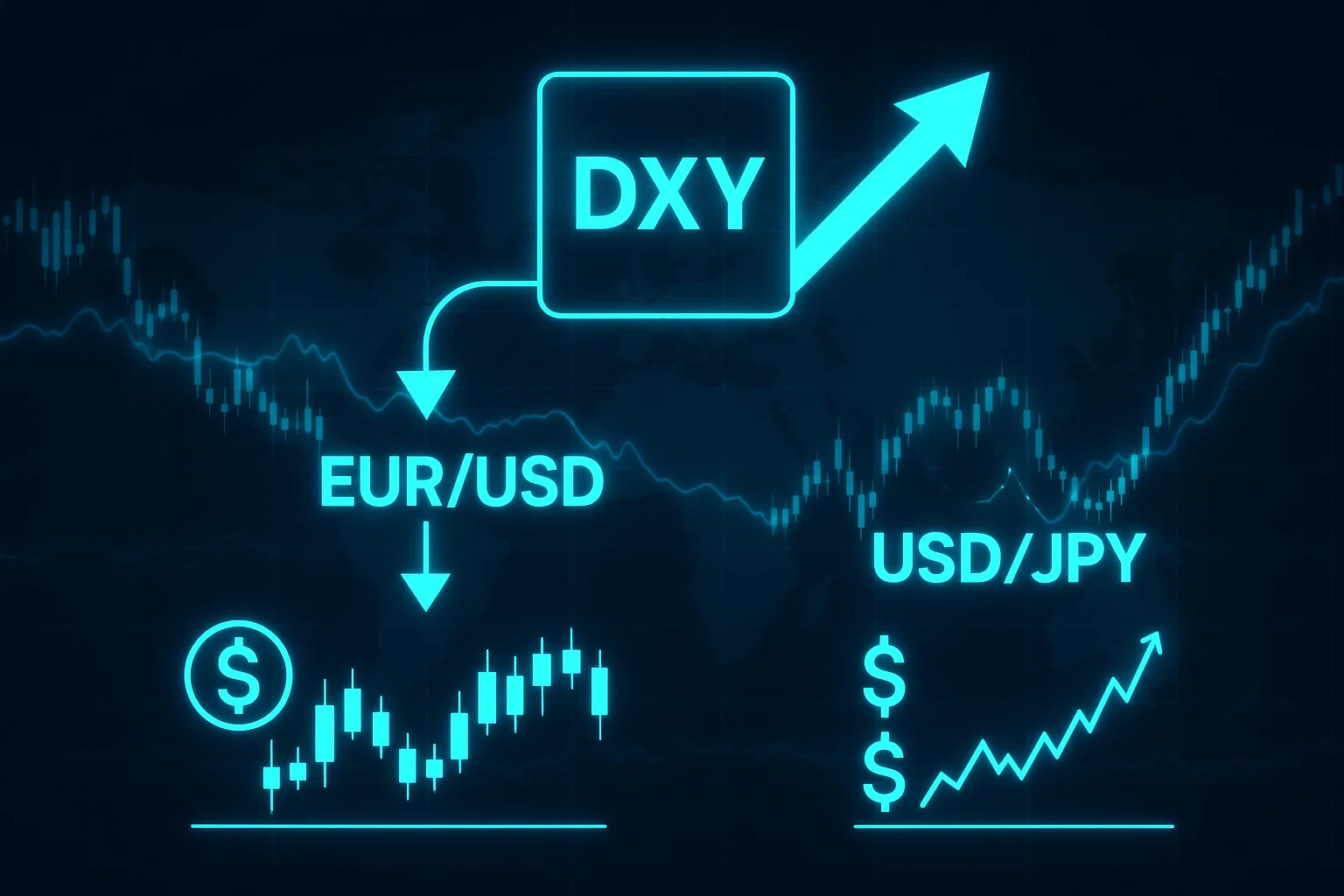
A correlated forex pairs list helps you trade smarter by knowing which currency pairs tend to move together or in opposite directions. Using this knowledge, you can avoid double‑exposure risk, hedge positions, or find confirmation across pairs. This gives you better control and smarter entries in the forex market.
Key Takeaways
- Correlation reveals how two currency pairs move in relation to each other, positively, negatively, or weakly.
- Positive correlation (close to +100%) means both pairs tend to move in the same direction; negative correlation (close to –100%) means they move in opposite directions.
- A solid correlated forex pairs list is a risk‑management tool as much as a strategy tool, helping you avoid overexposure.
- Correlations change over time; don’t assume relationships remain constant.
- Reviewing correlation before opening multiple trades ensures your portfolio is balanced and not unintentionally doubling risk.
Correlated Forex Pairs List
| Currency Pair A | Currency Pair B | Correlation Type | Brief Explanation |
| EUR/USD | GBP/USD | Strong positive (~+0.90) | Both major EUR‑based and GBP‑based currencies move similarly against USD. |
| EUR/USD | USD/CHF | Strong negative (~–0.90) | EUR/USD rises while USD/CHF falls, due to USD/CHF typically moving against EUR/USD. |
| AUD/USD | NZD/USD | Strong positive (~+0.90) | Both commodity‑linked, risk‑sensitive Australasian majors. |
| USD/CAD | AUD/USD | Moderate negative (~–0.75) | CAD tends to benefit from weak oil and USD, opposite to AUD/USD risk currency behavior. |
| EUR/JPY | GBP/JPY | Strong positive | Both JPY crosses; when risk sentiment changes, JPY flows drive both. |
What Is Currency Correlation and Why It Matters
In forex trading, currency correlation measures how closely two currency pairs move in relation to each other. If one pair rises while another also rises consistently over time, they are positively correlated. If one rises while the other falls, they are negatively correlated.
The reason this matters is simple: if you hold two trades that are highly positively correlated, you may think you’re diversified when in fact you’re doubling your risk.
On the other hand, if you open positions in negatively correlated pairs, you may create an effective hedge. Using a correlated forex pairs list as a reference helps you avoid these hidden pitfalls and ensure your trades are aligned with your risk profile and strategy.
How to Use a Correlated Forex Pairs List
A correlated forex pairs list serves multiple practical uses.
- First, it helps with trade confirmation: if you see a breakout in one pair and a similarly correlated pair breaks, you may have stronger conviction.
- Second, it helps with risk management: you avoid accidentally opening multiple positions that will all move together and expose you to a large drawdown.
- Third, it helps with hedging: by choosing pairs with strong negative correlation, you can offset risk in one position with another.
Always check the correlation coefficient and timeframe; pairs that are highly correlated on a daily chart may be less so on a 15‑minute chart.
Why Correlations Change (And You Must Monitor Them)
A common misunderstanding is believing that currency pair correlations are fixed. They are not. Correlations can shift due to changing economic data, central bank policy divergence, commodity price swings, or risk sentiment shifts.
For example, the strong positive correlation between EUR/USD and GBP/USD may weaken if the UK and Eurozone decouple economically or politically.
Traders who rely on stale lists risk suffering big losses when a correlation breaks down. That’s why a reliable strategy isn’t just selecting pairs from a correlated forex pairs list. It includes regular reviews and updates of those correlations.
How to Use Currency Correlations in Real Trading
If you identify EUR/USD breaking out and you know GBP/USD is positively correlated, you may check GBP/USD for confirmation. If it confirms and you place trades on both, you need smaller lot sizes or tighter risk controls because your exposure is doubled.
Alternatively, if you go long EUR/USD and short USD/CHF (a strongly negatively correlated pair), you are diversifying by implicitly hedging the USD exposure; this is a smarter use of your correlated forex pairs list.
Always match your lot sizes, risk control, and timing across pairs when working with correlation-based strategies.
Ready to build a smarter portfolio using correlation‑aware trading?
Open a Live Forex Account
FAQs
What is a correlated forex pairs list?
It is a reference list showing currency pairs and their statistical correlation relationships, either positive or negative. Traders use it to understand how pairs move in relation and to avoid excessive risk or design hedges.
Why should I care about pair correlation in forex?
Because if you trade multiple positions without recognizing correlation, you might be exposed to the same risk twice. For example, two highly positively correlated trades can both lose at the same time.
Are correlations the same across all timeframes?
No. Correlations may be strong on daily charts but weak or different on hourly or minute charts. Always check the timeframe that matches your trading style.
Can correlations change?
Yes. Economic shifts, policy changes, geopolitical events, and market opinion can all cause correlation relationships to shift or reverse. That’s why you must periodically refresh your correlated forex pairs list.
How can I use negative correlations in trading?
Negative correlations can serve as hedges. For example, going long EUR/USD and long USD/CHF has exposure to USD weakness and EUR strength from different angles. The negative correlation reduces net exposure to one currency.
Should I avoid trading correlated pairs altogether?
Not necessarily. Trading correlated pairs can be part of a smart strategy when you understand the exposure. The key is not to unknowingly double your exposure. Use smaller lot sizes, manage risk, and diversify.
Defcofx Forex Articles You Shouldn’t Miss
Discover powerful forex strategies in these top reads from Defcofx.
- Trailing Stop Loss vs Trailing Stop Limit
- Best Currency Pairs to Trade During London Session
- How Much Is a 0.5 Lot Size in Dollars
- Best Time To Trade NZD/USD
- What Is Exponential Moving Average and How It Works
- Is NZD/USD a Major or Minor Pair?
- Trailing Stop Limit: Definition, Uses & Trading Guide
- When Does a Bearish Market Become Bullish in Forex?
- Lower Currency Value: Causes, Effects & Trading Insights