


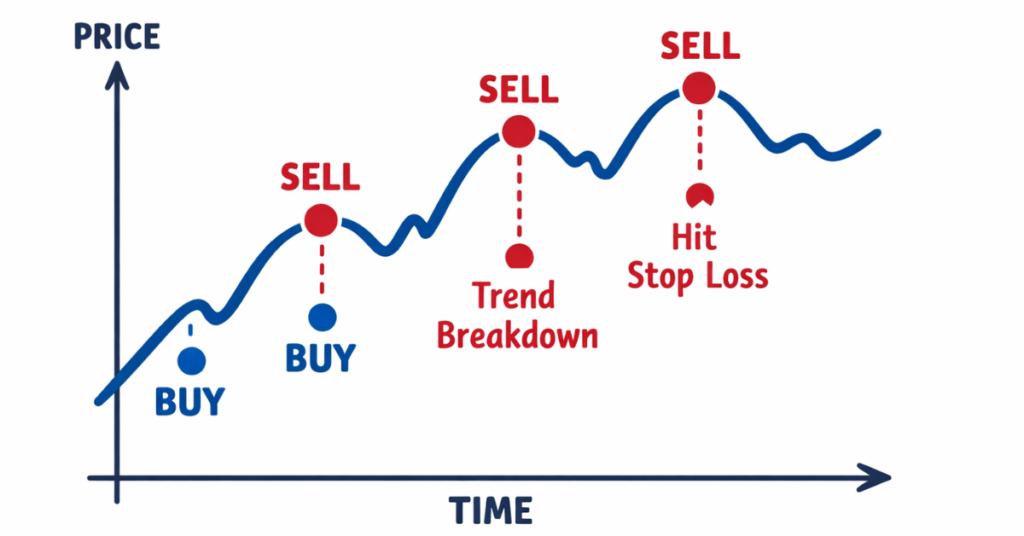
The best time to sell a stock is when it no longer fits your financial goals, becomes overvalued, shows declining fundamentals, or hits your pre-set profit or loss limits. Successful investors use clear strategies like profit targets and stop-losses instead of reacting emotionally to market swings.
Key Takeaways
- Sell stocks based on strategy, not emotions.
- Monitor company fundamentals and market conditions regularly.
- Use profit targets and stop-loss levels to manage risk.
- Reassess stocks that become overvalued or show declining performance.
- Consider taxes, fees, and portfolio balance before selling.
Introduction to Selling Stocks
Selling stocks is just as important as buying them. Many investors focus heavily on entry points but fail to plan their exit strategy. Knowing when to sell determines whether you lock in gains, prevent deeper losses, or improve portfolio performance.
A structured selling strategy removes emotional decision-making and replaces it with disciplined action. Instead of guessing, successful investors evaluate data, company performance, and personal financial goals before selling.
5 Key Factors to Consider Before Selling
When deciding when to sell your stock, several key factors must guide your decision to ensure you make informed choices:
1. Market Conditions and Trends
The overall market environment greatly impacts stock performance. A rising market might allow you to hold for greater gains, while a downturn may indicate it’s time to sell to protect your investment. Keeping an eye on indexes, sector performance, and macroeconomic indicators helps you gauge the right timing.
2. Company Performance and Fundamentals
Evaluate the company’s financial health, including revenue growth, profit margins, debt levels, and management performance. Declining fundamentals or negative news can be a strong signal that the stock may underperform in the near future.
3. Personal Financial Goals
Your investment strategy should align with your financial objectives. If you need liquidity for upcoming expenses or wish to rebalance your portfolio, selling stocks at strategic points ensures your investments support your goals.
4. Stock Valuation
Consider whether the stock is overvalued relative to its intrinsic worth. Overvaluation increases the risk of price corrections. Metrics like the price-to-earnings ratio (P/E) or price-to-book ratio (P/B) can help identify if a stock has reached a peak.
5. Risk Tolerance and Time Horizon
Assess how much risk you can tolerate and your investment timeline. Conservative investors may sell earlier to protect gains, while aggressive investors might ride short-term volatility for higher profits.
Strategies to Decide When to Sell Stocks
Choosing the right moment to sell requires a clear strategy rather than relying on guesswork.
Here are proven approaches investors use:
1. Profit-Target Strategy
Set a specific price at which you aim to sell a stock. Once the stock reaches this target, selling ensures you lock in gains.
For example, if you buy a stock at $50 and set a target of $70, selling at $70 secures a 40% profit. This strategy is particularly useful in volatile markets to avoid losing profits during sudden downturns.
2. Stop-Loss Strategy
A stop-loss order automatically sells a stock when it falls to a certain price, limiting potential losses. This approach protects your portfolio from unexpected market drops.
For instance, if you buy at $50 and set a stop-loss at $45, you prevent larger losses if the stock declines sharply.
3. Long-Term vs Short-Term Exit Strategies
Long-term investors may hold stocks for years, focusing on company growth and dividends, while short-term traders look for price swings and rapid gains. Choosing your strategy depends on your investment goals, risk tolerance, and market conditions. Combining both approaches with proper monitoring can optimize your returns.
4. Monitoring Trends and Signals
Pay attention to company earnings reports, sector trends, and economic indicators. If a company underperforms or the market shows instability, it may signal the need to sell. Technical indicators like moving averages or volume changes can also provide insights for timing exits.
5. Partial Selling
Instead of selling all shares at once, consider selling a portion to secure profits while keeping some exposure to potential future gains. This balanced approach reduces risk while maintaining upside potential.
Recognizing Signs It’s Time to Sell
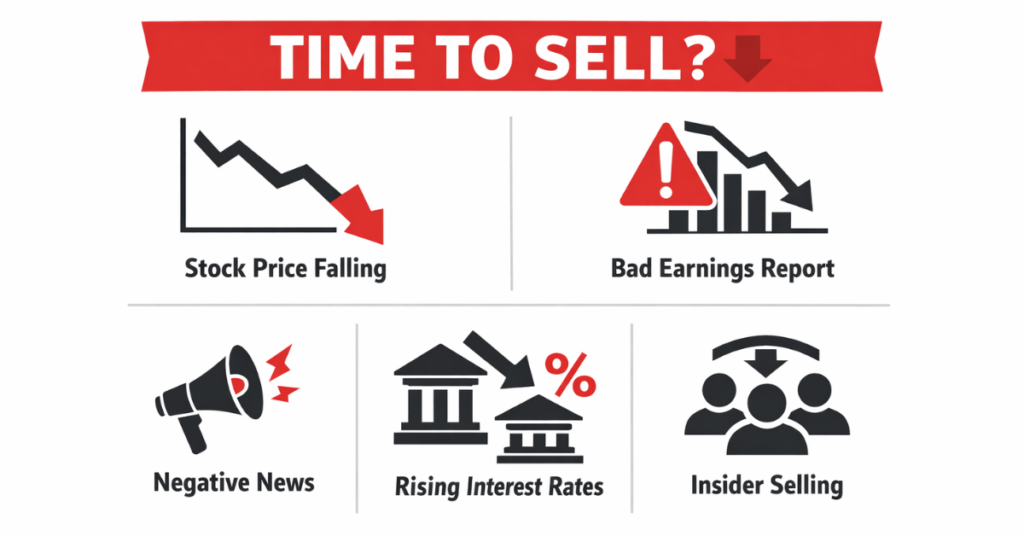
Knowing the signs that indicate it’s time to sell a stock is crucial to protect profits and minimize losses. Recognizing Signs It’s Time to Sell
| Sign | What It Means | Why Selling May Be Smart |
|---|---|---|
| Declining Company Fundamentals | Revenue falls, profit margins shrink, debt increases, or earnings disappoint. | Weak fundamentals suggest future underperformance. Selling early can protect your capital. |
| Overvaluation | The stock price rises far above its intrinsic value based on metrics like P/E, P/B, or price-to-sales ratios. | Overvalued stocks are more vulnerable to corrections. Locking in profits reduces downside risk. |
| Changes in Market Conditions | Economic downturns, rising interest rates, sector weakness, or market instability. | Broader risks can pressure stock prices. Reducing exposure may limit potential losses. |
| Reaching Personal Financial Goals | The stock hits your profit target or you need liquidity for other priorities. | Selling ensures your investments align with your financial plan. |
| Negative News or External Events | Scandals, leadership changes, lawsuits, or regulatory issues. | Such developments can damage long-term performance and investor confidence. Exiting early may prevent deeper losses. |
Tips to Maximize Returns When Selling
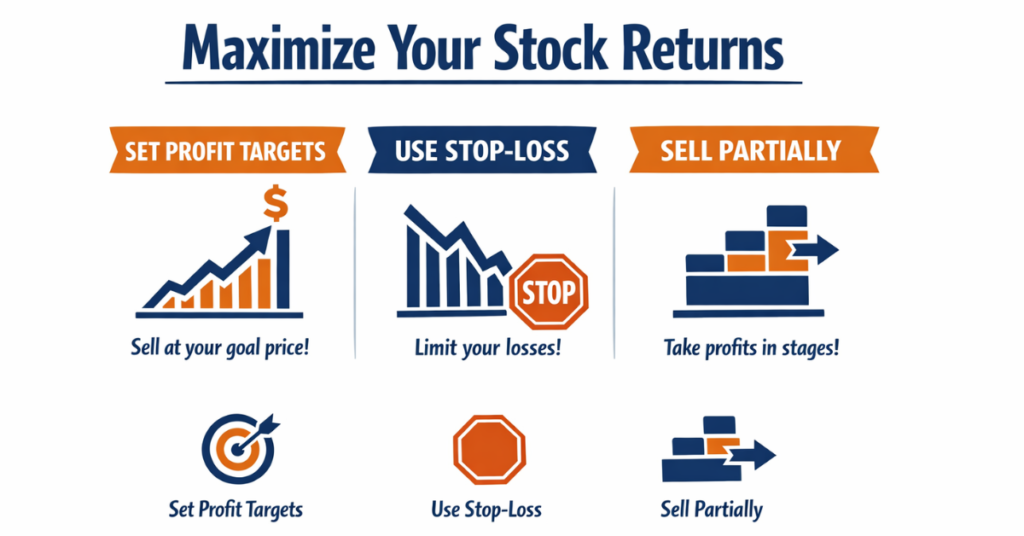
Maximizing profits when selling stocks requires strategic planning, market awareness, and disciplined execution.
Consider the following tips:
1. Diversify and Rebalance Your Portfolio
Regularly review your portfolio and sell stocks that no longer align with your investment goals. Rebalancing ensures that your portfolio remains aligned with risk tolerance and growth targets.
2. Monitor Market News and Trends
Stay informed about company updates, sector shifts, and economic indicators. Timely decisions based on reliable data can prevent losses and optimize selling points.
3. Set Realistic Expectations
Avoid chasing unrealistic profits or holding stocks indefinitely in hopes of huge gains. Establish clear profit targets and stop-loss levels to maintain disciplined selling.
4. Partial Selling for Risk Management
Selling a portion of your holdings allows you to secure gains while keeping exposure to potential upside. This strategy balances profit-taking with continued growth opportunities.
5. Take Advantage of Bonuses or Trading Incentives
If using a platform like Defcofx that offers promotions, such as a 40% welcome bonus on deposits above $1000, you can leverage additional funds to enhance trading efficiency and potential returns.
Open a Live Trading Account5 Common Mistakes to Avoid When Selling Stocks
| Mistake | Why It’s Risky | Practical Solution |
|---|---|---|
| Selling Based on Emotions | Fear during market drops or greed during rallies can lead to poor timing, missed gains, or unnecessary losses. | Create a predefined exit plan with profit targets and stop-loss levels. Stick to your strategy instead of reacting to short-term volatility. |
| Ignoring Taxes and Fees | Capital gains taxes and transaction costs can significantly reduce your actual profit. | Understand short-term vs. long-term tax rates and calculate net returns before selling. Factor in brokerage fees when planning exits. |
| Selling Too Early or Too Late | Selling too soon limits upside potential, while holding too long can erase profits. | Use valuation metrics, trend analysis, and clear financial goals to guide balanced decision-making. Review positions regularly. |
| Overlooking Portfolio Diversification | Heavy concentration in one stock increases overall portfolio risk. | Rebalance periodically. Sell portions of overweight positions to maintain proper asset allocation. |
| Relying Solely on Tips or Trends | Following rumors or hype without research often leads to poor decisions. | Base selling decisions on financial data, company fundamentals, and your personal investment strategy — not speculation. |
By recognizing these mistakes and applying structured solutions, investors can make more disciplined and profitable selling decisions.
Final Thoughts
Deciding when to sell your stock requires a careful balance of strategy, market awareness, and personal financial goals. Monitor company performance, market trends, and valuation indicators to make informed decisions. Implementing strategies like profit targets, stop-losses, and partial selling helps protect gains while minimizing risk.
By avoiding common mistakes such as emotional selling, ignoring fees, or relying on rumors, investors can maximize returns and maintain a disciplined approach. Leveraging tools with high leverage options, fast support and withdrawals, and low-cost trading can further enhance efficiency when executing selling strategies.
FAQs
The best time to sell depends on your financial goals, company performance, and market conditions. Look for signs like declining fundamentals, overvaluation, or reaching your profit targets. Combining strategies like stop-losses and monitoring trends ensures informed decisions.
Not necessarily. Evaluate why the price dropped temporary market volatility or fundamental issues. Use stop-loss orders to limit losses while avoiding emotional decisions during short-term fluctuations.
Profit-target strategies, stop-loss strategies, partial selling, and diversification are effective. Monitoring company performance, market news, and valuation metrics helps determine the optimal exit point.
Yes. Holding a stock beyond its peak or during declining fundamentals can lead to losses. Regularly review your portfolio and sell when signs indicate risk or when personal financial goals are met.
Discover More Forex Guides With Defcofx
- Can I Trade With $1 on MetaTrader 5?
- What Does It Mean to Short the Market?
- What is an Expert Advisor | Automated Trading Guide
- Pairs Trading – Market-Neutral Stock & Forex Guide
- How to Read Stock Candlesticks?
- How Many Countries Use Dollars?
- What Is Insider Trading?
- How Much Can I Earn From Trading per Month?