


Monday’s session reopened a theme the market had been trying to leave behind: the possibility that the U.S.-Iran ceasefire might not hold cleanly enough to keep the dollar under sustained pressure. Reuters reported that the dollar climbed as uncertainty grew over the ceasefire, with investors again asking whether the late-March and early-April war premium had really been removed too quickly. The greenback was helped by stronger U.S. retail sales and by a broader market reluctance to assume that Middle East tensions had truly stabilized.
What made Apr. 21 important was not that the dollar exploded higher. It did not. The importance of the session was that the market became more cautious about extending the anti-dollar move that had dominated the previous two weeks. Reuters’ coverage showed the dollar recovering in an environment where oil was still supported by Middle East uncertainty, and where investors were no longer comfortable assuming diplomacy would progress smoothly from here. That changed the tone from “sell dollar on easing fear” to something more balanced: “hold dollar unless clearer peace evidence emerges.”
EUR/USD
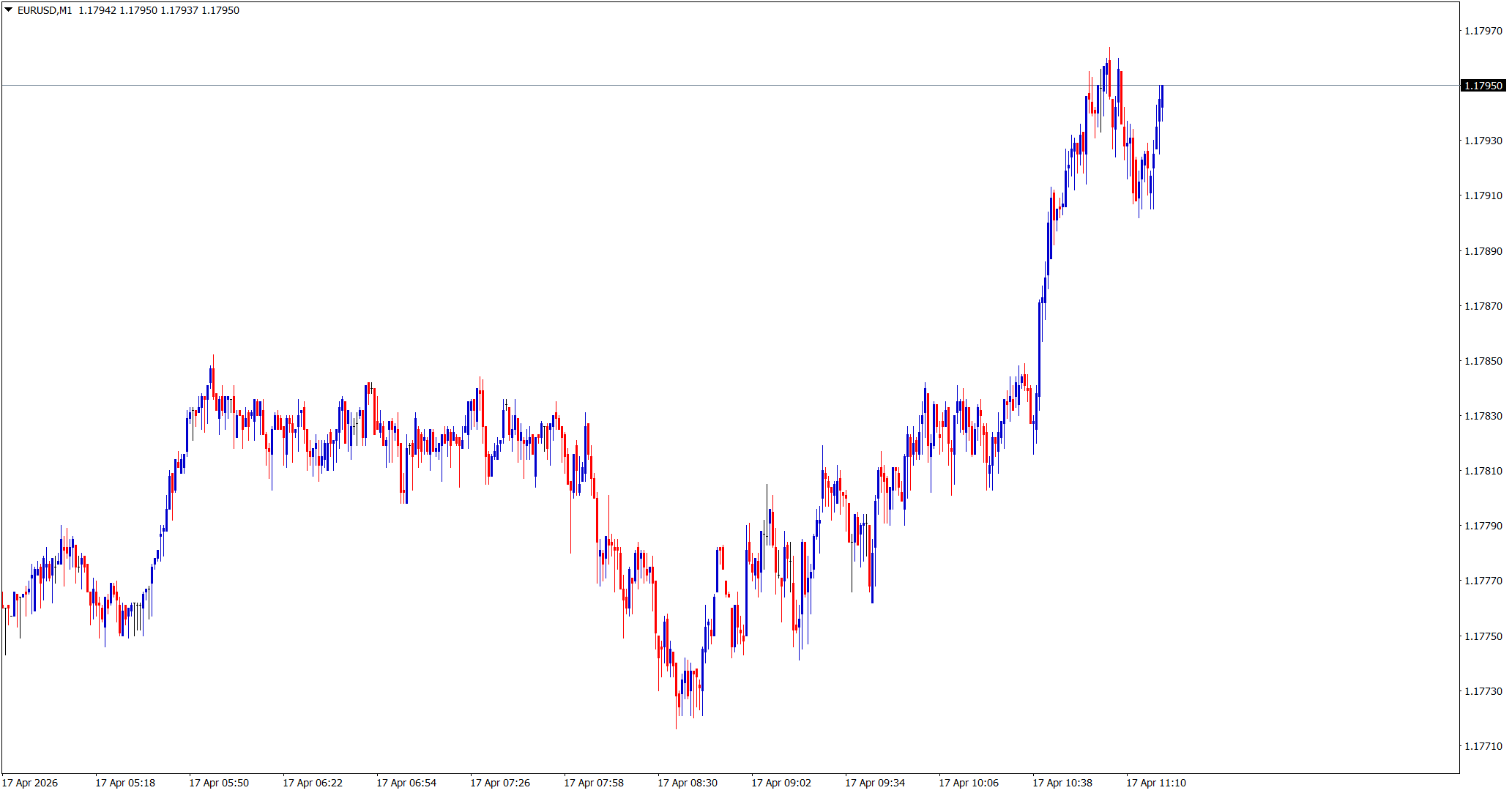
Technical Analysis
EUR/USD softened, but the move looked more like a controlled retracement than a full structural reversal. The pair had already rallied hard during the earlier ceasefire-and-relief phase, so Monday’s inability to extend higher suggested that the euro was running into a macro ceiling rather than collapsing on its own. Technically, this is the sort of session that often marks the beginning of consolidation after a strong countertrend move: the pair stops climbing easily, loses some momentum, and begins to trade more like a range than an impulse.
Fundamental Analysis
The euro’s weakness made sense in the day’s macro context. Reuters’ Apr. 21 FX report said the dollar climbed as ceasefire doubts increased, while European equity coverage the prior day emphasized that investors were already nervous ahead of the expiry of the truce. Europe remains highly sensitive to renewed energy disruption, so when the market starts questioning the durability of peace again, EUR/USD is usually one of the first places where that discomfort shows up. The euro was not falling because eurozone data had suddenly worsened; it was falling because the market once again saw Europe as more exposed than the U.S. if the conflict deteriorated.
USD/CAD
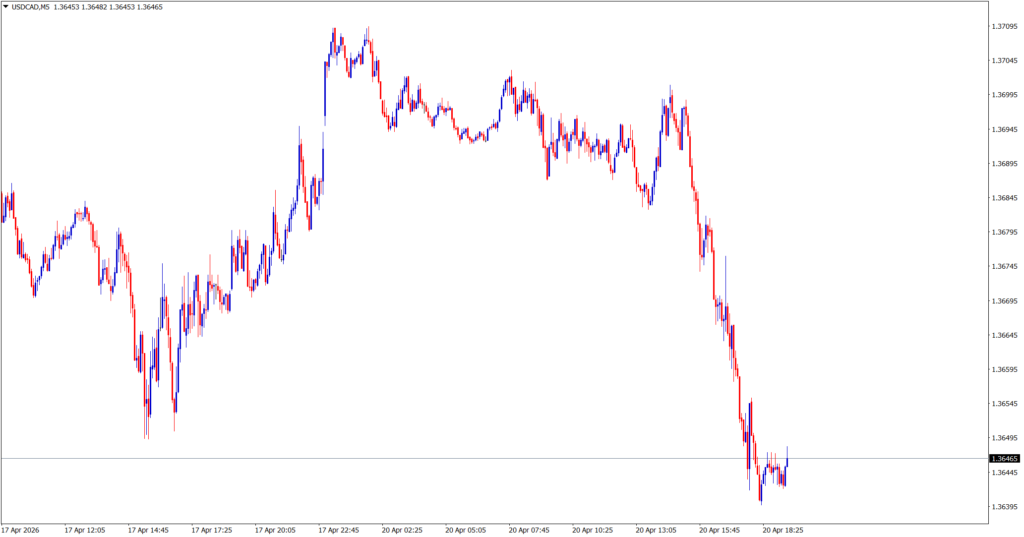
Technical Analysis
USD/CAD rebounded after the loonie had reached nearly a six-week high intraday, which made the pair one of the clearer “dollar-recovery” expressions on Monday. Reuters reported that the Canadian dollar retreated to 1.3667 per U.S. dollar after touching its strongest level since March 13. Technically, that kind of reversal matters because it suggests the prior CAD strength had become vulnerable once the broader dollar bid returned. It was not a runaway breakout in favor of USD, but it was the kind of rebound that often signals a pair is no longer willing to trend lower without stronger confirmation.
Fundamental Analysis
USD/CAD was especially informative because it had to weigh two conflicting forces at once. On one side, Canada still had support from crude and from the broader postwar energy narrative. On the other, Reuters reported that Middle East uncertainty was increasing again and that strong U.S. retail sales were helping the dollar. The fact that the loonie still pulled back despite having recently been one of the stronger major currencies shows that on Apr. 21 the market’s first instinct was to restore some dollar exposure rather than to keep chasing anti-dollar trades. In other words, USD/CAD rose not because Canada’s story had collapsed, but because the U.S. dollar’s relative macro appeal had improved enough to dominate the session.
GBP/USD
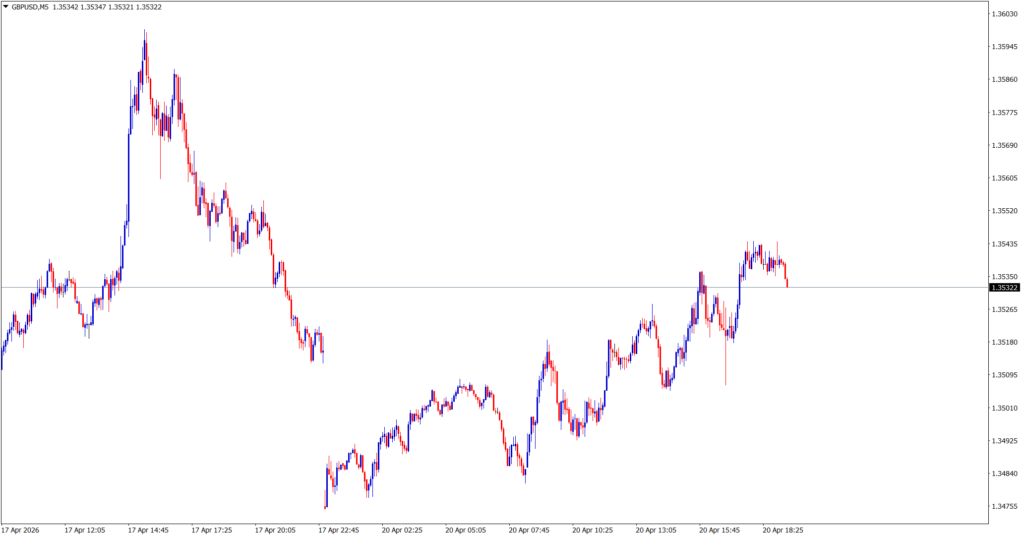
Technical Analysis
GBP/USD struggled to extend higher and instead traded with a heavier tone, which is often what happens when a pair has already rallied significantly and then runs into a more supportive environment for the dollar. The technical message was not one of panic selling, but of stalled upside. That matters because stalled upside after a strong run frequently signals that the market is transitioning from trend to range. Sterling was not collapsing, but the pair had clearly lost the easy upward momentum it showed during the ceasefire-relief phase.
Fundamental Analysis
Reuters’ sterling coverage from Apr. 20 had already highlighted that fresh worries were “percolating” around the fragility of the Iran ceasefire and the resulting rise in oil prices. By Apr. 21, those concerns were still weighing on the pound’s ability to outperform. The UK remains especially sensitive to imported energy shocks, and sterling tends to suffer when the market starts rebuilding a geopolitical inflation premium. At the same time, the pound was not too far from Friday’s highs, which tells you the market had not abandoned the prior bullish sterling repricing completely. So GBP/USD on Monday reflected a market becoming more cautious, not yet one turning outright bearish on the pound.
Market Outlook
Apr. 21 did not restore the late-March strong-dollar regime in full, but it did show that the anti-dollar move had become harder to extend mechanically. The dollar regained support because ceasefire confidence weakened and U.S. data stayed firm, while pairs like EUR/USD and GBP/USD slipped into more obvious consolidation behavior. USD/CAD was perhaps the cleanest tell of the day: even a relatively resilient currency like the Canadian dollar gave back some ground once the market decided it still needed a bit more dollar exposure. That left the market heading into Apr. 22 with a more cautious posture and a clearer sense that the next move would depend on whether diplomacy could reassert itself quickly enough to cap the renewed geopolitical premium.
Discover our other forex market analysis: