


Monday’s session was a good example of a market refusing to follow the most obvious headline in a straight line. At first glance, the setup looked dollar-positive: Reuters reported that the U.S. seizure of an Iranian cargo ship, Tehran’s retaliation threats, and renewed concern over the Strait of Hormuz helped push oil up around 5%, lifted U.S. 10-year yields, and initially supported the dollar. Global equities also eased as investors worried the fragile U.S.-Iran ceasefire might not hold.
But by New York trade, the market had chosen a different interpretation. Reuters reported that the dollar fell on Monday after reversing earlier gains, as traders stayed optimistic that a ceasefire breakthrough could still emerge, with Vice President JD Vance heading to Pakistan for negotiations and President Trump signaling willingness to meet Iranian leaders if progress was made. The dollar index dropped 0.33% to 98.13 after touching a one-week high, while both the euro and pound edged up about 0.12%. That tells you the market is no longer willing to pay the same full safe-haven premium for the dollar every time tensions flare.
That makes Apr. 20 less of a “risk-off dollar rally” day and more of a credibility test for the late-April anti-dollar narrative. The market acknowledged that tensions had worsened, but it still leaned toward the view that diplomacy had not collapsed outright. In FX terms, that produced a mixed but revealing session: classic European dollar pairs held up, the yen firmed modestly, and the Canadian dollar managed to gain even as inflation data turned hotter because traders viewed the gasoline shock as war-related rather than as an immediate policy game-changer for the Bank of Canada.
USD/JPY
Technical Analysis
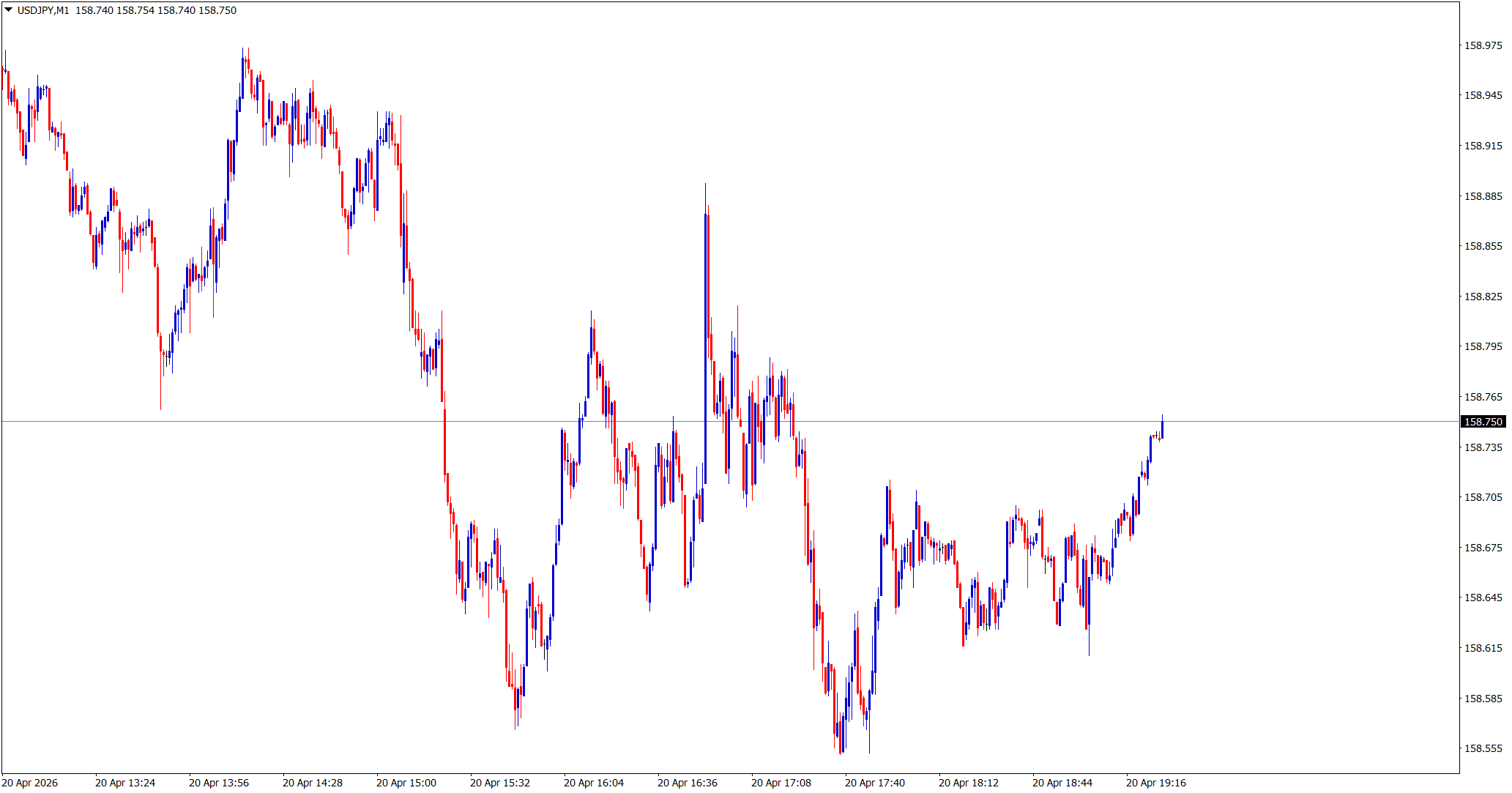
USD/JPY was one of the day’s most important pairs because it sits right at the intersection of geopolitics, yield shifts, and intervention sensitivity. Reuters reported the yen strengthened modestly to 158.62 per dollar, keeping it below the 160 area that has been widely seen as the zone where official Japanese discomfort becomes much harder to ignore. Technically, the pair still trades in a broader elevated range, but Monday’s inability to sustain earlier dollar strength suggests that buyers are becoming less comfortable pressing USD/JPY higher aggressively unless they get a much clearer escalation signal. When a pair fails to extend despite rising oil and firmer Treasury yields, that often tells you positioning is more cautious than the macro backdrop alone would imply.
Fundamental Analysis
The fundamental tension inside USD/JPY remains the same, but Monday showed it clearly. Higher oil is usually negative for Japan because of its dependence on imported energy, and firmer U.S. yields generally support the dollar side of the pair. Reuters’ gold story reinforced that those forces were active today: stronger dollar demand early on and higher benchmark yields were part of the initial reaction to the renewed U.S.-Iran tension. But Reuters’ FX report made just as clear that the market still expects diplomacy to continue, which reduced the need to chase the dollar higher. That left USD/JPY caught between two powerful narratives: structurally supportive yield and energy dynamics on one side, and a market increasingly unwilling to ignore intervention risk or overpay for dollar safety on the other.
GBP/USD
Technical Analysis
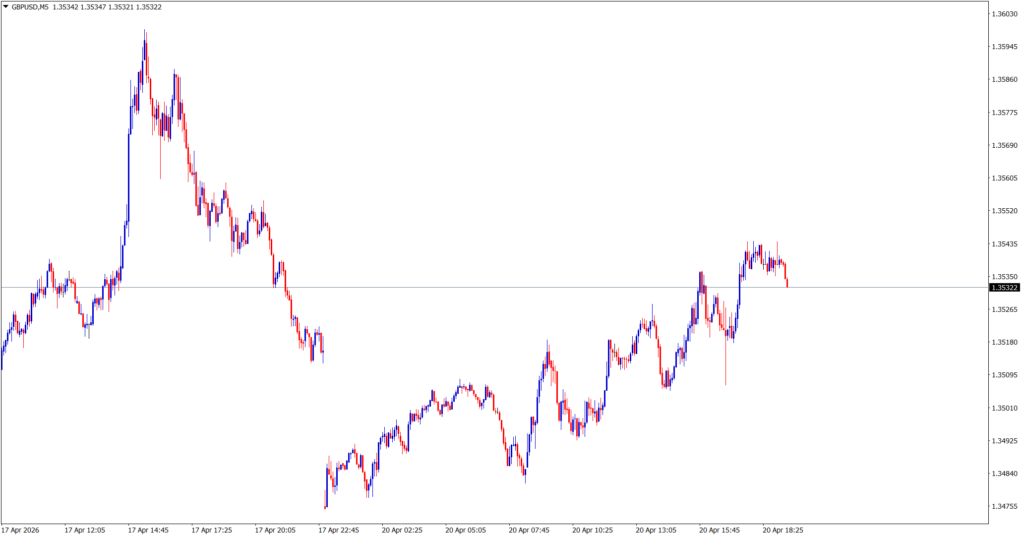
GBP/USD was not the most explosive mover on the board, but it was one of the cleaner tells about how the market was digesting the day. Reuters reported sterling rose about 0.12% to $1.3503 after dipping earlier, which is technically meaningful because it implies the pound was able to hold and then recover despite a session that, on paper, should have favored the dollar. The pair did not break out, but it also did not behave like a market ready to re-enter the defensive March pattern. Instead, it traded like a pair preserving a higher range while the market tested whether fresh Middle East headlines were strong enough to restore the greenback’s old premium.
Fundamental Analysis
Sterling’s fundamental story today was more complicated than a simple “dollar down, pound up.” Reuters reported that UK markets are also contending with a domestic political controversy around Prime Minister Keir Starmer and Peter Mandelson, which adds a local uncertainty premium just as the external environment becomes more unstable. Under a fully pro-dollar regime, that sort of domestic stress might have pushed GBP/USD down much more decisively. The fact that it did not is important. It suggests that, for now, the market still sees the pound’s earlier April recovery as credible enough to survive both a messy UK political backdrop and a fresh jump in oil, provided investors still believe diplomacy with Iran has a real chance to continue.
USD/CAD
Technical Analysis
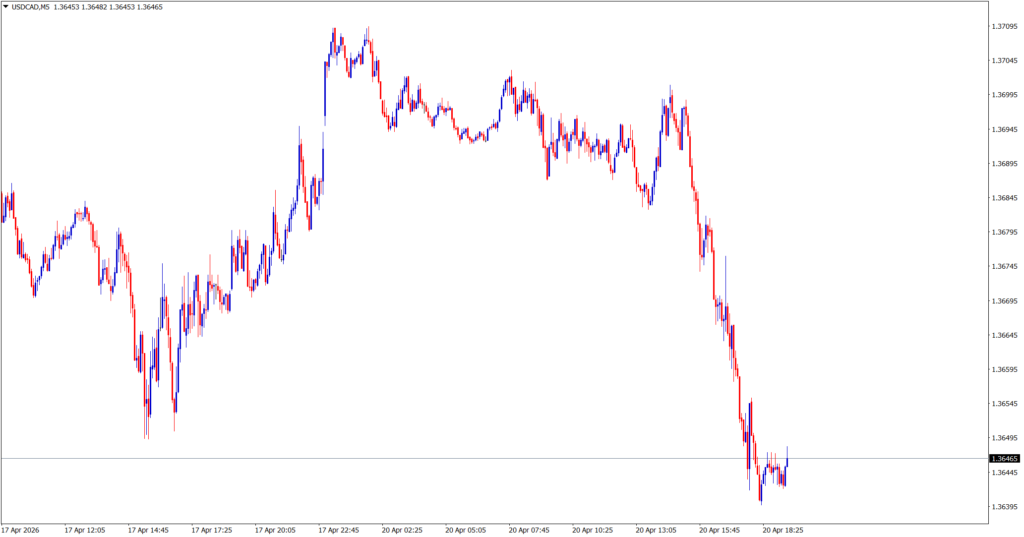
USD/CAD was one of the more interesting pairs today because Canada’s inflation report gave the market a real domestic input to work with. Reuters reported the Canadian dollar traded slightly higher after Canada’s annual CPI rose to 2.4% in March, while the U.S. dollar was broadly retreating from earlier gains. Technically, that means USD/CAD remains in a softer posture rather than participating in a broad dollar rebound. The pair’s inability to rally cleanly even with oil higher is important: it suggests that once the market shifted away from paying up for dollar safety, CAD had enough domestic and inflation support to hold its ground.
Fundamental Analysis
Reuters said Canada’s CPI accelerated because gasoline costs surged as the Iran war disrupted shipments through Hormuz, with headline prices rising 0.9% month-on-month, the biggest increase in 14 months. But Reuters also noted that core inflation gauges stayed relatively stable and that Bank of Canada Governor Tiff Macklem was not signaling alarm over a temporary energy-driven spike. That distinction is central for USD/CAD. This was not a clean “hawkish Canada” story. It was a story in which war-related inflation lifted the data without automatically forcing the BoC into a new near-term stance. Even so, the loonie still gained slightly because the broader dollar backed off and because markets treated the CPI surprise as enough to keep Canadian rate expectations from turning more dovish right away. In short, CAD did not need a perfect domestic story today, it only needed one good enough to benefit once the dollar’s fear premium started coming out again.
Market Outlook
Apr. 20 leaves the market in a more delicate place than the headlines alone suggest. On the one hand, Reuters’ reporting on gold, oil, and global markets shows that the Strait of Hormuz remains the key risk variable, with crude higher, stocks softer, and yields firmer when conflict fears intensify. On the other hand, Reuters’ main FX report shows the market still believes diplomacy has enough life in it to prevent a full return to the late-March stronger-dollar regime. That combination usually creates exactly the kind of uneven session we saw today: the dollar can spike early on tension, but it struggles to keep those gains if traders think peace talks still matter.
For the next session, the most important takeaway is probably this: the dollar is no longer winning automatically on every Middle East escalation headline. To restore a more durable bullish trend, it likely needs either a clear breakdown in negotiations or a much bigger move in oil and yields. Until then, pairs like GBP/USD and USD/CAD can keep resisting the dollar more effectively than they would have a few weeks ago, while USD/JPY remains the pair where broader dollar support and local policy sensitivity are colliding most visibly.
Discover our other forex market analysis: