


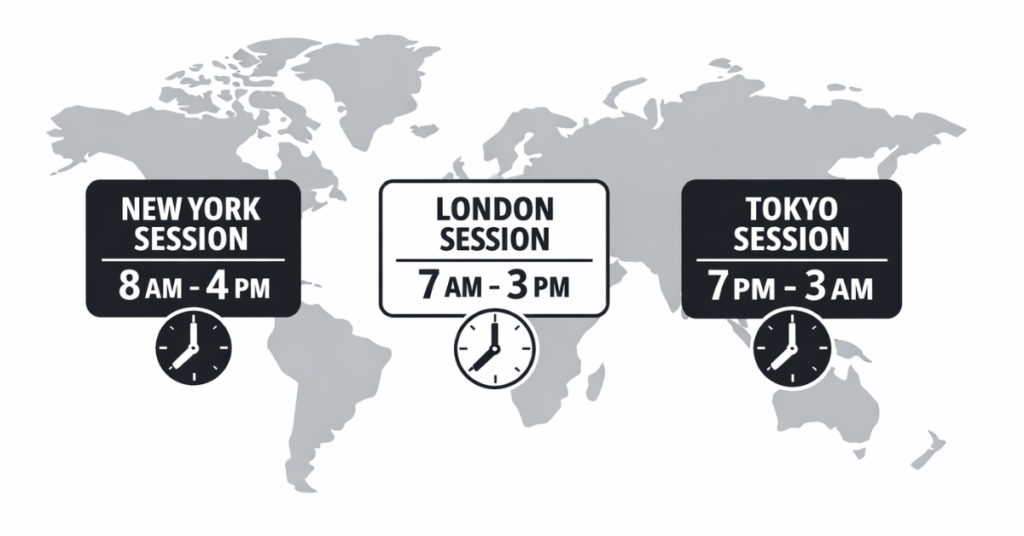
The Asian, London, and New York trading sessions differ mainly in timings, liquidity, and market volatility. The Asian session is calmer with lower volatility, London session offers high liquidity and active trading, while New York session sees strong price movements, especially during overlaps with London, ideal for high-leverage strategies and flexible trading.
Key Takeaways
- Asian, London, and New York sessions differ in timing, market activity, and volatility.
- The Asian session is quieter with lower liquidity, ideal for careful trading.
- The London session has the highest liquidity and volatility, perfect for active traders.
- The New York session shows strong movements, especially during overlap with London.
- Session overlaps create high trading opportunities and are crucial for strategy planning.
- Understanding each session helps traders optimize leverage, spreads, and account flexibility when trading.
Asian Trading Session Overview
The Asian trading session runs approximately from 11:00 PM to 8:00 AM GMT, covering major markets like Tokyo, Hong Kong, and Sydney. This session is generally quieter with lower volatility, making it suitable for traders seeking steady market conditions.
Currency pairs involving the Japanese Yen, Australian Dollar, and New Zealand Dollar are most active during this session. Liquidity is lower compared to London or New York, which can lead to slower price movements but allows for more precise entries and risk management.
Traders can use strategies like range trading or scalping during this session. Leveraging tools such as high leverage options (up to 1:2000) can help maximize opportunities even in calmer markets.
Lower volatility and liquidity
Focus on JPY, AUD, NZD pairs
Ideal for careful trading strategies
London Trading Session Overview
The London trading session runs approximately from 8:00 AM to 5:00 PM GMT and is known for high liquidity and significant market activity. This session overlaps with the Asian session for a short period and with the New York session later in the day, creating strong volatility and trading opportunities.
Major currency pairs such as EUR/USD, GBP/USD, and USD/CHF are highly active, offering tighter spreads and faster trade execution. Traders can benefit from no commissions or swap fees and low spreads starting from 0.3 pips during peak London hours.
Strategies such as breakout trading and news-based trading work well in this session due to active market participation.
Highest liquidity and volatility
Best for active trading strategies
Overlaps with Asian & New York sessions for maximum opportunities
New York Trading Session Overview
The New York trading session runs approximately from 1:00 PM to 10:00 PM GMT and is characterized by strong price movements, especially when it overlaps with the London session. This session often sees high trading volumes and increased volatility, making it ideal for traders seeking quick opportunities and active market engagement.
The most traded currency pairs during this session include USD-based pairs such as USD/JPY, USD/CHF, and EUR/USD. Traders can take advantage of fast support and withdrawals for active trading, along with flexible account options. Strategies like breakout trading, trend following, and news-based trading perform well in this session.
Strong volatility and high trading volume
Focus on USD-based pairs
Ideal for active and high-leverage strategies
Forex Trading Sessions Comparison: Asian vs London vs New York
| Feature | Asian Session | London Session | New York Session |
|---|---|---|---|
| Trading Hours (GMT) | 11:00 PM – 8:00 AM Begins with Sydney and gains momentum with Tokyo. | 8:00 AM – 5:00 PM Starts as European markets open and dominates global trading volume. | 1:00 PM – 10:00 PM Begins while London is still active, creating strong overlap volatility. |
| Main Financial Centers | Tokyo, Sydney, Hong Kong — markets in Asia-Pacific region drive activity. | London — considered the global forex hub with major institutional participation. | New York — influenced heavily by U.S. banks, hedge funds, and economic data releases. |
| Volatility Level | Low to moderate volatility. Price movements are generally smaller and more stable. | High volatility. Strong price swings and frequent breakouts occur. | High volatility, especially during London overlap when trading volume peaks. |
| Liquidity | Lower liquidity compared to London and New York, leading to slower price action. | Highest liquidity of all sessions, resulting in tight spreads and fast execution. | High liquidity, particularly in USD pairs and during economic news releases. |
| Most Active Currency Pairs | JPY, AUD, NZD pairs are most active due to regional economic influence. | EUR/USD, GBP/USD, USD/CHF show strong volume and tight spreads. | USD/JPY, USD/CHF, EUR/USD are heavily traded due to U.S. dollar demand. |
| Typical Market Behavior | Often range-bound markets with clearer support and resistance levels. | Breakouts and trend formations are common due to strong participation. | Sharp price movements and strong trends, especially after U.S. economic news. |
| Best Trading Strategies | Range trading and scalping work well in steady conditions. | Breakout and news-based strategies perform best in volatile conditions. | Trend-following, breakout, and news trading strategies are effective. |
| Session Overlaps | Brief overlap with London increases short-term volatility. | Overlaps with both Asian (morning) and New York (afternoon) sessions. | Major overlap with London creates the day’s highest trading activity. |
| Best Suited For | Traders who prefer controlled, lower-risk market environments. | Active traders seeking high momentum and liquidity. | Traders who want strong volatility and fast-moving opportunities. |
Session Overlaps and Trading Opportunities
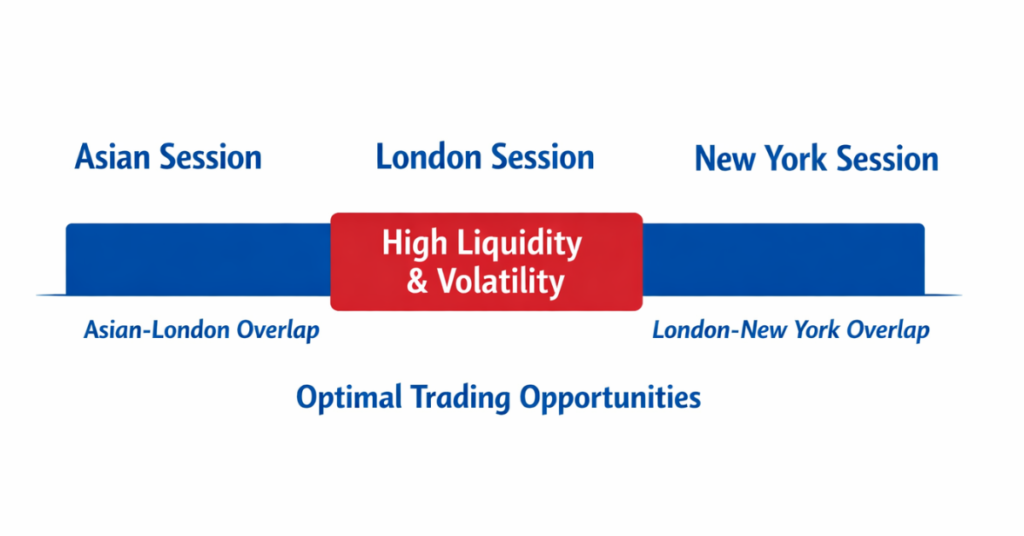
Session overlaps occur when two major trading sessions are active simultaneously, creating high liquidity and volatility, which increases trading opportunities. The most notable overlaps are Asian-London (early London hours) and London-New York (afternoon London and early New York).
During these overlaps, currency pairs experience stronger price movements, tighter spreads, and faster trade execution. Traders can capitalize on these periods using strategies like breakout trading, trend following, and scalping. Leveraging high leverage options and low spreads from Defcofx can enhance profitability during these active hours.
Choosing the Best Session for Your Strategy
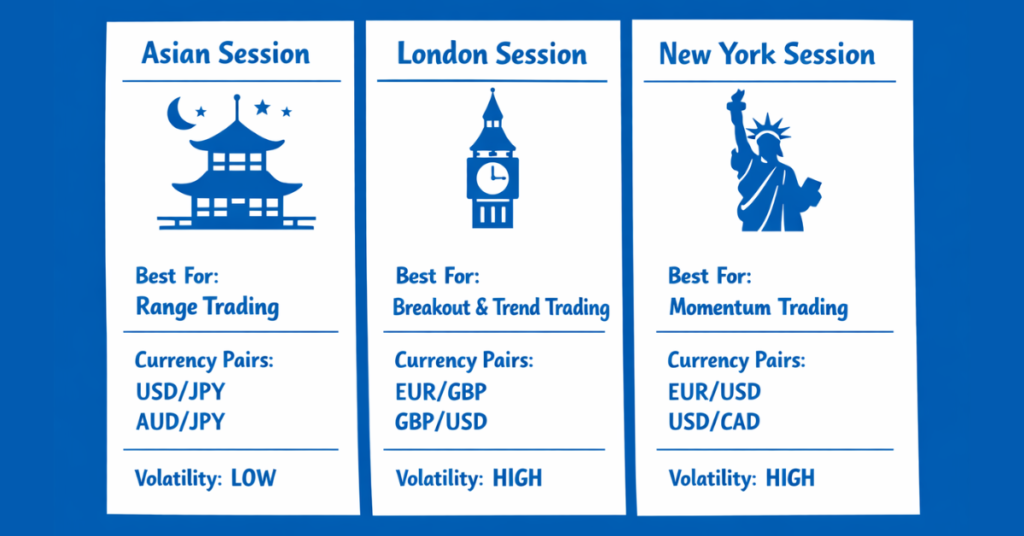
Choosing the Best Forex Session for Your Trading Strategy
Selecting the right forex trading session depends on your trading style, risk tolerance, and preferred currency pairs. Each session offers unique market conditions that align better with specific strategies.
1. Asian Session – Best for Controlled & Low-Volatility Trading
Best for: Range trading, scalping, and low-volatility strategies.
Why it works: The Asian session typically has slower and more stable price movements. Markets often trade within clear support and resistance levels, making it suitable for traders who prefer precision over aggressive volatility.
Example: A trader focusing on AUD/JPY during the Tokyo session may aim for small, consistent price movements. Even modest fluctuations can present opportunities when risk is managed properly.
Tip: Be cautious with major USD pairs during this time. Liquidity can be lower, and spreads may widen temporarily around unexpected news.
2. London Session – Best for Active & Breakout Traders
Best for: Breakout trading, news-based trading, and intraday strategies.
Why it works: The London session has the highest liquidity and strong institutional participation, leading to significant price movements and tighter spreads.
Example:: During a major ECB announcement, EUR/USD may experience rapid price swings. Traders can capitalize on volatility and quick execution during these high-activity hours.
Overlap Advantage:
- Morning overlap with Asia adds momentum.
- Afternoon overlap with New York creates the highest daily volatility, offering strong breakout opportunities.
3. New York Session – Best for Trend & Momentum Trading
Best for: Trend-following strategies, swing trades, and USD-based pairs.
Why it works: The New York session is driven by U.S. economic data releases and large institutional flows. When overlapping with London, price action becomes especially strong and directional.
Example: If GBP/USD establishes a strong trend during the London–New York overlap, traders may follow the momentum for larger moves.
Tip: Toward the session close (around 10:00 PM GMT), liquidity may decline slightly, and spreads can widen.
Strategy Matching Summary
- Scalpers & Range Traders → Asian Session
- Active Intraday Traders → London Session
- Trend Followers & Swing Traders → New York Session (especially during London overlap)
Choosing the right session helps align your strategy with market conditions, improving timing, execution, and overall trading efficiency.
Final Thoughts
Selecting the right forex trading session depends on your trading style, risk tolerance, and preferred currency pairs.
- The Asian session (11:00 PM – 8:00 AM GMT) is typically calmer, making it suitable for range trading and scalping strategies.
- The London session (8:00 AM – 5:00 PM GMT) is the most active and liquid, offering strong breakout opportunities and ideal conditions for intraday and news-based trading.
- The New York session (1:00 PM – 10:00 PM GMT) is known for powerful price movements, especially during its overlap with London, making it well-suited for trend-following and momentum strategies.
With Defcofx, traders can take advantage of different market conditions across all sessions through competitive spreads, fast execution, flexible account types, and high leverage options (up to 1:2000).
Whether you prefer steady Asian session trades, high-volatility London breakouts, or strong New York trends, Defcofx provides the tools and trading environment to support your strategy efficiently., traders can optimize their trading performance across all market hours.
Open a Live Trading AccountFAQs
The Asian trading session runs approximately from 11:00 PM to 8:00 AM GMT, covering major markets like Tokyo, Hong Kong, and Sydney.
The London session generally has the highest volatility due to large trading volumes and active market participation, especially during overlaps with the Asian and New York sessions.
Yes, traders can operate across sessions, but it’s important to adjust strategies based on liquidity, volatility, and timing. For example, using trend-following strategies during the London-New York overlap can be highly effective.
Asian: JPY, AUD, NZD pairs
London: EUR/USD, GBP/USD, USD/CHF
New York: USD-based pairs like USD/JPY, USD/CHF, EUR/USD
Overlaps create high liquidity and volatility, increasing trading opportunities but also raising risk. Traders should use proper risk management and leverage responsibly during these periods.
Discover More Forex Guides With Defcofx
- Can I Trade With $1 on MetaTrader 5?
- What Does It Mean to Short the Market?
- What is an Expert Advisor | Automated Trading Guide
- Pairs Trading – Market-Neutral Stock & Forex Guide
- How to Read Stock Candlesticks?
- How Many Countries Use Dollars?
- What Is Insider Trading?
- How Much Can I Earn From Trading per Month?
- When Should I Sell my Stock?