


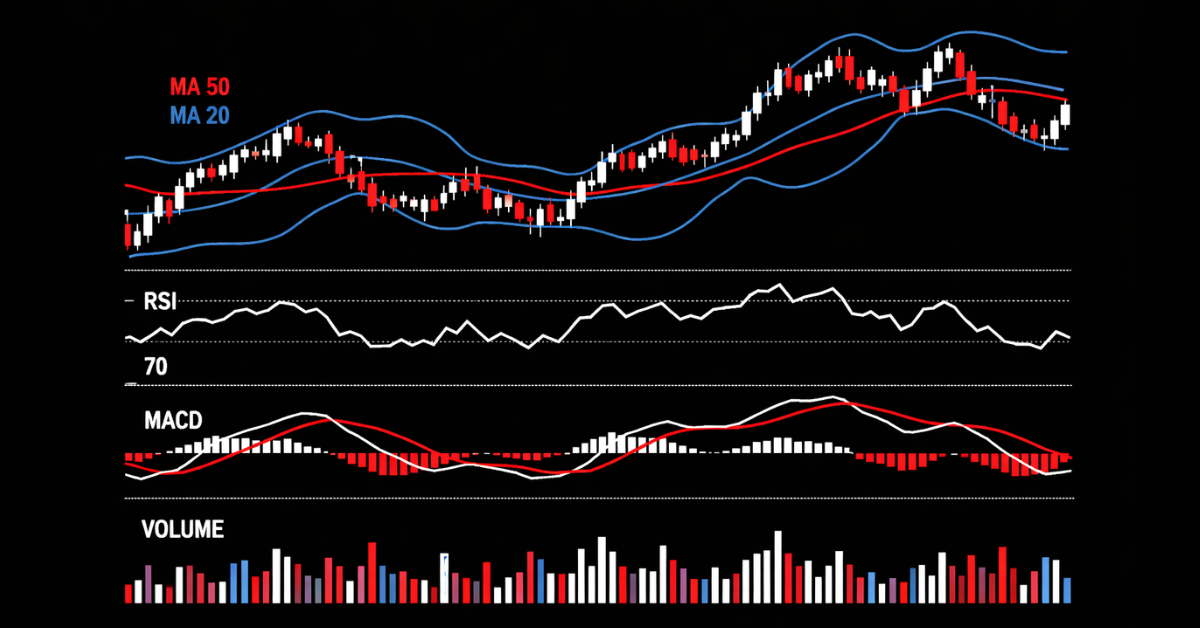
ChatGPT can generate forex trade ideas or sample signals, but it doesn’t provide real-time or actionable trading signals. It can suggest trade ideas using logic and patterns, but it does not use live market data. Traders should use it for learning and planning, not as a main signal provider.
Key Takeaways
- ChatGPT can generate forex signal ideas but not real-time signals
- It does not track live market prices or breaking news
- Best used for learning strategies and practicing setups
- You still need a broker to trade in real markets
- Combining AI with real tools gives better results
What Are Forex Signals?
Forex signals are simple trade instructions that tell you when to buy or sell a currency pair. These signals usually include three main parts: the entry price, the stop-loss level, and the take-profit target. Together, they help traders decide how and when to enter a trade and how to manage risk.
Signals can come from many sources. Some are created by experienced human traders who analyze charts and market news. Others are generated by automated systems or trading algorithms that follow strict rules. In recent years, AI tools like ChatGPT have also entered this space, offering a new way to generate trading ideas.
For beginners, forex signals can seem very helpful because they remove the need to do deep analysis. However, this can also become a problem. If a trader depends only on signals without understanding the logic behind them, it becomes difficult to grow or adapt when market conditions change.
Can ChatGPT Actually Give Forex Signals?
ChatGPT can generate forex signals, but it is important to understand how it does this. It does not connect directly to live forex markets. Instead, it uses general trading knowledge, patterns, and logic to create a possible trade setup.
For example, if you ask ChatGPT for a trade idea on EUR/USD, it might suggest a buy trade based on a support level or an upward trend. The structure of the signal may look very realistic, including entry, stop-loss, and take-profit levels. However, this is not based on current market prices unless external data is provided.
This means that ChatGPT signals are more like simulated or educational signals. They can help you understand how a trade should be structured, but they should not be treated as live trading advice. The difference between a “logical signal” and a “real-time signal” is very important, especially in fast-moving markets like forex.
Why ChatGPT Signals Are Not Fully Reliable
The main issue with ChatGPT-generated signals is the lack of real-time awareness. Forex markets are highly dynamic, and prices can change within seconds due to economic news, central bank decisions, or sudden market sentiment shifts.
Since ChatGPT doesn’t continuously monitor the market, it can’t adjust signals based on sudden changes. A trade idea that looks correct in theory may already be invalid by the time you try to place it. This delay creates a serious risk for traders who rely on timing.
Another limitation is trade management. Real trading isn’t just about entering a position. It also involves adjusting stop-loss levels, closing trades early, or reacting to unexpected movements. ChatGPT does not actively manage trades after giving a signal, which makes it incomplete as a full trading solution.
Because of these reasons, experienced traders use tools that provide live charts, fast execution, and up-to-date data. AI tools can support decisions, but they cannot replace real trading infrastructure.
What ChatGPT Is Actually Good for in Forex
While ChatGPT isn’t ideal for live signals, it is extremely useful for learning and improving trading skills. One of its biggest strengths is its ability to explain complex concepts in simple terms. This makes it especially helpful for beginners who are trying to understand how forex trading works.
You can use ChatGPT to learn about technical indicators, such as RSI or moving averages, and how they are applied in real trading situations. It can also help you build trading strategies step by step, explaining why certain setups work better in specific market conditions.
Another valuable use is practice. Traders can simulate trades using ChatGPT-generated ideas and then compare them with real market outcomes. This helps build confidence and understanding without risking real money immediately.
When combined with a proper trading platform like Defcofx, traders can take what they learn from ChatGPT and apply it in real market conditions with better execution and accuracy.
Apply Your Strategy in Real MarketsPractice what you learn with real-time charts, tight spreads, and instant execution.
Example of a ChatGPT Forex Signal
To understand this better, consider a simple example of a signal generated by ChatGPT.
· Pair: EUR/USD
· Direction: Buy
· Entry: 1.0800
· Stop Loss: 1.0750
· Take Profit: 1.0900
Before executing any signal, traders should always confirm:
- Current market price
- Trend direction
- Economic news events
At first glance, this looks like a valid trading signal. It includes all the key elements and follows a logical structure. However, without checking the current market price, trend direction, and recent news, this signal may not be usable in real trading.
This highlights the importance of verification. Every signal, whether from AI or a human trader, should be confirmed using a live chart before execution.
This content is for educational purposes only and doesn’t constitute financial advice.
ChatGPT vs Real Forex Signal Providers
To clearly understand the difference, it helps to compare ChatGPT with professional signal providers:
| Feature | ChatGPT | Professional Signal Providers |
| Live Market Data | No | Yes |
| Signal Accuracy | General/Logical | Higher (data-based) |
| Trade Updates | No | Yes |
| News Reaction | No | Yes |
| Learning Support | Excellent | Limited |
| Best Use Case | Education & planning | Real trading execution |
This table shows that ChatGPT is better suited for learning and planning, while professional signal providers are designed for real-time trading decisions.
Trade Beyond AI Signals with Defcofx
While ChatGPT helps you understand trading concepts, real success comes from executing trades in live markets with reliable tools. Defcofx provides everything traders need to move from theory to real performance.
Why choose Defcofx:
- High Leverage Options: Trade with up to 1:2000 leverage for greater flexibility
- 40% Welcome Bonus: Available on deposits from $1000 for new clients
- No Commissions or Swap Fees: Tight spreads starting from 0.3 pips
- Global Access: Open to traders worldwide with multi-language support
- Fast Withdrawals & Support: Withdrawals processed within 4 business hours

Should Beginners Use ChatGPT for Signals?
Beginners can benefit from ChatGPT, but only if they use it the right way. Instead of copying signals directly, it is better to focus on understanding how those signals are created.
Learning how to read charts, identify trends, and manage risk is much more valuable than following random trade ideas. ChatGPT can act as a guide during this process, helping you build confidence and knowledge step by step.
Once you are comfortable with basic strategies, you can start applying them in real markets using a reliable broker. Defcofx provides the tools needed to execute trades properly, including real-time pricing and fast order execution.
Open a Live Trading AccountTurn trading knowledge into real opportunities with a trusted platform.
Combining ChatGPT With Real Trading Tools
The most effective approach is to combine AI learning with real trading tools. ChatGPT can help you understand the “why” behind a trade, while a trading platform helps you execute the “how” in real time.
For example, you can use ChatGPT to plan a strategy based on support and resistance levels. Then, you can open your trading platform to confirm the setup using live charts. This combination reduces mistakes and improves decision-making.
Many traders follow this hybrid approach. They use AI for education and idea generation, while relying on brokers like Defcofx for execution, pricing, and trade management. This creates a balanced system where both learning and performance improve over time.
Start small, test your ideas, and grow your skills step by step. The right tools can turn simple strategies into real opportunities.
Should You Trust ChatGPT for Forex Signals?
ChatGPT can give forex signals, but it should not be trusted as a primary trading tool. Its strength lies in education, not execution. Traders who understand this can use it to improve their skills without taking unnecessary risks.
The best results come from combining knowledge with real market access. When you use AI alongside a proper trading platform, you create a stronger and more reliable trading approach.
FAQs
Can ChatGPT predict forex market movements?
ChatGPT cannot accurately predict forex market movements because it does not have access to live data or real-time events. It works based on patterns and general knowledge. While it can suggest possible scenarios, these should always be verified using actual market analysis before trading.
Is it safe to trade using ChatGPT signals?
It is not safe to rely only on ChatGPT signals for trading. These signals are not based on live prices and can quickly become outdated. Traders should always confirm signals using real charts and combine them with proper risk management to avoid unnecessary losses.
Can ChatGPT replace a forex broker?
No, ChatGPT cannot replace a forex broker. It cannot execute trades, provide live pricing, or manage trading accounts. A broker is necessary for accessing the market, placing orders, and handling trade execution in real time.
How should beginners use ChatGPT in forex?
Beginners should use ChatGPT as a learning tool rather than a signal provider. It can help explain strategies, indicators, and trading concepts in simple terms. This allows new traders to build a strong foundation before risking real money in the market.
Do professional traders use AI like ChatGPT?
Some professional traders use AI tools, but usually more advanced systems connected to real-time data. ChatGPT is more useful for education and idea generation. Professionals still rely on live analysis, experience, and reliable platforms to make trading decisions.