


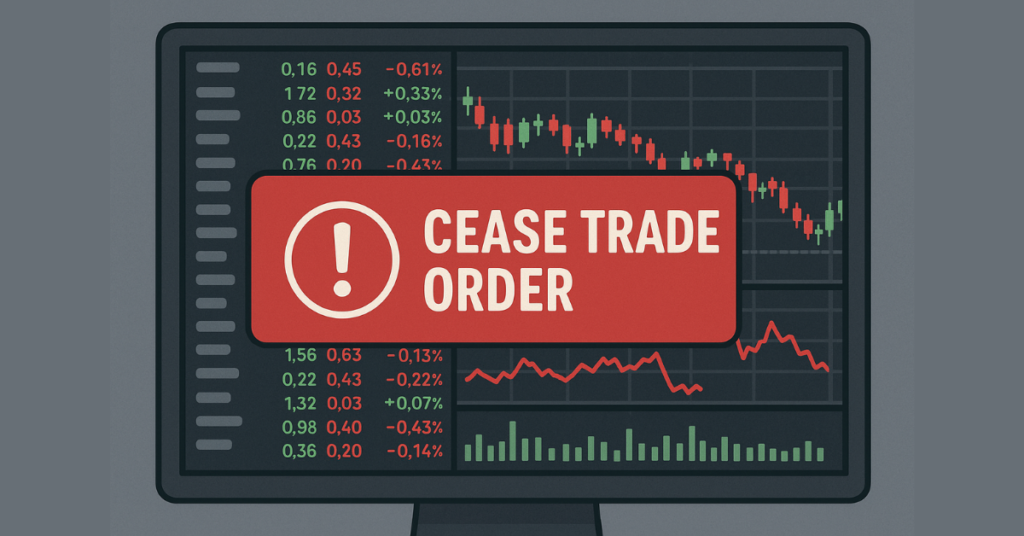
A cease trade order is an official regulatory directive that prohibits trading in a company’s securities until compliance or disclosure issues are resolved. Issued by securities regulators or exchanges, it protects investors by pausing transactions during investigations or material-information gaps.
Key Takeaways
- A cease trade order (CTO) is a regulatory directive that stops all trading in a company’s securities.
- It’s issued when disclosure, compliance, or integrity problems arise.
- The purpose is to protect investors and maintain transparent, fair market conditions.
Cease Trade Order Definition
A cease trade order is an enforcement action issued by a securities regulator that immediately prohibits buying, selling, or any form of trading in a company’s securities. It is applied when the regulator determines that the company has failed to meet essential reporting, disclosure, or compliance requirements needed to protect investors and maintain market integrity.
A CTO remains in effect until the underlying issue, such as missing financial statements, incomplete disclosures, or suspected misconduct, is resolved to the regulator’s satisfaction. This suspension ensures that investors are not trading based on incomplete or potentially misleading information, preserving fairness across the market.
In practical terms, a cease trade order freezes all trading activity for the affected issuer, meaning investors cannot enter or exit positions involving that security until the regulator lifts the restriction. This makes CTOs one of the strictest tools regulators use to uphold transparency and prevent risk escalation in financial markets.
Meaning & Regulatory Basis

A cease trade order (CTO) legally stops trading in a company’s securities until regulatory compliance issues are resolved. Securities regulators or exchanges issue these orders to ensure companies adhere to disclosure, reporting, and governance standards.
Regulatory Purpose:
- Protect investors from trading on incomplete or misleading information.
- Maintain fairness and transparency across financial markets.
- Enforce compliance with financial reporting laws and corporate governance requirements.
How Regulators Issue CTOs: Regulatory authorities such as securities commissions or stock exchanges monitor listed companies for timely filings, accurate financial statements, and legal compliance. When gaps, inaccuracies, or suspicions of misconduct are detected, a CTO can be issued immediately, restricting all trading activities in the affected securities.
This framework ensures that markets remain transparent and that investors make decisions based on verified and complete information.
Why Cease Trade Orders Happen
Cease trade orders are issued when regulators identify situations that could put investors at risk or compromise market integrity. Common reasons include:
- Failure to File Financial Statements: Companies that do not submit timely or accurate financial reports may trigger a CTO, as missing information can mislead investors.
- Non-Compliance with Regulatory Requirements: This includes violations of securities laws, corporate governance failures, or incomplete disclosure of material events.
- Fraud or Misrepresentation Suspicion: If a company provides false or misleading information, a CTO can prevent trading until the issue is investigated and resolved.
- Market Protection Measures: Regulators may issue CTOs to prevent unusual trading activity, manipulation, or sudden volatility that could harm investors.
Types of Cease Trade Orders
Cease trade orders can vary depending on the severity and nature of the compliance or disclosure issue. Understanding the types helps investors know how long trading restrictions may apply and under what conditions trading can resume.
- Temporary Cease Trade Order (Temporary CTO)
- Issued for short-term compliance or disclosure issues.
- Typically lasts until the company submits required financial statements or resolves minor regulatory gaps.
- Ensures investors are protected while the company corrects issues without causing long-term market disruption.
- Permanent Cease Trade Order (Permanent CTO)
- Applied in cases of severe or ongoing violations, such as repeated failure to comply or deliberate misrepresentation.
- Remains in effect until regulators are satisfied that all compliance issues have been fully addressed.
- Partial Cease Trade Order (Partial CTO)
- Limits trading of specific securities or restricts certain trading activities, rather than halting all transactions.
- May apply to a single class of shares, derivatives, or trading in certain markets.
Effects of Cease Trade Orders
Cease trade orders have significant impacts on both investors and the overall market. When a CTO is issued, trading in the affected securities stops entirely, which can limit liquidity and make it impossible for investors to buy or sell their positions. This pause ensures that investors do not make decisions based on incomplete or misleading information, helping to maintain market integrity and fairness.
For individual traders, a CTO can mean temporary suspension of trading strategies or halted access to leveraged positions. In Forex and CFD trading, brokers like Defcofx offer advantages in such scenarios by providing high leverage options up to 1:2000, low spreads starting from 0.3 pips, and fast support and withdrawals within 4 business hours, allowing traders to adapt quickly and manage risk efficiently.
At a broader market level, CTOs protect investor confidence by demonstrating that regulators are actively monitoring compliance, enforcing transparency, and preventing potentially manipulative or fraudulent trading practices.
How Long a Cease Trade Order Lasts
The duration of a cease trade order depends on the nature and severity of the underlying issue. Temporary CTOs may last only a few days or weeks, allowing companies time to submit missing financial statements or correct minor compliance gaps. Permanent CTOs, on the other hand, can remain in effect for months or longer if serious regulatory violations, fraud suspicions, or repeated non-compliance occur.
Regulators determine the length based on the completeness of disclosures, the company’s responsiveness, and any ongoing investigations. In some cases, partial CTOs may allow limited trading in certain securities while keeping others restricted, providing a flexible approach to maintain market integrity.
This understanding helps traders plan and adjust their strategies, especially when using platforms like Defcofx that offer global reach and fast account support, ensuring they can manage positions efficiently even during regulatory interruptions.
Cease Trade Orders in Forex & CFD Trading
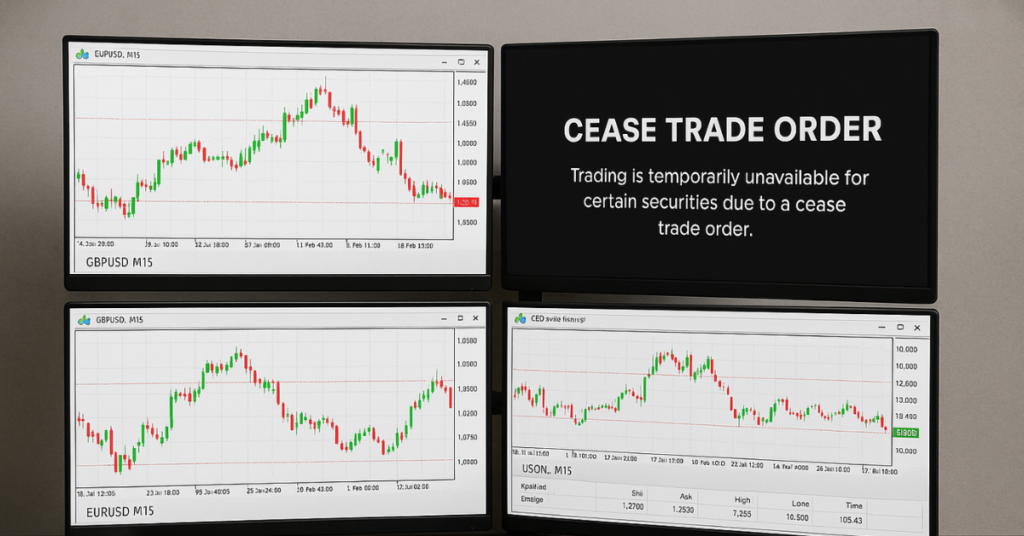
In Forex and CFD trading, cease trade orders function differently than in traditional stock markets. Since Forex is largely an over-the-counter (OTC) market, a CTO doesn’t directly halt currency pair trading but may impact related securities, such as CFDs based on stocks or indices. Traders holding positions tied to affected instruments may face restrictions or adjustments depending on regulatory directives.
Brokers like Defcofx provide tools to navigate these situations efficiently. Our platform supports high leverage up to 1:2000, allowing traders to maintain flexibility even when certain instruments are restricted. With low spreads from 0.3 pips and fast withdrawals completed within 4 business hours, traders can manage their positions with minimal disruption. Additionally, Defcofx’s global reach ensures access to multiple markets and instruments, helping traders diversify and respond to regulatory impacts effectively.
Examples of Cease Trade Orders
Cease trade orders often arise in real-world scenarios where regulatory compliance or investor protection is at stake.
For example, a publicly listed company may fail to file its annual financial statements on time. In such cases, the securities regulator can issue a CTO, freezing all trading until the documents are submitted and verified.
Another scenario involves suspected fraud or misrepresentation. If a company releases misleading financial information, regulators may intervene with a cease trade order to prevent investors from trading on inaccurate data.
Similarly, partial CTOs can occur when only certain classes of shares or specific securities are affected, allowing limited trading while maintaining regulatory oversight.
Final Thoughts on Cease Trade Order Definition
Cease trade orders are essential regulatory tools designed to maintain market integrity, protect investors, and ensure that trading occurs based on accurate and complete information. They temporarily restrict trading in securities when compliance, disclosure, or fraud concerns arise, giving companies time to address the issues while safeguarding the broader financial market. Understanding CTOs helps traders make informed decisions and avoid risks associated with incomplete or misleading information.
For Forex and CFD traders, choosing a broker with strong operational support can make a significant difference during such events. Platforms like Defcofx provide high leverage options up to 1:2000, low spreads from 0.3 pips, and fast withdrawals within 4 business hours, offering flexibility and efficiency even when regulatory actions affect market instruments. By staying informed and using reliable trading tools, traders can navigate market interruptions confidently.
Open a Live Forex AccountFAQs
A CTO is triggered when a company fails to comply with regulatory requirements, such as missing financial statements, providing misleading information, or violating securities laws. Regulators issue the order to protect investors and maintain market integrity.
Not always. CTOs can be temporary, permanent, or partial. Temporary orders last until minor compliance issues are resolved, while permanent orders remain until serious violations are fully addressed. Partial CTOs may restrict only certain securities or trading activities.
No. A cease trade order freezes all trading for the affected securities. Investors cannot buy or sell until the regulator lifts the order. Partial CTOs may allow limited trading, but full CTOs block all transactions.
Securities regulators, stock exchanges, or other governing authorities responsible for market oversight issue CTOs to ensure compliance with financial reporting and disclosure rules.
The duration depends on the severity of the issue. Temporary CTOs may last days or weeks, while permanent CTOs could remain for months. Partial CTOs allow limited trading while regulators assess compliance.
Yes. While Forex itself is decentralized, CFDs linked to stocks or indices under a CTO may be restricted. Brokers like Defcofx provide tools such as high leverage up to 1:2000, fast withdrawals, and low spreads, helping traders manage positions during such interruptions.
Defcofx Forex Articles You Shouldn’t Miss
Discover powerful forex strategies in these top reads from Defcofx.
- What Currency is The Most Valuable
- Best Currency Pairs to Trade During London Session
- How Much is 0.5 Lot Size in Dollars
- List of Major and Minor Forex Pairs
- What Is Considered the Greatest Risk Associated With Forex Settlement?
- Is NZD/USD a Major or Minor Pair?
- Trailing Stop Limit: Definition, Uses & Trading Guide
- When Does a Bearish Market Become Bullish in Forex?
- Is Pound Stronger than Dollar?