


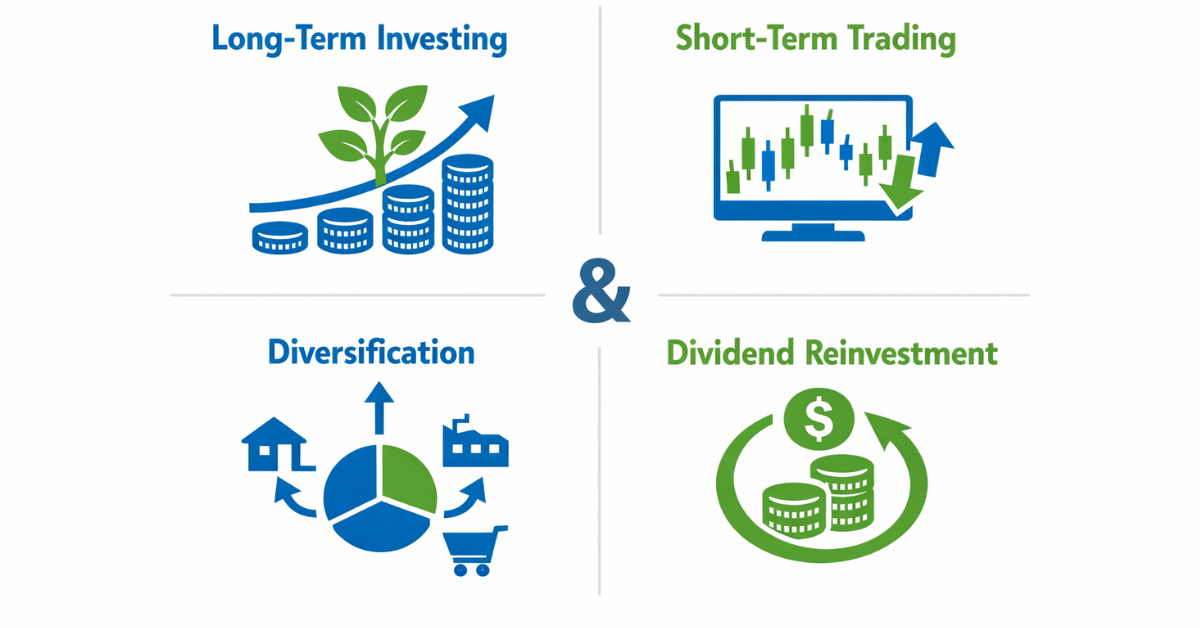
In most countries, you must be at least 18 years old to open your own stock trading or brokerage account independently. This is a legal requirement because trading involves financial contracts that minors cannot enter into on their own. However, younger investors can participate through custodial accounts managed by a parent or guardian. The adult controls the account until the minor reaches the legal age, at which point full control transfers to them.
Key Takeaways
- Most countries require traders to be at least 18 to open an independent brokerage or trading account
- Minors can invest through custodial accounts managed by parents or guardians until they reach the legal age
- The minimum age requirement exists because trading involves legal contracts, financial liability, and tax obligations
- Some countries require age 19 or 21 for independent accounts, the rule varies by jurisdiction and broker
- Learning about investing early provides significant long-term advantages through compounding and financial education
- In forex and CFD trading, age requirements follow the same 18+ standard globally, though some brokers serve clients from regions with higher minimums
What Is the Minimum Age to Trade Stocks?
The minimum age to open an independent personal brokerage account and trade stocks on your own is 18 years old in the vast majority of countries. This threshold exists because financial contracts, account agreements, and trading activity involve legal responsibilities that minors cannot assume independently under most legal systems.
When you open a brokerage account, you agree to terms and conditions that are legally binding. You accept responsibility for the trades you make, any losses incurred, and the tax obligations that arise from investment activity. Courts in most countries do not hold minors to these contracts, which is precisely why brokers enforce the 18-year minimum.
The question of do you have to be 18 to trade stocks comes up frequently from younger investors eager to participate in markets. The short answer is yes for independent accounts, but there are structured alternatives available.
Minimum Age by Country: A Global Overview
While 18 is the most common threshold globally, rules vary by country and sometimes by region within a country. The table below summarizes the position across major markets.
| Country / Region | Min Age | Custodial Available | Notes |
| United States | 18 | Yes, UGMA/UTMA accounts | FINRA regulated; state rules may vary |
| United Kingdom | 18 | Yes, Junior ISA, JIA | FCA regulated |
| European Union | 18 | Yes, varies by country | MiFID II regulated |
| Canada | 18–19 | Yes, RESP, custodial | Age varies by province |
| Australia | 18 | Yes, child accounts | ASIC regulated |
| UAE / GCC | 21 | Yes, guardian managed | DFSA and local authorities |
| India | 18 | Yes, guardian accounts | SEBI regulated |
| Pakistan | 18 | Yes, guardian managed | SECP regulated |
Can Minors Invest in Stocks?
Yes. Being under 18 does not mean you are completely locked out of investing. In most countries, parents or guardians can open custodial accounts on behalf of minors, allowing younger people to invest and grow wealth before they reach legal adulthood.
In the United States, the most common structures are UGMA (Uniform Gifts to Minors Act) and UTMA (Uniform Transfers to Minors Act) accounts. In the UK, the Junior ISA (Individual Savings Account) is widely used. Other countries have equivalent structures.
The mechanics are straightforward: the adult opens and manages the account, the assets legally belong to the minor, and when the minor turns 18 (or the age of majority in their jurisdiction), full control of the account and all its assets transfers to them automatically.
Custodial Accounts vs Regular Trading Accounts
| Feature | Custodial Account | Regular Trading Account |
| Who Can Open | Parent or guardian on behalf of minor | Individual aged 18 or older |
| Account Control | Adult until minor reaches majority | Account holder directly |
| Asset Ownership | Minor owns the assets | Account holder owns the assets |
| Legal Responsibility | Adult supervisor assumes liability | Individual account holder |
| Transfer of Control | Automatic at age of majority | Not applicable |
| Investment Options | Stocks, ETFs, funds (varies by broker) | Full range depending on broker |
| Best Purpose | Early investing, financial education | Independent trading and investing |
Why Brokers Have Age Restrictions
The 18-year minimum is not an arbitrary rule. It exists because of the legal framework surrounding financial contracts in most jurisdictions.
Legal contracts: Opening a brokerage account means signing legally binding agreements. In most countries, contracts with minors are voidable, meaning the minor can walk away from the agreement without penalty. Brokers cannot accept that legal uncertainty on financial commitments.
Tax liability: Investment activity generates taxable events, capital gains, dividend income, and in some jurisdictions, trading profits. Minors generally cannot independently file taxes or be held fully responsible for tax obligations.
Financial responsibility: Trading involves the risk of loss, and in some instruments like margin trading, losses can exceed the initial investment. Holding minors legally responsible for such losses creates serious problems for both the broker and the minor’s family.
Regulatory compliance: Regulators in most countries have set the adult threshold as the minimum for independently opening and operating financial accounts. Brokers must comply with these requirements to maintain their licenses.
Is Day Trading Allowed Under 18?
Minors generally cannot open independent day trading accounts anywhere in the world. Day trading carries even more stringent oversight than basic investing because of the leverage involved, the frequency of transactions, and the potential for rapid losses.
In the United States, the Pattern Day Trader (PDT) rule requires a minimum account balance of $25,000 for accounts that make four or more day trades within five business days. This threshold, combined with the 18-year minimum, effectively excludes all minors from independent day trading.
Participating in day trading through a supervised custodial account is possible in some jurisdictions, but this requires the managing adult to make and be legally responsible for all trading decisions. The minor cannot independently execute trades.
For younger investors who want to understand how active trading works, the best approach is to spend time learning through education first.
Read how to trade forex: complete beginners guide and use a demo account to practice without any financial risk.
What Young Investors Should Focus On
Most financial professionals advise that young investors starting out, whether through a custodial account or immediately upon turning 18, should prioritize long-term, education-first investing over active short-term trading.
Index funds and ETFs: Diversified funds that track broad market indices provide exposure to market returns without requiring active stock selection. They are lower cost, well-diversified, and widely regarded as appropriate starting investments.
Large-cap company stocks: Well-established, globally recognized companies with strong business histories are generally less volatile than smaller companies and provide a more stable learning environment.
Understanding before doing: Time spent learning how markets work, how to read charts, what drives prices, and how to manage risk is worth more in the long run than jumping into trading without that foundation. See good stocks to invest in for beginners and how to start investing in the stock market.
Compound growth: The single biggest advantage young investors have over older ones is time. A person who starts investing at 18 has 10 extra years of compounding compared to someone who starts at 28. Even small, consistent contributions made early can generate significant wealth over decades.
5 Benefits of Learning Investing Early
Financial literacy is one of the most valuable skills a young person can develop, yet it is rarely taught comprehensively in formal education. Young investors who begin learning about markets early build knowledge that serves them for life.
- More time for compounding: Compound growth is exponential, not linear. Starting at 18 instead of 28 does not just give you 10 more years, it gives you a dramatically larger ending balance because earlier gains compound over the full period
- Emotional education: Learning how to hold through market volatility, resist panic selling, and make decisions rationally rather than emotionally is a skill that takes years to develop. Starting young means more time to build that emotional discipline
- Understanding risk early: Experiencing market downturns while young, with smaller positions, is far less damaging than experiencing the same psychological pattern with a large retirement portfolio in later life
- Career and financial advantages: Young people who understand financial markets, economic cycles, and investment principles are better equipped for careers in finance, business, and entrepreneurship
5 Common Mistakes Young Investors Make
- Chasing quick profits influenced by social media: Social platforms amplify stories of overnight trading wins and downplay losses. The reality is that consistent, disciplined investing produces far better long-term results than high-risk speculation
- Starting with leveraged products before understanding the basics: Forex, CFDs, and options involve leverage that can amplify losses as well as gains. Building foundational knowledge of how markets work before using these instruments is essential
- Copying strategies without understanding them: Following a strategy you do not understand means you cannot adapt when conditions change or know when to exit a trade that is moving against you
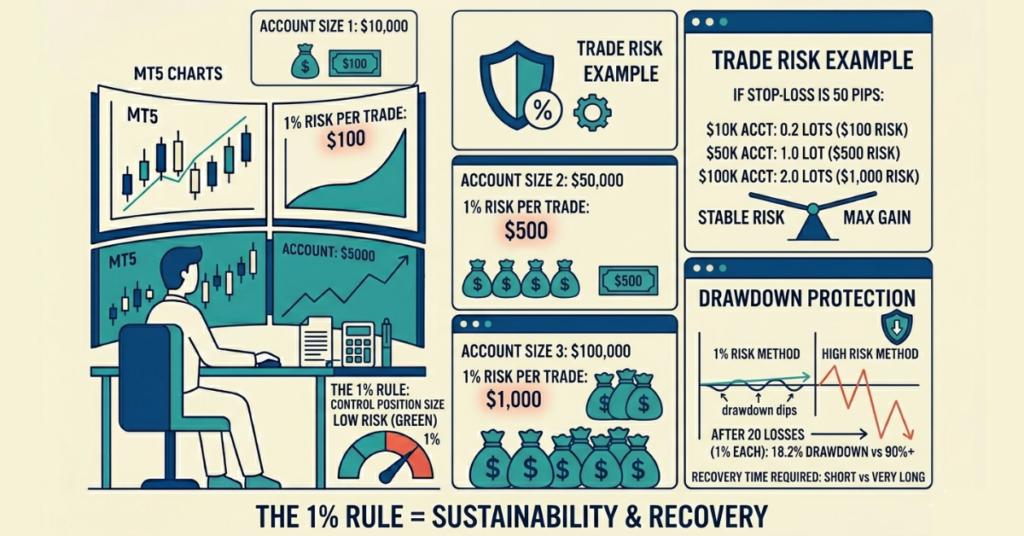
- Ignoring risk management: The most important rule in investing and trading is protecting capital. Position sizing, stop losses, and diversification matter far more than finding the “perfect” trade. See forex risk management for principles that apply to all markets
- Giving up after early losses: Almost every successful investor and trader experienced losses when they started. Losses are part of the learning process. The key is losing small amounts while learning, not large amounts while guessing
When You Turn 18: Getting Started with Trading
Once you reach 18, you can open an independent brokerage or trading account in your own name. Before depositing any real money, consider the following steps.
- Start with a demo account, practice trading with virtual money on live market prices before risking real capital. Most reputable platforms including Defcofx offer free demo access
- Study the basics of chart reading and technical analysis, understanding how to read price charts is foundational to both stock and forex trading
- Build a simple trading or investment plan, know what you are trying to achieve, how much risk you are willing to take, and what your exit criteria are before entering any position
- Learn about position sizing and leverage, understand what leverage means and how it amplifies both profits and losses. See leverage and margin requirements for a practical guide
Start Learning with Defcofx
Defcofx is an online forex and CFD broker registered in Saint Lucia, offering access to forex, gold, stocks, indices, and cryptocurrencies through MetaTrader 5 (MT5). For traders aged 18 and above, Defcofx provides a complete trading environment with the tools needed to learn markets properly.
- Free demo account, practice on live market prices with zero risk, ideal for new traders building their first real experience
- Educational resources, access the knowledge base, daily technical analysis, and market tools to build your knowledge systematically
- Spreads from 0.3 pips, no commissions, no swap fees, low-cost trading environment for beginners learning to manage trade costs
- Up to 1:2000 leverage with negative balance protection so you cannot lose more than your deposited amount
- 40% welcome bonus on first deposits of $1,000 or more. See the promotion page
- View accounts overview to choose the account type that fits your starting capital and goals
Start Your Trading Journey with Defcofx at 18
Open a free demo account and practice on live market prices with no financial risk. When you are ready to trade live, Defcofx gives you tight spreads, professional tools, and support from day one.
Frequently Asked Questions
How old do you have to be to buy stocks?
In most countries, you must be at least 18 years old to open your own brokerage account and buy stocks independently. Some jurisdictions set the minimum at 19 or 21. See the country-by-country table above for a regional breakdown.
Can a 16-year-old invest in stocks?
A 16-year-old cannot open an independent brokerage account in most countries, but can participate in the stock market through a custodial account opened and managed by a parent or guardian. The assets legally belong to the minor, and control transfers fully when they reach the age of majority.
What is a custodial account?
A custodial account is an investment account opened by an adult (parent or guardian) on behalf of a minor. The adult manages the investment decisions, but the assets belong to the minor. When the minor turns 18 (or the age of majority in their country), they automatically gain full control of the account and its assets.
Can minors day trade stocks?
Minors generally cannot open independent day trading accounts anywhere. Even through custodial accounts, the managing adult must make and be legally responsible for all trading decisions. In the US, the Pattern Day Trader rule also imposes a $25,000 minimum balance requirement on top of the 18-year age threshold.
Is investing safe for teenagers?
Long-term, diversified investing through a supervised custodial account is generally appropriate for teenagers with parental guidance. Short-term trading and leveraged instruments carry significantly more risk and are not appropriate for most young investors without substantial knowledge and experience.
Why do brokers require traders to be 18?
Brokers require the 18-year minimum because trading involves legally binding contracts, financial liability, and tax obligations that minors cannot independently accept under most countries’ legal systems. Regulators also mandate minimum age requirements that brokers must follow to maintain their licenses.
Can parents buy stocks for their children?
Yes. Parents can invest on behalf of their children using custodial accounts. In the US, UGMA and UTMA accounts are the most common structures. In the UK, the Junior ISA is widely used. The child legally owns the invested assets throughout, with the parent managing until the child comes of age.
What is the best age to start learning about investing?
Most financial experts agree that learning about investing during teenage years is highly beneficial. The earlier someone understands concepts like compound growth, risk management, and market cycles, the better prepared they are to make sound financial decisions throughout their life. Many successful investors attribute their long-term results to habits and knowledge built in their late teens.
Can I trade forex at 18?
Yes. Most forex and CFD brokers, including Defcofx, require account holders to be at least 18 years old. Once you turn 18, you can open a live trading account and access forex, gold, indices, and stocks through the same platform. Starting with a demo account is strongly recommended before committing real capital.
Ready to Start at 18? Open a Defcofx Account
Access forex, stocks, gold, and more from a single MT5 account. Learn on the demo, trade live when confident, and grow your skills at your own pace.