


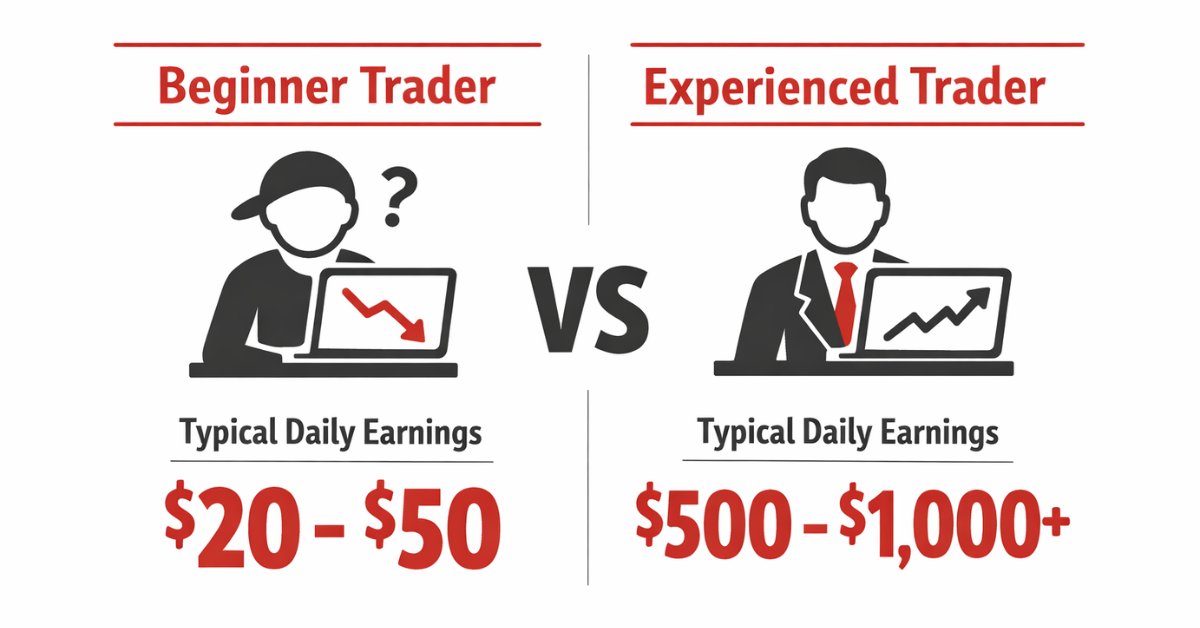
Day trading isn’t automatically easier than swing trading, and swing trading isn’t automatically easier than day trading. Day trading demands fast decisions, constant chart monitoring, and emotional control under real-time pressure. Swing trading requires patience, confidence in holding positions overnight, and the discipline to wait for setups that may take days to develop. The easier approach depends entirely on your personality, schedule, risk tolerance, and how you handle stress.
Key Takeaways
- Day trading means opening and closing all positions within the same trading day, no overnight exposure
- Swing trading means holding positions for several days or weeks to capture broader market trends
- Day trading requires more screen time, faster decisions, and higher emotional stamina during each session
- Swing trading requires patience, overnight risk tolerance, and the confidence to hold through temporary drawdowns
- Neither style is inherently easier, each suits a different type of trader
- Beginners often find swing trading more manageable because there is more time to analyze and react
What Is Day Trading?
Day trading is a style where all positions are opened and closed within the same trading session. No trades are held overnight. The goal is to capture short-term price movements, often within minutes to a few hours. Day traders typically focus on intraday patterns, short-term momentum, and session-specific volatility.
Because positions move fast and opportunities can appear and disappear within seconds, day traders usually monitor charts continuously during active market hours. This requires sustained focus, quick execution, and the emotional steadiness to make decisions under pressure without overthinking.
Day trading is most effective during high-volume market sessions when price movement is active and spreads are tight. The London and New York sessions are the most popular windows for day traders in forex.
What Is Swing Trading?
Swing trading is a medium-term approach where positions are held for several days, sometimes weeks, to capture the broader “swings” in market trends. Swing traders do not need to monitor charts continuously; many check in a few times per day or only at the open and close of sessions.
The advantage of swing trading is flexibility. Part-time traders and busy professionals can participate without being glued to screens. The trade setup is identified, the entry is placed, and the position is managed with defined stop-loss and take-profit levels that can be checked periodically.
The challenge is emotional. Holding a trade for three to five days means sitting through minor pullbacks, news events, and overnight moves that test your patience and conviction in the setup. Traders who exit too early or close positions out of fear often struggle with swing trading.
Day Trading vs Swing Trading: Full Comparison
| Feature | Day Trading | Swing Trading |
| Trade Duration | Minutes to hours | Days to weeks |
| Screen Time Required | High, often 4–8 hours | Moderate, 30–90 minutes daily |
| Decision Speed | Fast, seconds to minutes | Slower, hours or days |
| Overnight Risk | None, all closed daily | Present, positions stay open |
| Trading Frequency | Multiple trades per day | A few trades per week |
| Stress Level | Higher | Moderate |
| Capital Requirement | Moderate | Moderate to lower per trade |
| Best For | Active, focused traders | Patient, schedule-flexible traders |
| Main Skill Required | Execution speed, discipline | Patience, trend analysis |
| Profit Per Trade | Smaller but more frequent | Larger per trade, fewer setups |
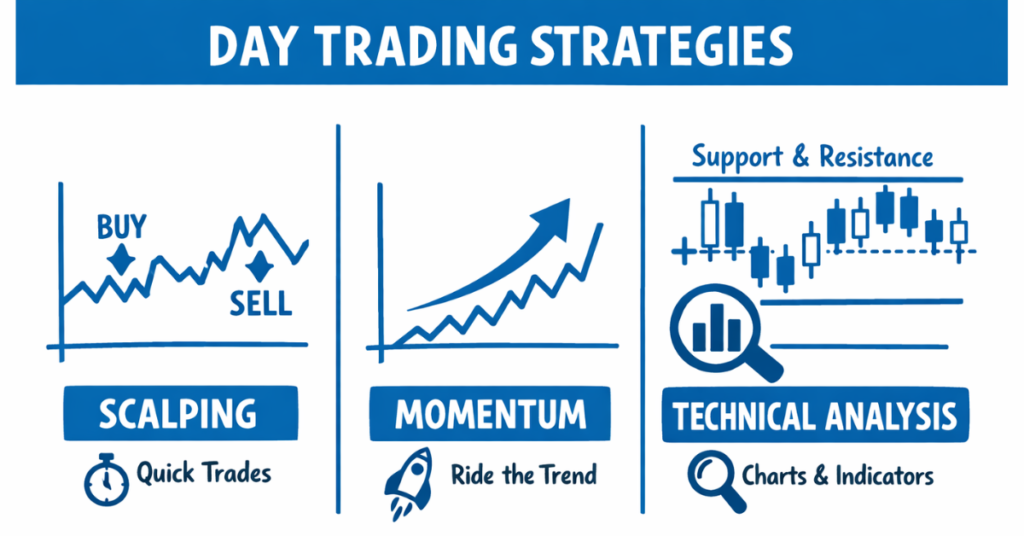
Why Some Traders Find Day Trading Easier
For certain personality types, day trading actually feels more natural and less stressful than swing trading. Several genuine advantages of day trading attract these traders.
- No overnight uncertainty: Every position is closed by end of session. There is no waking up at 3:00 AM to check if a geopolitical event has blown through your stop overnight.
- Faster feedback loops: You know whether a trade worked within hours, not days. This faster feedback helps some traders learn more quickly from mistakes.
- Defined trading schedule: Day traders work during specific session windows and stop trading when the session ends. For disciplined traders, this creates a structured routine.
- No waiting anxiety: Some traders find the multi-day wait of swing trading harder to manage psychologically than the intensity of a fast intraday session.
See also: is day trading profitable? for a realistic look at outcomes, and what are the biggest day trading mistakes before committing to this style.
Why Some Traders Find Swing Trading Easier
For many traders, especially those with demanding schedules or lower emotional tolerance for intraday pressure, swing trading is a significantly more comfortable approach.
- Less screen time: You do not need to monitor charts continuously. Many successful swing traders spend 30–60 minutes per day on market analysis and trade management.
- More time to analyze: Swing trade setups develop over hours and days. There is time to check multiple timeframes, consult your trading checklist, and make thoughtful decisions without being rushed.
- Fewer trades needed: Swing traders aim for higher-quality setups rather than high volume. Overtrading, one of the most common causes of losses, is easier to avoid when you only need two or three solid setups per week.
- Works alongside a day job: Swing trading is widely used by professionals who cannot commit to full-time market monitoring. A setup identified in the evening can be managed with orders placed before the next morning.
Useful resources for swing traders: what is the 2% rule in swing trading, what is the golden rule of swing trading, should a beginner do swing trading, and how much money is required for swing trading.
Which Style Is Better for Beginners?
This is genuinely one of the most commonly asked questions in trading education, and the answer is more nuanced than most guides suggest.
Most experienced traders and trading coaches recommend swing trading as the starting point for beginners, for several practical reasons. The slower pace allows more time for reflection. Setups can be analyzed thoroughly without the pressure of a live, moving market. Mistakes can be reviewed calmly without the emotional intensity of watching a trade fail in real time.
That said, some beginners naturally adapt to the pace of day trading. If you find yourself energized by fast-moving markets, capable of making quick decisions without second-guessing, and able to handle losses without letting them affect subsequent trades, day trading may suit you better from the start.
The most important factor is self-awareness, not which style sounds more exciting or potentially profitable.
Profitability: Which Style Makes More Money?
Neither day trading nor swing trading is guaranteed to be more profitable. Both styles can generate strong returns, and both can result in losses. The outcome depends on skill, discipline, and the quality of the strategy being applied.
Day trading potentially allows more frequent opportunities, but transaction costs, execution slippage, and emotional mistakes reduce profits on a per-trade basis. Swing trading involves fewer trades with larger targets, but each trade requires holding through uncertainty for longer.
4 Common Mistakes When Choosing a Style
- Choosing based on potential earnings, not personality: The most profitable style is the one you can execute consistently. If the pace or demands of a style cause you to make emotional decisions, it will not be profitable for you regardless of what others report
- Switching styles every time you have a losing period: Every strategy has drawdown periods. Constantly switching between day trading and swing trading prevents you from developing competence in either
- Trying to combine both without mastering either: Day trading and swing trading require different mindsets and tools. Beginners who try to do both simultaneously usually end up doing neither well
- Underestimating time requirements for day trading: Many beginners assume they can day trade “just a few hours a day.” Effective day trading during active sessions requires full attention and mental energy for the entire session window
Trade Both Styles with Defcofx
Defcofx supports both day trading and swing trading through MetaTrader 5 (MT5), with the same account giving you access to forex, gold, indices, stocks, and cryptocurrencies. Whether you are making intraday entries or managing multi-day swing positions, the platform provides the tools to execute both approaches efficiently.
- Real-time charts and indicators on MT5 for both intraday and multi-day analysis
- Spreads from 0.3 pips, no commissions, no swap fees, important for day traders who make multiple entries per session
- Up to 1:2000 leverage with risk management tools built in
- 40% welcome bonus on first deposits of $1,000 or more. See the promotion page
- Multiple account types including demo accounts, essential for testing whichever style you choose at zero risk
Find Your Trading Style on Defcofx
Test both day trading and swing trading on a free demo account with live market prices. When you know which style fits, open a live account and start with tight spreads and no commissions.
Frequently Asked Questions
Is day trading harder than swing trading?
Day trading is generally considered harder for most people because it requires making fast decisions under real-time pressure, constant chart monitoring, and strong emotional control throughout each active session. Swing trading allows more time for analysis and has a slower pace, which many traders find more manageable.
Which trading style is better for beginners?
Most experts recommend swing trading for beginners because the slower pace allows more time to analyze setups, learn from trades, and build good habits without the intensity of intraday pressure. See should a beginner do swing trading for detailed guidance.
Can day trading be profitable?
Yes, day trading can be profitable, but it requires genuine skill, consistent execution, and disciplined risk management. Statistical data shows that most retail day traders do not sustain long-term profitability, which is why proper preparation and a tested strategy are essential before trading live capital.
Why do some traders prefer swing trading?
Swing trading offers significantly more flexibility. Traders do not need to monitor charts continuously, trades have larger individual targets, and the emotional pressure of real-time decision-making is lower. It is especially popular among part-time traders and working professionals.
Does day trading require full-time attention?
During active trading sessions, yes. Effective day trading typically requires full attention for several consecutive hours per session. Partial attention or multitasking during a live day trading session leads to missed setups and reactive, emotional decision-making.
Is swing trading safer than day trading?
Swing trading reduces intraday execution risk and emotional pressure, but introduces overnight risk as positions remain open through news events, economic releases, and market gaps. Neither style is inherently “safer”, proper risk management through position sizing and stop losses is what creates safety in either approach.
Can you do both day trading and swing trading?
Yes, some experienced traders run both simultaneously, using their swing account for medium-term directional trades and their day trading account for intraday setups. Beginners are strongly advised to master one style first before attempting to combine them.
Which style makes more money?
Neither style guarantees higher profits. Profitability comes from disciplined execution of a well-tested strategy with consistent risk management, regardless of whether that strategy is intraday or multi-day. Compare your expectations with swing trading vs day trading for a more detailed analysis.
Start Trading on a Defcofx Demo Account Today
Practice day trading and swing trading strategies on live prices with zero risk. See which style suits your personality before committing real capital.