


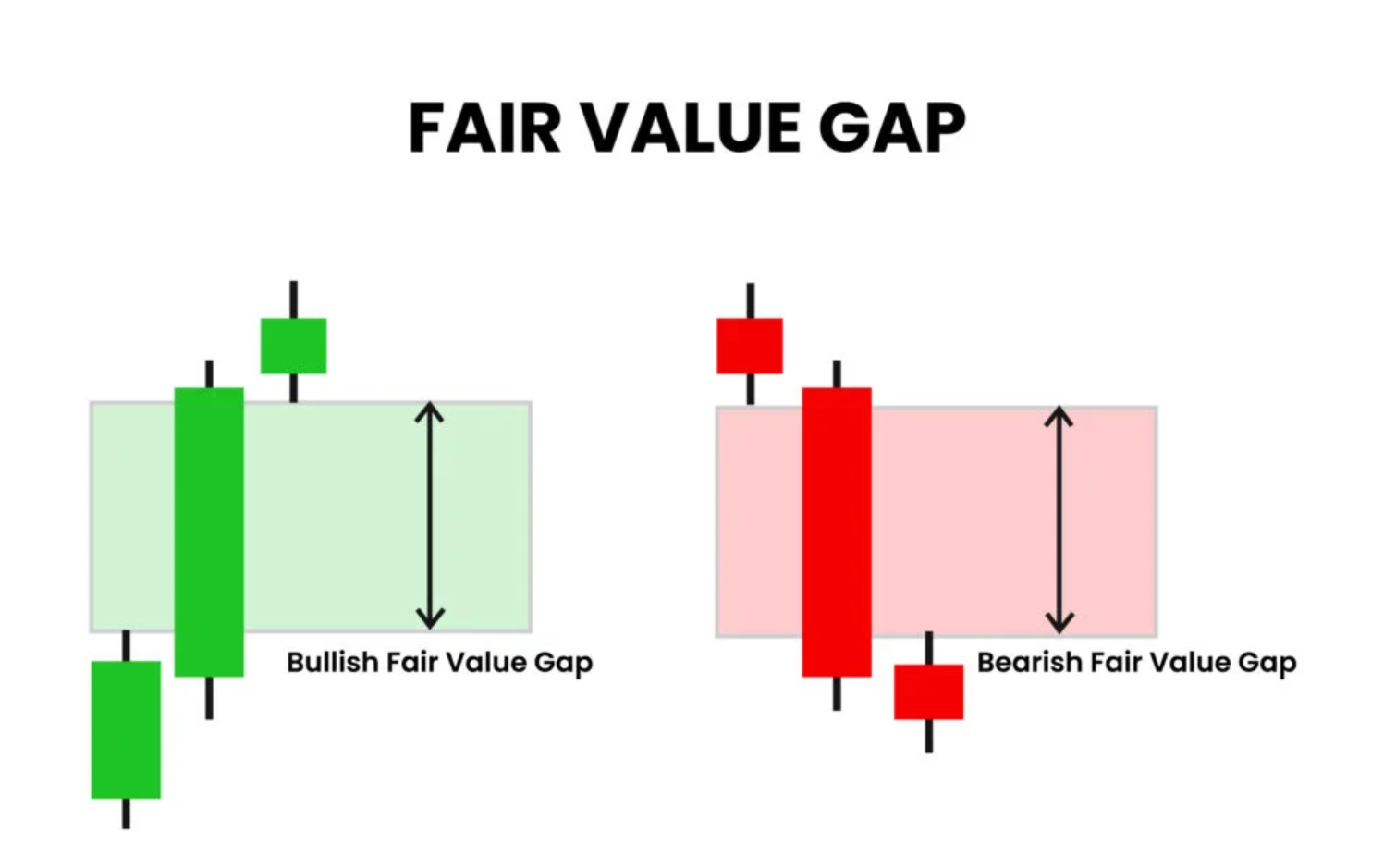
A fair value gap (FVG) in trading is a price imbalance that occurs when the market moves rapidly, leaving an area where little to no trading activity takes place between candles. Traders use these gaps to identify potential entry zones where price may retrace before continuing in the direction of the trend.
This concept is widely used in price action and smart money trading strategies to improve entry timing and risk management.
Want to apply price action concepts like fair value gaps in real markets? Explore how Defcofx provides access to fast-moving forex and CFD markets with advanced charting tools.
Open a Live AccountKey Takeaways
- A fair value gap is a price imbalance caused by strong momentum.
- It appears when candles leave a visible gap in price action.
- Traders expect the price to return to the gap before continuing.
- FVGs are commonly used in smart money and price action trading.
- They help identify high-probability entry zones.
- Fair value gaps are not always filled and require confirmation.
So What Is a Fair Value Gap?
If you’re wondering what is a fair value gap in trading, think of it like this:
The market moved too fast and “skipped” prices. When this happens, it creates an imbalance, meaning the price didn’t trade evenly through that area. This gap becomes important because tthe market often comes back to “fill” it later. That’s why traders pay close attention to fair value gaps. They act like magnets for price.
How a Fair Value Gap Forms
A fair value gap usually forms during strong momentum moves.
It typically involves three candles:
- A strong bullish or bearish candle
- A second candle continuing the move
- A third candle leaving a gap between the first and third
The gap is the area where little or no trading occurred.
For example:
- In a bullish move → price shoots up quickly
- In a bearish move → price drops rapidly
In both cases, the market leaves behind an imbalance.
The gap is measured between the high of the first candle and the low of the third candle (for bullish FVG), or vice versa for bearish FVG.
Why Fair Value Gaps Matter in Trading
Fair value gaps matter because they show where the market may return.
The idea is simple: Markets seek efficiency. So when there’s an imbalance, price often revisits that zone before continuing in the original direction.
For you as a trader, this creates opportunities:
- Better entry prices
- Lower-risk setups
- Clear trade zones
Instead of chasing price, you wait for it to come back to the gap.
Bullish vs Bearish Fair Value Gaps
There are two types of fair value gaps.
| Type | What It Means | Trading Idea |
| Bullish FVG | The price moved up quickly | Look for buy entries when price returns |
| Bearish FVG | The price dropped quickly | Look for sell entries when price returns |
Understanding the direction is key. You always want to trade with the trend, not against it.
Note: Instead of chasing fast moves, wait for the price to return to a fair value gap; this can improve your entries significantly.
How to Trade Fair Value Gaps
Let’s break this down into a simple approach.
Step 1: Identify the Gap
Look for strong moves with visible imbalance between candles.
Step 2: Mark the Zone
Draw the gap area on your chart.
Step 3: Wait for Price to Return
Don’t rush; patience is key.
Step 4: Confirm Entry
Use additional confirmation like the following:
- support/resistance
- trend direction
- candlestick signals
Step 5: Manage Risk
Always use stop-loss and proper position sizing.
Combining FVG with Other Tools
Fair value gaps work best when combined with other analysis tools.
For example:
- Trend analysis → confirms direction
- Support and resistance → adds confluence
- Liquidity zones → shows where price may reverse
The more confirmation you have, the stronger your setup becomes.
Are Fair Value Gaps Reliable?
FVGs are popular because they are based on market behavior, not indicators.
But like any strategy, they are not 100% accurate.
Sometimes the price:
- Partially fills the gap
- Completely ignores it
- Takes longer than expected to return
This is why risk management is always essential.
Why Traders Like Using FVGs
Fair value gaps are widely used because they:
- Provide clear entry zones
- Improve risk-to-reward ratios
- Help avoid chasing the market
They are especially popular in price action and smart money strategies.
For you, they offer a structured way to approach entries.
Execution Still Matters
Even when using precise entry concepts like fair value gaps, execution quality can significantly impact results. Tight spreads, fast order execution, and stable pricing are especially important when trading specific price zones.
Defcofx provides access to MT5, low-latency execution, and competitive spreads, helping traders enter and manage trades more efficiently in fast-moving markets.
Open a Live Trading Account
Frequently Asked Questions (FAQ)
What is a fair value gap in trading?
A fair value gap is a price imbalance created when the market moves quickly and leaves a gap between candles. It shows that price did not trade evenly through that area. Traders use these gaps to identify potential zones where price may return before continuing its trend.
Do fair value gaps always get filled?
No, fair value gaps do not always get filled. While price often returns to these areas, it can sometimes continue trending without revisiting the gap. This is why traders combine FVGs with other confirmations and always use proper risk management.
How do you identify a fair value gap?
A fair value gap is identified by looking at three candles where there is a visible gap between the first and third candles. This usually happens during strong momentum moves. Marking this area on your chart helps you track potential entry zones.
Are fair value gaps good for beginners?
Fair value gaps can be useful for beginners, but they require practice to understand properly. Beginners should combine FVGs with basic concepts like trend direction and support/resistance. Keeping things simple at first will help build confidence.
What is the difference between bullish and bearish FVG?
A bullish fair value gap forms during a strong upward move and suggests buying opportunities when price returns. A bearish fair value gap forms during a downward move and suggests selling opportunities. The direction of the trend is important when using these setups.
Can you use FVG in forex and stocks?
Yes, fair value gaps can be used in forex, stocks, and other financial markets. The concept is based on price movement and market behavior, which applies across all markets. However, effectiveness may vary depending on volatility and liquidity.
What time frame is best for fair value gaps?
Fair value gaps can be used on multiple time frames, but many traders prefer higher time frames for stronger signals. Lower time frames may produce more gaps but also more false signals. Choosing the right time frame depends on your trading style.
Do you need indicators to trade FVG?
No, fair value gaps are based on price action and do not require indicators. However, combining them with tools like trend analysis or support/resistance can improve accuracy. Many traders prefer using a mix of both approaches.
Do institutions use fair value gaps?
Fair value gaps are often associated with institutional trading concepts, as they reflect inefficiencies created during large-volume movements.
Are FVGs better than indicators?
FVGs are based on price action, not lagging indicators. Many traders prefer them for precision, but combining both approaches can improve accuracy.
Final Thoughts
A fair value gap in trading is a price imbalance created by strong market momentum, leaving a gap that price often revisits later. By identifying these gaps and waiting for price to return, traders can find better entry points with improved risk-to-reward setups. When combined with trend analysis and proper risk management, FVGs can become a powerful tool in your trading strategy.