


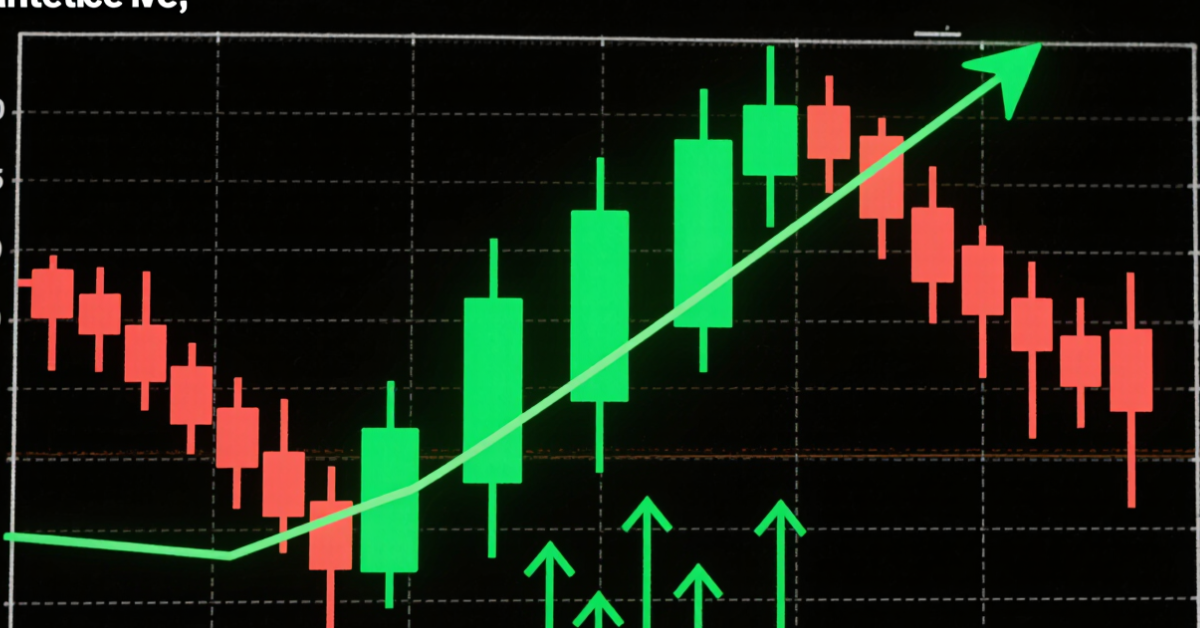
The wick fill trading strategy is a powerful method that focuses on how price reacts to long wicks (shadows) on candles. Traders use this technique to spot quick reversals or momentum shifts. When a wick gets filled, it often signals that price wants to move in that direction.
Key Takeaways
- Wick fill strategy focuses on candles with long upper or lower wicks.
- Traders expect price to fill the wick area during momentum reversals.
- It works well on lower timeframes like 5M, 15M, and 1H charts.
- News events and session opens often trigger wick fill setups.
What Is the Wick Fill Trading Strategy?
A wick is the long line that sticks out from a candle on your chart. It shows the highest or lowest price reached during a session. Sometimes, these wicks are quickly retraced, or filled, as price moves back in the direction of the candle body.
The wick fill trading strategy uses this behavior to catch fast entries. If a candle leaves a long upper wick (and closes bearish), some traders expect the price to move downward and fill that wick area. The same logic applies for lower wicks and bullish moves.
This approach can work on its own or be combined with support/resistance, session timing, or news events. Many scalpers rely on wick fills because they often offer quick profits and clear risk placement.
Open a Live Trading AccountHow Does It Work in Real Trading?
Let’s say you’re trading the EUR/USD on the 15-minute chart. A big bullish candle forms with a long lower wick and closes strong. The next candle opens and begins to rise, aiming to fill that wick from the previous candle. You enter long, placing your stop just under the wick’s end.
The wick fill strategy is based on the idea that price doesn’t like imbalances. The long wick left behind can act like unfinished business. Market makers often push price back to those levels to grab liquidity or trigger stop-loss orders.
This happens a lot after economic news drops, at the start of new sessions, or during market resets (like the 4-hour or daily candle open).
Want a broker that’s built for fast entries and exits? Defcofx gives you raw spreads and zero-delay execution, perfect for trading wick fills and other fast-paced setups.
Open a Live Account NowBest Timeframes for Wick Fill Strategy
Most traders use the wick fill technique on lower timeframes like:
- 1-minute (M1) and 5-minute (M5) for scalping
- 15-minute (M15) and 1-hour (H1) for intraday trades
- Sometimes on 4-hour (H4) or daily candles for swing entries
The idea is to spot a large wick, wait for the next candle to show momentum in the wick’s direction, and enter with a tight stop-loss and small take-profit. This is where brokers like Defcofx shine, as speed and spread matter more than ever.
ALERT BOX: Avoid wick fills during low-volume hours. Asian session lulls or weekends often show fakeouts that don’t follow through. Stick to high-volume overlaps like London/New York for better success.
Pros and Cons of Wick Fill Trading
| Pros | Cons |
| Simple and beginner-friendly | Can lead to false signals |
| Quick entries with tight stops | Doesn’t work well in choppy markets |
| Great for scalping | Requires fast execution |
| Works well with Defcofx features | Needs confirmation for reliability |
Using Defcofx for Wick Fill Strategy
Wick fill trading demands low latency, reliable charting, and fast execution. Defcofx provides raw spread accounts, direct market access, and lightning-fast order placement. That means you can take advantage of wick fill setups before the price moves away.
Final Thoughts
The wick fill trading strategy is perfect for traders who enjoy clean chart setups and quick price reactions. It’s not foolproof, but when used with good timing, strong execution, and confirmation tools, it can be a solid part of your trading playbook. Platforms like Defcofx make the difference by offering raw spreads, fast execution, and charting tools that help you trade with confidence.
Open a Live Trading Account
FAQs
What does “wick fill” mean in trading?
A wick fill means the price is moving back to cover or retrace the long wick left by a previous candle. This often signals momentum in that direction. Traders use this behavior to enter trades expecting price to revisit or “fill” that wick area. It’s a common setup among scalpers and day traders.
How do I know if a wick will fill or not?
There’s no guaranteed signal, but confirmation from the next candle helps. For example, a bullish candle with a long lower wick followed by another bullish candle often suggests the wick may be filled. Add support/resistance levels and volume spikes to improve the odds of success.
What is the best timeframe to trade the wick fill strategy?
Most traders use the wick fill strategy on short timeframes like 5-minute or 15-minute charts. These offer frequent wick formations and fast reactions. However, swing traders sometimes apply the same logic to 4H or daily charts, especially around news events or key price zones.
Is wick fill trading good for beginners?
Yes, it’s simple and visual. Beginners can learn to identify long wicks and observe how price behaves around them. Just remember to confirm your entries and use proper risk management. Using a broker like Defcofx ensures smooth execution, which is crucial for new traders learning price action.
Can the wick fill strategy be automated?
Yes, many traders write custom scripts or indicators to alert them to long wick formations. Some even use bots to enter wick fill trades automatically. Make sure to backtest any automation first.
Does news affect wick fills?
Definitely. News events often cause sharp spikes that create large wicks. These wicks are prime targets for wick fill trades. But be cautious, as slippage and volatility can also lead to losses. Trade news-based wicks fill only if your broker can handle fast movement.
What should my stop-loss and take-profit be for wick fill trades?
Place your stop just beyond the wick to minimize loss. For take-profit, target the start or midpoint of the wick, depending on the setup. Always aim for a risk-reward ratio of at least 1:1.
Defcofx Forex Articles You Shouldn’t Miss
Discover powerful forex strategies in these top reads from Defcofx.
- Trailing Stop Loss vs Trailing Stop Limit
- Best Currency Pairs to Trade During London Session
- Forex Trading Sessions in EST ICT Trading Guide
- USD/CAD Forex Trump Tariffs and Market Reaction
- Can You Trade Forex on Weekends
- Is NZD/USD a Major or Minor Pair?
- Trailing Stop Limit: Definition, Uses & Trading Guide
- When Does a Bearish Market Become Bullish in Forex?
- Lower Currency Value: Causes, Effects & Trading Insights