


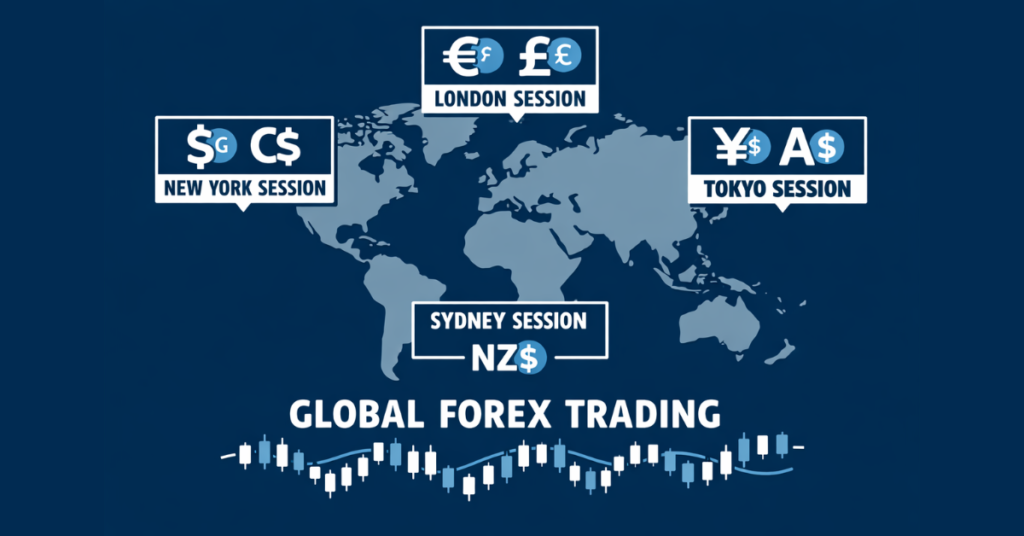
Yes, currencies trade 24 hours a day during weekdays, allowing traders to buy and sell forex across global markets. While the forex market operates five days a week, trading pauses over the weekend. Major sessions Sydney, Tokyo, London, and New York ensure almost continuous access for international traders.
Key Takeaways
- Forex operates 24 hours a day, Monday to Friday, covering all major global trading sessions.
- Currencies are not traded on weekends, except for certain crypto or derivative instruments.
- Understanding forex trading hours helps traders optimize strategy for liquidity and volatility.
- Global time zone differences create session overlaps, allowing nearly continuous market access.
Overview of Forex Market Hours
The forex market operates 24 hours a day during weekdays, providing traders with unmatched flexibility to trade currencies across the globe, this continuous operation is possible because the market is decentralized, with major financial centers in different time zones taking turns opening and closing.
The four main trading sessions Sydney, Tokyo, London, and New York form the backbone of the forex trading schedule.
- Sydney Session: This is the first major session to open, usually from 10 PM to 7 AM GMT, and primarily affects currencies like AUD and NZD. Trading activity is generally lower, making spreads tighter but liquidity moderate.
- Tokyo Session: Running from 12 AM to 9 AM GMT, this session sees higher activity in JPY and other Asian currencies. Overlaps with the Sydney session can increase volatility, presenting strategic opportunities for traders.
- London Session: One of the most active sessions, from 8 AM to 5 PM GMT, focuses on GBP, EUR, and other European currencies. It often has the highest liquidity and trading volume, with narrow spreads that benefit both retail and professional traders.
- New York Session: Operating from 1 PM to 10 PM GMT, this session dominates USD currency pairs. Overlaps with London create periods of extremely high liquidity and volatility, making it ideal for traders seeking active markets.
Session Overlaps: The key to successful forex trading is understanding session overlaps. For example, the London–New York overlap offers some of the most volatile and liquid trading hours, allowing traders to capitalize on price movements effectively.
By trading with Defcofx, users can take full advantage of these 24/5 market hours with benefits like high leverage options up to 1:2000, low spreads starting from 0.3 pips with no commissions or swap fees, and fast support and withdrawals, ensuring that traders worldwide can act on opportunities quickly and efficiently.
Open a Live Trading AccountDo Currencies Trade on Weekends?
While the forex market operates 24 hours a day during weekdays, it is generally closed on Saturdays and Sundays. The closure occurs because major financial institutions and banks in all global centers are not processing transactions during weekends. As a result, liquidity drops significantly, and price movements are minimal.
Some exceptions exist for crypto CFDs or certain derivative instruments, which may continue trading over the weekend depending on the broker. However, standard currency pairs like EUR/USD, GBP/USD, and USD/JPY typically resume trading at the start of the Sydney session on Monday, marking the beginning of a new trading week.
Knowing that currencies don’t trade on weekends allows traders to plan ahead with more confidence. It gives them time to review their strategies, adjust or close open positions if needed, and get ready for the next market session without being caught off guard by sudden price gaps.
Why Forex Trades 24/5 and Not 24/7
The forex market operates 24 hours a day, five days a week due to the rotation of major financial centers across different time zones. Unlike centralized exchanges, forex is a decentralized global market, meaning trading relies on the activity of banks, financial institutions, and brokers in cities like Sydney, Tokyo, London, and New York.
Trading stops on weekends because most banks and institutions are closed, and there is minimal participation, which reduces liquidity and increases the risk of volatile gaps. This ensures that prices remain stable and transactions are accurately processed when the market reopens.
Session overlaps are critical for liquidity. For instance, when London and New York sessions overlap, market activity peaks, spreads narrow, and traders can capitalize on higher volatility. Understanding these overlaps allows traders to optimize strategies and choose the most active times for trading specific currency pairs.
How Defcofx Supports 24/5 Trading Flexibility
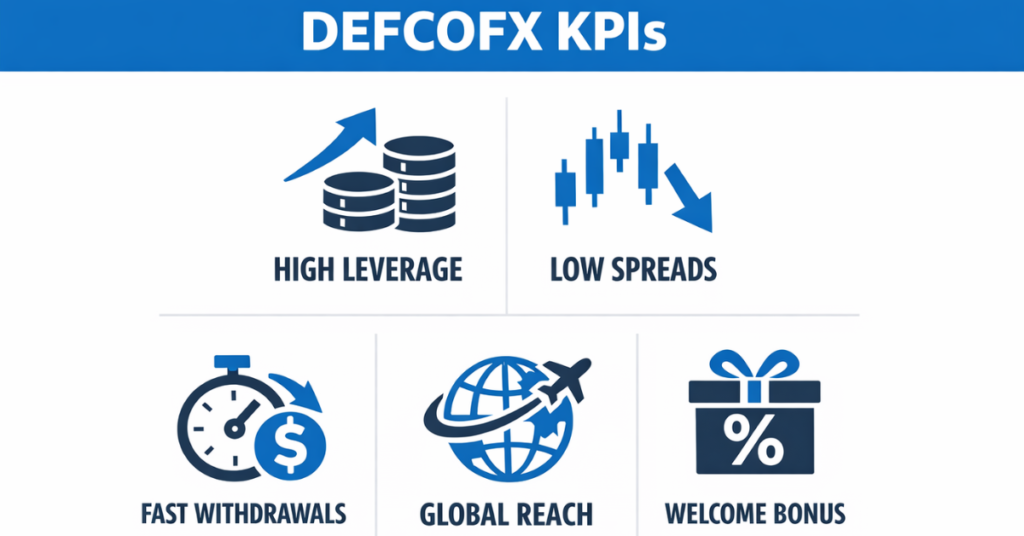
Defcofx enables traders to fully leverage the 24/5 forex market hours by offering features and services designed to maximize trading efficiency and accessibility. With this broker, users can trade currency pairs, commodities, indices, and other instruments during any active session without limitations.
- High Leverage Options: Defcofx offers leverage of up to 1:2000, giving traders more flexibility to increase potential returns and manage positions according to their risk appetite.
- 2. No Commissions or Swap Fees: With low spreads starting from 0.3 pips and zero hidden fees, traders can execute trades cost-effectively across all major sessions.
- 3. 40% Welcome Bonus: First-time deposits of at least $1000 qualify for a 40% bonus, providing extra capital to explore different trading strategies during active forex hours.
- Global Reach: Defcofx welcomes clients from all countries, with multi-language support, enabling international traders to access markets in their preferred time zones.
- Fast Support and Withdrawals: Traders benefit from withdrawals completed within 4 business hours, including weekends, and responsive customer support to address any trading or account issues promptly
4 Tips for Trading During Different Forex Sessions
Trading effectively requires understanding the characteristics of each forex session and adjusting strategies accordingly. Each session offers different levels of liquidity, volatility, and trading opportunities:
- Sydney Session: Typically quieter, ideal for smaller trades or testing strategies. Best for AUD and NZD currency pairs. Tight spreads make it suitable for beginners.
- Tokyo Session: Moderate activity with increased volatility in JPY pairs. Overlaps with Sydney create higher trading opportunities, allowing traders to capture early market movements.
- London Session: High liquidity and volatility make this session ideal for active traders. EUR, GBP, and other European pairs experience significant price movements. Strategies like scalping or intraday trading work best here.
- New York Session: Focused on USD pairs, overlaps with London and creates peak trading periods. Traders can exploit volatility for short-term gains while managing risk with stop-loss strategies.
Final Thoughts on Do Currencies Trade 24/7.
Currencies trade 24 hours a day from Monday to Friday, offering traders worldwide the flexibility to engage in the forex market during Sydney, Tokyo, London, and New York sessions. While the market closes on weekends, understanding session timings, overlaps, and volatility allows traders to plan strategies effectively and maximize opportunities.
Brokers like Defcofx enhance this trading experience by providing high leverage options up to 1:2000, low spreads starting from 0.3 pips with no commissions or swap fees, and a 40% welcome bonus for first-time deposits. With global reach, multi-language support, and fast withdrawals within 4 business hours, traders can confidently access the market and manage funds efficiently.
Open a Live Trading AccountFAQs
No, forex can be traded 24 hours a day from Monday to Friday. Trading pauses over the weekend when major financial centers are closed. Understanding session timings helps traders plan their strategies effectively.
The forex market opens with the Sydney session on Monday 10 PM GMT and closes with the New York session on Friday 10 PM GMT. Each session Sydney, Tokyo, London, New York—has distinct volatility and liquidity characteristics.
Standard currency pairs are not traded on weekends, though some brokers may allow crypto or derivatives trading. Weekend trading carries higher risks due to low liquidity and potential price gaps.
The London–New York overlap is considered the most active period, offering high liquidity and volatility. Traders should align sessions with their currency pairs and trading strategies to optimize results.