


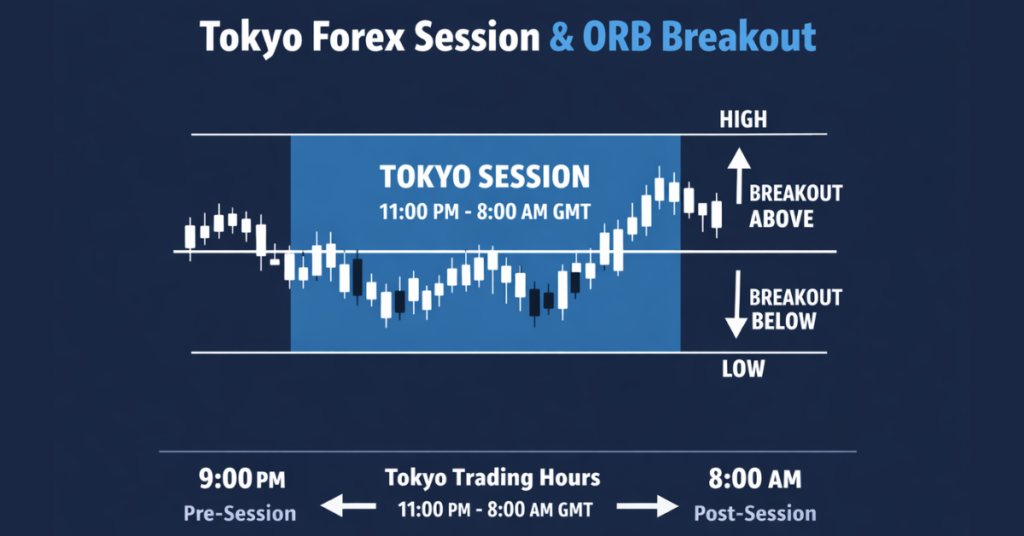
The ORB (Opening Range Breakout) strategy can work in the Tokyo session, but its effectiveness depends on lower volatility and tighter ranges compared to London or New York sessions. Traders often combine it with proper risk management and timing to maximize potential profits during early Tokyo session hours.
Key Takeaways
- The ORB strategy can be applied in the Tokyo session, but lower volatility means smaller breakout moves compared to London or New York sessions.
- Proper timing and risk management are critical for success during Tokyo hours.
- Best results occur when traders combine ORB with session-specific market analysis.
- Beginners should start with smaller positions due to narrower ranges in Tokyo.
- Using a reliable platform like Defcofx allows traders to benefit from high leverage, low spreads, and fast withdrawals, making strategy implementation smoother.
What is the ORB Strategy?
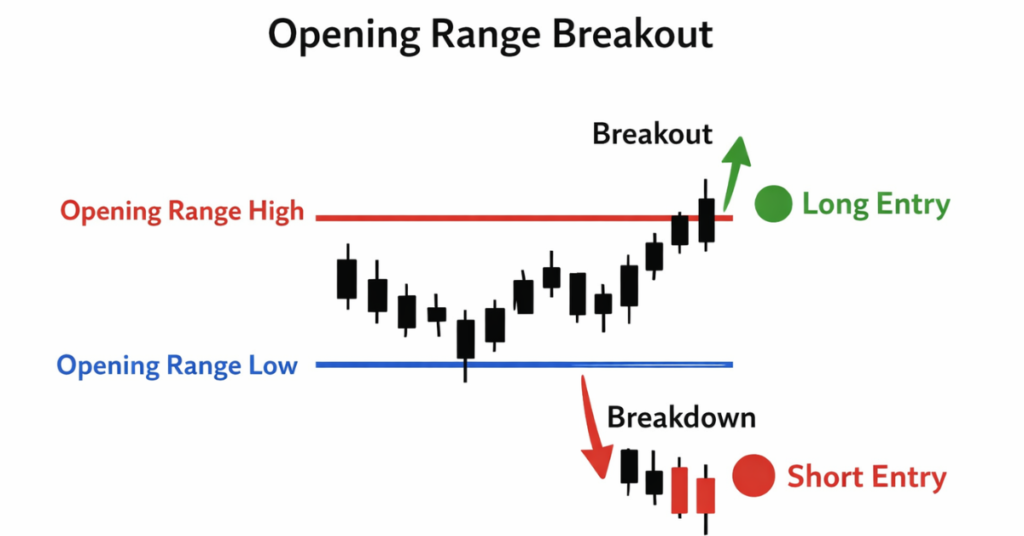
The ORB (Opening Range Breakout) strategy is a popular forex trading technique that focuses on trading price movements when a session’s opening range is broken. The “opening range” is the high and low of the first 30–60 minutes after a trading session begins. Traders watch for price breaking above or below this range and take positions accordingly, aiming to capture momentum and volatility.
This strategy works on the principle that early session movements often indicate market sentiment for the rest of the session. It can be applied across different sessions, including London, New York, and Tokyo, but each session has unique characteristics that affect effectiveness.
4 Key Features of the ORB Strategy:
- Simple setup: Identify the high and low of the opening range.
- Breakout signals: Enter trades when price exceeds the range in either direction.
- Risk management: Set stop-loss just inside the opening range to minimize losses.
- Adaptability: Can be applied to forex, indices, and cryptocurrency markets.
Getting to Know the Tokyo Session in Forex
The Tokyo session is one of the three major forex trading sessions, running roughly from 00:00 to 09:00 GMT, or 09:00 to 18:00 JST. It overlaps slightly with the London session toward the end, but overall, it is known for lower volatility compared to London and New York sessions. This makes it unique and particularly important for traders using the ORB strategy.
During the Tokyo session, Asian currency pairs such as USD/JPY, EUR/JPY, and AUD/JPY see the most activity. Unlike London or New York, where price movements can be explosive, the Tokyo session often features smaller, more measured breakouts. This has a direct impact on the effectiveness of the ORB strategy: breakouts exist, but traders need to adjust expectations for range size and momentum.
Example: If the opening range of USD/JPY in the first hour of Tokyo session is 135.00–135.20, an ORB trader would:
- Buy if the price breaks above 135.20, aiming to ride the breakout momentum.
- Sell if the price breaks below 135.00, expecting downward continuation.
Liquidity during the Tokyo session is moderate. Major pairs like USD/JPY typically maintain relatively low spreads, while minor pairs may have slightly wider spreads. Volatility can increase significantly during important Japanese economic events such as Bank of Japan announcements, CPI data, or employment reports, which can create stronger breakout opportunities.
Does ORB Strategy Work in the Tokyo Session?
The ORB strategy can work in the Tokyo session, but its effectiveness is influenced by the session’s lower volatility and tighter price ranges compared to London or New York. Traders often find that breakouts are smaller and slower, so adjustments to trade size, stop-loss, and profit targets are necessary to capture meaningful gains.
Effectiveness Factors:
- Session Volatility: Tokyo session movements are generally limited to the first few hours. Traders may need to wait for confirmation of a breakout rather than entering immediately.
- Currency Pairs: Major Asian pairs like USD/JPY, EUR/JPY, and AUD/JPY provide the most consistent breakouts. Exotic or minor pairs may not move enough to trigger the strategy effectively.
- Timing: The first 30–60 minutes of the Tokyo session are critical. This is the period where the opening range is established and where the ORB strategy signals are most reliable.
Example: If the opening range for EUR/JPY is 150.50–150.70 and the price breaks above 150.70, a trader could enter a buy position. However, due to narrower ranges, profits may be smaller, so a tight risk-reward ratio is recommended. Conversely, if there’s a BoJ interest rate announcement, breakouts can be stronger and more profitable, even within the Tokyo session.
Real-World Tip: Pairing the ORB strategy with a reliable trading platform like Defcofx ensures that traders benefit from:
- High leverage up to 1:2000 for flexible position sizing
- No commissions or swap fees, with spreads starting at 0.3 pips
- Fast support and withdrawals, including weekends, to manage trades efficiently
While the Tokyo session may not produce huge breakouts like London, the ORB strategy still works for disciplined traders who adapt to the session’s characteristics, carefully choose pairs, and manage risk effectively.
Open a Live Trading AccountBest Practices for ORB Trading in the Tokyo Session
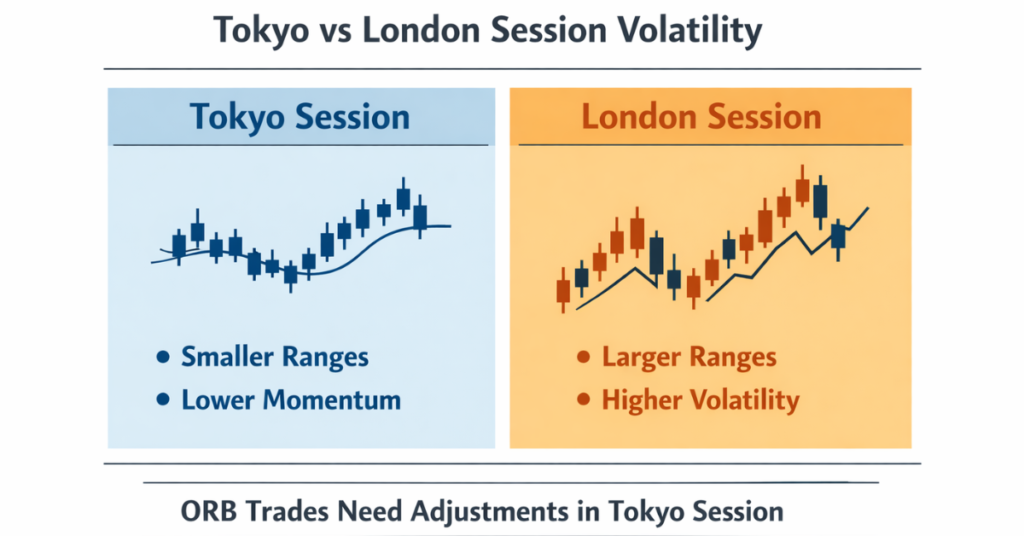
To maximize the effectiveness of the ORB strategy in the Tokyo session, traders should follow specific best practices tailored to the session’s characteristics. This ensures that trades are executed with lower risk and higher probability of success.
1. Focus on Major Asian Pairs
The Tokyo session is most active in USD/JPY, EUR/JPY, AUD/JPY, and NZD/JPY. These pairs tend to show consistent breakouts during the first hour, whereas minor or exotic pairs often experience low liquidity and unpredictable movements.
2. Adjust Your Stop-Loss and Take-Profit Levels
Due to narrower opening ranges, it’s crucial to set tighter stop-losses and realistic profit targets. For example, if the opening range of USD/JPY is 20 pips, a trader might:
- Set a stop-loss 5–10 pips inside the opening range
- Set a take-profit of 15–20 pips, aiming for a 1:1.5–1:2 risk-reward ratio
3. Wait for Breakout Confirmation
Unlike London or New York, false breakouts are common in Tokyo. Traders should consider waiting for:
- A 5-minute candle close beyond the opening range
- A spike in volume to confirm momentum
4. Incorporate Economic News
Significant events such as BoJ interest rate announcements, CPI releases, or employment data can create stronger breakouts. Using an economic calendar helps traders anticipate potential volatility spikes.
5. Manage Position Size Carefully
Because the Tokyo session often features smaller moves, using high leverage wisely is essential. Platforms like Defcofx provide leverage up to 1:2000, allowing traders to optimize positions while maintaining proper risk management.
6. Monitor Trade Timing
The first 30–60 minutes after the Tokyo session opens is the most reliable for ORB signals. Later in the session, breakouts tend to slow, making trades less predictable.
Common Mistakes to Avoid in Tokyo Session ORB Trading
| Mistake | Why It’s a Problem | How to Avoid It |
|---|---|---|
| Ignoring Session Volatility | Tokyo session ranges are usually smaller than London or New York. Expecting large breakouts can lead to over-leveraging and unrealistic targets. | Adjust expectations to smaller moves. Reduce position size and set realistic profit targets. |
| Entering Too Early | Trading before the opening range is clearly formed often results in false breakouts. | Wait 30–60 minutes to properly define the opening range before taking a trade. |
| Overlooking Economic Events | Japanese news (BoJ, CPI, GDP, employment data) can suddenly increase volatility and cause sharp moves. | Always check the economic calendar before trading the session. |
| Poor Risk Management | Not using stop-loss or setting wide targets can quickly erase gains in a low-volatility session. | Use tight but logical stop-loss levels and realistic take-profit targets suited to smaller ranges. |
| Trading Too Many Pairs | Monitoring multiple pairs reduces focus and increases decision errors. | Focus on 1–2 major Asian pairs like USD/JPY or AUD/JPY for better clarity and execution. |
How Defcofx Supports ORB Strategy
Traders implementing the ORB strategy in the Tokyo session can benefit from a reliable and efficient trading platform like Defcofx. While ORB success depends on timing, currency pairs, and risk management, the right platform ensures smooth execution and access to essential trading tools.
How Defcofx Enhances ORB Trading:
- High Leverage Options: Defcofx offers leverage up to 1:2000, giving traders the flexibility to scale positions according to their risk tolerance, especially useful when Tokyo session ranges are narrow.
- No Commissions or Swap Fees: Traders enjoy low spreads starting from 0.3 pips with zero hidden costs. This is critical for ORB trades, where smaller session breakouts mean every pip matters.
- 40% Welcome Bonus: For first-time deposits of $1000 or more, Defcofx provides a 40% bonus, helping traders increase their trading capital and test strategies like ORB with more flexibility.
- Global Reach: Defcofx supports clients from all countries and provides multi-language options, making the platform accessible for international forex traders executing Tokyo session trades.
- Fast Support and Withdrawals: Traders can count on withdrawals within 4 business hours, even on weekends, and responsive customer support, which ensures that profits from timely ORB trades can be accessed quickly.
Final Thoughts on Does ORB Strategy Work for Tokyo Session
The ORB (Opening Range Breakout) strategy can work effectively in the Tokyo session when traders adapt to its lower volatility, tighter ranges, and session-specific conditions. Success depends on selecting major Asian pairs, timing trades during the first 30–60 minutes, and applying disciplined risk management.
While breakouts are generally smaller than in London or New York sessions, careful trade execution and confirmation techniques can still yield consistent results. Incorporating economic news events like BoJ announcements can further improve the strategy’s effectiveness.
FAQs
Yes, it can be profitable, but traders should expect smaller breakouts compared to London or New York sessions. Profitability depends on proper pair selection, timing, and disciplined risk management.
The first 30–60 minutes after the Tokyo session opens are most effective. This period defines the opening range, which is critical for generating reliable breakout signals.
Major Asian pairs like USD/JPY, EUR/JPY, AUD/JPY, and NZD/JPY are ideal due to higher liquidity and predictable early-session movements. Minor or exotic pairs may not produce consistent breakouts.
Yes. Defcofx provides fast execution, high leverage up to 1:2000, and tight spreads from 0.3 pips, making it suitable for ORB trading in the Tokyo session.
Set tight stop-losses within the opening range, use realistic take-profit levels, and consider waiting for breakout confirmation. Incorporating session-specific adjustments helps reduce losses from false breakouts.
Absolutely. Economic releases like BoJ announcements, CPI, or employment reports can create sharp breakouts, increasing the strategy’s effectiveness but also its risk if not monitored.
Beginners can use it, but with smaller positions and strict risk management. The Tokyo session’s narrower ranges require careful attention to avoid over-leveraging.
Discover More Forex Guides With Defcofx
- Can I Trade With $1 on MetaTrader 5?
- What Does It Mean to Short the Market?
- What is an Expert Advisor | Automated Trading Guide
- Pairs Trading – Market-Neutral Stock & Forex Guide
- How to Read Stock Candlesticks?
- How Many Countries Use Dollars?
- What Is Insider Trading?
- How Much Can I Earn From Trading per Month?