


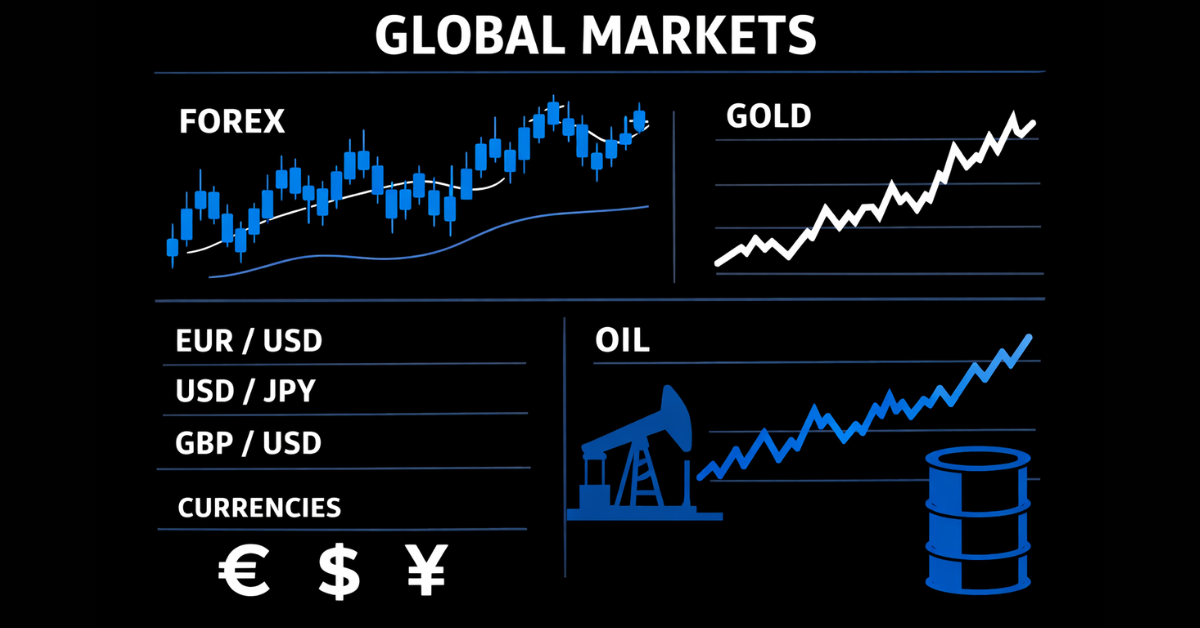
Commodities in the stock market include assets like gold, silver, crude oil, natural gas, wheat, coffee, and copper. These are raw materials traded through futures, ETFs, or CFDs, allowing investors and traders to profit from price changes without directly owning physical goods.
Key Takeaways
- Commodities are raw materials traded in financial markets
- They fall into three categories: metals, energy, and agricultural products
- You can trade them through futures, ETFs, or CFD-based trading platforms
- Prices are shaped by supply, demand, and global events
- Commodities are widely used for portfolio diversification and as an inflation hedge
What Are Commodities in the Stock Market?
Commodities are basic goods or raw materials used to produce other products. These include metals, energy resources, and agricultural items. In financial markets, commodities are not usually bought physically. Instead, they are traded through instruments like futures contracts, exchange-traded funds (ETFs), or contracts for difference (CFDs).
The reason commodities are traded is because their prices constantly change based on global supply and demand. This creates opportunities for traders and investors to profit from price movements.
Unlike stocks, which represent ownership in a company, commodities represent value based on real-world resources. This makes them behave differently and adds diversification to a trading portfolio. If you are also exploring other asset classes, see forex vs stocks vs crypto for a complete comparison.
Major Types of Commodities in the Stock Market
Metals
Metals are among the most popular commodities. They are divided into precious metals and industrial metals. Precious metals like gold and silver are often used as a store of value, especially during economic uncertainty.
Industrial metals like copper and aluminum are used in construction and manufacturing. Their prices usually reflect economic growth and industrial demand. You can explore metal trading at Defcofx to get a feel for how precious metal CFDs are structured.
Energy
Energy commodities include oil, natural gas, and coal. These are essential for powering industries and transportation. Crude oil is one of the most actively traded commodities in the world.
Energy prices are highly sensitive to geopolitical events, supply disruptions, and global demand. This makes them more volatile compared to other commodities.
Agricultural Commodities
Agricultural commodities include products like wheat, corn, coffee, sugar, and cotton. These are influenced by weather conditions, seasonal cycles, and global demand.
Prices in this category can change due to natural events like droughts or floods, making them unique compared to metals and energy.
List of Common Commodities
Here is a clear list of widely traded commodities in the market:
| Category | Commodity | Use Case |
|---|---|---|
| Precious Metals | Gold | Store of value, safe haven, inflation hedge |
| Precious Metals | Silver | Investment and industrial use |
| Industrial Metals | Copper | Construction, electronics, manufacturing |
| Energy | Crude Oil | Fuel, global trade, transport |
| Energy | Natural Gas | Power generation, heating |
| Agriculture | Wheat | Food production |
| Agriculture | Corn | Food and biofuel |
| Agriculture | Coffee | Beverage industry |
| Agriculture | Sugar | Food production |
| Agriculture | Cotton | Textile industry |
This table shows how commodities are tied directly to real-world usage, which is why their prices are influenced by global demand and supply conditions.
How Commodities Are Traded
Commodities can be traded in different ways depending on your approach. Some traders use futures contracts, which are agreements to buy or sell a commodity at a specific price in the future. Others prefer ETFs, which track the price of a commodity without requiring direct ownership.
In modern trading, many people trade commodities through CFDs. This allows traders to speculate on price movements without holding the physical asset. To understand the mechanics of this in more detail, read how to trade commodities in forex.
This flexibility makes commodity trading accessible to beginners while still offering opportunities for experienced traders.
Why Traders Invest in Commodities
Commodities are popular because they offer diversification. Unlike stocks, they are not directly tied to company performance. Instead, they respond to global economic conditions.
For example, gold often rises during economic uncertainty, while oil prices may increase when global demand grows. This makes commodities useful for balancing a trading portfolio.
They also provide opportunities during inflation, as rising prices in the economy often push commodity prices higher. If you want to understand gold specifically, check out is gold better than forex for a detailed breakdown.
Trade Commodities with Defcofx
Defcofx is a regulated online CFD broker that gives you access to a wide range of commodities, including gold, silver, and oil, all within a single trading platform powered by MetaTrader 5 (MT5).
Here is what sets Defcofx apart for commodity traders:
- Leverage up to 1:2000: trade larger positions with a smaller deposit
- Spreads from 0.3 pips with no hidden commissions or swap fees
- 40% Welcome Bonus on first deposits of $1,000 or more
- Withdrawals within 4 business hours, including weekends
- MT5 platform with advanced charting, real-time data, and fast execution
- Clients accepted from all countries, with multilingual support
Not ready to go live? Test your commodity trading strategy with a free Defcofx demo account first.
Practice commodity trading with zero risk before committing real capital.
Open a Free Demo Account →Are Commodities Worth Trading?
Commodities play a major role in global markets and offer unique trading opportunities. Their connection to real-world demand makes them different from stocks and currencies.
For traders, they provide a way to diversify and take advantage of global trends. With the right knowledge and tools, commodities can become a valuable part of any trading strategy. Pairing commodity trades with solid forex risk management principles can help you navigate volatility more effectively.
Frequently Asked Questions
What are commodities in simple terms?
Commodities are raw materials like gold, oil, and wheat that are used to produce goods. They are traded in financial markets based on supply and demand rather than company performance.
Can I trade commodities like stocks?
Yes, you can trade commodities through financial instruments like futures, ETFs, or CFDs. This allows you to benefit from price changes without owning the physical commodity.
What is the most traded commodity?
Crude oil is one of the most traded commodities in the world because of its importance in global energy supply and demand.
Why is gold so popular in trading?
Gold is considered a safe-haven asset. During economic uncertainty, investors often move their money into gold, which tends to push its price higher.
Are commodities risky to trade?
Yes, commodities can be risky because their prices can change quickly due to global events, weather conditions, and supply changes. Proper risk management is essential.
How do beginners start trading commodities?
Beginners usually start by learning how commodity markets work and then use a demo trading account to practice. Starting with familiar commodities like gold or crude oil is often recommended before branching out.
What affects commodity prices the most?
Commodity prices are mainly affected by supply and demand, global economic conditions, weather events, geopolitical factors, and currency movements, especially the US dollar.
Are commodities better than stocks?
Commodities are not necessarily better than stocks, but they offer different benefits. They can provide diversification and protection against inflation, while stocks offer long-term growth potential tied to company earnings.
Can I trade gold with $100?
Yes, with a CFD-based platform and appropriate leverage, you can start trading gold with a relatively small amount. Check the minimum deposit and margin requirements of your broker before getting started.
Does the US dollar affect commodity prices?
Yes, most commodities are priced in US dollars. When the dollar weakens, commodities typically become cheaper for buyers using other currencies, which can push prices higher. The reverse is also true.