


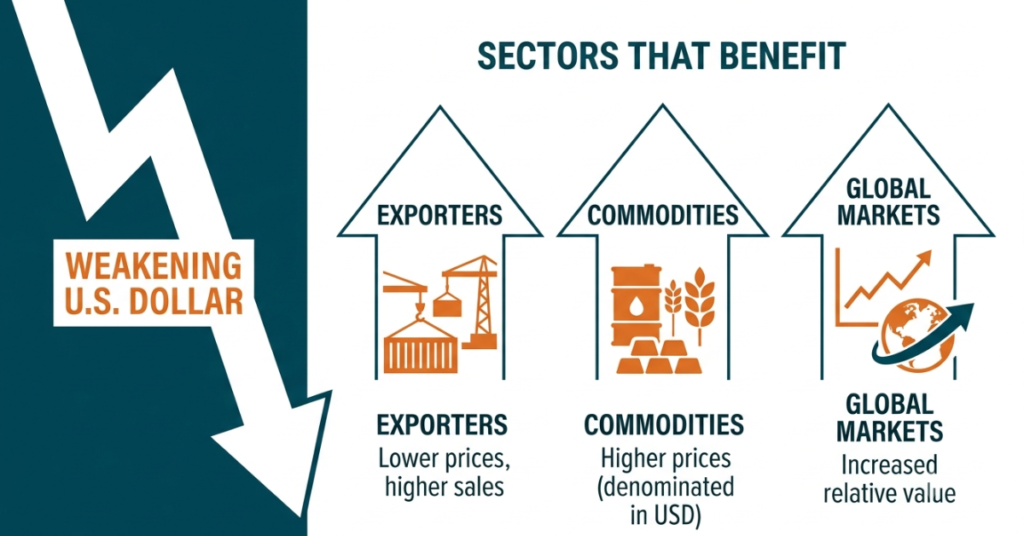
US exporters, multinational companies with overseas revenue, domestic producers competing against imports, emerging markets carrying dollar debt, and holders of dollar-priced commodities like gold and oil all benefit when the dollar weakens. A softer dollar makes American goods cheaper abroad and lifts the dollar value of foreign earnings and commodities.
Key Takeaways
- A weak dollar lowers the price of US goods overseas, helping exporters compete on price.
- Multinational firms report higher profits when foreign earnings are converted back into dollars.
- Emerging markets with dollar-denominated debt see their repayment burden shrink.
- Gold, oil, and other commodities priced in dollars typically become more expensive, rewarding holders.
US Exporters and Manufacturers
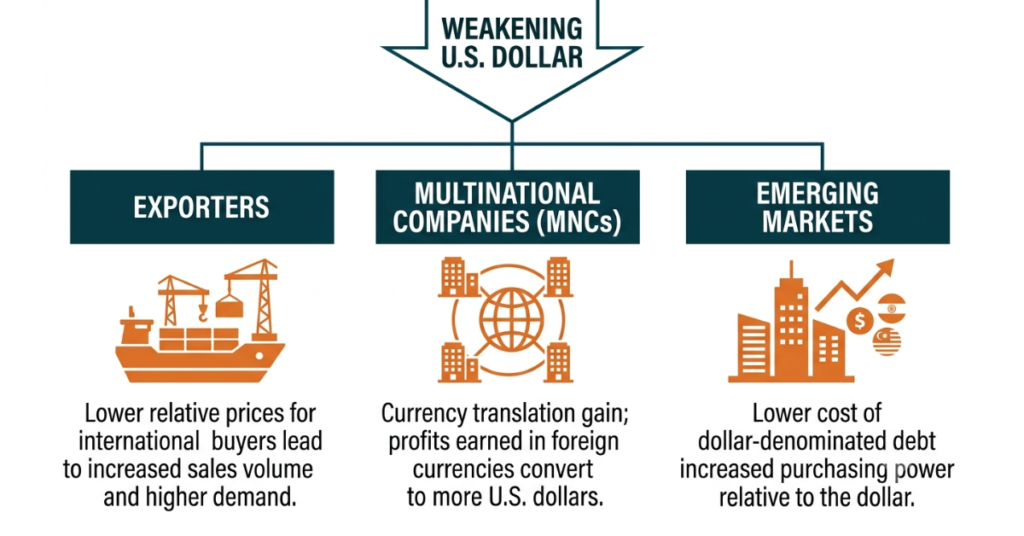
When the dollar falls against other currencies, American products become cheaper for foreign buyers without US companies needing to cut prices. A tractor priced at $50,000 costs a European buyer fewer euros when the dollar weakens, which tends to boost export volumes. This has historically shown up clearly in agriculture and heavy manufacturing, where US soybean and equipment exporters gained ground during periods of dollar softness.
Domestic producers that compete with imported goods benefit in a related way. A weaker dollar makes a German-made car or Japanese electronics more expensive in US stores, giving American-made alternatives a pricing edge with local buyers even if they never sell a single unit abroad.
Multinational Companies and Their Shareholders
| Scenario | Exchange Rate | €1,000,000 Revenue Converts To |
| Strong dollar | €1 = $1.00 | $1,000,000 |
| Weak dollar | €1 = $1.20 | $1,200,000 |
A US company earning revenue in euros, yen, or pounds converts more dollars back home when the dollar is weak, even if nothing changes in the underlying business. This lifts reported earnings for large multinationals, which can support their stock prices and, in turn, benefit shareholders through gains or dividends.
Emerging Markets and Dollar Debt
Many emerging economies borrow in US dollars because it is cheaper and more accessible than borrowing in their own currency. When the dollar weakens, the local-currency cost of servicing that debt drops, freeing up government and corporate budgets and often making emerging market assets more attractive to investors.
Investors, Traders, and Commodity Holders
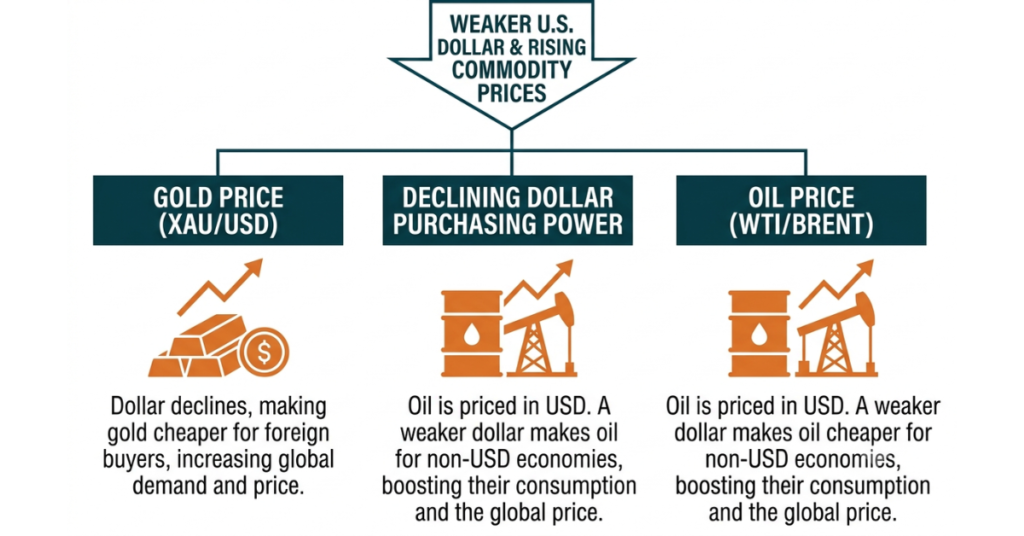
Traders holding assets priced in dollars often see better performance when the greenback softens, since it typically takes more dollars to buy the same amount of gold, oil, or other raw materials. This inverse relationship is one reason gold is often described as a hedge against dollar weakness. Investors holding foreign stocks or bonds also gain an extra lift when they convert profits back into a cheaper dollar.
Traders looking to position around dollar moves can explore gold trading conditions or review the full list of currency pairs available for trading.
Who Loses When the Dollar Weakens
Importers pay more for foreign goods, US consumers face pricier imported products, and travelers heading abroad get less for their dollar. A weak dollar can also stoke inflation at home as import costs rise, which is why central banks watch the currency closely alongside interest rate decisions.
Defcofx Features for Trading Dollar Movements
| Feature | Defcofx Offering |
| Spreads | From 0.3 pips on major pairs |
| Leverage | Up to 1:2000 |
| Commissions | Zero commissions, zero swap fees |
| Platform | MetaTrader 5 |
| Welcome Bonus | 40% on first deposits of $1,000 or more |
| Withdrawals | Processed within 3 hours, including weekends |
Statistics Snapshot
- The US dollar index lost roughly 10% of its value against major currencies between January 2025 and March 2026.
- US soybean and agricultural export sales rose during past periods of sustained dollar weakness, according to industry trade reporting.
- Commodities priced in dollars, including gold and oil, have historically shown a negative correlation with the dollar index during weakening cycles.
Trade Dollar Pairs With Defcofx
Whether the dollar is climbing or falling, the trade is in how it moves against other currencies. Defcofx runs on MetaTrader 5 with spreads from 0.3 pips, leverage up to 1:2000, and zero commissions or swap fees, giving traders room to size positions around dollar-driven volatility. New clients funding an account with $1,000 or more receive a 40% welcome bonus, and withdrawals are processed within 3 hours, weekends included.
Open a Demo Trading AccountFinal Thoughts on Who Benefits from a Weak U.S. Dollar?
A weaker U.S. dollar creates both winners and losers across the global economy. American exporters, multinational corporations, commodity investors, and emerging markets often benefit because their products become more competitive, foreign earnings translate into more dollars, and debt denominated in U.S. dollars becomes easier to service. At the same time, importers, overseas travelers, and consumers who rely on imported goods typically face higher costs as the dollar loses purchasing power.
For traders, understanding dollar strength is more valuable than simply predicting whether the currency will rise or fall. Because the U.S. dollar is involved in the majority of global forex transactions, shifts in its value influence major currency pairs, commodities, and global equity markets. Recognizing these relationships helps traders identify opportunities while managing risk during changing market conditions.
FAQ
US exporters and multinational companies with significant foreign revenue tend to benefit most, since their goods become cheaper abroad and foreign earnings convert into more dollars.
It mostly hurts consumers in the short term through pricier imports and higher travel costs abroad, though it can support domestic manufacturing jobs over time.
Many emerging economies hold debt denominated in US dollars. A weaker dollar reduces the local-currency cost of repaying that debt.
Gold has historically shown a negative correlation with the dollar, but the relationship is not guaranteed every time and can be affected by interest rates and demand shifts.
Multinational companies with overseas revenue often report stronger earnings when the dollar weakens, which can support their share prices, while domestically focused firms may see less benefit.
Common drivers include falling US interest rates relative to other countries, rising trade deficits, high government debt, and reduced global demand for dollar-denominated assets.
You can trade major pairs like EUR/USD or GBP/USD, where a weaker dollar typically pushes the pair higher, using a platform like Defcofx that offers tight spreads and high leverage.