


Tuesday’s session continued the slow but noticeable shift that has been building over the past week: the market is gradually leaning away from worst-case geopolitical scenarios and toward a more controlled outcome.
Unlike earlier in April, when any tension in the Middle East would trigger immediate dollar buying, Apr. 28 showed a different behavior. The greenback drifted lower, not because risks disappeared, but because traders are increasingly pricing those risks as contained rather than escalating.
Oil prices remained relatively stable rather than spiking, U.S. yields showed little upward momentum, and there were no major surprises from policymakers. In that environment, the dollar struggled to find strong support. Instead, the market leaned toward modest risk appetite, allowing European currencies to firm and safe-haven demand for the dollar to ease.
The key takeaway from the session is that the dollar is no longer being driven by fear alone. Without a clear escalation trigger, the market is comfortable reducing defensive positioning, and that dynamic is now clearly visible across major USD pairs.
EUR/USD
Technical Analysis
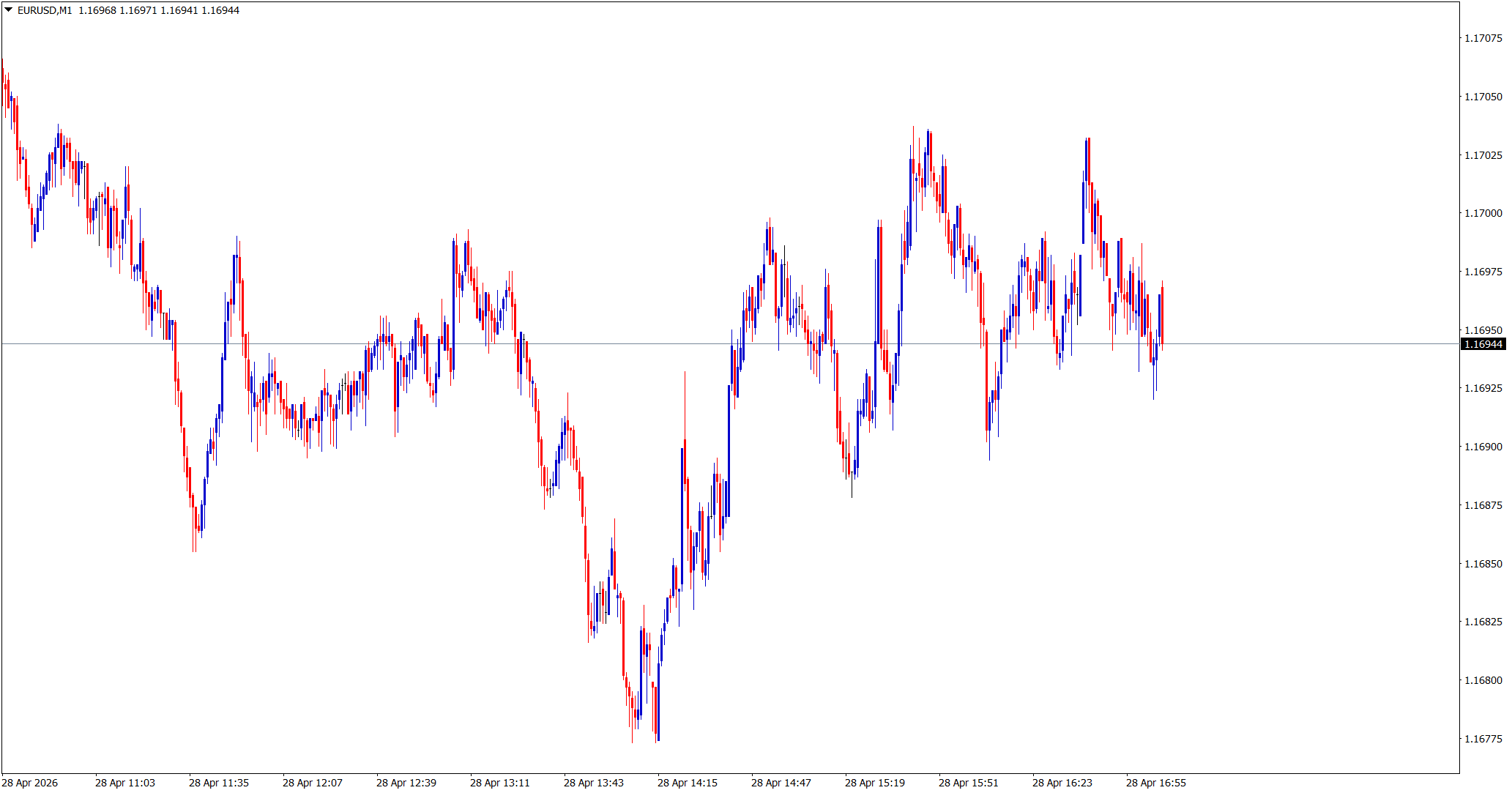
EUR/USD pushed slightly higher and continued to trade near the upper end of its recent range. The move was not aggressive, but it was consistent, with the pair maintaining a firm tone throughout the session.
Technically, this reinforces the idea that the pair has transitioned from a recovery phase into a stable consolidation with bullish bias. Support levels remain intact, and the absence of downside pressure suggests that sellers are still not in control.
The structure now favors range continuation with a slight upward tilt unless a stronger dollar catalyst emerges.
Fundamental Analysis
The euro’s strength reflects the ongoing normalization of geopolitical risk. While tensions in the Middle East remain, they are no longer being priced as an immediate threat to energy supply.
This is particularly important for the eurozone, which had been heavily penalized earlier due to its energy dependence. As oil stabilizes and fears of severe disruption fade, the euro benefits from reduced downside pressure.
At the same time, the dollar lacks a fresh driver. With no major shift in Federal Reserve expectations and stable U.S. data, EUR/USD is able to grind higher in a low-conviction environment.
USD/JPY
Technical Analysis
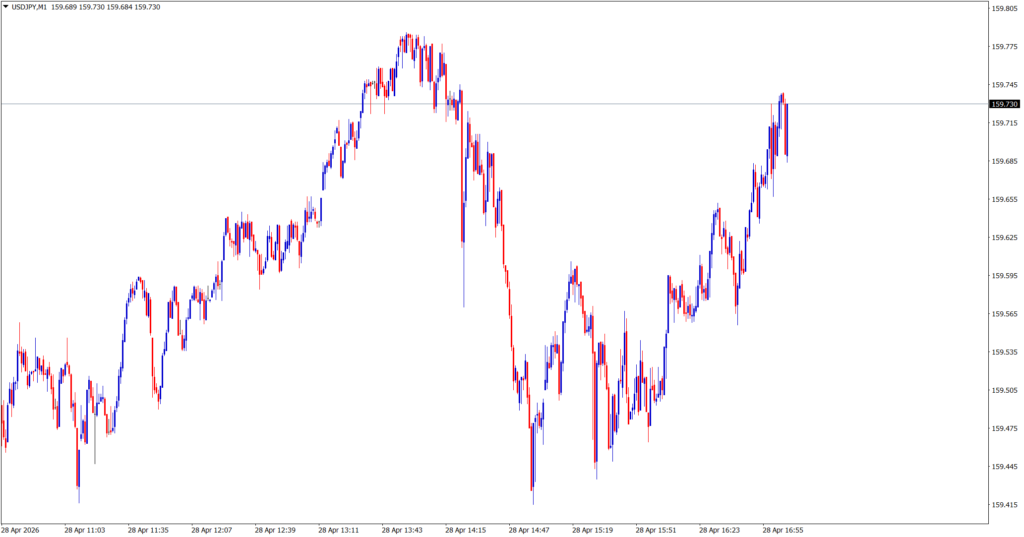
USD/JPY moved lower, continuing its gradual pullback from recent highs. The decline was controlled rather than sharp, indicating a steady unwinding of positions rather than aggressive selling.
Technically, the pair remains elevated but is showing clear signs of momentum loss. Repeated failures to sustain higher levels suggest that resistance near the upper range is holding, and the pair is transitioning into a corrective phase.
If this behavior continues, USD/JPY is likely to remain range-bound with a downward bias in the near term.
Fundamental Analysis
The decline in USD/JPY reflects a combination of softer dollar demand and stable U.S. yields. As geopolitical fears ease slightly, the need to hold dollars as a safe haven diminishes.
The yen, while not strongly bullish on its own, benefits from this shift. Even modest improvements in risk sentiment can lead to yen strength when the dollar weakens.
At the same time, the absence of rising U.S. yields removes a key support factor for USD/JPY. Without that driver, the pair struggles to maintain upward momentum, leading to the gradual pullback seen on Tuesday.
USD/CAD
Technical Analysis
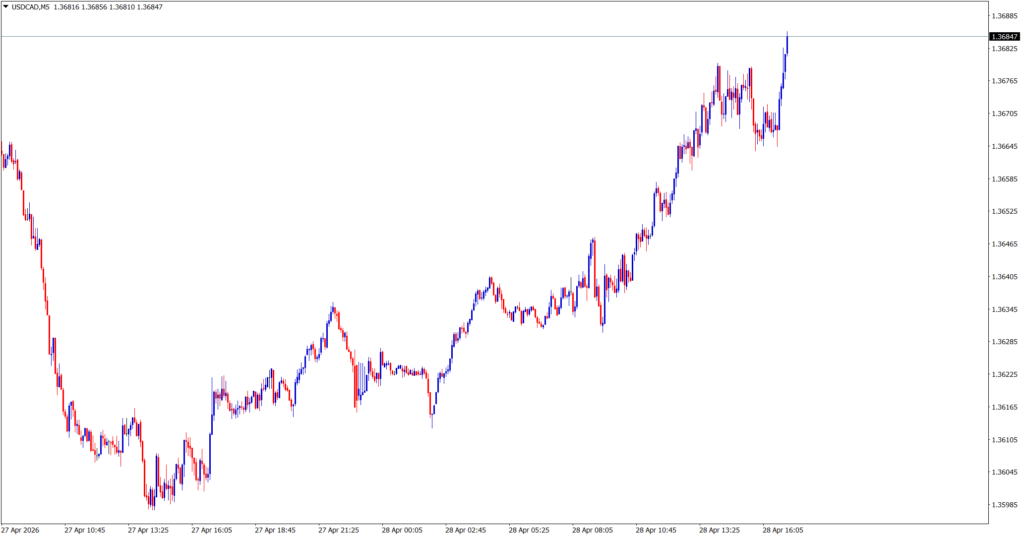
USD/CAD moved lower, continuing its range-bound behavior but with a slight bearish bias. The pair failed to hold earlier levels and drifted downward, reflecting a lack of sustained dollar strength.
Technically, the pair remains within a consolidation structure, but the recent price action suggests that sellers are gaining a slight edge. However, the move is still limited, and no clear breakout has occurred.
Fundamental Analysis
The Canadian dollar benefited from stable oil prices and improving risk sentiment. While oil did not surge, it remained firm enough to provide support for CAD.
At the same time, the broader weakening of the dollar allowed USD/CAD to move lower. The pair continues to be influenced by competing forces, but on Apr. 28, the balance tilted slightly in favor of the Canadian dollar.
Importantly, oil is no longer acting as a pure directional driver. Instead, it is stabilizing, which reduces volatility and contributes to the pair’s range-bound nature.
Market Outlook
Tuesday reinforced a key theme: the market is gradually shifting away from fear-driven positioning and toward a more balanced outlook.
The dollar is no longer the automatic safe-haven choice in every situation. Instead, it requires clear escalation or stronger macro drivers to regain momentum.
As long as:
- geopolitical tensions remain contained
- oil prices stay stable
- and central banks remain cautious
the market is likely to continue trading in a range-bound environment with a mild anti-dollar bias.
For now, EUR/USD remains supported, USD/JPY shows signs of fatigue, and USD/CAD continues to drift within a defined range.
The next directional move will depend on whether a new catalyst emerges, either from geopolitical developments or from a shift in monetary policy expectations.
Discover our other forex market analysis: