


After regaining some footing earlier in the week, the U.S. dollar entered Thursday’s session with a supportive backdrop but little follow-through. The combination of elevated oil prices, persistent geopolitical uncertainty around Iran, and a more cautious central-bank tone should have, in theory, allowed the greenback to extend higher. Instead, the market paused.
The key reason is that traders are no longer reacting to Middle East headlines in a one-directional way. While tensions remain, particularly around the Strait of Hormuz, there is still a strong belief that diplomacy has not fully broken down. That has fundamentally changed how the dollar behaves. It is no longer a currency that automatically rallies on every escalation headline; instead, it requires confirmation that risks are worsening in a sustained way.
As a result, Thursday’s price action was defined by hesitation. The dollar held its recent gains but failed to push decisively higher. European currencies stabilized, commodity-linked currencies held ground, and yen pairs remained volatile but directionless. The overall tone was one of consolidation, not continuation.
EUR/USD
Technical Analysis
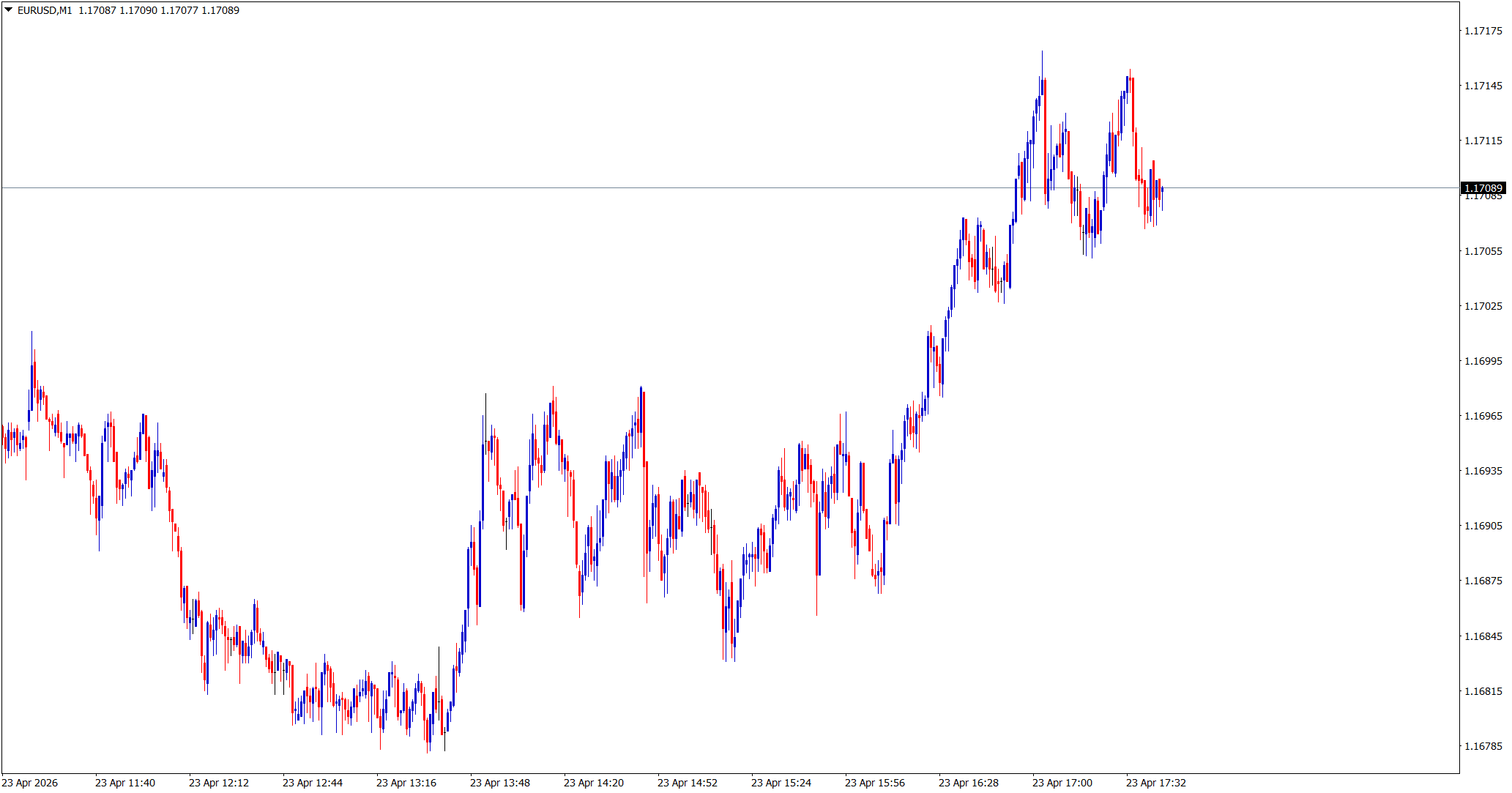
EUR/USD showed resilience, trading sideways and holding near recent highs despite the dollar’s earlier strength in the week. After a strong rally earlier in April, the pair has now clearly transitioned into a consolidation phase. Price action remained tight, with no decisive break lower, suggesting that sellers are not yet strong enough to reverse the trend.
The pair’s ability to stay elevated, even in a mildly dollar-supportive environment, is technically significant. It indicates that the prior bullish momentum has not been fully unwound and that the market is comfortable holding long positions at current levels. Immediate support remains intact, and unless a stronger catalyst emerges, EUR/USD is likely to continue trading within a defined range.
Fundamental Analysis
The euro’s stability reflects a shift in how markets are pricing geopolitical risk. Earlier in April, rising oil and war-related uncertainty heavily pressured European currencies due to their exposure to imported energy. Now, that relationship has softened.
While energy risks remain, traders are no longer assuming worst-case scenarios. As long as supply disruptions remain limited and negotiations continue, the euro can hold up. At the same time, the dollar lacks a fresh driver. There has been no significant shift in Federal Reserve expectations, and U.S. data has not been strong enough to justify a renewed bullish wave. This leaves EUR/USD in a balanced position, where both sides lack conviction.
USD/JPY
Technical Analysis
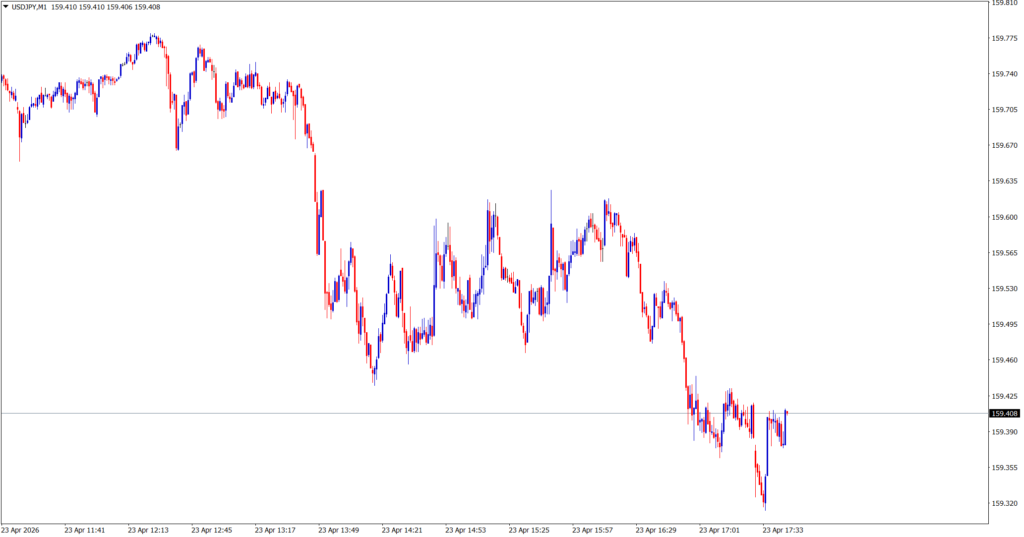
USD/JPY continued to trade in a volatile and choppy manner near elevated levels. The pair attempted to push higher during the session but failed to sustain momentum, pulling back and settling into a tight range. This kind of price action typically signals instability rather than strength.
The broader trend remains intact, but momentum is weakening. Repeated failures to break higher suggest that resistance near key psychological levels is becoming more significant. Traders appear reluctant to add new long positions without stronger confirmation, particularly given the sensitivity of the pair to intervention risks.
Fundamental Analysis
The pair is currently being driven by conflicting forces. On one side, the dollar is supported by steady U.S. yields and a cautious Federal Reserve outlook. On the other, the yen benefits from its safe-haven status and increasing sensitivity to elevated exchange rates.
Even though Japan remains vulnerable to higher energy costs, the market is becoming more cautious about pushing USD/JPY higher without clear justification. The lack of follow-through on Thursday highlights this hesitation. The pair is no longer reacting purely to yield differentials; it is also being influenced by policy risk and positioning fatigue.
USD/CAD
Technical Analysis
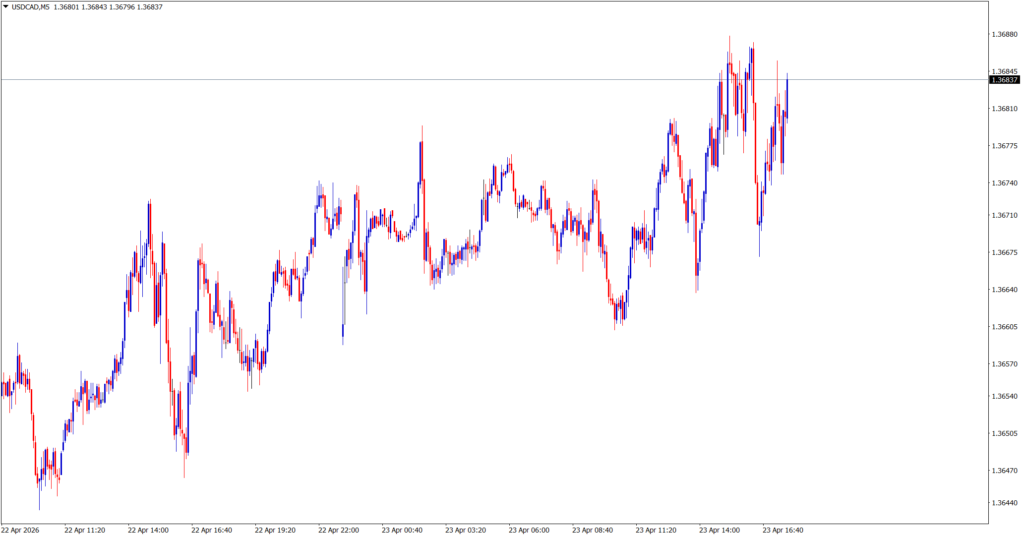
USD/CAD remained range-bound, with no clear directional bias. The pair moved within a narrow band, reflecting indecision and a lack of strong momentum. Attempts to push higher or lower were quickly reversed, indicating that neither buyers nor sellers had a clear advantage.
This type of consolidation usually occurs when a pair is influenced by opposing macro forces. Until one side gains dominance, USD/CAD is likely to continue trading sideways.
Fundamental Analysis
The fundamental backdrop for USD/CAD remains mixed. On the one hand, the dollar is supported by geopolitical uncertainty and stable U.S. yields. On the other, the Canadian dollar benefits from elevated oil prices and relatively firm domestic inflation data.
However, oil is no longer a straightforward bullish factor for CAD. Because the price increase is driven by geopolitical risk rather than demand strength, its impact on the currency is less direct. This creates a situation where both currencies have valid support, leaving the pair stuck in equilibrium.
Market Outlook
Thursday’s session confirmed that the market is currently in a consolidation phase rather than a trending one. The dollar remains supported but lacks the momentum needed to extend gains. At the same time, other major currencies are holding their ground, reflecting a broader reluctance to commit to new positions.
Looking ahead, the next directional move will likely depend on a clear catalyst. This could come in the form of:
- a breakdown in Iran negotiations, which would favor the dollar
- a confirmed de-escalation, which would weaken it
- or a shift in central-bank expectations
Until then, the market is likely to remain range-bound, with price action driven more by headlines than by sustained trends.
Discover our other forex market analysis: