


On 27 March 2015, a buyer reportedly spent about $110,000 on Altera call options as news of Intel takeover talks broke. The stock surged, lifting the position’s reported paper value to about $2.56 million by the close. The headline describes an estimated gain, not a verified cash payout.
Key takeaways
- CNBC’s corrected account places the buying in the same second as the newswire headline, before the reporter’s tweet.
- Options did the heavy lifting. Cheap out-of-the-money call options rose from about $0.35 to $8.10, a gain of more than 2,000%.
- Automation is one possible explanation, not an established fact. Market experts at the time suggested an automated program reading news headlines placed the order.
- The accounts reviewed do not identify the trader. They do not establish a complete enforcement history or the trader’s legal status.
- One exceptional trade does not establish a repeatable strategy. Long calls can lose the entire premium paid.
The trade, minute by minute
The reported sequence occurred on Friday, 27 March 2015. CNBC updated its account to distinguish the newswire headline from the later tweet. The times below follow that corrected report, rather than an independently audited exchange record.
| Time (New York) | What happened |
| Before 3:32 PM | Altera, then trading as ALTR, was around $34 before the takeover report |
| 3:32:38 PM | Dow Jones Newswires publishes a headline: Intel is in talks to buy Altera |
| Within the same second | A buyer purchases 3,158 Altera April $36 call contracts at a $0.35 per-share premium, or $35 per standard contract |
| 3:32:56 PM | CNBC reports that Altera shares were halted; the report does not establish the precise regulatory halt category |
| 3:32:58 PM | Wall Street Journal reporter Dana Mattioli tweets the news. The reported option buying preceded the tweet by about 20 seconds |
| 3:37 PM | Altera reopens for trading and surges |
| 4:00 PM | The market closes. Altera finishes up about 28%. CNBC reports a closing option value of $8.10 per share; this is a valuation, not proof of a completed sale |
From the purchase at 3:32 PM to the close at 4:00 PM is about 28 minutes (27 minutes and 22 seconds after the 3:32:38 PM headline), which is where the famous headline comes from.
The math behind the $2.4 million
The size of the gain comes from how call options work. A standard US equity call gives its buyer the right to buy shares at the strike on or before expiration. The Options Industry Council explains the usual 100-share multiplier and per-share premium. A long call can lose its full premium plus costs. Exercising creates exposure in the underlying shares.
The trader bought calls with a $36 strike when Altera was trading at about $34. That means the options were “out of the money.” If the stock were at or below the strike at expiration, the calls would have no intrinsic value. Before expiration, their price also depends on remaining time and implied volatility. The quoted $0.35 was per share, or $35 per standard 100-share contract.
Once Altera jumped to around $44.50, the right to buy at $36 was suddenly worth a lot. Here is an illustrative calculation using the reported contract count and premium quotes. These quotes are not verified executable exit prices; a $36 call’s intrinsic value at a $44.39 share price is $8.39 per share, so quotes from different times should not be treated as simultaneous.
| Item | Figure |
| Contracts bought | 3,158 |
| Shares controlled (100 per contract) | About 315,800 |
| Quoted premium per share (100 shares per contract) | About $0.35 |
| Total cost | $110,530 before fees |
| Reported option quote per share | About $8.10 |
| Illustrative position value | $2,557,980 |
| Paper profit | $2,447,450 before fees |
| Return | About 2,214% |
| Time taken | 28 minutes |
Figures are rounded; the premium table illustrates the account’s reported figures rather than confirming an executed profit. Reuters’ contemporaneous market report records a $44.39 close and 28.4% rise. The profit was a paper gain at the close. The reports reviewed do not establish if the entire position was sold at that valuation that day.
Was it luck, skill or something else?
This question is why the story went viral. There are three main explanations, but the trader’s process has not been established.
Theory 1: An algorithm reading the news
Reacting in about one second would be difficult for a human without a prepared order or automated assistance. That is why CNBC options contributor Mike Khouw suggested at the time that the buyer was likely using an automated trading program. Many funds run systems that scan news feeds for keywords like “in talks to buy” and fire orders instantly. Learn more about algorithmic trading in forex and how expert advisors automate trades on MetaTrader.
Theory 2: A very fast, prepared human
Some professional traders keep order tickets ready and watch premium news feeds like Dow Jones for exactly these moments. It is possible, though one second is extremely fast even for a professional.
Theory 3: Advance knowledge
Any time a big bet lands just before a price jump, people ask about insider trading, which means trading on important information that is not yet public. CNBC places the option buying in the same second as the public headline. That timing is consistent with a fast reaction to public news, but does not establish the trader’s information sources or legality. The reports reviewed do not identify the buyer or establish if an enforcement case relates to this position.
What happened next with Intel and Altera?
The story has an interesting twist. On 1 June 2015, Intel announced it would buy Altera for $54 per share in cash, a deal worth about $16.7 billion. It was the largest acquisition in Intel’s history at the time, and Intel confirmed completion on 28 December 2015.
So the original headline turned out to be right, just a couple of months early. Anyone who held Altera shares from $34 to the $54 deal price would have gained close to 60%.
Current context: Intel completed its Altera acquisition in December 2015. In a separate transaction, Intel’s September 2025 filing records the sale of a 51% stake to a Silver Lake affiliate, with Intel retaining 49%. This later transaction is separate from the 2015 options trade.
5 lessons for everyday traders
- Big headlines move markets in seconds. By the time most people read the news, the first move is already over. Retail traders rarely win a speed race against machines.
- Leverage multiplies everything. Options turned a 28% stock move into a 2,000% gain. An unfavorable move, time decay or lower implied volatility can reduce a long call’s value; it can lose its full premium by expiration. Read our guide on forex leverage before using it.
- Cheap out-of-the-money options can expire worthless. For every trade like this, there are countless out-of-the-money calls that never pay off. Buying lottery-ticket options is not a strategy.
- Plan around scheduled news instead. You cannot predict surprise merger headlines, but you can prepare for scheduled events like central bank decisions and jobs data. Our list of the most important economic calendar events is a good place to start.
- Risk management beats one lucky hit. Consistent traders focus on small, repeatable edges and strict risk management, not one life-changing trade.
Can you make money trading the news in forex?
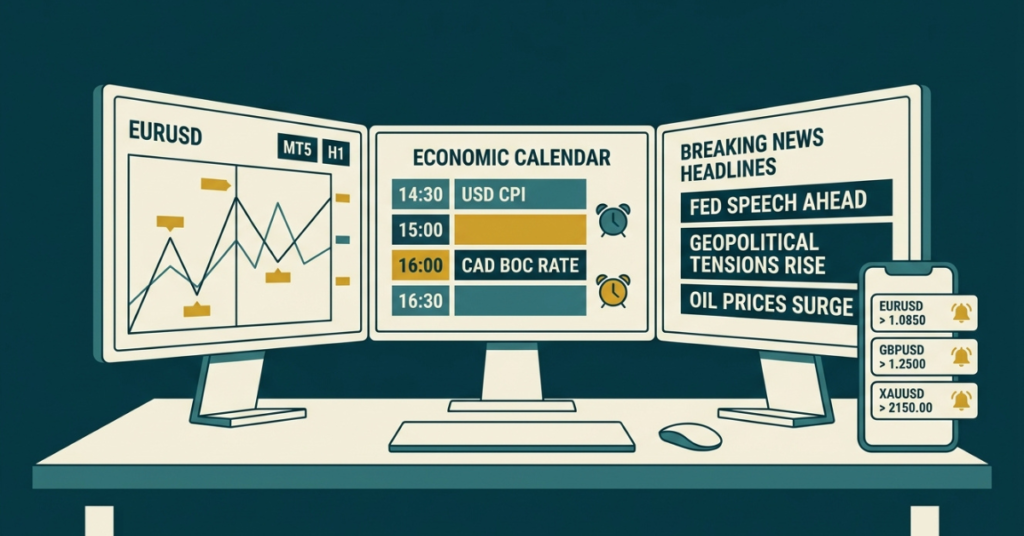
Yes, but not in the same way. Currencies can respond to scheduled economic releases and unexpected political or corporate news. The Altera position used equity options, whose payoff differs from forex or CFD trading. Here is a simple example.
Say US non-farm payrolls come in far stronger than expected. The dollar may strengthen, but the response depends on expectations, wages, unemployment, revisions and other market conditions. A trader who planned ahead might wait for the first spike to settle, then look to sell EUR/USD on a pullback with a clear stop above the spike high. If they risk 20 pips on a 0.5 lot position (about $100) and target 60 pips (about $300), the planned price risk is about $100 and gross target about $300 for a USD account, before costs. News slippage or gaps can make the actual loss larger; the stop is not a guaranteed loss limit.
This is a hypothetical risk calculation, not a tested trading signal or a promise of repeatable profits. Spreads can widen, orders can slip and a planned stop may not cap the loss. If you are curious about the bigger picture, read Can Forex Make You a Millionaire? and the skill vs luck debate in trading.
Trade the news with Defcofx
Compare Defcofx’s current account specifications and withdrawal conditions before trading. Its forex and CFD services should not be confused with the exchange-traded Altera call options in this case:
| Feature | Why it matters when news breaks |
| MetaTrader 5 | One-click trading and an economic calendar; the account page lists Gold for EA users. Confirm account permissions. No guaranteed news-time execution |
| Spreads from 0.5 pips | Advertised minimums are not guaranteed during news. Spreads can widen substantially |
| Zero commissions and zero swap fees | No trading commissions or swaps as advertised; spreads, slippage and applicable funding or withdrawal fees remain |
| Advertised account leverage up to 1:2000 on Silver or 1:500 on Gold; instrument limits vary | Account maximums do not apply to every instrument. Higher leverage reduces required margin, not the loss for a given position size |
| 40% welcome bonus | Eligible new clients must make a qualifying first deposit, complete verification and receive the bonus before placing orders. Bonus credit cannot be withdrawn, is cancelled by withdrawals or internal transfers, and has country exclusions. Check the full promotion terms |
| Withdrawals typically around 3 hours | Subject to conditions, a $10 USDT fee and possible wallet or unused-deposit fees; Saturday requests with positions open Friday must be resubmitted Monday |
Keep an eye on the Defcofx economic calendar so you know which releases are coming each week.
Open Free Demo AccountWhat do traders say about Defcofx?
Read recent customer experiences on Trustpilot and REVIEWS.io. Compare feedback on execution, support and withdrawals with the published terms. Reviews do not guarantee future results.
What the Altera trade teaches
The Altera trade became famous because of its extraordinary timing, but the bigger lesson is how quickly markets can react to major news. Buying the call options in the same second as the Dow Jones headline allowed the trader to capture a dramatic move that most human traders would have struggled to reach in time.
The options amplified the result. A sharp move in Altera shares produced a much larger percentage change in the out-of-the-money calls, turning roughly $110,000 into about $2.5 million in paper value by the close. That same leverage, however, can work against traders just as quickly, particularly when an option expires worthless.
FAQ
CNBC’s report did not identify the buyer. Its contributor suggested automation as a possible explanation for buying in the same second as the headline. The reporting does not establish who placed the orders or how.
Altera Corporation, a US chipmaker that traded under the ticker ALTR. The trade used Altera April $36 call options, bought on 27 March 2015.
About $110,000. The trader bought 3,158 standard call contracts quoted at $0.35 per share, or $35 per contract. Multiplying by 100 shares per contract gives $110,530 before fees and exposure to 315,800 shares.
The reporting reviewed does not establish a legal finding about this buyer. CNBC places the buying in the headline’s same second, before the tweet. That timing alone cannot establish the information source, intent or legal status.
Yes. Intel announced on 1 June 2015 that it would buy Altera for $54 per share in cash, about $16.7 billion. The deal closed on 28 December 2015.
The stock’s rise moved the $36 calls into the money. CNBC reported premiums rising from $0.35 to $8.10 per share. A low initial premium magnified the percentage change; option returns also depend on time and volatility.
This case does not show a reliable method for repeating the result. Execution speed, liquidity and option pricing matter. Retail traders should assess those limits, test their rules and size positions for possible losses, including news slippage.