


Stocks and bonds are two of the most common investment types, but they work very differently. Stocks represent ownership in a company and offer higher growth potential with more risk. Bonds are loans you make to a government or company in exchange for regular interest payments, offering more stability with lower returns. Most experienced investors use both together to balance growth with protection.
Key Takeaways
- Stocks represent ownership in a company. Their value rises or falls with business performance and market conditions
- Bonds are loans made to governments or companies. They pay fixed interest and return the principal at maturity
- Stocks offer higher long-term return potential but come with more volatility and risk
- Bonds provide stability and predictable income, making them popular with conservative investors and retirees
- Many investors hold both assets to create a diversified portfolio that balances growth with risk protection
What Are Stocks?
Stocks represent partial ownership in a company. When you buy a share of stock, you own a small piece of that business. If the company grows and becomes more valuable over time, the stock price typically rises, and your investment gains value.
Some companies also pay dividends, which are regular cash payments distributed to shareholders from company profits. Dividends can provide income even when a stock’s price is not moving.
Stocks are popular because they offer strong long-term growth potential. However, prices can fluctuate significantly based on earnings reports, economic news, market sentiment, and broader trends. This makes stocks higher-risk assets compared to bonds.
What Are Bonds?
Bonds work differently from stocks. Instead of buying ownership, you are lending money to a government, corporation, or other entity for a set period of time. In return, the borrower pays you interest at regular intervals and returns the original principal when the bond reaches its maturity date.
Because the interest payments are predetermined, bonds provide more predictable income than stocks. This makes them appealing to investors who prioritize stability over aggressive growth.
Government bonds, especially from stable economies, are generally considered among the safest investments available. Corporate bonds pay higher interest to compensate for the added risk that a company might default.
The Core Difference Between Stocks and Bonds
The fundamental difference comes down to ownership versus lending.
When you buy stocks, you become a part-owner of the company. Your fortunes rise and fall with the business. When you buy bonds, you act as a creditor. Your return is mostly fixed regardless of how the business performs (unless it defaults).
This ownership structure means stocks have theoretically unlimited upside but also significant downside during recessions or company failures. Bonds cap your upside but provide far more predictability.
Stocks vs Bonds: Side-by-Side Comparison
| Feature | Stocks | Bonds |
| Investment Type | Ownership in a company | Loan to a government or company |
| Risk Level | Higher | Lower |
| Return Potential | Higher (long-term) | Moderate and predictable |
| Income Source | Price growth and dividends | Regular interest payments |
| Volatility | High | Lower |
| Maturity Date | No fixed end date | Fixed maturity date |
| Best For | Long-term growth investors | Stability and income seekers |
| Market Risk | Significant in downturns | Lower, but inflation risk exists |
Why Investors Choose Stocks
Stocks are typically chosen by investors who want long-term capital growth. Historically, equities have outperformed most other major asset classes over extended periods, making them the preferred choice for building wealth over decades.
Younger investors especially tend to favor stocks because they have time to ride out short-term volatility and benefit from compounding returns over many years. A 25-year-old investing in quality stocks has decades to recover from any market downturn.
Stocks also provide exposure to business innovation and sector growth. Industries such as technology, healthcare, and energy have generated significant returns for long-term investors. You can also explore the 7 types of stocks to understand the different categories available.
Why Investors Choose Bonds
Bonds are primarily used for stability and income generation. Retirees and conservative investors favor bonds because they produce regular, predictable interest payments that can supplement income without relying on price growth.
Government bonds are especially popular during uncertain economic conditions. When stock markets are falling, many investors move capital into bonds as a safe haven, which also helps support bond prices during those periods.
For portfolios that hold a mix of assets, bonds act as a stabilizer. During severe equity sell-offs, bond allocations often limit overall portfolio losses and reduce stress for long-term investors.
Which is better for beginners?
There is no universal answer because it depends on your goals, timeline, and comfort with risk.
Beginners who want long-term growth and can handle volatility often start with stocks, particularly through diversified index funds or ETFs. Those who want lower risk and more predictable outcomes tend to prefer bonds or mixed-asset funds. You can also explore good stocks to invest in for beginners as a starting point.
Most financial planning guidance suggests holding a mix of both, with the proportion depending on your age and risk tolerance. A common starting point is to hold a higher percentage of stocks when young and gradually shift more toward bonds as retirement approaches.
3 Common Mistakes Investors Make
- One of the most common mistakes is chasing returns without understanding risk. Many investors buy stocks during periods of rapid market gains and panic-sell when prices fall, locking in losses and missing the eventual recovery.
- Another frequent error is failing to diversify. Putting all capital into either stocks or bonds concentrates risk unnecessarily. Even within stocks, holding a mix of sectors and geographies reduces exposure to any single failure.
- Ignoring investment timelines is also a problem. A person retiring in two years should not have the same portfolio as someone who has 30 years ahead of them. Understanding your time horizon is essential, which is covered further in forex trading vs stock trading and forex vs stocks vs crypto.
How Defcofx Fits Into Your Investment Approach
Defcofx is an online forex and CFD broker that gives traders access to a wide range of financial instruments, including stocks as CFDs, forex pairs, indices, commodities, and cryptocurrencies, all from a single MetaTrader 5 (MT5) platform.
If you want to trade financial markets rather than invest for the long term, Defcofx provides the tools to do so efficiently. CFD trading on stocks allows you to speculate on price movements without owning the underlying shares.
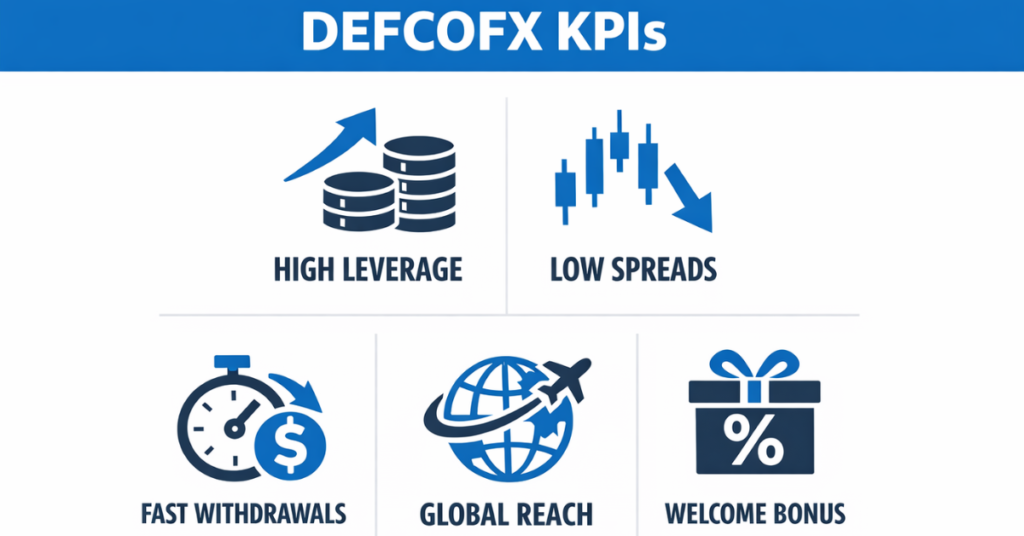
- Up to 1:2000 leverage on forex and selected instruments
- Spreads from 0.3 pips, no commissions, no swap fees
- 40% welcome bonus on first deposits of $1,000 or more. See the promotion page for full terms
- Access to stocks, indices, and forex from the same account.
- Multiple account types including demo and live accounts
Explore Financial Markets with Defcofx
Access stocks, forex, indices, and commodities from a single MT5 platform. No commissions, spreads from 0.3 pips, and fast withdrawals processed within 4 hours.
► Try a Free Demo Account First
Frequently Asked Questions
What is the main difference between stocks and bonds?
Stocks represent ownership in a company, while bonds are loans you make to governments or companies in exchange for regular interest payments.
Are stocks riskier than bonds?
Generally yes. Stock prices can change sharply based on company performance and market conditions. Bonds are more stable but carry inflation risk if interest rates do not keep pace with rising prices.
Which gives higher returns, stocks or bonds?
Stocks have historically offered higher long-term returns than bonds. However, they also come with greater short-term volatility. Bonds provide lower but more predictable returns.
Why do investors buy bonds?
Investors buy bonds for stable, predictable income, lower risk compared to stocks, and portfolio diversification. They are especially popular during uncertain market conditions.
Can beginners invest in both stocks and bonds?
Yes, and many financial experts recommend that even beginners hold both. A balanced approach reduces overall risk while still providing exposure to growth through stocks.
Are bonds safe during market crashes?
Government bonds in stable economies tend to hold their value better during equity market crashes and sometimes rise as investors seek safety. Corporate bonds carry more risk but typically still outperform stocks during severe downturns.
What is better for long-term investing?
Stocks are generally preferred for long-term wealth building, while bonds provide stability and income. The ideal mix depends on your timeline, risk tolerance, and financial goals.
How much of a portfolio should be in bonds?
This depends on your age, goals, and risk appetite. A common rule of thumb is to hold a percentage of bonds equal to your age, though younger investors often hold far less. Always review your situation with a financial professional.
Can I trade stocks and bonds through Defcofx?
Defcofx offers stocks as CFDs, meaning you can trade price movements on major company shares without owning them directly. You can also access indices and forex pairs from the same MT5 account.
Build Your Market Knowledge with Defcofx
Whether you are exploring stocks, forex, or commodities, Defcofx gives you the tools to trade smarter. Real-time data, no commissions, and a platform built for all experience levels.