


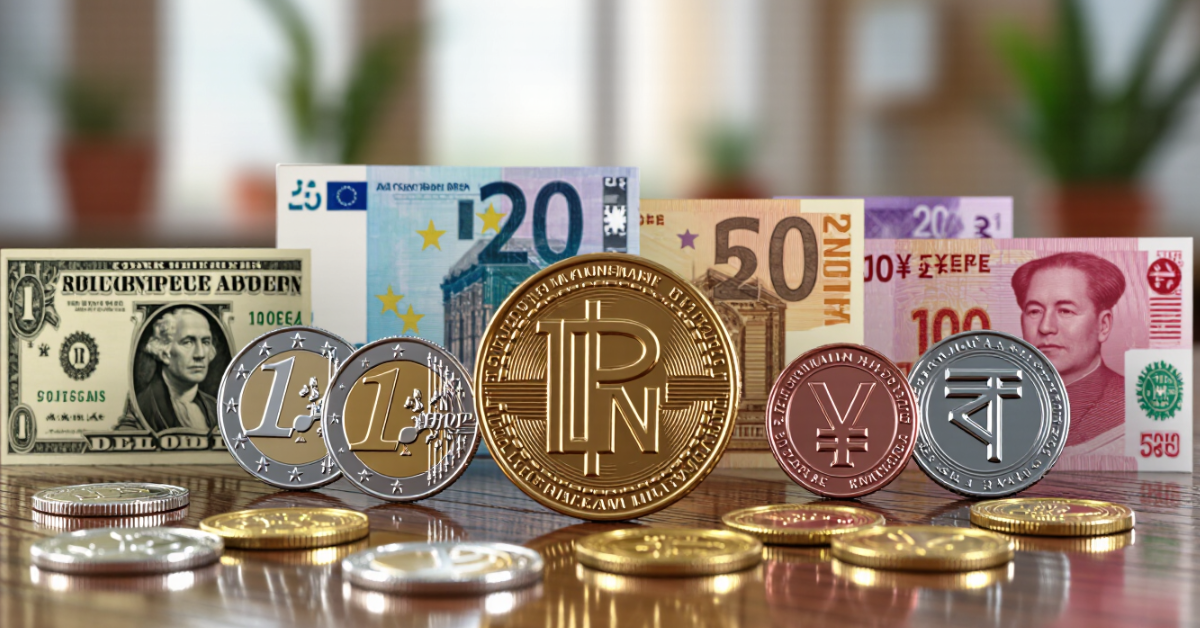
A country may choose to devalue its currency to make exports cheaper, reduce trade deficits, and support economic growth. Devaluation is a deliberate government or central bank decision that lowers the exchange rate. It can boost local industries and create jobs, but it also risks pushing inflation higher and making imports more expensive.
Key Takeaways
- Currency devaluation makes exports cheaper for foreign buyers, increasing demand for local goods and services
- It is primarily used to improve the trade balance and shrink persistent deficits
- Devaluation can support economic recovery during recessions or slow-growth periods
- Imports become more expensive after devaluation, which can fuel domestic inflation
- The forex market reacts quickly to devaluation events, often creating strong trends in currency pairs
- Devaluation only applies to fixed or managed exchange rate systems, not floating currencies
What Does Currency Devaluation Mean?
Currency devaluation happens when a government or central bank intentionally lowers the value of its currency against other currencies. This is a deliberate policy decision, not a natural market movement.
It usually takes place in countries with fixed or managed exchange rate systems, where the government controls or pegs the currency’s value rather than letting market forces determine it freely.
When a currency is devalued, foreign buyers can purchase that country’s goods and services more cheaply. At the same time, imported products become more expensive for local consumers. This creates a clear trade-off that policymakers must weigh carefully.
To Make Exports Cheaper and More Competitive
One of the biggest reasons governments devalue their currency is to boost exports. When a currency weakens, the country’s products cost less for foreign buyers in their own currency terms, making them more attractive globally.
For example, if a manufacturing economy devalues its currency by 10%, foreign buyers effectively get a 10% discount on those goods without any change in the actual production cost. This can significantly increase export volume and bring more foreign revenue into the economy.
A stronger export sector supports economic growth, increases employment, and improves industrial output. This is especially important for countries that depend heavily on international trade, such as commodity exporters, textile manufacturers, or technology producers.
To Reduce Trade Deficits
A trade deficit occurs when a country imports more than it exports. Over time, a persistent deficit can weaken a country’s economic position and drain its foreign exchange reserves.
Devaluation can help reduce this imbalance in two ways. First, imports become more expensive, which discourages excessive foreign purchases. Second, exports become cheaper and more competitive, which can increase foreign demand for domestic products.
Together, these effects can shift the trade balance in a more favorable direction. However, the improvement is rarely immediate. Trade relationships, existing contracts, and supply chain adjustments take time, meaning the full effect of devaluation may take months or even years to show.
To Stimulate Economic Growth
Governments may also devalue their currency during periods of slow economic growth or recession. A weaker currency can encourage foreign tourism, attract foreign investment, and create stronger demand for domestically produced goods.
When more money flows into the domestic economy through exports and tourism, businesses may hire more workers, increase production, and invest in expansion. This cycle of activity can provide a meaningful economic stimulus without requiring direct government spending.
That said, this approach carries real risks. If inflation rises too quickly as a result of more expensive imports, the boost to growth can be offset by reduced consumer purchasing power and rising business costs.
Benefits vs Risks of Currency Devaluation
Understanding both sides of devaluation is important for traders, investors, and anyone tracking global markets.
| Factor | Potential Benefits | Potential Risks |
| Exports | Cheaper for foreign buyers, more demand | Trading partners may retaliate |
| Trade Balance | Can reduce deficits over time | Short-term worsening (J-curve effect) |
| Growth | Boosts production and employment | Unsustainable if inflation spikes |
| Tourism | Country becomes cheaper for visitors | Locals face higher outbound travel costs |
| Purchasing Power | Helps exporters earn more locally | Consumers pay more for imported goods |
| Investment | May attract foreign capital short-term | May reduce investor confidence long-term |
Follow Currency Markets in Real Time
Devaluation events and central bank decisions cause major moves in forex markets. Access real-time pricing, fast execution, and no-commission trading across major currency pairs.
How Devaluation Affects Forex Markets
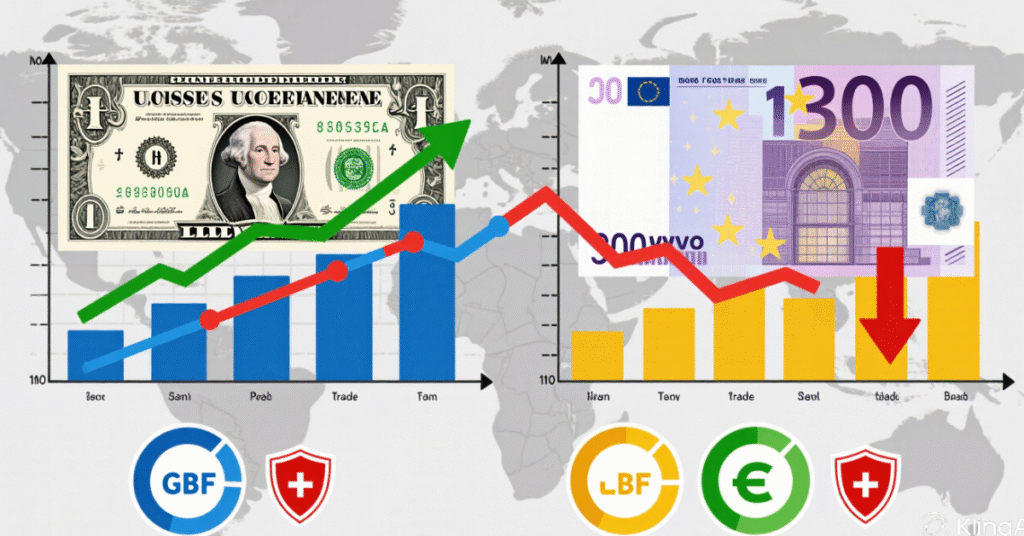
Currency devaluation creates significant movement in forex markets. Traders closely watch central bank policies, government statements, and economic data for signs that a devaluation may be coming, often positioning themselves ahead of the official announcement.
When a devaluation is announced or widely expected, the affected currency can fall sharply against major currencies like the US dollar or euro. This creates strong directional trends in currency pairs that traders can use to build strategies.
For traders who understand forex risk management and how to read economic news, devaluation events can offer high-probability setups. The key is reacting quickly and using proper tools to manage risk. You can also check our forex trading checklist to ensure your process is solid before entering these volatile conditions.
Real-World Examples of Currency Devaluation
History offers several well-known examples of deliberate currency devaluation and the effects that followed.
- China and the Yuan: China has faced long-running scrutiny over its management of the yuan (CNY). The Chinese government has historically guided the currency lower during trade disputes to keep exports competitive, leading to significant diplomatic tensions with trading partners.
- Argentina: Argentina has devalued its peso multiple times over the decades during periods of economic crisis. While each devaluation aimed to stimulate exports and reduce debt pressure, the inflationary consequences often eroded the benefits quickly.
- United Kingdom 1992: The British pound was forced out of the European Exchange Rate Mechanism on “Black Wednesday,” effectively a sudden devaluation. While painful initially, many economists now argue it allowed the UK to recover faster through a more competitive exchange rate.
These examples show that devaluation is never just an economic decision. It carries political, diplomatic, and social consequences that ripple through markets for months or years.
Trade Currency Pairs During Devaluation Events with Defcofx
Defcofx is an online forex and CFD broker registered in Saint Lucia, offering access to major, minor, and exotic currency pairs through MetaTrader 5 (MT5). When devaluation events occur, having the right platform in place makes a real difference.
- Up to 1:2000 leverage on forex pairs, giving you flexibility to size positions according to your risk tolerance
- Spreads from 0.3 pips with no commissions or swap fees, keeping your costs low during high-activity events
- 40% welcome bonus on your first deposit of $1,000 or more. See the promotions page for details
- Fast withdrawals processed within 4 business hours, including weekends
- MT5 platform with real-time charts, economic calendar integration, and advanced order management. Learn more at How to Use MetaTrader 5
- Multiple account types to match your capital level and trading style
Start Trading with Defcofx
Access over 100 instruments including major forex pairs, commodities, indices, and crypto. No commissions, spreads from 0.3 pips, and support available 7 days a week.
► Practice with a Free Demo Account
Frequently Asked Questions
What is currency devaluation in simple terms?
Currency devaluation is when a government or central bank intentionally lowers the value of its currency against other currencies. It is a deliberate policy move, not a natural market shift. Learn more in our guide to what is forex trading.
Why would a country want a weaker currency?
A weaker currency makes the country’s exports cheaper and more attractive for foreign buyers, which can increase demand for local goods, support industries, and improve the trade balance.
Is currency devaluation good or bad?
It depends on how it is managed. Devaluation can help exports and support economic growth, but it also raises the cost of imports and risks pushing inflation higher. The net effect depends on the country’s economic structure and how well the policy is executed.
What is the difference between devaluation and depreciation?
Devaluation is an intentional decision by a government or central bank to lower the currency’s value. Depreciation happens naturally through market supply and demand without any policy intervention.
How does devaluation affect consumers?
Consumers typically pay higher prices for imported goods like electronics, fuel, and food because those products become more expensive after devaluation. This can reduce household purchasing power and fuel broader inflation.
Can devaluation help reduce unemployment?
Yes, by stimulating exports and increasing production activity, devaluation can help create jobs in export-oriented industries and manufacturing sectors.
How does devaluation affect forex trading?
Devaluation typically causes sharp directional moves in the affected currency pairs. Traders who follow central bank policies and economic data closely can often anticipate these moves and position accordingly.
Which countries typically devalue their currency?
Countries with fixed or managed exchange rate systems, persistent trade deficits, or export-dependent economies are more likely to use devaluation as a tool. Emerging markets with weaker economic buffers often resort to it during crises.
What is the J-curve effect in devaluation?
The J-curve describes the pattern where devaluation initially worsens the trade balance before improving it. This happens because existing import contracts are still priced at old rates, so costs rise before export volumes grow enough to offset them.
Stay Ahead of Major Currency Moves
Central bank decisions and policy shifts drive some of the biggest moves in forex markets. With Defcofx, you get the tools and execution speed to react when it matters.