


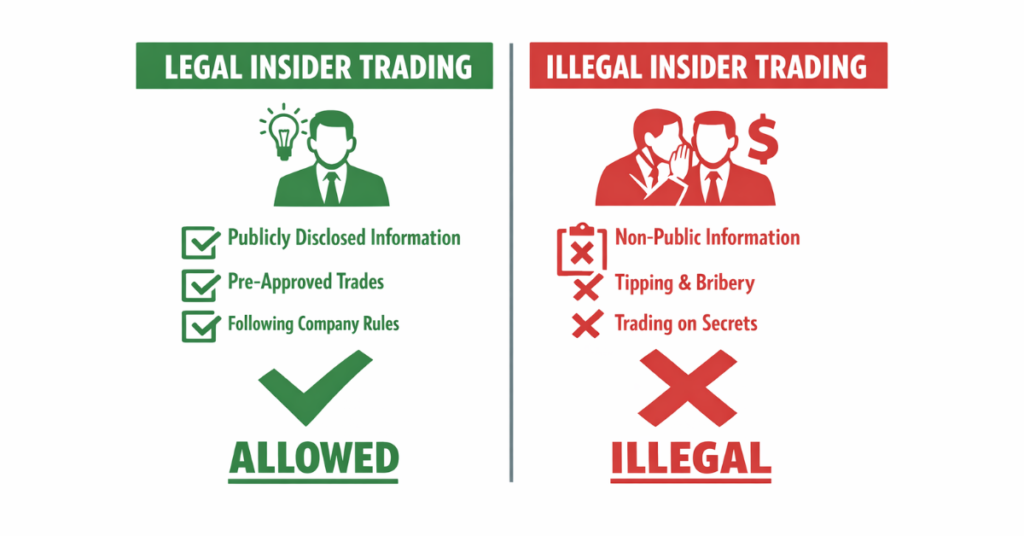
Insider trading occurs when someone buys or sells stocks or securities based on non-public, material information about a company. While some forms are legal, most cases involving confidential corporate information are illegal and can lead to severe financial penalties, legal consequences, and reputational damage.
Key Takeaways
- Definition: Insider trading involves buying or selling securities based on confidential, non-public information.
- Legality: Can be legal (e.g., corporate insiders reporting trades) or illegal (using undisclosed information for profit).
- Examples: Includes executives trading before major announcements or leaks of confidential company plans.
- Regulations: Governed by laws globally, such as SEC rules in the US, to ensure market fairness.
- Penalties: Illegal insider trading can result in fines, imprisonment, and reputational damage.
- Detection: Authorities monitor unusual trading patterns to detect suspicious activities.
Definition of Insider Trading
Insider trading is defined as the buying or selling of a company’s stocks, bonds, or other securities by someone who has access to material, non-public information about the company. Material information refers to any data that could influence an investor’s decision, such as financial results, mergers, acquisitions, or major corporate announcements.
While some insider trading is legal, such as when executives report trades to regulatory authorities, illegal insider trading occurs when confidential information is used to gain an unfair advantage in the market. Authorities worldwide, including the SEC in the United States, strictly monitor and prosecute illegal cases to protect market integrity.
Types of Insider Trading
When people hear “insider trading,” they often assume it’s always illegal. But that’s not entirely true. Insider trading actually comes in different forms, some legal, some illegal, and the difference usually comes down to transparency and intent.
Let’s break it down in simple terms.
1. Legal Insider Trading
Yes, insider trading can be legal.
Company insiders like CEOs, directors, or employees are allowed to buy or sell shares of their own company. The key requirement? They must follow strict reporting rules.
For example, if a CEO decides to sell company stock after quarterly earnings have already been publicly announced, and properly reports the transaction to regulators, that’s completely legal.
The trade isn’t secret. It’s disclosed and transparent.
2. Illegal Insider Trading
This is the type most people think of.
Illegal insider trading happens when someone uses confidential, non-public information to make a profit (or avoid a loss) before that information becomes public.
3 Common situations include:
- Buying shares before a merger is announced
- Selling stock before negative earnings are released
- Trading based on undisclosed acquisition news
It doesn’t even have to be a company executive. Sometimes information is leaked to friends, family members, or outsiders who then place trades. That’s illegal too.
The problem isn’t just the trade — it’s the unfair advantage.
3. Corporate Insider Trading
This focuses specifically on trading activity within a company.
Employees and executives often have access to sensitive information, which is why there are strict rules about:
- When they’re allowed to trade
- How trades must be reported
- “Blackout periods” when trading is prohibited
These regulations exist to prevent misuse of inside information and ensure transparency.
4. Stock Market Insider Trading (Market Impact)
Insider trading doesn’t just affect one person — it can impact the entire market.
When illegal insider trading occurs, it can:
- Artificially influence stock prices
- Cause unexpected volatility
- Hurt regular investors
- Undermine trust in financial markets
And trust is everything. If investors believe the market is rigged, they lose confidence — and that can damage the system as a whole.
Table: Comparison of Insider Trading Types
| Type | Who It Involves | Legality | Example |
| Legal | Executives, directors, employees | Legal | CEO sells shares after public earnings report |
| Illegal | Insiders, external leakers | Illegal | Trading before a confidential merger announcement |
| Corporate | Company insiders | Legal/Illegal | Employee trading based on undisclosed quarterly results |
| Stock Market | Broader market influence | Illegal | Large-scale trades manipulating stock prices |
Examples of Insider Trading

Insider trading can occur in various forms, ranging from executive actions to leaks within an organization. Understanding real-world examples helps investors recognize and avoid suspicious practices.
1. Real-Life Example
In 2001, an executive at a publicly traded company learned about a major upcoming merger and purchased company shares before the news became public. Once the announcement was made, the stock price surged, leading to significant profits. This trade was later investigated and deemed illegal insider trading.
2. Hypothetical Example:
Imagine a company planning to release breakthrough technology. An employee learns about the launch and buys stocks in anticipation of a price increase. Since this information is non-public and used for personal gain, it constitutes illegal insider trading.
3. Legal Example:
A company director sells shares after announcing quarterly earnings to the public and reports the transaction to regulatory authorities. This is a legal form of insider trading, as it follows compliance rules.
Insider Trading Laws & Regulations
Insider trading is strictly regulated worldwide to protect investors and keep financial markets fair. Regulatory authorities such as:
- U.S. Securities and Exchange Commission (SEC)
- UK Financial Conduct Authority (FCA)
- European Securities and Markets Authority (ESMA)
enforce rules to prevent people from gaining an unfair advantage through confidential, non-public information.
Legal vs. Illegal Insider Trading
Not all insider trading is illegal. The difference comes down to transparency, disclosure, and access to information.
Here’s a clear comparison:
| Legal Insider Trading | Illegal Insider Trading |
|---|---|
| Trades are properly reported to regulators | Trades are not disclosed |
| Information used is already public | Information used is confidential and non-public |
| Follows regulatory filing requirements | Violates securities laws |
| Example: Executive sells shares after earnings are publicly announced | Example: Buying shares before a merger announcement becomes public |
The key question is simple:
Was the information publicly available, and was the trade properly disclosed?
If the answer is no, the trade is likely illegal.
Consequences of Violating Insider Trading Laws
Breaking insider trading laws can result in serious penalties, including:
- Heavy financial fines
- Criminal prosecution
- Imprisonment
- Trading bans
- Severe reputational damage
Regulators treat these violations seriously because market trust depends on fairness.
Why Using a Compliant Trading Platform Matters
Because regulations are strict, traders should always choose transparent and compliant brokers.
For example, Defcofx offers:
- A secure trading environment
- High leverage options (up to 1:2000)
- No commissions or swap fees
- Withdrawals processed within 4 business hours
- Multi-language support for global traders
Using a compliant broker helps ensure that your trading activity remains legal, transparent, and aligned with regulatory standards.
Penalties & Consequences
Illegal insider trading isn’t just a minor rule violation, it carries serious legal, financial, and reputational consequences. Regulators treat these offenses aggressively because market integrity depends on fairness and transparency.
Legal vs. Reputational Consequences
The impact of insider trading goes far beyond fines. Here’s how the consequences typically break down:
| Legal Consequences | Reputational & Career Consequences |
|---|---|
| Multi-million-dollar fines | Loss of professional credibility |
| Criminal charges | Termination from employment |
| Imprisonment | Long-term career damage |
| Permanent trading bans | Loss of investor and public trust |
A single violation can permanently affect someone’s financial career.
Who Can Be Held Responsible?
It’s not just company executives who face penalties.
Regulators can pursue:
- Corporate insiders (executives, directors, employees)
- Friends or family members who receive leaked information
- External traders who knowingly act on confidential tips
If someone trades shortly before a major merger announcement or earnings release without proper disclosure, it can immediately trigger regulatory scrutiny. Authorities actively monitor unusual trading patterns and investigate suspicious activity.
Regulatory Monitoring & Enforcement
Financial regulators worldwide use advanced monitoring systems to detect:
- Unusual spikes in trading volume
- Trades placed just before major announcements
- Coordinated activity across multiple accounts
If suspicious activity is detected, investigations can lead to asset freezes, account suspensions, and formal legal proceedings.
How To Preventing Insider Trading
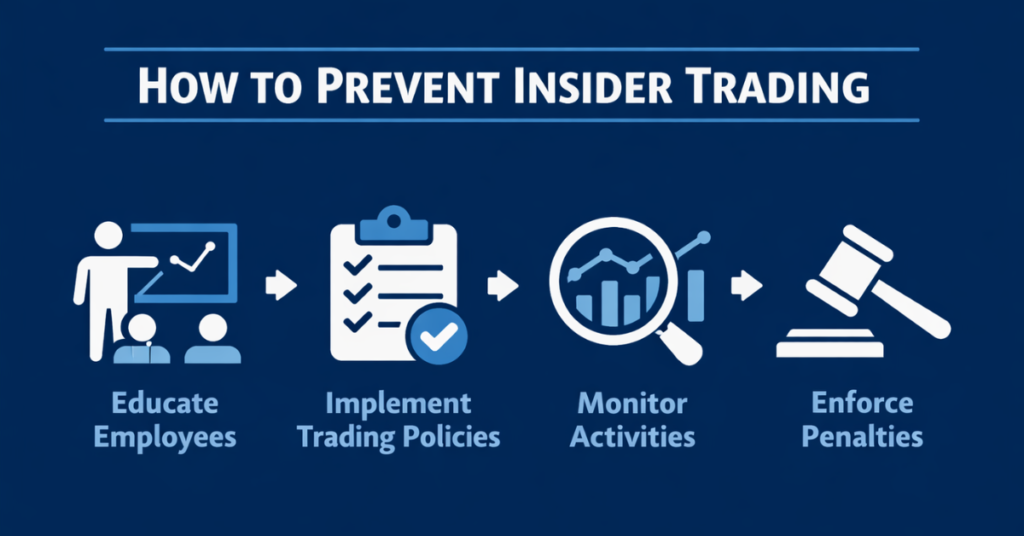
Preventing insider trading requires a combination of awareness, compliance, and monitoring. Companies should implement clear internal policies, conduct regular training for employees, and ensure all trades by insiders are properly reported to regulatory authorities. This helps create a culture of transparency and reduces the risk of illegal activity.
For individual traders, staying informed about corporate disclosures, avoiding trading on non-public information, and using regulated platforms are key measures to prevent violations. Authorities also encourage whistleblowing and provide protections for employees who report suspicious activities, helping maintain market integrity.
Final Thoughts on What Is Insider Trading?
Insider trading might sound like a complicated legal term, but at its core, it’s about fairness. Financial markets only work when everyone has access to the same information. When someone uses secret, non-public information for personal gain, it breaks that trust.
Not all insider trading is illegal. Company executives, for example, can buy or sell shares — as long as they follow strict reporting rules. The problem begins when confidential information is used quietly to gain an unfair advantage. That’s when serious legal trouble can follow.
The consequences aren’t small. Illegal insider trading can lead to heavy fines, prison time, and long-lasting damage to a person’s reputation and career. But beyond the penalties, it also harms confidence in the financial system itself.
The good news? Avoiding problems is simple in principle:
Stick to public information. Follow the rules. Trade transparently.
When investors stay informed and act responsibly, they help keep markets fair, efficient, and trustworthy for everyone. In the end, awareness and integrity aren’t just legal protections — they’re what keep the entire financial system running smoothly.
FAQs
Examples include executives buying shares before a merger announcement, employees trading based on undisclosed quarterly earnings, or anyone using leaked corporate information to profit. Legal examples involve reported trades following disclosure rules.
No. Insider trading is legal when company insiders report trades to regulatory authorities and follow compliance rules. It becomes illegal when confidential information is used secretly to gain an unfair advantage in the market.
Illegal insider trading can result in multi-million-dollar fines, imprisonment, and permanent bans from trading. Companies and individuals may also face reputational damage, making compliance critical.
Regulators and companies monitor unusual trading patterns, spikes in volume, and trades before major announcements. Preventive measures include internal compliance policies, employee training, proper reporting, and using regulated platforms for trading.
Discover More Forex Guides With Defcofx
- Can I Trade With $1 on MetaTrader 5?
- What Does It Mean to Short the Market?
- What is an Expert Advisor | Automated Trading Guide
- Pairs Trading – Market-Neutral Stock & Forex Guide
- How to Read Stock Candlesticks?
- How Many Countries Use Dollars?
- Can I Pay Someone To Day Trade For Me?
- How Much Can I Earn From Trading per Month?