


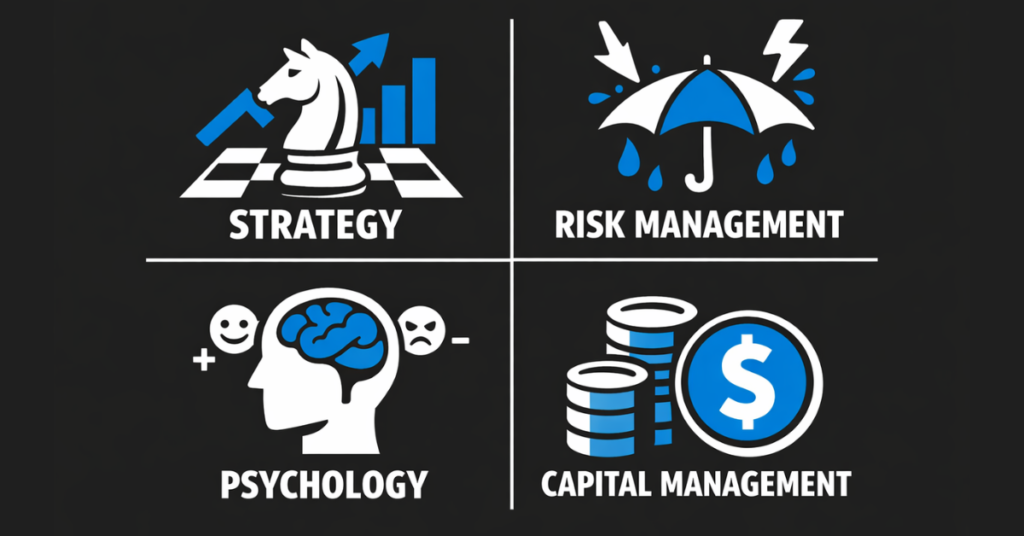
The 4 pillars of trading are strategy, risk management, psychology, and capital management. Mastering these 4 pillars is essential for consistent trading success, helping traders plan effective trades, control risk, maintain emotional discipline, and manage their capital responsibly to grow their accounts over time.
Key Takeaways
- Strategy: Plan trades effectively using technical and fundamental analysis.
- Risk Management: Protect capital through proper position sizing and stop-losses.
- Psychology: Maintain discipline, control emotions, and avoid impulsive decisions.
- Capital Management: Allocate funds wisely, manage leverage responsibly, and grow your account efficiently.
- Trading Fundamentals: Mastering all four pillars improves consistency, reduces losses, and increases profit potential.
4 Pillars Introduction
The 4 pillars of trading form the foundation for consistent success in any market. They guide traders to make informed decisions, manage risk, maintain emotional discipline, and grow their capital efficiently. Understanding these 4 pillars helps both beginners and experienced traders build a strong, reliable trading framework.
Pillar 1: Strategy
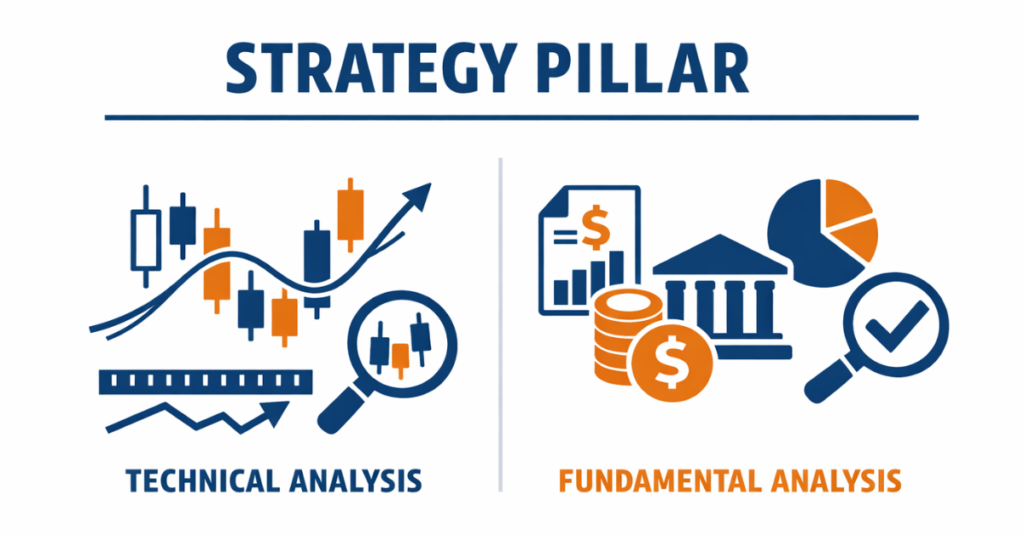
Strategy is the foundation of successful trading. It defines how, when, and why a trader enters or exits a trade, ensuring decisions are based on analysis rather than emotions. A solid strategy reduces guesswork and provides a structured approach to the markets.
There are two main approaches:
- Technical Analysis: Using charts, indicators, and historical price patterns to predict future price movements. Tools like trend lines, moving averages, and oscillators help traders identify entry and exit points.
- Fundamental Analysis: Evaluating economic data, news events, and market sentiment to anticipate price trends. For example, interest rate changes, GDP reports, or geopolitical events can strongly influence forex and stock prices.
Pillar 2: Risk Management
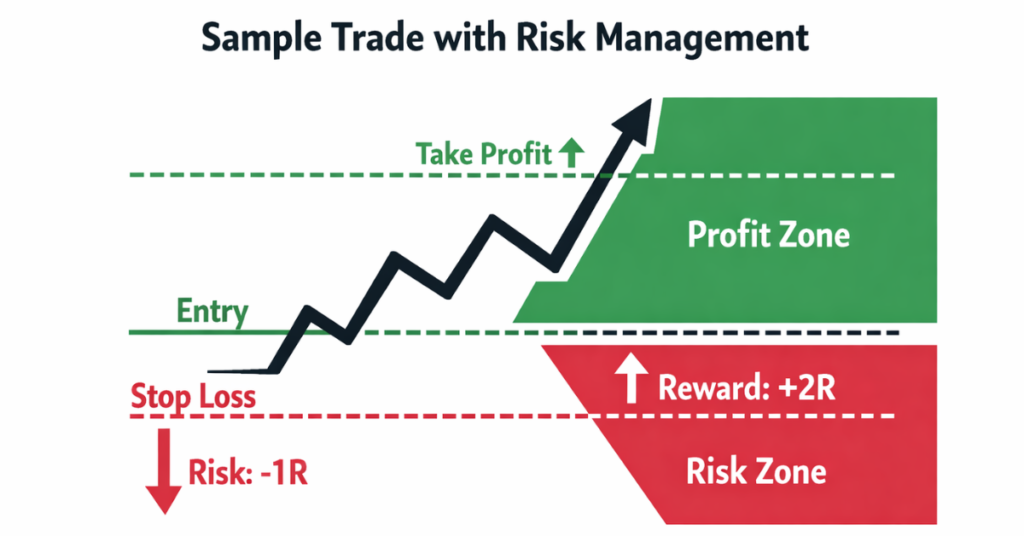
Risk management is the practice of protecting your trading capital from significant losses. Even the best strategies can fail without proper risk control. This pillar ensures that a single bad trade does not wipe out your account, allowing for long-term trading consistency.
3 Key components of risk management include:
- Position Sizing: Determine how much capital to allocate per trade based on your total account balance and acceptable risk level. For example, risking 1–2% of your account per trade helps minimize losses.
- Stop-Loss Orders: Set predefined exit points to limit losses if the market moves against your trade.
- Risk-Reward Ratio: Plan trades with a favorable reward-to-risk ratio, such as 2:1 or 3:1, ensuring potential profits outweigh potential losses.
Pillar 3: Psychology / Trading Mindset
Trading psychology refers to the mental and emotional aspects of trading. A disciplined mindset helps traders control fear, greed, and impulsive behavior, which are common causes of poor trading decisions. This pillar is essential because even a strong strategy can fail if emotions take control.
4 Key aspects of trading psychology include:
- Emotional Discipline: Avoid making trades based on panic, excitement, or overconfidence.
- Patience: Wait for high-probability setups instead of forcing trades.
- Consistency: Follow your trading plan and maintain a routine, regardless of recent wins or losses.
- Self-awareness: Recognize your psychological triggers and adjust behavior accordingly.
Pillar 4: Capital Management / Money Management
Capital management focuses on how traders allocate, protect, and grow their trading funds. Proper money management ensures that traders can stay in the market long-term, even during periods of losses, and take advantage of profitable opportunities when they arise.
Key components of capital management include:
- Leverage Management: Use leverage responsibly to amplify profits without exposing the account to excessive risk.
- Diversification: Spread funds across multiple instruments or markets to reduce risk concentration.
- Position Sizing: Allocate capital based on risk tolerance, trade setup, and market conditions.
- Compounding Gains: Reinvest profits strategically to grow the account over time.
4 Common Mistakes and How to Avoid Them
Even experienced traders can fall into common pitfalls that undermine the 4 pillars of trading. Understanding these mistakes helps beginners and professionals alike avoid unnecessary losses.
- Ignoring Strategy: Trading without a clear plan leads to inconsistent results. Always define entry, exit, and risk parameters before placing trades.
- Poor Risk Management: Over-leveraging or neglecting stop-losses can wipe out accounts quickly. Stick to small, calculated risk per trade.
- Emotional Decisions: Letting fear or greed dictate trades often causes premature exits or chasing losses. Maintain discipline and follow your plan.
- Neglecting Capital Management: Failing to diversify or over-investing in a single trade exposes funds to high risk. Always allocate capital wisely.
How Trading Platforms Support the 4 Pillars
A reliable trading platform plays a crucial role in helping traders implement the 4 pillars effectively. For strategy and capital management, access to advanced charting tools, technical indicators, and real-time market data ensures that trades can be planned and executed with precision.
Platforms like Defcofx that offer high leverage options allow traders to optimize their capital responsibly while testing strategies in real-market conditions.
Risk management is also enhanced by platforms with low spreads starting from 0.3 pips and no hidden fees or swap costs, as these reduce trading costs and make stop-loss and risk-reward calculations more accurate.
Similarly, psychology and discipline are supported when platforms provide fast withdrawals and responsive customer support, so traders can focus on disciplined decision-making without distractions.
5 Key Platform Benefits:
- Advanced charting and technical analysis tools for better strategy execution.
- Low spreads and zero swap fees to support precise risk management.
- High leverage options to optimize capital use responsibly.
- Fast withdrawals and support for stress-free trading.
- Global access for traders from all countries.
FAQs
All four pillars strategy, risk management, psychology, and capital management are equally important. Ignoring any one of them can compromise trading consistency and long-term success.
Start by learning each pillar individually. Develop a simple strategy, practice strict risk management, focus on controlling emotions, and manage your capital carefully. Gradually integrate all four into daily trading routines.
Leverage is not a pillar itself but is part of capital management. Using leverage responsibly can help traders optimize profits while managing risk effectively.
Yes, but beginners often benefit from mastering one pillar at a time. Over time, integrating all four ensures a comprehensive, disciplined approach to trading.
Platforms with advanced charting, low spreads, fast withdrawals, and global access help traders implement the pillars effectively. These tools assist with strategy execution, risk control, disciplined decision-making, and efficient capital management.
Discover More Forex Guides With Defcofx
- What Is the 10000 Hour Rule in Forex Trading?
- What is an Expert Advisor | Automated Trading Guide
- Pairs Trading – Market-Neutral Stock & Forex Guide
- How to Read Stock Candlesticks?
- How Many Countries Use Dollars?
- What Is Insider Trading?
- How Much Can I Earn From Trading per Month?
- When Should I Sell my Stock?
- Forex vs Stocks vs Crypto – Full Comparison Guide