


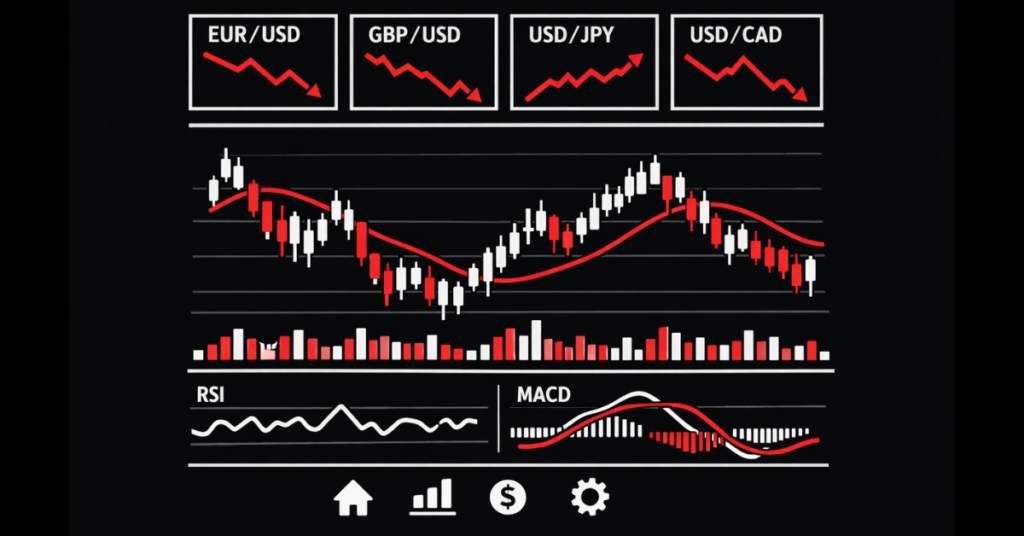
Trading in USD usually means participating in the forex market by buying or selling currency pairs that include the US dollar, such as EUR/USD or USD/JPY. Traders use online trading platforms to analyze price movements, place trades, and manage risk through leverage, spreads, and market strategies.
Platforms like Defcofx provide access to these global markets.
Open a Live Trading AccountKey Takeaways
- Trading in USD typically involves buying or selling currency pairs that include the US dollar in the forex market, such as EUR/USD or USD/JPY.
- The US dollar is the most traded currency globally, making USD pairs some of the most liquid and actively traded markets.
- Beginners can start trading USD by opening an online trading account, selecting a USD currency pair, and executing trades through a trading platform.
- Market factors like interest rates, economic data, and global events often influence the value of the US dollar.
- Many trading platforms, including Defcofx, allow traders to access USD markets with flexible leverage options, competitive spreads, and global market access.
What Does It Mean to Trade the US Dollar?
Trading the US dollar means participating in the foreign exchange (forex) market, where currencies are exchanged in pairs. Instead of purchasing USD as a standalone asset, traders speculate on how the value of the US dollar changes relative to another currency. This is done by trading currency pairs where USD is either the base or the quote currency.
Because the US dollar is the most widely used currency in international trade and finance, it appears in the majority of forex transactions. This high demand often results in greater liquidity, tighter spreads, and more consistent trading activity compared to many other currencies.
How USD Trading Works in Forex
When traders trade USD, they are essentially predicting whether the dollar will strengthen or weaken against another currency.
For example:
| Currency Pair | What It Means | Example Scenario |
| EUR/USD | Euro vs US Dollar | If EUR/USD rises, the euro is gaining value compared to the USD |
| USD/JPY | US Dollar vs Japanese Yen | If USD/JPY rises, the US dollar is strengthening against the yen |
| GBP/USD | British Pound vs US Dollar | If GBP/USD falls, the USD is strengthening against the pound |
These movements create opportunities for traders to buy or sell based on expected price changes.
Ways Traders Interact With USD Pairs
Depending on their market expectations, traders may approach USD trading in different ways:
- Buying a pair (Going Long): Traders buy when they expect the base currency to increase in value.
- Selling a pair (Going Short): Traders sell when they believe the base currency will decrease in value.
- Trading volatility: Some traders focus on short-term price movements during high market activity.
Why the US Dollar Is So Important in Forex
The US dollar dominates global currency markets due to its economic and financial influence. Some key reasons include:
- The USD is the world’s primary reserve currency used by central banks.
- Many commodities like oil and gold are priced in US dollars.
- Most major forex pairs include USD, creating higher liquidity and trading volume.
- Strong market participation often leads to tighter spreads and more trading opportunities.
Because of these characteristics, USD currency pairs are often the first markets new traders explore when entering the forex industry.
The Most Popular USD Currency Pairs Traders Use
When trading USD, it’s important to know which currency pairs are most commonly traded. These pairs are divided into major, minor, and exotic pairs, depending on their liquidity and trading volume.
Major USD Pairs
Major pairs always include the US dollar and are the most liquid and widely traded:
| Pair | Description | Example |
| EUR/USD | Euro vs US Dollar | If EUR/USD rises, the euro strengthens against the USD |
| USD/JPY | US Dollar vs Japanese Yen | If USD/JPY rises, the USD strengthens against the yen |
| GBP/USD | British Pound vs US Dollar | If GBP/USD falls, the USD strengthens against the pound |
| USD/CHF | US Dollar vs Swiss Franc | Popular for safe-haven trading strategies |
| AUD/USD | Australian Dollar vs US Dollar | Often influenced by commodity prices like gold and iron |
Minor USD Pairs
Minor pairs include USD but are less liquid than major pairs. They often involve currencies from smaller economies:
- USD/CAD (US Dollar vs Canadian Dollar)
- NZD/USD (New Zealand Dollar vs US Dollar)
- EUR/USD crosses can also be considered minor in certain contexts
These pairs may have slightly wider spreads, but still provide significant trading opportunities.
Exotic USD Pairs
Exotic pairs involve USD and currencies from emerging markets, such as:
- USD/TRY (Turkish Lira)
- USD/ZAR (South African Rand)
Why These Pairs Are Popular
- High liquidity ensures trades can be executed quickly.
- Predictable price movements based on global economic indicators.
- Frequent market activity creates opportunities for both short-term and long-term strategies.
Traders often start with major USD pairs to gain familiarity before moving to minors or exotics. Defcofx provide access to all these pairs, allowing traders to diversify their USD trading strategies effectively.
Open a Live Trading AccountHow Trading USD in the Forex Market Works
Trading the US dollar in forex involves speculating on the value of USD relative to another currency. Unlike buying a stock, you’re always trading two currencies at once, known as a currency pair. Traders aim to profit from price movements between the two currencies.
3 Key Concepts in USD Trading
- Base and Quote Currency:
In a pair like EUR/USD, the EUR is the base currency, and the USD is the quote currency. The exchange rate shows how much USD is needed to buy 1 EUR. - Going Long or Short:
- Long (Buy): Expecting the base currency to increase relative to USD.
- Short (Sell): Expecting the base currency to decrease relative to USD.
- Pips and Price Movements:
Forex prices are measured in pips (the smallest price change). Profits or losses are calculated based on the number of pips gained or lost.
Example Scenario
Imagine a trader believes the US dollar will strengthen against the Japanese yen:
- They sell USD/JPY at 110.00.
- The exchange rate rises to 111.00.
- The trader closes the trade, earning a profit from the difference in pips.
Conversely, if the USD weakens and the trader did not anticipate it, losses occur.
Factors Affecting USD Trading
- Economic Data: US employment numbers, inflation rates, and GDP influence the dollar.
- Interest Rates: Higher rates can strengthen the USD as it attracts global investment.
- Global Events: Geopolitical developments, trade deals, and crises impact USD value.
Platforms and Broker Role
Traders execute USD trades using online trading platforms. Brokers like Defcofx provide:
- Access to USD pairs
- Tight spreads and low trading costs
- Tools for analysis, charting, and automation
Step-by-Step Guide: How Beginners Can Start Trading USD
Starting to trade USD can seem overwhelming at first, but breaking it down into clear steps makes the process manageable. Here’s a practical guide for beginners:
Step 1: Learn the Basics of Forex Trading
- Understand how currency pairs work
- Learn the concepts of base/quote currency, pips, and spreads
- Study the factors that influence USD value, such as economic reports and interest rates
Step 2: Choose a Reliable Trading Platform
- Look for platforms with real-time USD price charts
- Ensure access to major USD currency pairs
- Consider execution speed, trading tools, and customer support
Platforms like Defcofx provide access to USD pairs with tight spreads and high liquidity, ideal for beginners and experienced traders alike.
Step 3: Open a Trading Account
- Register with a broker
- Verify your identity and account details
- Choose an account type based on trading goals and capital
Step 4: Fund Your Account
- Deposit funds using supported methods
- Be aware of minimum deposit requirements
- Some brokers provide welcome bonuses for new accounts
Step 5: Select USD Currency Pairs
- Start with major pairs like EUR/USD or USD/JPY
- Avoid highly volatile exotic pairs at first
- Monitor historical price movements to understand trends
Step 6: Execute Your First Trade
- Decide whether to buy (go long) or sell (go short)
- Set stop-loss and take-profit levels to manage risk
- Review trade results and learn from outcomes
3 Key Factors That Influence the Value of the US Dollar
Trading USD successfully requires understanding the main factors that affect its price in the forex market. These include economic indicators, interest rate decisions, and global events. Each factor can influence whether the US dollar strengthens or weakens relative to other currencies.
Major USD Influencing Factors
| Factor | Description | Example Impact on USD |
| Economic Data | Reports such as employment numbers, inflation rates, and GDP growth | Strong US jobs data or rising GDP can strengthen the USD |
| Interest Rates | Decisions by the US Federal Reserve regarding benchmark rates | A rate hike may attract global investment, increasing USD demand |
| Global Events | Geopolitical tensions, trade agreements, and crises | Safe-haven demand during market uncertainty often boosts USD value |
Example Scenario
Suppose the US Federal Reserve raises interest rates unexpectedly:
- Investors may buy USD to benefit from higher yields.
- Currency pairs like EUR/USD may drop, reflecting a stronger dollar.
- Traders anticipating this move could profit from short positions on EUR/USD.
Best Time to Trade USD Currency Pairs
Timing plays a crucial role in trading USD because currency volatility and liquidity vary throughout the day. Understanding when USD pairs are most active helps traders identify opportunities for better entry and exit points.
Forex Trading Sessions
The forex market operates 24 hours a day, divided into three main sessions:
| Session | Active Hours (EST) | USD Trading Activity |
| Asian Session | 12:00 AM – 9:00 AM | Moderate activity for USD pairs like USD/JPY; lower volatility for EUR/USD |
| London Session | 3:00 AM – 12:00 PM | High liquidity; EUR/USD, GBP/USD, and USD/CHF see frequent movement |
| New York Session | 8:00 AM – 5:00 PM | USD pairs become very active, especially when overlapping with London session |
Optimal Trading Window
The London–New York overlap (8:00 AM – 12:00 PM EST) is often considered the best time to trade USD pairs. During this period:
- Market liquidity is at its highest
- Price movements are more predictable
- Opportunities for intraday trading increase
Beginners should focus on major USD pairs during high-liquidity periods. This reduces spreads and allows trades to be executed more efficiently.
By aligning trades with active market sessions, traders can take advantage of stronger trends, reduced slippage, and tighter spreads when trading USD pairs on platforms like Defcofx.
Trading Costs to Consider When Trading USD
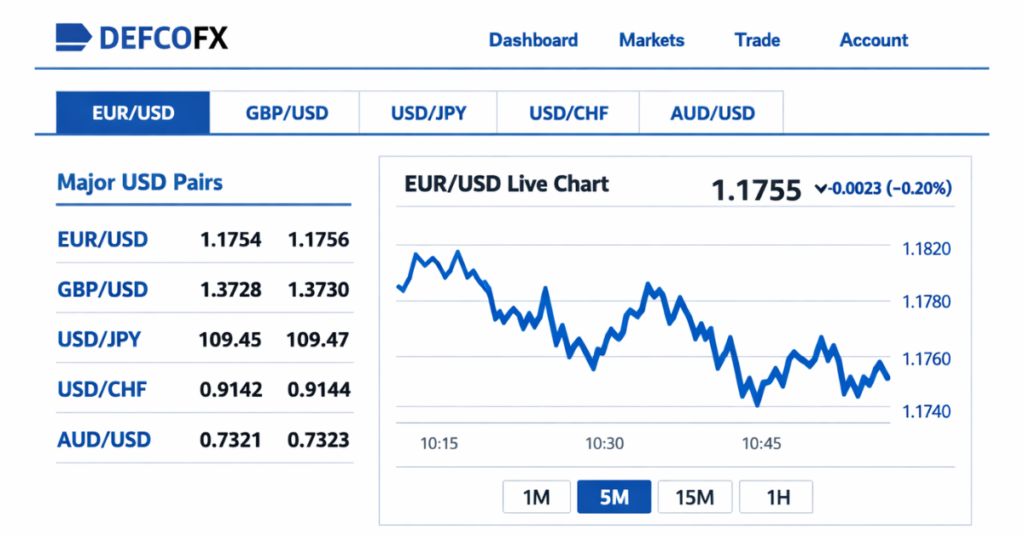
When trading USD currency pairs, understanding trading costs is essential for managing profitability. Costs vary depending on the broker, currency pair, and trading style, but the main factors include spreads, commissions, and overnight fees.
Key Trading Costs
| Cost Type | Description | How It Affects Trading |
| Spread | The difference between the buy and sell price of a currency pair | A lower spread reduces the cost of entering and exiting trades |
| Commission | Some brokers charge a fee per trade | Commission adds to overall trading expenses, impacting small trades more |
| Overnight Swap Fees | Interest applied to positions held overnight | Can increase costs for long-term trades |
Always check the broker’s cost structure before trading USD pairs. Lower costs allow traders to make more efficient trades and manage smaller accounts effectively.
Open a Live Trading AccountUsing Leverage When Trading USD
Leverage allows traders to control larger positions with a smaller amount of capital. It can significantly amplify both potential profits and losses when trading USD currency pairs, so understanding how to use it responsibly is essential.
How Leverage Works
When a broker offers leverage, it lets you borrow funds to increase your trading exposure. For example:
| Leverage | Trading Capital | Maximum Market Exposure |
| 1:50 | $1,000 | $50,000 |
| 1:200 | $1,000 | $200,000 |
| 1:2000 | $1,000 | $2,000,000 |
Responsible Leverage Use
- Always set stop-loss levels to manage risk
- Avoid using maximum leverage for every trade
- Focus on position sizing according to account balance
Practical Example
Suppose a trader has $1,000 in their account and uses 1:200 leverage to trade USD/JPY:
- Market exposure = $200,000
- A 0.5% favorable move yields $1,000 profit (100% of initial capital)
- Conversely, a 0.5% adverse move results in full account loss
Using leverage responsibly allows traders to maximize opportunity while controlling risk. Platforms like Defcofx provide tools to monitor and adjust leverage effectively.
Choosing a Trading Platform for USD Trading
Selecting the right trading platform is crucial for trading USD efficiently. A good platform provides real-time market data, charting tools, and reliable execution, enabling traders to make informed decisions.
Key Features to Look For
| Feature | Why It Matters |
| Real-Time USD Price Charts | Allows accurate monitoring of currency movements |
| Execution Speed | Faster order execution reduces slippage |
| Access to USD Pairs | Ensures the ability to trade major, minor, and exotic USD pairs |
| Leverage Options | Provides flexibility in trading positions |
| Deposit & Withdrawal Process | Smooth transactions support better account management |
Platform Example
Brokers like Defcofx provide:
- Major USD pairs with high liquidity
- Flexible leverage options up to 1:2000
- Tight spreads starting from 0.3 pips with no commissions or swap fees
- Fast deposits and withdrawals, often within 4 hours, including weekends
Simple Trading Strategies for USD Currency Pairs
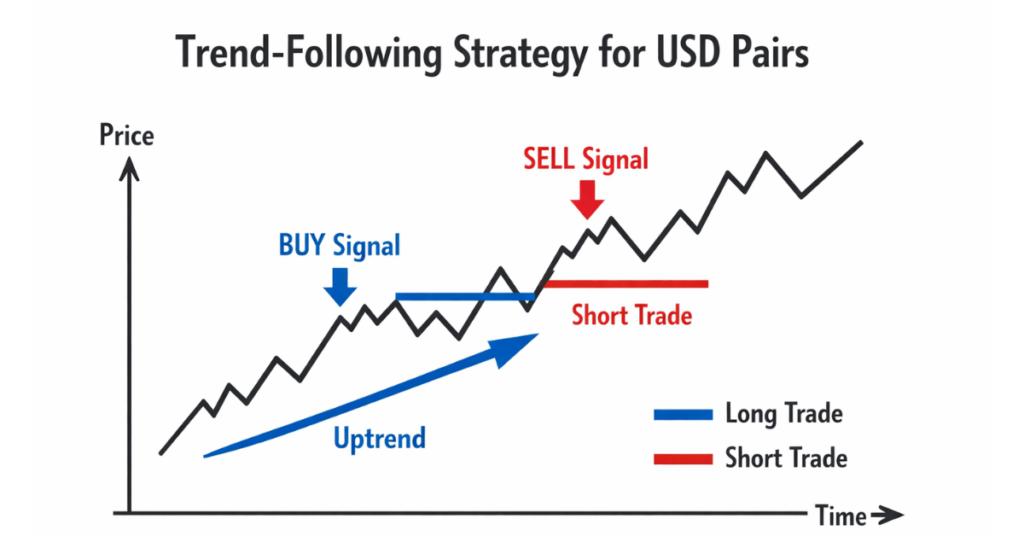
When trading USD, having a trading strategy helps traders make informed decisions and manage risk effectively. Beginners should focus on simple, proven approaches before exploring advanced techniques.
Popular Strategies for USD Trading
| Strategy | How It Works | Example |
| Trend Following | Traders identify the direction of a USD pair and trade along the trend | If EUR/USD is rising steadily, buy the pair to follow the upward trend |
| Breakout Trading | Traders enter trades when the price moves beyond established support or resistance levels | If USD/JPY breaks above a strong resistance, a long position can capture the momentum |
| News Trading | Traders trade USD around economic announcements | Reacting to US Non-Farm Payrolls can create short-term trading opportunities |
Risk Management Tips
- Always use stop-loss orders to limit potential losses
- Avoid trading large positions relative to account size
- Focus on major USD pairs before moving to more volatile exotics
Risks Every USD Trader Should Understand
Trading USD offers many opportunities, but it also comes with inherent risks. Understanding these risks is crucial to protect capital and trade responsibly.
Key Risks in USD Trading
| Risk Type | Description | Example |
| Market Volatility | Sudden price swings due to economic data, news, or global events | A surprise interest rate hike can cause USD pairs to move rapidly |
| Leverage Risk | High leverage can amplify losses | Using 1:2000 leverage on USD/JPY could wipe out the account from small adverse moves |
| Emotional Trading | Impulsive decisions can lead to unnecessary losses | Closing trades too early out of fear or greed |
| Lack of Risk Management | Ignoring stop-losses or overexposure | Trading multiple high-volatility USD pairs without limits |
Mitigating Risks
- Use stop-loss and take-profit orders
- Limit leverage according to experience level
- Trade high-liquidity USD pairs for more predictable price action
- Keep a trading journal to track decisions and outcomes
By combining strategic risk management with knowledge of USD currency pairs, traders can maximize opportunities while minimizing potential losses.
How Fast Withdrawals and Global Access Benefit Traders
One of the most important considerations for USD traders is accessibility and reliability of the trading platform. Fast withdrawals, responsive support, and global reach significantly improve the trading experience and give traders confidence in managing their funds.
Why Global Access Matters
- Traders from all over the world can participate in USD markets
- Multi-language support ensures clarity and usability
- Access to international financial markets enables trading anytime, anywhere
Importance of Fast Withdrawals and Support
| Feature | Benefit |
| Fast Withdrawals | Traders can access their funds within hours, improving liquidity management |
| 24/7 Support | Quick resolution of account or technical issues ensures uninterrupted trading |
| Reliable Payment Methods | Reduces the risk of delays or failed transactions, especially for urgent trades |
Defcofx process withdrawals in as little as 4 hours, including weekends, giving traders peace of mind and efficient fund management.
Open a Live Trading AccountFAQs
Yes, beginners can trade USD by starting with major currency pairs like EUR/USD or USD/JPY. Using demo accounts and following step-by-step strategies reduces risk while learning market behavior.
Major pairs like EUR/USD, USD/JPY, and GBP/USD are the most popular due to high liquidity, tighter spreads, and predictable movements, making them ideal for both beginners and experienced traders.
The minimum amount depends on the broker and account type. Platforms like Defcofx allow trading with smaller deposits while offering flexible leverage options, making USD trading accessible to new traders.
The London–New York session overlap (8:00 AM – 12:00 PM EST) is the most active for USD trading, offering higher liquidity, tighter spreads, and better trading opportunities.
USD trading can be profitable with proper strategy, risk management, and timing. Using tools like stop-loss orders, analyzing economic indicators, and trading during active market sessions improves success potential.
Final Thoughts on How can I trade in USD?
Trading USD in the forex market offers opportunities for both beginners and experienced traders due to the US dollar’s global significance and high liquidity. By understanding currency pairs, monitoring economic indicators, and following structured strategies, traders can make informed decisions and manage risks effectively.
Ultimately, successful USD trading combines knowledge, risk management, and the right trading environment. Beginners should start cautiously, use demo accounts to practice, and gradually apply strategies in live markets.
This closes the article by reinforcing key lessons, emphasizing safe trading practices, and naturally highlighting the broker only where relevant, keeping the content user-focused and actionable.
Discover More Forex Guides With Defcofx
- What Is the 10000 Hour Rule in Forex Trading?
- Pairs Trading – Market-Neutral Stock & Forex Guide
- How to Read Stock Candlesticks?
- How Many Countries Use Dollars?
- What Is Insider Trading?
- How Much Can I Earn From Trading per Month?
- When Should I Sell my Stock?
- Forex vs Stocks vs Crypto – Full Comparison Guide